
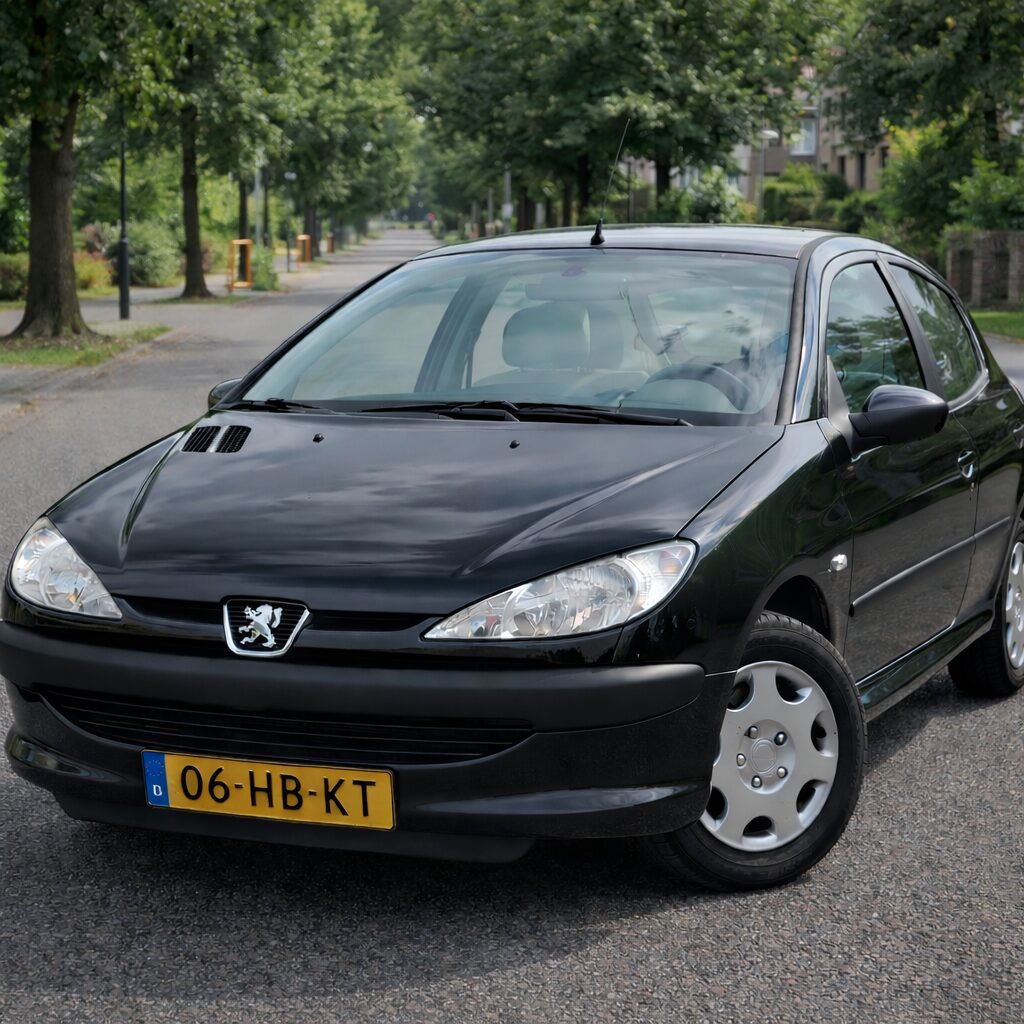
The Peugeot 206 CC combines compact dimensions with the fun of an open roof, but it does have a number of well-known technical weak spots. The convertible roof sometimes suddenly refuses to open. Persistent leaks in the footwells are a common complaint among owners. Know what to watch out for and you can avoid costly surprises.
Convertible roof will not open or gets stuck halfway
The electrically operated folding roof is the trademark of the 206 CC, but also a source of frustration. The roof motor can fail due to wear. The roof then no longer opens. During folding it sometimes gets stuck halfway. In addition, sensors can fail. The system then does not correctly register whether the roof is fully closed.
When buying a used car, check whether the rear boot lid closes properly. If the display stays dark, the boot lid is not properly shut. This prevents the roof from opening. Replacing the roof motor usually costs several hundred euros in parts and labour. Preventive maintenance of the mechanical parts and regular lubrication of the hinges will postpone this problem.
Owners of the Peugeot 206 report this regularly. Problems with the convertible roof often go hand in hand with electrical faults. The ECU (engine control unit, the engine computer) misinterprets signals. As a result, the roof system unexpectedly cuts out.
‘ This points to a structural leak. ’
Leaks in the footwells and interior
Water leaks are among the most commonly reported complaints with the 206 CC. The seals of the convertible roof wear out over time, allowing rainwater to seep in. The HVAC intake openings (the heating and ventilation air inlets) can also leak. The heater matrix can leak as well. This causes a wet footwell on the passenger or driver side.
During inspection, look for damp patches on the carpets and a musty smell in the interior. This points to a structural leak. Replacing the roof seals often solves this, but also check the roof drain holes. Blocked drains cause water to build up. It will still end up inside. Regular cleaning of these drain holes prevents a build-up of leaves and dirt.

Electrical faults and defective sensors
The 206 CC is prone to faults in its electronic systems. The ECU can lose functionality for no obvious reason, which shows up as the failure of various systems. Defective air temperature sensors and camshaft sensors are common. Replace these in good time. That way you prevent engine problems.
An important point to check is the ignition coil rail. Check whether it is made by Electrofil. Other brands sometimes cause conflicts with the ECU. This leads to faults. When buying a second-hand example, it is wise to have the complete electronics read out by a garage familiar with Peugeot.
Squeaking brakes and wear
Owners of the 206 CC often report squeaking brakes. This can have several causes. Sometimes it is normal contact between brake pad and disc at low speeds, but persistent squeaking often points to worn brake pads or contaminated brake discs. Using the wrong type of brake pad can also cause excessive noise.
Have the brakes inspected annually. Replace the pads in time. If you keep driving on worn brakes they can damage the brake discs. The repair costs then rise sharply. During a test drive, check whether the car brakes in a straight line and does not cause vibrations under heavy braking. This points to warped discs. Problems with the brake caliper are also possible.
‘ The result is that doors no longer lock centrally or will not open at all. ’
Central locking and lock mechanisms
Faults in the central locking are very common. The cause is usually broken actuators or defective solenoids (electromagnetic coils) in the door locks. These parts contain microswitches. After years of use they fail. The result is that the doors no longer lock centrally or will not open at all.
When buying you can easily test this by locking and unlocking all doors several times with the remote control. Also check whether the window motors still work. Defective window motors mean that electric windows no longer move, which is particularly inconvenient in a convertible. Replacing lock mechanisms and window motors is not technically complex, but the door panels do have to be removed.
Engine problems and cooling system
Some 206 CC versions are fitted with a 2.0-litre engine. This engine can suffer from contaminated hydraulic tappets. Owners report rattling or ticking noises on start-up, especially with a cold engine. A little noise at start-up is normal. After a minute any odd noises should have disappeared.
Check this during a test drive after the car has stood still for at least a day. The cooling fan can produce irregular noises under the bonnet. The cause is worn bearings. Replacing the fan is usually sufficient and costs several hundred euros. Also watch for oil leaks on TU engines. The head gasket regularly leaks oil along the timing belt. If neglected this leads to serious damage.
Drivetrain and suspension
Older examples sometimes suffer from vibrations and noises from the drivetrain. This mainly occurs while driving. Defective constant-velocity joints in the drive shafts are common. You notice this as clicking noises. These noises occur when taking tight corners. Play in the wishbones is also common. This is most noticeable when changing gear or pulling away.
Worn engine mounts cause knocking and banging noises from the engine bay. Anti-roll bar links and the associated bushes also wear out. This leads to noises over uneven road surfaces. During a pre-purchase inspection, have the drive shafts checked. Pull on the wheels. Play can be felt and heard. Replace worn parts in good time to prevent further damage to the suspension.
‘ Continuing to drive can lead to expensive transmission damage. ’
Automatic gearbox and transmission problems
Examples with an automatic gearbox sometimes have transmission problems. Oil leaks from the output and torque converter seals are known issues. Red or brown fluids under the car point to this. Jerky gear changes when setting off indicate wear in the automatic gearbox. Rattling or whining when stationary can also indicate a worn release bearing.
Check the colour of the transmission oil. Check the smell of the transmission oil. Dark oil indicates overdue maintenance. Oil that smells burnt also points to this. Have any abnormal noises during gear changes checked immediately. Continuing to drive can lead to expensive transmission damage. Flush and replace the transmission oil as a preventive measure. This significantly extends the life of the automatic gearbox.
Recalls and safety
In 2001, around one hundred Peugeot 206 CC examples were recalled due to defective track rod ends and airbag components. These parts are safety critical. Failure can create dangerous situations. Buying a used car? Then check whether these recalls have been carried out. The garage or seller should be able to prove this with service documentation.
Track rod ends that are not properly secured cause play in the steering. This reduces control over the car. Defective airbag components mean that the airbag will not deploy in a collision. Sometimes the airbag goes off unexpectedly. Use the registration number to check whether there are any outstanding recalls. Do this before you buy the car.
Buying tips for a safe used car
Are you buying a used 206 CC? Then carry out thorough checks. Test the convertible roof system fully by opening and closing it several times. Check that the rear boot lid closes correctly. Check that the display indicates that everything is shut. Inspect the footwells and boot for damp patches and musty smells.
When starting a cold engine, listen for unusual noises. Ticking or rattling noises can occur. Do they continue for longer than a minute? Then this points to problems. Check the brand of the ignition coil rail and ask about the service history of the electronics. Test all electrical functions: windows, central locking, lighting and air conditioning.
Take a test drive. Take tight corners. This will help you trace drive shaft problems. Watch for vibrations above certain speeds and check whether the car brakes in a straight line without vibrations. Ask for service documentation and check whether recalls have been carried out. A thorough inspection by an independent specialist costs a few tens of euros. It prevents you from buying a car with hidden defects.
‘ With consistent servicing and timely repairs, the 206 CC remains a reliable convertible for enthusiasts. ’
Maintenance tips for a longer service life
With the 206 CC, regular maintenance is essential, not a luxury. Check oil and coolant levels every month. Replace the cabin filter as a preventive measure to avoid air conditioning problems. Have the clutch system inspected annually. Have the timing belt replaced at the prescribed interval.
Clean the roof drains at least twice a year. This will prevent blockages. Lubricate the roof hinges annually with suitable grease. Lubricate the mechanical parts of the folding roof system once a year. Check the drive shafts at every service. Check the suspension bushes at every service. Replace brake pads in good time. Replace brake discs in good time. Have the brake fluid renewed every two years.
Treat the roof seals with a rubber care product to prevent drying out and cracking. Wherever possible, park the car indoors or under a carport. This limits exposure to the weather and UV radiation. With consistent servicing and timely repairs, the 206 CC remains a reliable convertible for enthusiasts.
On the Carnews website you will find more information about common car problems, maintenance tips and buying advice for different makes and models. Discover which other models have well-known teething troubles and how to spot them before you buy.
Frequently asked questions
The most common roof problems with the Peugeot 206 CC are leaks along the roof rubbers and joints, jerky or not fully closing roof mechanisms, and electronic faults in the roof controls. You can recognise leaks by damp or mould patches in the footwells, wet upholstery or condensation in the car after rain. You notice a defective or badly adjusted mechanism from jerky opening/closing, a crooked fit of the roof or squeaking/creaking noises while it moves. You can recognise electronic problems from error messages, a roof that stops halfway or no longer responds at all to the control button.
Typical electronic faults with the 206 CC include problems with the ECU, defective sensors (such as air and camshaft sensors), faults in the central locking and failure of window motors. The ignition coil rail can also cause electronic engine problems if it is not from the correct brand. In practice, these faults mainly cause inconvenience (key and window problems) and occasional issues with engine running or starting. They are rarely directly dangerous, but they can noticeably affect the car’s reliability and the driver’s confidence in it.
Yes. On the 2.0 engine, watch out for dirty hydraulic tappets and any ticking or rattling noises that continue for longer than about a minute after a cold start. Also check for oil leaks around the head gasket and unusual noises from the cooling fan. On automatics, jerky gear changes, leaking seals (red/brownish oil under the car) and whining or rattling when stationary are important warning signs. Vibrations at speed or while changing gear can also point to worn engine mounts, drive shafts or gearbox bearings.
Leaks on a 206 CC often occur at the rubber seals of the convertible roof and doors. Keep these clean, supple (with rubber care products) and well aligned, and check that the roof closes properly everywhere. Also pay attention to drainage around the roof and in the boot: regularly clean the water drains and gutters so that water can flow away. Inside the car, you should mainly check the footwells for moisture, which may indicate a leaking heater matrix or a blocked HVAC drain. In the case of persistent leaks, worn rubbers or incorrect roof adjustment may be the cause, which often requires professional adjustment or replacement.
It is essential to check oil and coolant levels regularly and replace them in good time to prevent engine and cooling issues. Keep all rubbers, roof seals and water drains clean and supple to minimise water leaks and roof faults. Have drive shafts, engine mounts, suspension and clutch regularly checked for play and wear to prevent vibrations and damage. Replace the cabin filter as a preventive measure and have the air conditioning, central locking, windows and electronics tested at intervals so that emerging faults are dealt with at an early stage.