

The Audi A5 with quattro four-wheel drive regularly suffers from faults in the drive system. These faults are noticeable in the steering. In addition, clutch problems cause judder when it engages. These issues often appear after 50,000 to 100,000 kilometres and can lead to costly repairs if they are not tackled in time. Do you want to know how to recognise these problems and what you can do about them?
Quattro ultra system causes vibrations and noises
The quattro ultra system in the Audi A5 automatically switches between front-wheel drive and four-wheel drive to reduce fuel consumption. This clever technology has weak points that show up as recognisable symptoms.
Many owners report a humming or droning noise when accelerating, especially when the wheels are turned. Vibrations or a scraping sensation during acceleration are also common. These signals indicate wear to the clutch or differential in the drivetrain.
Continuing to drive with these issues speeds up further damage considerably. The clutch in the quattro ultra system is constantly under load. This happens when switching between two- and four-wheel drive. Wear is therefore a logical consequence, especially with intensive use in town with a lot of stop-and-go traffic.
Do you recognise a defective quattro clutch?
There are several symptoms that point to problems. These symptoms indicate faults in the quattro system. Pay attention to the following signals:
- Humming or droning noises from the drivetrain while accelerating
- Vibrations or jolts that can be felt in the steering wheel or the driver’s seat
- A scraping sensation when pulling away, especially with the wheels turned
- Excessive play in the front-axle flange during manual inspection
These complaints are often the first to appear. This happens mainly with temperature changes or in cold weather. The quattro ultra system then has more difficulty switching smoothly between the drive modes. As things get worse, the vibrations are constantly present, regardless of driving conditions.
A professional diagnosis by a specialist is essential. This allows you to rule out other causes. Worn suspension bushes, defective wheel bearings (parts that let the wheels rotate smoothly) or gearbox problems can cause similar symptoms. After the correct diagnosis and repair, the vibrations disappear immediately. The car then drives completely smoothly again.

S tronic transmission suffers from juddering and wear
In addition to the quattro system, there are also frequent complaints about the S tronic in the Audi A5. S tronic is a dual-clutch automatic gearbox. This applies mainly to models built between 2007 and 2017 with the seven-speed S tronic (DL501) with wet clutches. This transmission is suitable for higher torque levels up to 550 Nm, but it does have specific weak points.
Owners report juddering and vibration at low speed, when parking or when pulling away from a standstill. The clutch wears out faster with intensive use in city traffic or in models with high engine power. Some owners experience sudden clutch failure at around 50,000 kilometres. The engine then revs higher without the car slowing down. This happens for example when using cruise control.
A software update reduces juddering in some cases. In cases of severe wear, replacing the clutches is unavoidable. In that case, choose quality parts to prevent the problem from recurring. The transmission oil also plays a role. Transmission oil is the oil that lubricates the gearbox and drivetrain. Aged or incorrect oil accelerates wear significantly.
How do you recognise a worn clutch on a manual gearbox?
For A5 models with a manual gearbox, the symptoms of a worn clutch are different. In models with automatic gearboxes (these are gearboxes that change gear themselves), the symptoms are different. The clutch does not engage smoothly and causes judder when changing gear, especially on cold starts.
Typical signs of clutch wear on a manual gearbox are:
- Juddering or vibration when the clutch engages in first gear
- Slipping of the clutch under heavy acceleration, with the engine speed rising without power being transmitted
- A high biting point of the clutch pedal
- Burning smell while driving, especially on hills or when pulling away
With manual gearboxes, the service life of the clutch depends heavily on driving style. Aggressive gear changes, frequent clutch use in city traffic and using the clutch as a holding brake on hills shorten its life considerably. Under normal use a clutch usually lasts 100,000 to 150,000 kilometres.
‘ Aged oil accelerates the wear of clutches and gears. ’
Maintenance tips for the quattro drive
Preventive maintenance avoids many problems with the quattro system. This maintenance includes regular inspections before complaints arise. Follow Audi’s maintenance schedules closely and have the drivetrain in particular inspected at service intervals. Technical guidelines for working on the drivetrain clearly indicate which wear points need extra attention.
Replace the transmission oil according to the prescribed schedule. Transmission oil is the oil for the gearbox and drivetrain. Audi sometimes refers to lifetime oil. Aged oil accelerates the wear of clutches and gears. An oil change every 60,000 kilometres significantly increases reliability.
Adjust your driving style to minimise wear. Avoid abrupt acceleration in town and let the quattro system switch smoothly between the drive modes. During cold starts, it is sensible to drive gently for the first few kilometres until all components have reached operating temperature.
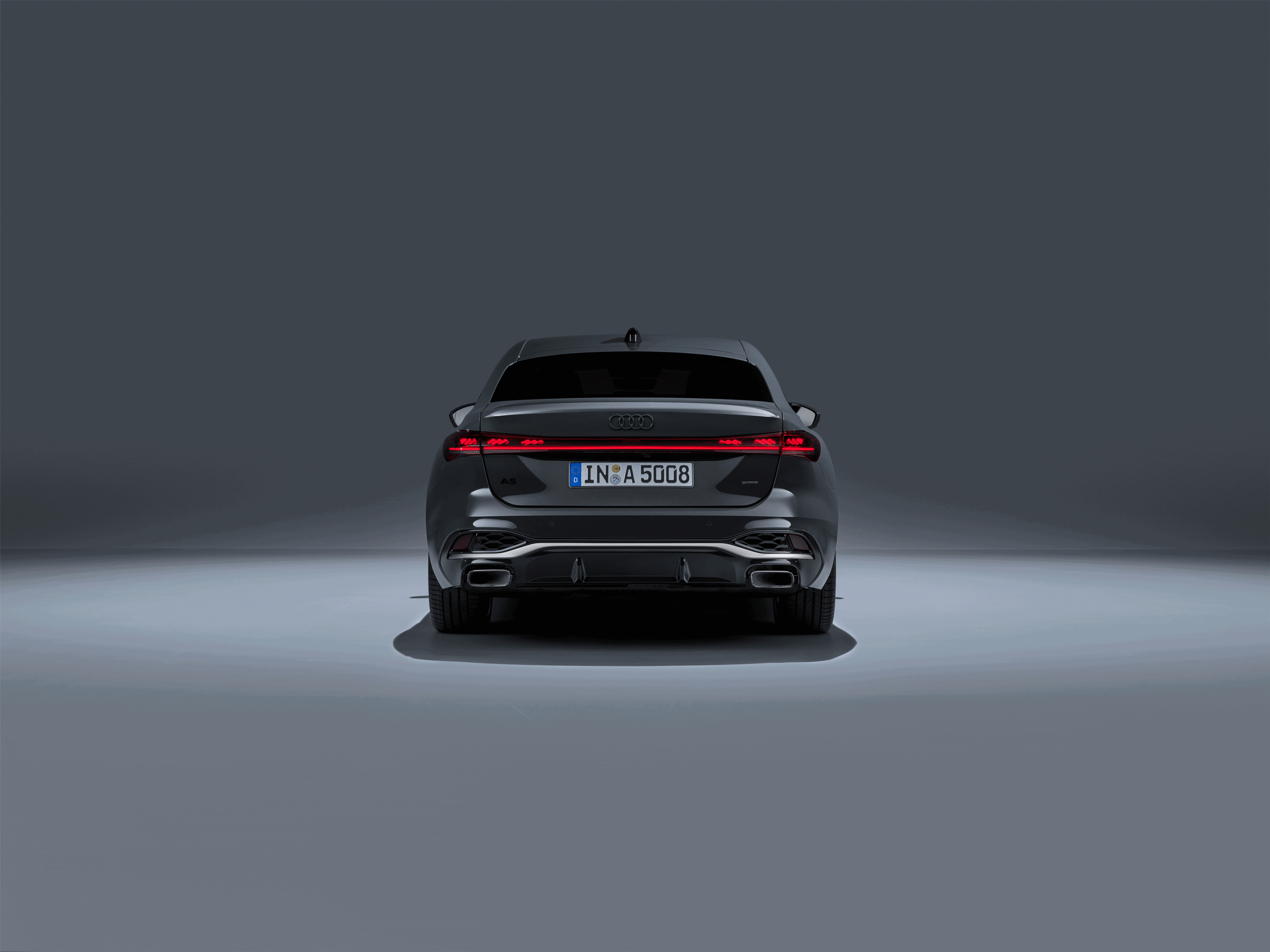
Other transmission problems with the Audi A5
Besides the S tronic, there are also complaints about other transmissions in the A5. The eight-speed Tiptronic automatic can cause juddering or roll backwards unexpectedly after around 100,000 kilometres. Tiptronic is an automatic gearbox with the option of manual shifting. This transmission is used in combination with the 3.0 TDI quattro (TDI stands for turbocharged direct-injection diesel engine) and 45 TFSI engines (TFSI stands for turbocharged direct-injection petrol engine). The complaints point to defective mechatronics or worn bearings.
The Multitronic CVT transmission sometimes produces a sudden loss of drive while driving. Multitronic is Audi’s brand name for their CVT transmission. CVT stands for a continuously variable automatic gearbox without fixed gears. This transmission can be found in some older diesel models such as the 2.7 TDI from 2009. Automatic transmissions require strict maintenance and generally last less long than manual gearboxes.
With all automatic transmissions, timely inspection at the first signs is essential. There are several warning signs. A shuddering or jolting sensation, unusual engine speed or no response when you press the accelerator are immediate warning signs. Have the car inspected straight away by a specialist with knowledge of Audi transmissions.
Reliability of quattro on used cars
When buying a used Audi A5 with quattro drive, extra attention must be paid to the condition of the drive system. Symptoms of quattro problems often start between 50,000 and 100,000 kilometres, depending on maintenance and use.
During a test drive, specifically check for vibrations and noises when accelerating. Turn the wheels fully and accelerate firmly to reveal hidden problems. Ask about the maintenance history and check whether the transmission oil (oil for the gearbox and drivetrain) has been changed regularly.
Used cars with a complete service history are significantly more reliable. Proof of regular servicing also increases reliability. Also pay attention to any software updates carried out during service visits. These updates often improve the operation of the quattro system and reduce wear.
The total cost of replacing a quattro clutch or repairing an S tronic quickly runs into several thousand euros. Factor these potential costs into your purchase decision and negotiate on the price if necessary for a used car with known issues.
‘ Investing in quality pays off in the long term. ’
Practical approach to quattro and clutch problems
Do you recognise one of the symptoms mentioned? Immediate action is then necessary. Schedule an inspection at a specialist garage with experience of Audi quattro systems. A general garage sometimes lacks the specific knowledge and diagnostic equipment for this complex drive technology.
Ask about the exact cause. Have the mechanic explain the different options to you. Sometimes a software update or oil change is sufficient. In other cases, replacement of clutches or differentials (these are gear units that distribute the drive power over the wheels) is unavoidable. Ask for a written quotation with a warranty on parts and labour.
When replacing parts, always choose original components or quality alternatives from reputable brands. Cheap alternatives can save money in the short term but often lead to a shorter service life and a recurrence of problems. Investing in quality pays off in the long term.
On the Carnews website you will find much more information about specific car problems, maintenance advice and tips for buying used cars. Discover all the articles and expand your knowledge of cars and automotive technology.
Frequently asked questions
Common clutch problems in an Audi A5 with quattro drive include humming or droning noises and vibrations/scraping sensations when pulling away, especially with the wheels turned. On S tronic gearboxes, juddering and vibration often occur at low speed, when parking or when pulling away from a standstill. The clutch can also wear prematurely, noticeable when the engine revs high without the car accelerating properly. In addition, excessive play in the front-axle flange and bearing problems in the drivetrain occur, which show up as extra vibration and instability in the drive.
The quattro drive puts extra load on the clutch and components in the drivetrain, especially when accelerating and in corners, which means wear often occurs earlier. In systems such as quattro ultra, which are constantly switching between front- and four-wheel drive, the engagement clutch can start to cause vibrations and humming noises as it wears. In combination with the S tronic, juddering and vibration at low speeds are often caused by worn wet clutches, which typically becomes apparent at around 50,000–100,000 km. Good maintenance (oil, software updates) and pulling away gently limit this extra wear.
Early symptoms of a failing clutch in an Audi A5 quattro include a humming or droning noise when pulling away (especially with the wheels turned) and vibrations or a scraping sensation while accelerating. On S tronic versions, you often notice juddering at low speed, for example when pulling away or manoeuvring. Car enthusiasts can recognise this by consciously paying attention during a test drive to unusual noises from the drivetrain, vibrations in the steering wheel or seat and an engine that revs higher without the car accelerating in proportion. If any of these phenomena occur, a professional diagnosis is advisable to prevent further wear.
Owners of an Audi A5 quattro can limit clutch problems by following the maintenance schedule strictly, including timely replacement of the transmission oil and having any software updates carried out. Avoid repeatedly accelerating hard, excessive clutch slip and intensive city driving with continuous stop-and-go behaviour. At the first signs of vibration, jerky gear changes or humming noises in the drivetrain, have a professional diagnosis carried out immediately to prevent further wear. When buying a used A5 quattro, pay extra attention to vibrations, juddering and strange noises around 50,000–100,000 km.
The average costs of replacing a clutch in an Audi A5 with quattro drive are generally in the region of several thousand euros, depending on model year, type of transmission (S tronic/manual) and any additional wear to components such as the differential or bearings. On S tronic models the complete clutch unit is often renewed, which pushes the costs up further. As alternatives, a software update (on S tronic), a transmission oil and filter change or targeted repair of specific wear points (for example bearings or flanges) are sometimes used if the damage is still limited. These alternatives can reduce or postpone complaints, but usually do not permanently resolve severe mechanical wear to the clutch.
Yes, aggressive driving styles such as frequent hard acceleration, full-throttle acceleration and ‘launches’ from a standstill accelerate clutch wear in an Audi A5 quattro. Frequently driving with a high load, for example with a heavy trailer or fully loaded car in mountainous areas, also shortens its service life. Prolonged clutch slip (pedal half pressed, crawling in traffic with small bursts of throttle) is particularly stressful. Gentle, smooth gear changes and acceleration, on the other hand, extend the life of the clutch.