
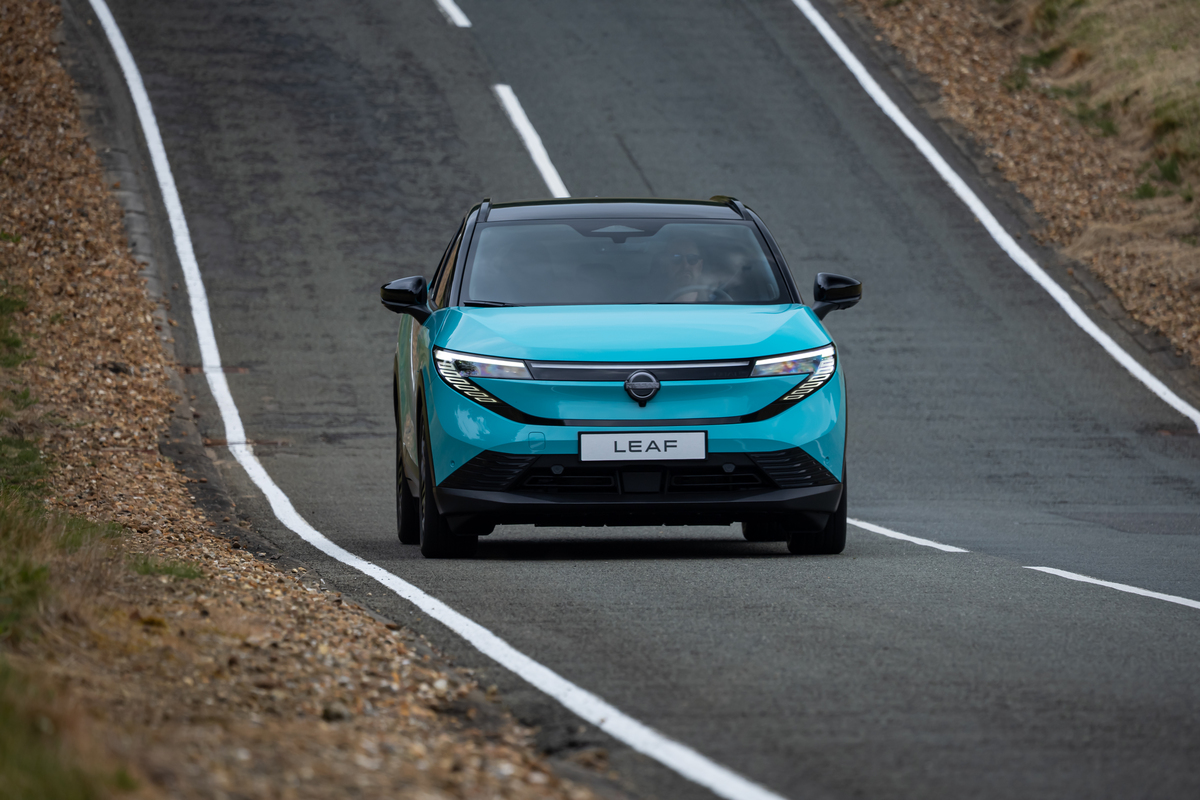
The Nissan Leaf with a 40 kWh battery suffers from a striking problem: after repeated fast‑charging sessions the charging speed drops from 50 kW to just 22 to 30 kW. This slowdown is caused by an overheated battery without liquid cooling. The software automatically reduces the charging speed to prevent damage. This phenomenon, known as rapidgate, makes long journeys with multiple charging stops frustratingly slow. Find out what this really means for your driving habits.
What is rapidgate and how does it occur?
Rapidgate refers to the downshifting of the fast‑charging speed on the 40 kWh Nissan Leaf from 2018. The battery is air‑cooled instead of being equipped with liquid cooling. During fast charging the battery heats up quickly. This happens especially with several charging sessions one after another on a long trip. After the second or third charging session the software detects an excessively high temperature. The software then drastically limits the charging speed to an average of 28 kW. This prevents degradation of the battery cells. It extends charging from minutes to sometimes hours.
At temperatures above 30 degrees Celsius the problem accelerates. The battery does not cool down sufficiently between charging sessions. Each subsequent stop therefore becomes slower. Cold conditions around 0 degrees Celsius actually reduce the problem. The battery overheats less quickly. Older 24 kWh Leafs suffer less from rapidgate thanks to more generous cell spacing and better cooling at lower temperatures.
‘ The hashtag #rapidgate arose precisely out of frustration about these unexpected delays on long‑distance journeys. ’
Do you recognise the symptoms of rapidgate?
You mainly notice rapidgate during long motorway journeys with multiple fast‑charging stops. At the first stop the battery still charges with a peak speed of around 50 kW. During the second or third session this drops back to 20 to 30 kW. The battery is still largely empty at that point. This means you wait considerably longer at a charging station than expected.
Owners report that journeys of 800 kilometres can take up to 14 hours because of repeated drops in charging speed. A Leaf normally charges to 80 percent within 40 minutes. In these cases the car sometimes needs more than an hour. The hashtag #rapidgate arose precisely out of frustration about these unexpected delays on long‑distance journeys.
Software updates and Nissan’s solutions
Nissan rolled out a software update at the end of 2018 for newer examples of the 40 kWh Leaf. This update improves the charging curves. The update postpones throttling until higher battery temperatures. As a result, some owners can charge for longer at higher speeds before the slowdown kicks in. Older 2018 models did not always receive this update automatically and dealers did not consistently inform owners about its availability.
Even with the software update, the Leaf remains limited on long motorway journeys in warm weather. After heating up, charging speeds still drop back to 28 to 40 kW. Nissan regards this as essential battery protection. Users experience it as a limitation. The restriction reduces the car’s practical range.
Practical tips to reduce rapidgate
You can limit the effects of rapidgate by charging and driving smartly. The most important measures are:
- Charge once for longer up to 80 or 100 percent instead of making several short stops. This minimises heat build‑up in the battery.
- Drive a few hundred kilometres at a relaxed pace after a charging session. This gives the battery time to cool down. Then fast‑charge again.
- Keep speeds below 100 kilometres per hour to prevent the battery from overheating.
- Plan routes with apps. Choose apps that take charging speeds and temperatures into account. This way you build in longer breaks between fast‑charging sessions.
- Make use of cold temperatures: in winter the battery overheats less quickly. You experience less delay.
Do three or four charging sessions in a row. Then test whether the speed remains limited. This gives you insight into how your specific Leaf responds on long journeys with a lot of fast charging.
‘ Heat remains a problem, even after software updates. ’
Why does my Leaf only manage 20 kW when DC charging?
A charging speed of only 20 kW often points to a heavily heated battery. After several consecutive fast‑charging sessions the software cuts the speed back. The software protects the cells in this way. This mainly happens on long trips with short stops. The battery has hardly any time to cool down.
Some owners report that even two short top‑ups are enough for the speed to drop. Heat remains a problem, even after software updates. Experience shows that an 800‑kilometre trip can take longer with a 40 kWh Leaf than with an older 27 kWh Leaf, precisely because of rapidgate limitations during repeated sessions.
How does the Leaf compare with its rivals?
Without liquid cooling the Nissan Leaf struggles to compete with electric cars such as Tesla over long distances. Brands with active battery cooling maintain higher charging speeds over several sessions. This speeds up long journeys considerably. The Leaf is therefore mainly suitable for everyday use with at most one fast‑charging session per day.
For trips within a radius of 150 kilometres you notice little of rapidgate. However, as soon as you fast‑charge several times a day, the limitations become clear. This makes the Leaf less practical for holiday or business trips covering long distances.
Can rapidgate be fixed when fast‑charging speeds are slow?
Slow fast‑charging speeds caused by rapidgate are hard to solve completely without hardware changes. The air‑cooled battery remains prone to overheating under intensive use. You can reduce the impact through adapted driving behaviour and smart route planning, but the thermal limitation remains.
Dealers can check whether your Leaf has received the software update. Explicitly ask about updates that optimise the charging curves. Note that even with updates the speed drops again after the battery has heated up. This happens especially in the warmer months. At high motorway speeds the charging speed also drops.
‘ “Driving more calmly saves the battery.” ’
What does rapidgate mean for your driving experience?
For everyday use with short journeys and occasional fast charging you will hardly notice rapidgate. Most owners charge at home or at work and only use fast charging now and then. In those situations the battery stays within safe temperatures and the Leaf charges at normal speeds.
It is only on longer trips with two or more fast‑charging sessions in one day that the limitation becomes noticeable. In that case, plan extra time for charging. Consider driving more calmly. Driving more calmly saves the battery. Allow for longer travel times compared with electric cars that have liquid cooling.
On the Carnews website you will find more information about electric cars. You will also find information about charging technology and common problems with different models. Discover useful tips and experiences that help you get the most out of your electric driving experience.
Frequently asked questions
Rapidgate is the name given to the issue affecting mainly the 40 kWh Nissan Leaf (from 2018 onwards), where the fast‑charging speed drops sharply after several rapid charging sessions close together. Because the battery is air‑cooled, the temperature rises during repeated fast charging, after which the software limits the charging speed to protect the battery. As a result, after one or two sessions the charging speed often drops from around 45–50 kW to roughly 22–30 kW. This significantly increases charging times, especially on long journeys.
The models most sensitive to rapidgate are in particular the 2018 Nissan Leafs with the 40 kWh pack (without liquid cooling). The problem mainly occurs with several consecutive fast‑charging sessions in a single day, for example during long motorway journeys. In those situations the air‑cooled battery heats up too much and the software severely limits the charging speed (to about 22–30 kW). Hot outside temperatures (around or above 30 °C) and high driving speeds make the effect worse.
Yes, partly: by planning one longer charging session instead of several short fast‑charging stops you reduce heat build‑up in the battery. Drive more gently (for example below 100 km/h) between charging stops so that the battery heats up less. Preferably plan long journeys when outside temperatures are cooler, because high summer temperatures exacerbate rapidgate. Check with your dealer whether the latest software update for the charging curve has been applied to your Leaf so that throttling kicks in as late as possible.
Frequent fast charging increases the temperature of the Nissan Leaf’s air‑cooled battery, which can cause additional degradation in the long run. Rapidgate is in fact a software‑based restriction of the charging speed at high battery temperatures, specifically to limit that degradation, at the expense of fast‑charging time. As a result, the battery is generally better protected, but long journeys with several fast‑charging sessions in a row remain demanding. In normal day‑to‑day use (occasional fast charging) the long‑term effects on battery life are limited.
The charging experience of the Nissan Leaf, especially the 40 kWh version, is less favourable on long journeys than that of many competitors because of the so‑called ‘rapidgate’ problem. Whereas other brands with liquid‑cooled batteries can sustain high fast‑charging power for longer, the Leaf sometimes drops back to around 22–30 kW after a few rapid charging sessions. This leads to considerably longer charging times and makes long motorway trips more cumbersome. For everyday use with at most one or two fast‑charging moments per day the disadvantage is smaller, but for holiday or transit journeys competitors clearly come out ahead.