
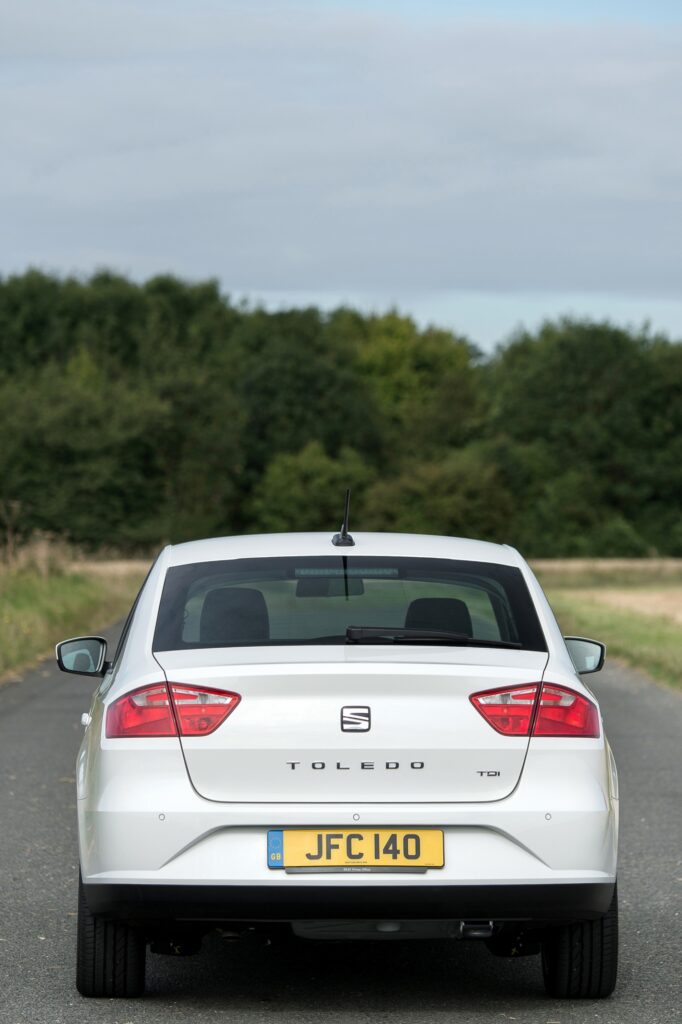
A faulty number plate light is a very common problem that often leads to MOT failure and directly affects road safety. Many drivers underestimate this fault, but the consequences can include hefty fines and extra test costs. In this article you will discover the causes, how to trace the exact fault and the solutions to tackle this issue yourself quickly.
Why the number plate light fails
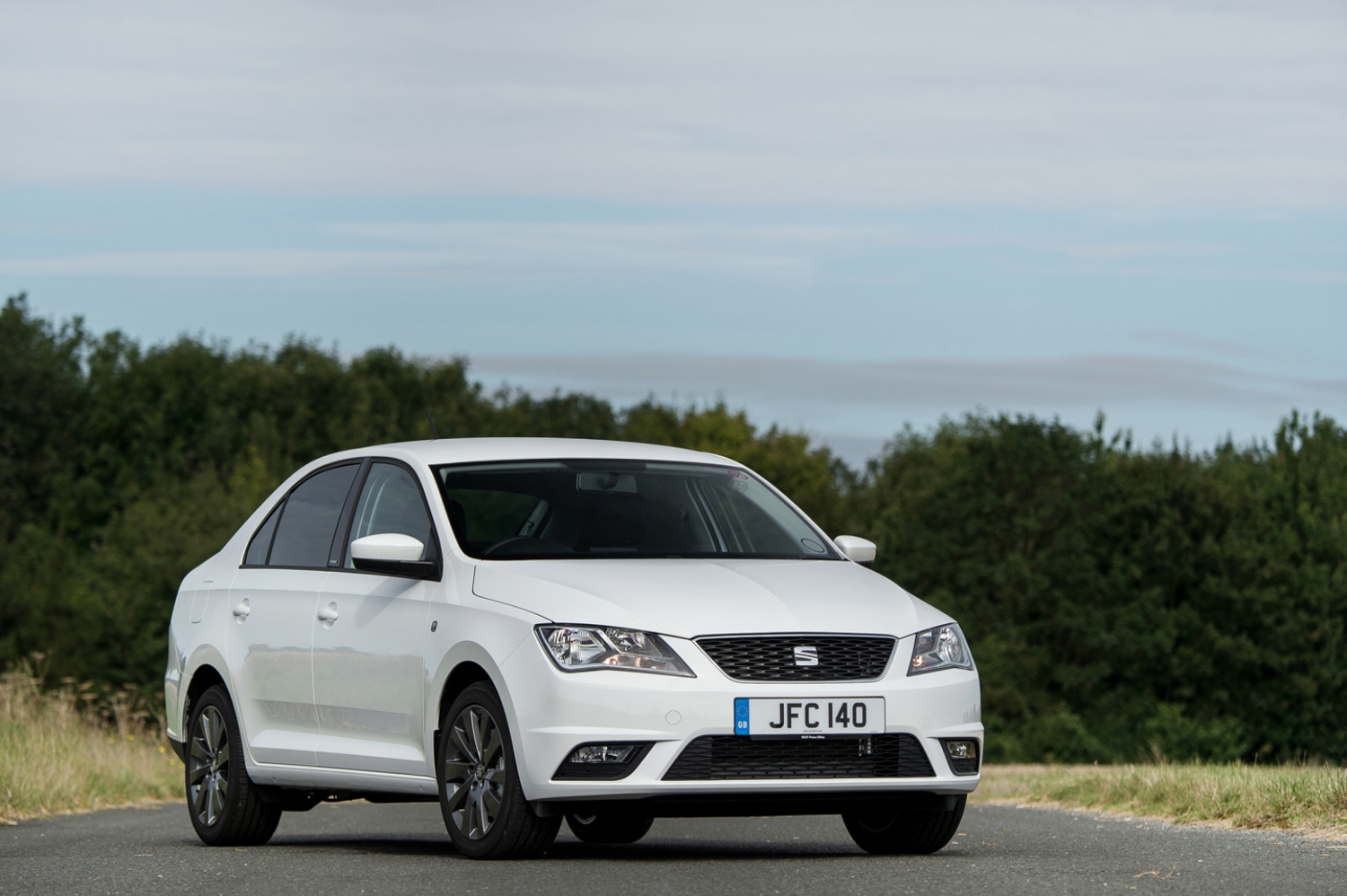
The number plate light often fails due to a combination of technical causes. The most common reason is a blown bulb, but modern LED upgrades are increasingly causing problems as well. In models such as the Seat Toledo this occurs regularly because of the CAN bus system (the communication network between electronic components in the car), which continuously monitors the current consumption of the bulbs.
When you fit LED bulbs instead of halogen bulbs, the system may interpret this as a fault. LEDs (energy-efficient bulbs using semiconductor technology) use only 1 to 2 watts, while the vehicle expects a minimum current draw of 5 to 10 watts. The system then thinks there is an open circuit and shows a fault message on the dashboard.
Other common causes are loose connectors, corrosion in the wiring under the bumper and blown fuses. In older cars, water ingress plays a major role. Moisture penetrates the lamp unit through perished rubber seals and causes short circuits or rust on the contact points.
Recognisable symptoms of a fault
A faulty number plate light gives off a number of signals. The most obvious symptom is of course that the light does not come on at all. But there are also more subtle signs that point to a fault.
- Lamps that blink or flicker, especially after a cold start
- Warning messages on the dashboard such as “Number plate light faulty”
- Bulbs that fail quickly despite being replaced
- Uneven lighting with one side working and the other not
- Light that is too bright or irregular when using LED upgrades
These symptoms occur mainly in cars with modern electronics and CAN bus systems (the communication network between the electronic components). In vehicles built between 2004 and 2012 this is a known problem that is often only noticed during the MOT test.
Does this mean an MOT fail?
Yes, a faulty number plate light leads directly to failure at the MOT. The test centre checks whether both number plates are properly illuminated and whether the light is white and does not flicker. A missing or non-functioning number plate light is regarded as a direct safety risk.
The law states that the number plate must be readable from behind in the dark from a distance of at least 20 metres. If the light does not work or is missing, your car does not meet the legal requirements. This means you must fix the fault before you can have it re-tested, which brings extra time and costs.
Diagnosis in five steps
Before you start with repairs, it is sensible to first identify the exact cause. With a systematic approach you avoid unnecessary expenses and do not waste time on the wrong repairs.
- Visually check the bulbs, fuses and wiring under the boot or bumper. Look for visible damage, corrosion or loose connectors.
- Clean all contact points with contact spray to remove dirt and oxidation. Sometimes this alone solves the problem.
- Measure the voltage at the lamp connection with a multimeter. The voltage should be between 12 and 14 volts while driving.
- Check the fuse for the number plate lighting. You will usually find this in the glove box or engine bay. Consult the manual for the exact location.
- Use an OBD2 scanner (a device that reads fault codes from the engine management) to read any error codes. Codes such as P0562 (which indicates low system voltage) point to voltage issues in the system.
Always also test with the original halogen bulbs if you have installed LEDs. If the lights work properly then, you know that the problem lies with the LED upgrade and not with the wiring or fuses.
‘ In more modern vehicles, however, it is often more complex. ’
Simple bulb replacement or more?
In many cases, simply replacing the bulb is indeed sufficient. In classic cars without advanced electronics you can just fit a new bulb and you are done. This costs at most a few euros and can be done within ten minutes.
In more modern vehicles, however, it is often more complex. If you want to use LED bulbs, you usually need extra components to prevent compatibility problems. A simple bulb change will not solve the issue and can even lead to new warning messages.
The cause can also lie deeper in the wiring or the electrical system. Damaged cables, pierced insulation or defective modules require more than just a new bulb. In those cases, further diagnosis and repair are necessary.
Effective solutions for every situation
The right solution depends on the cause of the fault. For LED upgrades that do not work because of the CAN bus system, you can install a resistor or load resistor (an additional resistor that mimics the consumption of a halogen bulb) in parallel with each bulb. This component simulates the higher wattage that the system expects and costs between 5 and 15 euros per set.
Another option is to choose CAN bus compatible LED bulbs with built-in resistors. These cost between 20 and 40 euros per set, but work straight away without modifications. Do pay attention to the quality, because cheap versions often fail within a few months due to voltage spikes in the on-board network.
In the case of wiring problems, replacing damaged wires and providing watertight sealing is the solution. Use heat-shrink tubing on all connections to keep moisture out. For persistent cases where the dashboard continues to display fault messages, activating the trailer module via the vehicle menu or diagnostic software can help.
The cost of a repair
The cost of repairing number plate lighting varies considerably. A simple bulb change with standard halogen bulbs costs between 5 and 15 euros for parts. If you do this yourself, you will be finished within fifteen minutes with no labour costs.
For LED upgrades with all the necessary components such as resistors or CAN bus modules you pay between 20 and 60 euros. Professional installation at a garage usually costs between 50 and 100 euros in labour, depending on the hourly rate and complexity.
For more extensive repairs such as replacing wiring or fixing software issues, costs can rise to between 100 and 200 euros. A full check with an OBD2 scanner at the garage costs around 30 to 50 euros, but often saves you from unsuccessful repair attempts.
‘ This simple maintenance prevents many future faults. ’
Prevention and maintenance
Prevention is better than cure, especially when it comes to number plate lighting. When upgrading to LED, always choose CAN bus compatible bulbs from a reliable brand. Cheap alternatives from online platforms often cause problems within a short time due to poor voltage control.
Clean the contact points once a year and check the rubber seals around the lamp units for cracks or hardening. If necessary, apply a thin layer of silicone sealant to prevent water ingress. This simple maintenance prevents many future faults.
If in doubt, replace both bulbs at the same time, even if only one seems to be faulty. Bulbs from the same production batch often have a similar service life. By replacing both, you avoid having to do the job again shortly afterwards.
Discover more about car problems
Number plate lighting is just one of many faults you may encounter. On the Carnews website you will find extensive information about electrical problems, lighting, MOT tests and maintenance advice for all car brands. Discover more articles and tips to keep your car in top condition and avoid unpleasant surprises at the test centre.
Frequently asked questions
The most common causes are faulty bulbs (halogen or cheap LEDs that burn out quickly) and problems with the CAN bus, which interprets the lower power consumption of LEDs as a fault. In addition, corrosion, loose or dirty connectors and broken wiring around the rear bumper or boot are very common. A blown fuse or a defective relay can also completely switch off the number plate lighting. Finally, moisture and water ingress in the lamp units regularly cause short circuits and failure.
Start by checking and, if necessary, replacing the bulbs themselves and see whether there is any corrosion or dirt on the holders and contact points; clean these with contact spray. Then check the fuse for the number plate lighting (the location is given in your manual) and replace it if it has blown. Use a multimeter to measure whether there is 12–14 V at the connector; if there is voltage and new bulbs still do not work properly, the cause is often the wiring or a bad earth, and you should check and, if necessary, repair cables and connectors. If you are using LED bulbs and get error messages, replace them with CAN bus compatible LEDs or fit a suitable resistor (load resistor) in parallel so that the system no longer sees a fault.
Driving with non-functioning number plate lighting is a traffic offence, because your number plate must always be clearly legible; you can receive a fine for this. At the MOT, defective or missing rear number plate lighting is a reason for failure. Your car will then fail the test until the lighting is repaired.
For number plate lighting, W5W (T10) or C5W (festoon) bulbs are usually suitable; for LED replacement you must choose the correct fitting type and 12 V system voltage. When buying, look for “CAN bus compatible” or “error free”, so that the vehicle’s electrical system does not show a fault due to the lower power consumption of LEDs. Choose quality LEDs that can handle voltage spikes (up to approx. 14.4 V) and are made watertight. Also check whether the light colour (usually 5,000–6,000 K white) and light output are legally permitted and correspond to the original lighting.
Yes, there are points to watch out for depending on the make and model, especially with cars that have CAN bus monitoring of the lighting. When replacing halogen with LED bulbs, power consumption that is too low can cause fault messages or flickering lights, which means CAN bus compatible LEDs or additional resistors are required. The location of the fuses and the sensitivity to voltage spikes and water ingress also differ per model, which affects the choice of bulbs and the way they are fitted. Always consult the make-specific wiring diagram and preferably choose kits that are explicitly intended for that model.