
Diesel particulate filter blockage in the Renault Trafic 2.0 dCi is not an isolated incident but a structural risk, especially with short journeys and city driving. The engine management system often blocks regeneration because of fault codes, leading to loss of power and warning lights. The cause rarely lies in the filter alone, but rather in sensors, interrupted cleaning cycles and oil dilution. Read how to recognise this at an early stage and what the best approach is.
Why the diesel particulate filter on the Renault Trafic often fails
The diesel particulate filter in the Renault Trafic diesel versions does not just fail out of nowhere. The system is designed to trap soot particles and burn them off regularly during regeneration. However, many Trafic users experience problems because of their driving profile. Short trips, city traffic and stop-start use mean the exhaust never reaches a high enough temperature for complete regeneration.
On average, the system automatically starts a cleaning process every 300 to 500 kilometres. When regenerations are interrupted, soot remains behind in the filter and builds up. This leads to saturation and eventually a blockage. The engine management system responds by storing fault codes such as P253F and P2002, which then block further regeneration attempts.
Oil dilution is another factor. During failed regenerations, unburnt fuel ends up in the engine oil sump. This degrades the oil quality and then hinders new regeneration attempts. A vicious circle develops in which the filter becomes increasingly blocked.
Recognisable symptoms of a blocked diesel particulate filter
You will usually first notice diesel particulate filter problems from an illuminated or flashing warning light on the dashboard. This is often accompanied by the message “Start cleaning particulate filter” or a similar DPF/FAP warning (Diesel Particulate Filter / Filtre à Particules). It is wise not to ignore this message. Continuing to drive without taking action will worsen the problem and lead to more serious fault codes.
You will also often notice a clear loss of power. The engine responds more slowly to the accelerator pedal and, in severe cases, the vehicle switches to limp-home mode. This is a protection mode to prevent further engine damage. Some owners also notice that the engine tries to regenerate more often and more frequently than before.
Technical symptoms that can be read out using diagnostic equipment include:
- Fault code P253F: regeneration cycle failed or interrupted
- Fault code P2002: diesel particulate filter efficiency too low, filter saturated
- Increased pressure values in the filter (measured by differential pressure sensors)
- Abnormal exhaust gas temperatures indicating a restricted exhaust
How do you force regeneration on the Renault Trafic?
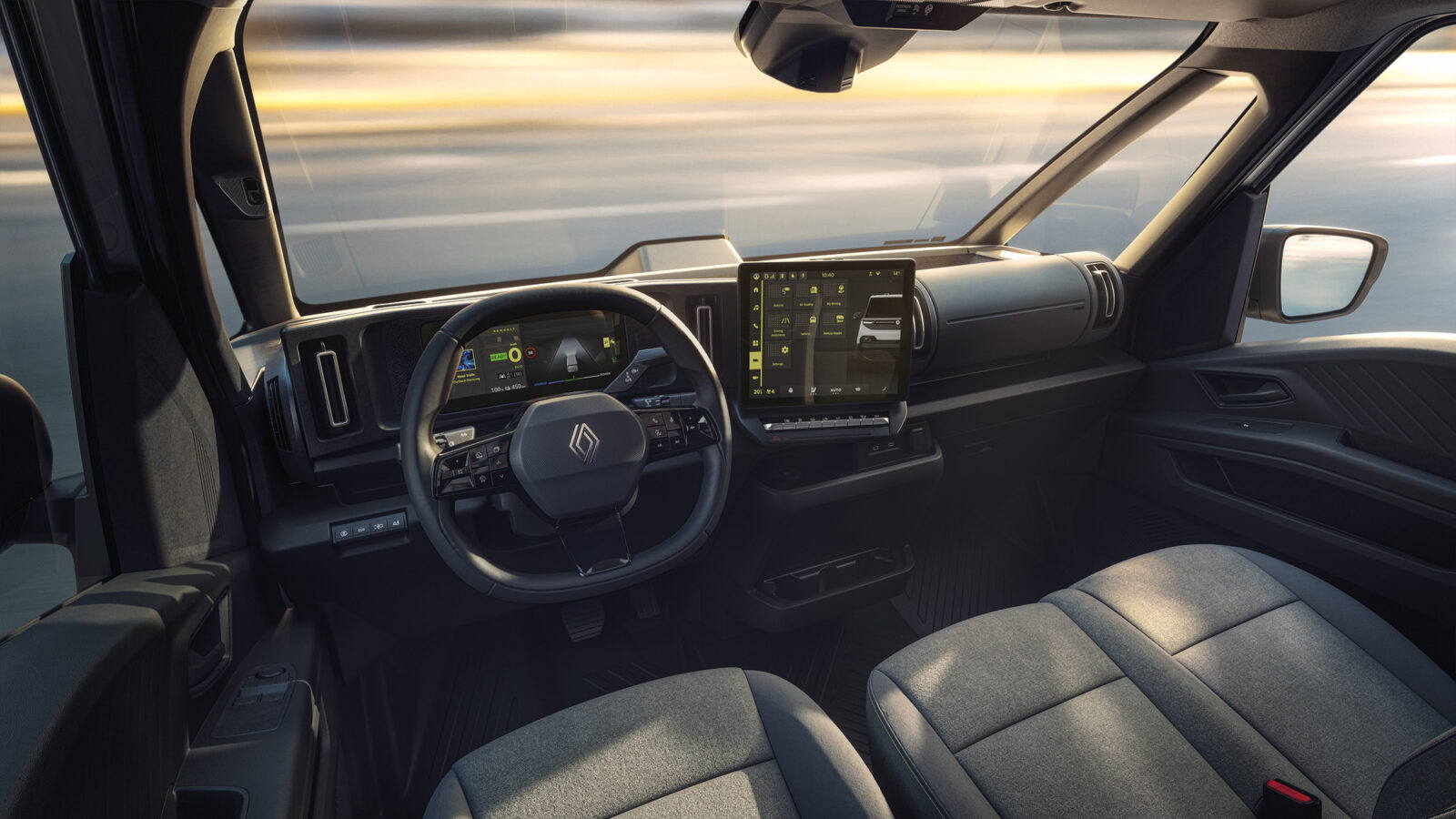
When the warning light appears, you can still start a regeneration yourself. This is only possible as long as the engine management system still allows the cleaning process. Park the vehicle in a safe place, preferably outdoors and not in an enclosed space. Leave the engine running and go to the particulate filter cleaning option via the on-board menu.
The process takes around 40 minutes. During this time the engine must not be switched off. The system increases the exhaust gas temperature to burn off the soot actively. You will notice that the revs are slightly higher and that heat is coming from the exhaust. After a successful regeneration, the warning light should go out automatically.
Note: if the system refuses to start regeneration or if the warning keeps returning, a visit to the dealer is necessary. A hidden fault code often blocks the process. This must first be read out and resolved before regeneration is possible.
When does manual regeneration no longer work?
On some Trafic models, the diesel particulate filter is so saturated that regeneration is no longer possible. The engine management system blocks the process. This happens after several failed attempts and accumulated fault codes. In that case the filter must be professionally cleaned or replaced. An approved garage can read out, assess and, if necessary, chemically clean or mechanically flush the filter.
Sensor issues can also block regeneration. Differential pressure sensors, exhaust gas temperature sensors and even faulty glow plugs can interfere with the system. Without a correct diagnosis, the problem will keep coming back, even after a new regeneration or filter replacement.
Replace or clean: what is the best choice?
If the diesel particulate filter is genuinely defective, you broadly have three options. The first is professional cleaning. Specialist companies flush the filter through chemically or using pressure equipment. This works well for filters that are still mechanically intact but saturated with soot build-up. The costs are usually between €300 and €600, depending on the method.
The second option is replacement with a brand-new original filter. This is more expensive, with prices starting from €800 to €1,500 including fitting. The advantage is that you have certainty about quality and service life. However, with recurring problems caused by sensor faults or your driving profile, a new filter does not solve anything structurally.
A third option also exists. Some parties suggest completely removing the diesel particulate filter. However, this is illegal in the Netherlands and across Europe and will lead to your vehicle failing its MOT (APK). In addition, the engine management system may remain in fault mode, meaning the engine does not run optimally. Experts strongly advise against this.
Practical tips to prevent diesel particulate filter problems
Prevention starts with conscious driving behaviour. Regularly drive a longer journey of at least 20 to 30 minutes on the motorway or an A-road. This allows the filter to reach temperature and burn off soot completely. Businesses that use the Trafic only for short city trips face a challenge, but in the long term it saves expensive repairs.
Check the oil level and oil quality regularly. If you suspect fuel dilution of the oil, it is advisable to have an oil change carried out. This prevents contaminated oil from causing new regeneration problems. Always use the oil quality specified by Renault.
If you repeatedly get particulate filter warnings, also have the underlying systems checked:
- Glow plugs that may be faulty
- Differential pressure sensors that are giving incorrect readings
- Exhaust gas temperature sensors that are disrupting regeneration
- Stored fault codes that are blocking regeneration
Do not clear fault codes without resolving the cause. Many mechanics notice something very clear: a quick reset without repair only provides temporary relief. The warning returns within a few days because the underlying problem is still there.
What do owners say in practice?
Experiences from Trafic owners on car forums and social media confirm this picture. In particular, users who drive many city kilometres or do short-distance delivery work suffer from recurring diesel particulate filter problems. Many report that replacing the filter only helped temporarily, until the sensors were replaced as well.
The timing of regenerations also stands out. Some owners notice that the vehicle wants to regenerate precisely during a short trip, which results in the process being interrupted as soon as the engine is switched off. This makes the problem worse. Being aware of this mechanism helps you plan or wait out the regeneration cycle better.
Mechanics also stress the importance of a thorough diagnosis. The diesel particulate filter is often not the primary cause, but the result of a combination of driving behaviour, sensor faults and software issues. A holistic approach produces better results than simply replacing parts.
When should you go to the dealer?
Go to an authorised Renault dealer or specialist if manual regeneration does not work or the warning light stays on after a successful cycle. Professional diagnosis is also necessary if the warnings reappear repeatedly within a short period. Reading out fault codes and live data provides insight into the real cause.
Make sure the garage does not just check the filter, but the entire exhaust system, sensors and engine management. A targeted approach saves money in the long term and prevents frustration from recurring complaints. If in doubt, ask for a second opinion or have the vehicle checked by an independent specialist with Renault experience.
On the Carnews website you will find much more information about common problems with Renault models, maintenance tips for vans and practical guides for solving technical faults. Discover more articles and stay up to date with everything you need to know as a car enthusiast or van driver.
Frequently asked questions
The most common causes are frequent short journeys and interrupted regenerations, which cause the diesel particulate filter to become saturated. In addition, underlying faults (such as defective glow plugs or other fault codes) often prevent regeneration from taking place. In practice, sensor problems around the exhaust and diesel particulate filter system are also often mentioned as a cause. Oil dilution due to failed regenerations can also contribute to persistent DPF problems on the Renault Trafic.
You can recognise an (almost) faulty or blocked diesel particulate filter on your Renault Trafic from an illuminated or flashing DPF warning light or a message such as “Start cleaning particulate filter” on the dashboard. Other early signs are noticeable loss of power, an engine that goes into limp-home mode, or the filter regenerating (cleaning) much more often than normal. A rough-running engine or increased fuel consumption can also point to a blocked diesel particulate filter. As soon as you notice these symptoms, you should carry out the regeneration procedure or have the vehicle read out by a specialist to prevent damage.
A faulty or blocked diesel particulate filter on a Renault Trafic often leads to noticeable loss of power and sometimes limp-home mode, which severely reduces driving performance. The engine then has to work harder and cannot breathe properly, which usually results in higher fuel consumption. In cases of severe blockage, regeneration can be blocked and the power is limited even further. This not only makes the vehicle slower and less smooth, but also makes it harder to drive at more economical speeds.
The costs for repairing or replacing the diesel particulate filter on a Renault Trafic usually range roughly between €600 and €1,500, depending on the model, engine variant and whether original or aftermarket parts are used. Professional cleaning or forced regeneration is often cheaper and can cost around €150 to €400.
Yes, you can limit diesel particulate filter problems by regularly driving longer journeys so the filter can complete a full regeneration, and by never ignoring particulate filter cleaning warnings. Make sure you carry out the manual cleaning procedure immediately when the system requests it and do not interrupt it. During servicing, have the oil level and oil condition checked, because oil dilution can block regeneration. If the warnings keep coming back, it is sensible to have the sensors, glow plugs and fault codes checked specifically, not just the filter itself.