
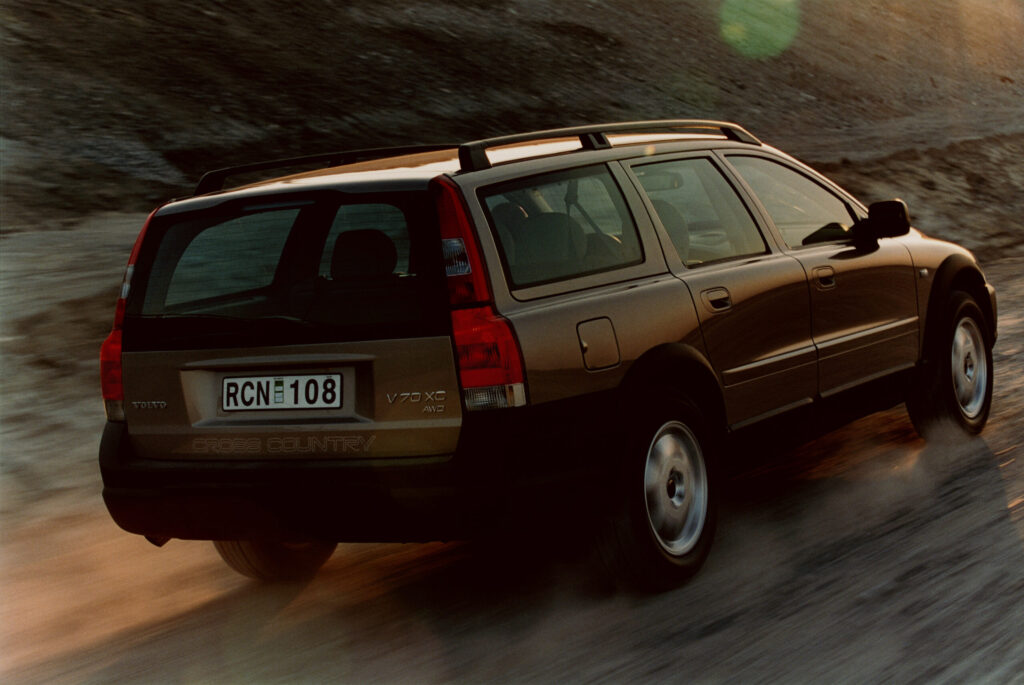
In some models, the automatic gearbox is a weak point that can cause jerky gear changes, delayed responses, and slippage. These faults are not only frustrating while driving, but can also lead to expensive repairs if ignored for too long. Read on to learn what you need to know to recognise problems early and avoid high costs.
What transmission slippage means and how to recognise it
Slippage occurs when the automatic transmission engine speed increases, but the drive is not transferred directly or fully to the wheels. You will notice this primarily as a higher engine speed without proportional acceleration. The car feels as though it is struggling to transfer power, even though the engine is responding to the accelerator.
This problem occurs regularly in Volvo XC70 models from generations II and III. Owners report stuttering acceleration, jerky gear changes, and delayed reactions when accelerating. In practice, this is sometimes described as “the clutch in the automatic transmission seems to slip”, especially when pulling away or at low speeds.
Symptoms indicating transmission slippage include:
- Engine speed increases without a corresponding increase in vehicle speed
- Jerky shifting when changing up or down
- Delayed response after accelerating or when selecting a gear
- The automatic transmission shifts poorly when cold, or only improves after warming up
- Dashboard messages such as ‘transmission service required’
‘ Engine problems can mimic automatic transmission complaints. ’
Common causes of automatic transmission problems
Outdated or contaminated ATF (the special oil for automatic transmissions) is one of the most frequently cited causes. The oil provides lubrication and hydraulic pressure within the gearbox. If the oil becomes contaminated or is too old, shifting quality deteriorates and slippage complaints may increase. Flushing or changing the oil is mentioned in many practical scenarios as the first step.
Problems with control components such as the TCM (the electronic control unit for the automatic transmission) or related electronics can also cause jerky shifting or error messages. These electronic controls regulate the shift timing and pressure in the gearbox. A fault here can cause the same symptoms as mechanical wear.
Wear in the gearbox itself leads to genuine mechanical slip, especially if complaints have been present for a long time. Internal components such as clutch plates, valves, and gaskets can wear out over time. This leads to a loss of pressure and reduced power transfer.
Indirect causes that mimic automatic transmission problems
Not every shifting problem immediately means a defective gearbox. Engine problems can mimic automatic transmission complaints. In several practical cases, the air mass meter, throttle body, and automatic transmission oil were checked to rule out causes. A contaminated throttle body or defective air mass meter can cause the engine to deliver irregular power, making it look as if the automatic transmission is not shifting properly.
With older electronics, it is wise to visually inspect plugs, wiring, and earth connections for corrosion or contact problems. A poor connection can cause control faults that look like a defective gearbox.
Practical tips for diagnosis and inspection
Begin by checking the condition and level of the ATF. Oil is an inexpensive first cause to rule out. Discoloured or burnt oil often smells scorched and indicates internal wear or overheating.
Have the car scanned for fault codes, even if there is no clear gearbox error visible yet. Many modern automatic transmissions record early faults that do not yet trigger a warning light. This information helps in estimating the cause and urgency.
Check whether complaints also occur during cold starts, warm driving, slow crawling, and firm acceleration. That pattern helps to distinguish the cause. Some problems only occur in cold conditions, while others get worse after warming up. This information is valuable when making a diagnosis.
The following steps will help with a targeted check:
- Check the ATF for colour, smell, and level
- Scan the car for fault codes in the transmission system
- Test shifting behaviour at different temperatures and driving conditions
- Rule out engine-related causes such as air mass meter and throttle body
- Inspect electrical connections and plugs on the gearbox
How much does transmission repair or replacement cost
The costs for transmission repair vary significantly depending on the nature of the problem. An oil change or flush costs a few hundred euros and in many cases can fix minor complaints. This is the most cost-effective first step.
Repairing internal parts such as valves, solenoids, or clutch plates typically costs between 1,000 and 2,500 euros. This requires removing the gearbox and replacing worn components. Labour costs make up a large part of this repair.
Replacing a complete automatic transmission costs between 2,500 and 5,000 euros or more, depending on the model and whether you choose a new, reconditioned, or used gearbox. For some models, reconditioned units are a reliable and affordable option.
Continuing to drive with slip can cause extra wear and make the repair significantly more expensive. What begins as an oil problem can grow into a complete overhaul if you wait too long to intervene.
Can regular maintenance prevent transmission problems
Yes, regular maintenance significantly reduces the chance of transmission faults. Plan ATF maintenance in time and do not wait until the gearbox actually slips. Most manufacturers recommend changing the oil between 60,000 and 100,000 kilometres, depending on usage and driving conditions.
If a flush is performed, it must be done professionally. Incorrect maintenance can sometimes make existing problems visible or worse. A wrong flushing method can loosen wear particles that then damage other components.
After maintenance, take a test drive with different driving scenarios. Test city traffic, inclines, motorway driving, and slow manoeuvring to check if the shifting behaviour has improved. Note when any slip occurs: only when cold, only when warm, at what gear, and at what engine speed. This information is valuable for follow-up diagnosis.
Signals that you should not ignore
Forums and user experiences often report that an automatic transmission starts acting strangely before it actually fails. Jerking first, then slip, then error messages. This progression gives you the chance to intervene before the damage becomes too great.
Look out for these warning signs:
- Changes in shifting behaviour that gradually get worse
- Increasing delay between using the accelerator and the car’s response
- New sounds such as banging, clicking, or whirring when shifting
- Oil stains under the car after parking
- Burning smell during or after driving
On the Carnews website, you will find comprehensive information about common car problems, maintenance advice, and technical details for various models. Discover more tips to keep your car in top condition and avoid costly repairs.
Frequently asked questions
You usually recognise early-stage slippage by a clearly higher engine speed without the car gaining speed proportionally. You may also notice that the car reacts in a stuttering or jerky way when accelerating or at low speeds. A delayed response when accelerating or when shifting into “D” or “R” (the car only starts moving after a slight pause) is also an early sign. If this keeps happening, it is wise to have the automatic transmission oil and any fault codes checked.
The most common causes of slippage and faults in automatic transmissions are outdated or contaminated ATF, which causes shift quality to deteriorate. In addition, problems in the electronic controls (such as TCM and sensors) regularly cause jerky or delayed shifting. Internal wear of friction plates and other mechanical parts in the gearbox itself can also cause real slip. Finally, engine-related problems (e.g., air mass meter, throttle body) can cause complaints that strongly mimic transmission slip.
With a slipping automatic transmission, wear on the torque converter, friction plates, and other internal parts increases significantly, causing the gearbox to be damaged faster and more severely. The higher heat generation can burn and contaminate the ATF, which further worsens lubrication and operation. As a result, shift quality and reliability can quickly deteriorate, eventually leading to complete failure of the transmission. Expected repair costs also typically rise sharply, for example, for an overhaul or replacement of the entire gearbox.
Prevent slippage by having the automatic transmission oil (ATF) checked and changed or flushed according to the recommended maintenance interval. Have the transmission scanned periodically for fault codes and also check the control/electronics, so that small control problems do not cause major damage. Ensure the engine and sensors (such as the air mass meter and throttle body) are in good condition, because engine problems can put extra load on the gearbox and worsen slip complaints. Do not ignore early symptoms such as jerky shifting, delayed reaction, or rising engine speed without acceleration, but have these investigated professionally immediately.
It is economically sensible to repair an automatic transmission if the cause is relatively limited (for example, contaminated oil, a valve control problem, or limited wear) and the repair costs are clearly lower than an overhaul or replacement. Replacing or overhauling becomes more attractive as soon as there is extensive internal wear or structural damage, the car has already covered many kilometres, and there is a high chance that new expensive problems will follow after a partial repair. The residual value and expected remaining life of the car also play a role: for an older car with a low market value, an expensive overhaul or a new gearbox is often not profitable. In practice, you should therefore first have a diagnosis and cost estimate made; if the recovery costs approach a large part of the current market value or the price of an overhaul, replacing it is usually more economically sensible.