
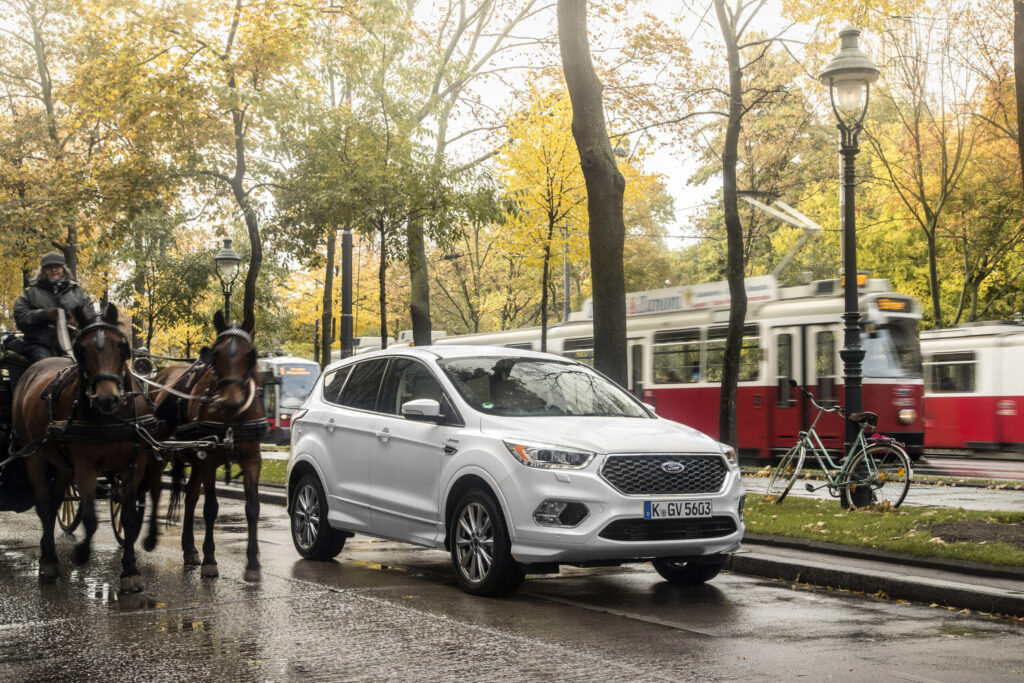
The Ford Kuga with PowerShift automatic gearbox is known for persistent transmission complaints such as jerky gear changes, hesitation when pulling away and warning messages on the dashboard. These problems are often caused by faults in the electronic control system, worn clutches or contaminated transmission fluid. Want to know what to look out for with your Ford Kuga and when you should take action? Read on for clear warning signs and practical tips.
Which symptoms point to transmission problems?
Transmission complaints in the Ford Kuga usually start subtly and gradually become more serious. The most frequently reported symptoms are linked to the PowerShift automatic gearbox, a dual‑clutch automatic (two separate clutches that alternate to provide smooth gear changes). This transmission wears faster than average. Electronic faults are also common. Do you recognise one or more of the signs below? Then it is advisable to have a diagnostic check carried out quickly.
- Jerky or unsettled gear changes when pulling away or at low speeds
- Delay or hesitation when accelerating, as if the clutch slips briefly before the car responds
- Shuddering or vibration while accelerating or at low revs
- Skipping gears or unpredictable shifting
- Warning messages such as “Transmission Limited Function” or a transmission warning light
- Burning smell coming from the drivetrain or gearbox
- Difficulty selecting D, R or other positions
These complaints are particularly recognisable in older versions with the 6‑speed DCT PowerShift. Some owners report that the fault started with slight jolts, but after a few weeks worsened to complete loss of drive in certain gears.
‘ Although the PowerShift is sometimes described as maintenance‑free, in practice timely replacement of fluid and filter is very important. ’
What are the causes of transmission faults?
The problems with the Ford Kuga transmission are rarely down to a single component. In most cases there is a combination of mechanical wear and electronic faults. Below are the most common causes.
Worn or overheated clutch packs
The dual clutch in the PowerShift can overheat due to intensive use or a lot of stop‑start city and traffic‑jam driving (frequent starts and stops at traffic lights and junctions). This leads to slip, jolts and vibration. The clutch plates wear faster than normal, especially when the transmission fluid is not changed regularly.
Faulty Transmission Control Module
The Transmission Control Module (the transmission control unit) is the electronic brain that controls the gearbox. A fault in this module causes unpredictable shifting, loss of gears or sudden dropping into neutral. Fault codes stored in this module are often the first indication of an electronic problem.
Contaminated or excessively old transmission fluid
Although the PowerShift is sometimes described as maintenance‑free, in practice timely replacement of fluid and filter is very important. Contaminated fluid disrupts hydraulic pressure and accelerates wear of internal components.
Leaks around shafts or seals
If transmission fluid leaks to the outside or ends up on the clutch, it significantly disrupts operation. Leaks often arise from aged oil seals or damaged gaskets.

How do you spot a faulty PowerShift in a used Kuga?
Buying a used Ford Kuga? Then it is wise to check the transmission carefully before you decide to purchase. The PowerShift has a mixed reputation. Not every car has issues. Pay attention to the following points during a test drive and inspection.
Start the car and check whether the gearbox shifts smoothly when pulling away. Also drive a stretch in town with plenty of traffic lights to see whether the transmission reacts jerkily at low speeds. Accelerate firmly and check whether all gears are selected without shuddering or slip.
Ask the seller about the service history. Has the transmission fluid ever been changed? Have any software updates been carried out by a Ford dealer? Check whether any warning messages appear on the dashboard. Even temporary warnings can indicate an underlying problem.
If in doubt, have a specialist read out the fault codes stored in the system (error messages in the on‑board computer). Faults in the control unit or sensors are often recorded before they become noticeable while driving. A dirty underbody or traces of transmission fluid under the car are clear warning signs.
What does it cost to repair a leaking transmission?
The cost of repairing transmission problems in the Ford Kuga varies widely, depending on the cause and the extent of the wear. A minor job such as replacing an oil seal or sensor costs a few hundred euros. A full overhaul or replacement of the clutch will quickly run into several thousand euros.
For leaks around shafts or oil seals, garages charge on average between 300 and 600 euros, including labour. If the Transmission Control Module (gearbox control unit) needs to be replaced or reprogrammed, the price is between 500 and 1,200 euros. A complete overhaul of the PowerShift transmission usually costs between 2,500 and 4,500 euros. This includes new clutches and mechatronics (the combined control and hydraulic unit).
Some owners choose to have a reconditioned gearbox fitted. This can be more cost‑effective than a repair at the dealer, but it does require a reliable supplier who offers a warranty. Do not forget that postponing maintenance often leads to more serious damage and therefore higher costs.
Practical tips to limit transmission damage
Prevention and timely intervention make the difference between a small repair and an expensive overhaul. With these tips you reduce the risk of transmission problems or prevent existing issues from getting worse.
- If you see a warning such as “Transmission Limited Function”, have a specialist or Ford dealer read out the fault codes in the system (error messages in the on‑board computer) straight away
- Do not continue driving for long with jolts, slip or a burning smell; this causes additional damage to the clutch or mechatronics
- Replace transmission fluid and filter in good time, even if the manufacturer describes the unit as maintenance‑free
- Check whether software updates are available for your model year; some complaints have been improved through software
- If the car pulls away roughly, also have the battery and electrical supply checked. A weak on‑board voltage can disrupt the operation of the transmission.
- Avoid heavy stop‑start and city driving where possible and, when stationary, shift to N instead of leaving it in D

When should you go to the garage?
Do not ignore early warning signs. Is the transmission starting to jolt slightly or is there a delay when pulling away? Have this checked immediately. In many cases the problem starts small but quickly escalates if nothing is done. A software update or fluid change can already be enough at an early stage to prevent more serious damage.
If a warning message appears on the dashboard, do not keep driving. The transmission may switch to limp‑home mode, where only certain gears are available. This protects the gearbox temporarily but does not solve the problem.
If you smell burning or notice that the gearbox is overheating, stop as soon as possible. Continuing to drive can cause permanent damage to the clutches and internal components. Let the car cool down and call a breakdown service if the fault is serious.
Want to know more about the Ford Kuga and other models?
On the Carnews website you will find extensive information about common problems with different car makes and models. Think of engine issues, electrical faults, maintenance tips and buying advice for used cars. Discover more articles and increase your knowledge about the car you drive or are considering buying.
Frequently asked questions
You can recognise early transmission problems in a Ford Kuga (especially with a PowerShift automatic) by jerky or unsettled gear changes and slight hesitation or delay when pulling away. Shuddering or slip during gentle acceleration can also be an early sign. In addition, warning messages on the dashboard, such as “Transmission Limited Function” or other drivetrain faults, are important to take seriously. A burning smell from the drivetrain or difficulty selecting D or R indicates a more advanced problem that needs urgent attention.
The most common causes of transmission problems in the Ford Kuga are wear or overheating of the (dual) clutch packs in the PowerShift automatic gearbox and faults in the Transmission Control Module (TCM) or other electronic control systems. In addition, aged or contaminated transmission fluid and possible oil leaks around seals and shafts often play a role. These problems manifest themselves as jerky shifting, vibration, slip and warnings such as “Transmission Limited Function”.
Common repair options for transmission problems in the Ford Kuga (particularly with PowerShift) include: software update and reset/adaptation of the gearbox, changing the transmission oil and filter, replacing or overhauling the clutch pack and, if necessary, replacing/overhauling the Transmission Control Module (TCM) or carrying out a complete gearbox overhaul. A simple diagnosis, software update and oil/service can often cost between about €150 and €500. Replacing clutch packs and/or TCM usually comes out between roughly €800 and €2,000, depending on parts and labour costs. A full overhaul or exchange gearbox can, depending on the supplier and extent of the damage, run to around €2,000–€4,000.
Yes, there are several measures that can help to prevent or delay transmission problems in a Ford Kuga. Make sure the transmission fluid (and filter, if applicable) is changed on time, in line with or even earlier than the service schedule, and check regularly for leaks. In addition, if there are complaints or warnings such as “Transmission Limited Function”, have the fault codes read out immediately and any available software updates carried out by a specialist. Do not continue driving with jerky shifting, slip or a burning smell, as this accelerates wear to the clutch and control systems.
Transmission problems in the Ford Kuga – especially with PowerShift automatics – often cause jerky or unsettled shifting and delay when pulling away. The driving behaviour becomes less predictable due to vibration, slip during acceleration and sometimes unexpected changes in shift behaviour. This affects driving comfort and the feeling of control, and in severe cases can lead to limited or lost drive. In addition, continuing to drive with these complaints can lead to extra wear and higher repair costs.
The Ford Kuga – particularly versions with the PowerShift automatic – is regarded as being more prone to transmission problems than many competing SUVs in the same class. Complaints about jerky shifting, delay when pulling away, vibration and drivetrain fault messages are reported relatively often. As a result, its transmission reliability is generally rated lower than that of several Japanese and some European rivals. These problems are far less common in manual versions.