
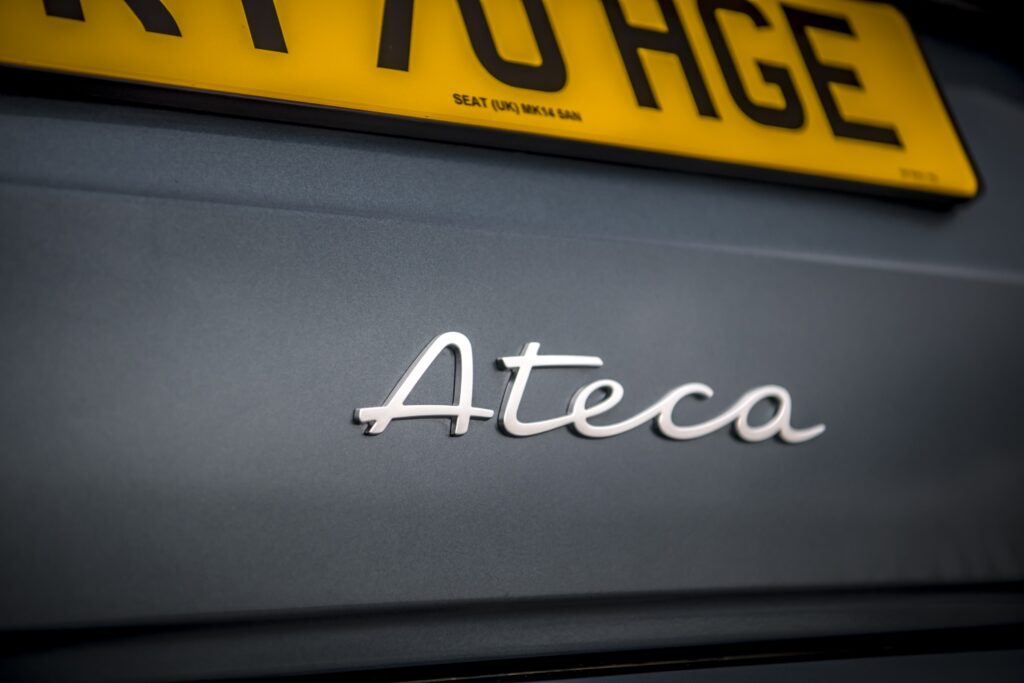
The 2016–2018 Seat Ateca has a software issue that means the dashboard does not give a warning when an indicator fails. This creates a road‑safety risk, because other road users cannot see which direction you are indicating. Seat has therefore started a recall for a free software update. Below you can read exactly what is going on and how to check whether it is your car’s turn.
Why the Seat Ateca gives no warning for a faulty indicator
In a modern car a warning light normally appears on the dashboard as soon as an indicator fails. This system uses the CAN bus (a digital communication network that allows the electronic modules in the car to communicate with each other). However, the Seat Ateca from the first years of production has a software error in the Body Control Module (the control unit that manages various electrical functions), which means this warning does not appear.
The result is that as a driver you do not notice that your indicator is not working. Other road users cannot see which way you are going, which can cause dangerous situations when merging, turning or changing lanes. Seat acknowledges this problem and has established that it is purely a software issue.
The fault occurs mainly in vehicles built between the end of 2016 and the beginning of 2018. The problem is not caused by a physical defect in the bulbs themselves, but by an incomplete monitoring algorithm in the control software for the lighting system.
How to check whether your Seat Ateca is covered by the recall
Owners of a Seat Ateca from the mentioned years of manufacture can check in several ways whether their car is eligible for the free software update:
- Contact your nearest Seat dealer and give them your registration number or VIN (chassis number)
- Check the official Seat website, where you can use your registration number to see whether there are any outstanding recalls
- Check any letters from Seat or the RDW (Netherlands Vehicle Authority), as affected owners are proactively informed
- Call Seat customer service with your vehicle details to hand
The recall is completely free of charge and consists only of a software update carried out by an authorised Seat workshop. The workshop connects a diagnostic computer to the OBD port (the diagnostic connector of your car) and performs the update of the Body Control Module. This usually takes between 30 and 60 minutes.
If your car is covered by the recall, it is sensible to make an appointment quickly. Until the update has been carried out, there remains a risk that you are driving with a faulty indicator without realising it. Therefore, regularly check your lights yourself by walking around your car while the indicators are on.
How to replace an indicator module
If an indicator really is faulty, you can sometimes replace it yourself. In the Seat Ateca the indicators are located in different positions: in the bumpers at the front and rear, and in the exterior mirrors. The method differs per location.
Replacing a front indicator
- Open the bonnet and locate the rear of the headlamp unit
- Turn the bulb holder a quarter turn anti‑clockwise and pull it out
- Remove the orange bulb by pressing it in slightly and turning it anti‑clockwise
- Fit the new bulb and reassemble everything in reverse order
Replacing a rear indicator
- Open the tailgate and remove the trim on the inside of the rear light unit
- Undo the bulb holder and pull it towards you
- Replace the orange bulb and refit the holder
- Refit the trim in its place
Replacing a mirror indicator
Replacing the indicator in the exterior mirror is more complex. You have to carefully prise off the mirror cover with a plastic wedge, taking care to avoid scratches. You can then access the LED module (the LED component of the mirror light). If you are unsure about the correct procedure, it is best to consult a mechanic, as removing it incorrectly can cause damage.
Be careful when converting indicators to LED
Many Ateca owners choose to replace the standard bulbs with LED variants (energy‑efficient diode lighting) for a more modern look and lower energy consumption. However, not all aftermarket LED bulbs are fully compatible with the Ateca’s CAN bus system.
Some LED modules can cause electromagnetic interference (disruptive electrical signals that affect other systems). Owners report, for example, that the DAB+ radio system (digital radio reception) suddenly cuts out when the indicators are used after fitting cheap LED bulbs. This is because certain LED circuits produce high‑frequency signals that disrupt vehicle communication.
If you still want to switch to LED lighting, choose bulbs that are specifically offered as Seat Ateca compatible or use genuine Seat LED units. These have been tested for electromagnetic compatibility and do not cause conflicts with the Body Control Module or other electronics.
‘ Regular maintenance of the electrical system prevents many problems. ’
Other electrical problems with the Seat Ateca
In addition to the indicator warning issue, the Seat Ateca sometimes has other electronic faults as well. Owners occasionally report inexplicable dashboard warnings, failure of the infotainment system or faults in the NOx emission system (exhaust after‑treatment for nitrogen oxides) with fault code P20F6 (indicating an emission fault).
With such problems it often helps first to disconnect the battery for a few minutes so the system can reset. If the faults keep returning, professional diagnostics with VCDS (diagnostic software for VAG cars) or a comparable scanner is necessary. A Seat dealer has the right equipment to read out which module is generating a fault code.
Regular maintenance of the electrical system prevents many problems. Check the battery voltage, make sure all earth connections are clean and tight, and inspect the plug connections at the lighting systems for corrosion.

Discover more about the Seat Ateca on Carnews
On the Carnews website you will find much more information about common problems, maintenance tips and experiences with the Seat Ateca and other models. Whether you have technical questions about your own car or simply want to learn more about car technology and maintenance, there is always an article that will help you further. Take a look and discover what other car enthusiasts share about their driving experience.
Frequently asked questions
Typical faults are those where, after fitting aftermarket LED indicators or reversing lights, the DAB+ radio or other electronic systems cut out as soon as you use the indicators. This is usually due to electromagnetic interference or incompatibility with the CAN bus, which disrupts the vehicle electronics. There are also sometimes inexplicable dashboard warnings and general electrical system errors that apparently relate to the lighting. The meaning is therefore that non‑compatible LED kits can disturb the Ateca’s communication network and infotainment system.
First check whether all indicator bulbs are working (front, rear and in the mirrors) and replace any faulty bulbs with the correct type, preferably genuine Seat parts. Then check the holders, plugs and wiring for corrosion, loose connectors or damage and clean or secure them if necessary. If you have recently fitted LED bulbs, test whether the fault disappears by temporarily reverting to the original halogen or OEM LED bulbs. Finally, check the fuses for the lighting in the fuse box according to the owner’s manual, and only replace a blown fuse with one of the same rating.
You should definitely go to a specialist (preferably SEAT‑authorised) garage with indicator and blinker problems if the fault keeps coming back, several electrical systems fail at the same time (such as DAB+ or other lighting) or if there are persistent fault codes in the system. If you put this off, you risk further damage to the electrical system, faults in CAN bus communication and possible failure of important safety functions while driving.
You can reduce faults in indicators and blinkers by regularly checking all light units and plug connections for corrosion, loose contacts and damaged wiring. Avoid cheap aftermarket LED bulbs and preferably use genuine Seat parts or modules that are demonstrably CAN bus compatible. It is best to have electrical modifications (such as LED conversions) carried out professionally, with attention to good earthing and EMC control (such as ferrite cores and correct cable routing). Also check the battery voltage and earth connections regularly, as voltage drops and poor earths are often the cause of random lighting faults.