
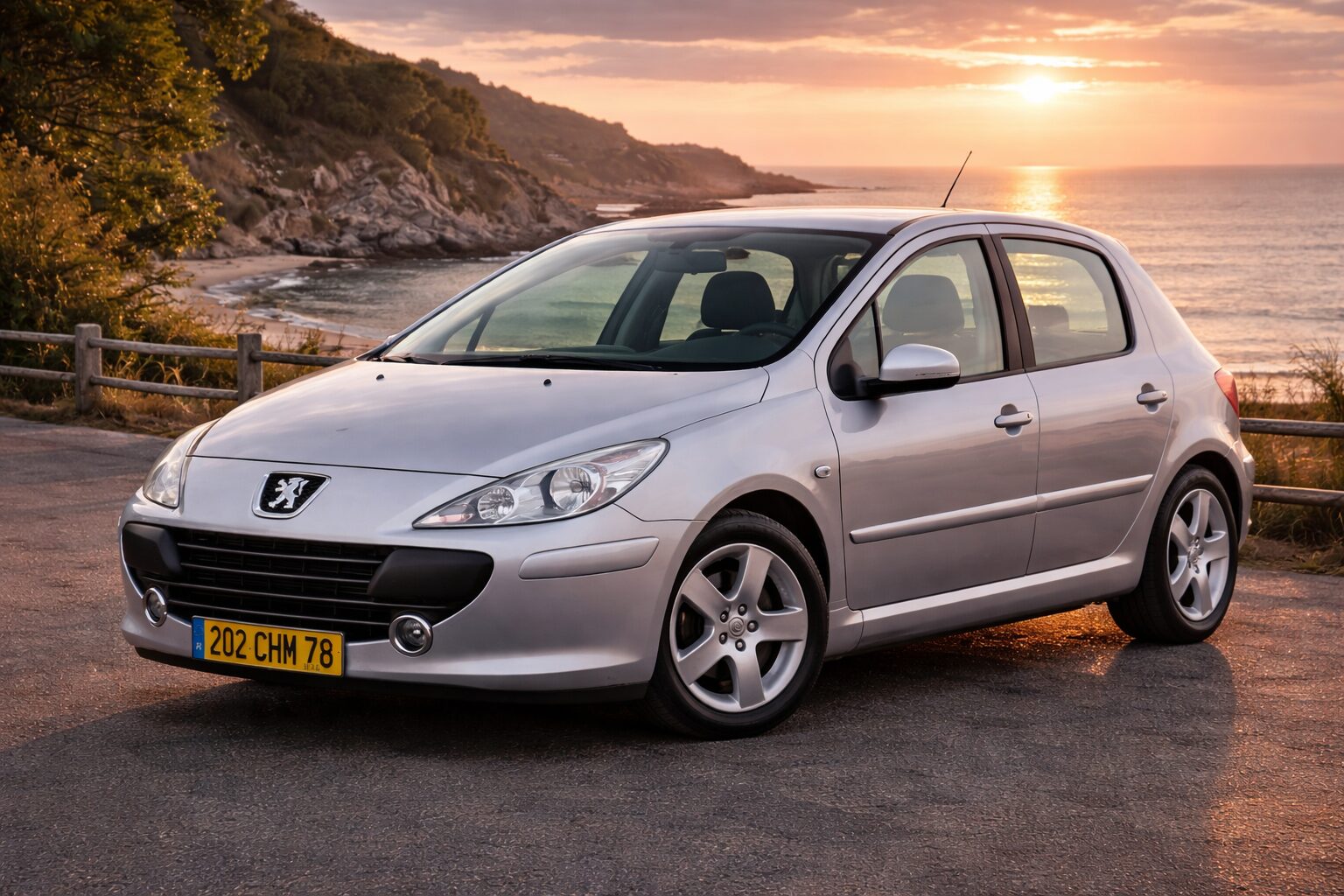
In addition to the usual teething problems, the Peugeot 307 CC suffers from typical convertible issues. Leaking folding roofs, faulty window mechanisms and broken seat heating are common. This stylish coupé-cabriolet from the years 2003–2009 requires extra attention when it comes to purchase and maintenance.
The 307 CC shares many technical problems with the Peugeot 307. However, the complex folding roof and convertible-specific components bring additional challenges. The standard 307 already struggles with automatic transmission issues and electrical faults. The CC version also suffers from water damage, mechanical roof problems and interior defects. This article highlights the most common problems that occur specifically with this cabriolet.
Leaks in the folding roof and headlining
The biggest pain point of the 307 CC is water ingress. Models from the production years 2003–2006 often suffer from leaks around the convertible roof. Water enters via worn rubber seals and blocked drain channels. This leads to rings in the headlining, wet floor mats and moisture damage to the electronics.
The cause is often the drain holes that become clogged with leaves and dirt. Water then remains in the roof mechanism and finds its way into the interior. Regularly check the drain holes in the wheel arches and clean them with compressed air. Replace rubber strips at the first signs of ageing to prevent more serious damage.
Repair costs vary widely. A cleaning of the drain channels costs between 50 and 150 euros at a garage. Replacement of sealing rubbers can run up to 300 to 500 euros. The exact price depends on how many strips need to be replaced. In cases of serious water damage to the upholstery or electronics, costs can head towards 1,000 euros.
Folding roof that gets stuck
A blocked folding roof is a common problem for owners. The mechanism refuses to open or close, often halfway through the movement. This can have various causes, from electrical faults to mechanical blockages.
Possible causes are:
- Low battery voltage due to an ageing battery
- Faulty hydraulic pumps or lines
- Broken cables in the roof frame
- Sensors sending incorrect signals
- Frozen mechanism in frost
Always start by checking the battery. The folding roof demands a lot of power and a weak battery causes blockages. Fully charge the battery and try again. Hydraulic problems are harder to solve and often require a visit to a workshop. Replace hydraulic oil and check for leaks in the lines.
Repairs to the roof mechanism are expensive. Diagnosis alone already costs 75 to 150 euros. Replacement of hydraulic components ranges from 400 to 800 euros. In cases of severe mechanical damage to the frame, repairs are needed. These repair costs can rise to 1,500 euros or more. Preventive maintenance by regularly cleaning and lubricating the rails saves a lot of hassle.
Faulty window mechanisms
The electric windows of the 307 CC are prone to faults. Windows get stuck halfway, drop down spontaneously or no longer respond to the controls. This problem mainly occurs with the front doors.
The cause is often wear to the window regulators. The cables in the mechanism stretch or break due to frequent use. The electric motors that drive the windows can also fail. Some owners report that short circuits in the wiring under the seats cause problems. This is similar to problems with the airbag ECU, the electronic control unit that controls the airbags.
Replacement of a window regulator costs between 200 and 400 euros per door, including labour. When buying a used car, pay close attention to the functioning of all the windows. Test them several times fully up and down during the test drive.
Seat heating that gives up
Faulty seat heating is a regular occurrence with the 307 CC. One or both seats no longer heat up, or only work on the highest setting. This is not a life-threatening problem, but it is annoying for driving comfort in winter.
The heating element in the seat upholstery can become damaged due to wear or penetrating moisture. Short circuits in the wiring under the seat can also cause failure. This is the same area where problems with the airbag ECU occur. That points to a vulnerable spot in the electrical system.
Repair usually requires replacement of the complete heating element. Costs range between 150 and 350 euros per seat. Some owners choose to live with the defect, given the limited impact on safety. When buying, do check that the function works, as it lowers the resale value.
‘ Moisture and corrosion attack these, especially in a convertible. ’
Electrical faults and sensor problems
The 307 CC suffers from various electrical complaints that also occur with the standard model, but are made worse by the extra convertible components. The airbag ECU (the electronic control unit that controls the airbags) regularly gives fault messages due to short circuits in the wiring under the seats. Power steering sometimes fails due to faulty sensors or a broken pump.
When dealing with electrical problems, always start by checking the plug connections. Moisture and corrosion attack these, especially in a convertible. First read out the fault codes with an OBD scanner. This is a device that reads the car’s fault codes. Only then replace expensive components. Often, cleaning contacts and plugs already solves the problem.
The rear lights also work loose due to ageing mounting clips. The red covers come loose and rattle while driving. This is an easy-to-fix issue with inexpensive replacement parts costing 20 to 50 euros per unit.
What to look out for with a used car
If you are considering a used 307 CC, check carefully for leaks and mechanical problems. Inspect the headlining for water rings and damp patches. Smell the interior, as a musty odour indicates moisture problems. Test the folding roof several times fully open and closed, preferably with a fully charged battery.
Pay attention to these specific points during the viewing:
- Water droplets or moisture in the boot and under the mats
- Rings or discolouration of the headlining
- Smooth operation of all windows without hesitation
- Working seat heating in both seats
- Loose rear lights or other plastic parts
- Warning messages on the dashboard for airbag or electronics
Ask about the service history of the roof and hydraulic system (the system that operates the folding roof). Cars that have been regularly maintained have fewer problems. When buying, immediately set aside an extra 500 to 1,000 euros for fixing minor defects. Completely fault-free examples are rare.
Maintenance and prevention
Preventive maintenance prevents many problems that occur specifically with convertibles, such as leaks and mechanical roof problems. Clean the roof drain holes at least twice a year. Lubricate the rails and hinges of the folding roof with special silicone spray. Treat rubber seals with rubber care products to prevent them from drying out and cracking.
Preferably park the car indoors or under a carport. This protects the roof from the elements and slows the ageing of rubbers and mechanisms. Use the folding roof regularly, including in the winter months. Standing idle is disastrous for mechanical and hydraulic components.
During the MOT, ask for an extra check of fluid leaks and the condition of the brake hoses. These are common issues for the 307 CC during inspections. Check tyre pressure regularly. Incorrect pressure is found in 12 to 15 percent of examples. Budget several hundred euros per year for maintenance on top of regular service costs.
The Peugeot 307 CC requires dedicated owners who do not shy away from regular maintenance. With the right care this cabriolet still offers enjoyable open-top driving, despite its known technical vulnerabilities. On the Carnews website you will find much more information about specific car problems, maintenance advice and tips for buying used cars. Discover more about your favourite car and stay up to date with the latest developments.
Frequently asked questions
The most common problems with the roof mechanism of the Peugeot 307 CC are hesitating or not fully opening/closing due to faulty sensors or microswitches, and leaks along the roof rubbers and where the roof meets the boot. You can recognise these from warning messages or beeps when operating the roof, a roof that stops halfway or moves crookedly, and damp or water rings in the headlining or wet patches in the boot and rear. A poorly functioning hydraulic pump or leaking hydraulic hoses can also cause slow or jerky roof movement, often preceded by unusual pump noises. Finally, rattles or creaks when driving over speed bumps often point to worn hinge points or latches that are not closing properly.
Common leak points on the 307 CC are the seals around the folding roof, especially at the windscreen pillars and the rear roof sections, through which water can enter the interior. The rubber door and window seals can also dry out or deform, leading to water ingress into the doors and sills. Solutions include carefully cleaning, lubricating and adjusting the roof rubbers, and replacing worn or damaged rubbers and drain hoses where necessary. Checking the headlining and floor mats for moisture helps to detect leaks at an early stage.
Electronic faults can cause the convertible roof of the 307 CC to no longer open/close, or only partially, because sensors, switches or the roof ECU control it incorrectly. Other comfort systems, such as power steering and windscreen wipers, can also intermittently fail or react unpredictably in the event of short circuits, bad earths or connector problems. This leads to warning messages on the dashboard and sometimes a limp-home mode for certain systems. The result is reduced reliability and ease of use of both the roof mechanism and the other comfort electronics.
The 307 CC is generally known for having a reasonably stiff body for a coupé-cabriolet, but some owners do report slight scuttle shake and creaks on poor road surfaces. Because of the absence of a fixed roof, torsional rigidity is lower than on the closed 307, which can show up as vibrations in the steering column and dashboard. This mainly affects the driving experience by making it feel less refined and less solid, especially on uneven roads or over speed bumps. On good road surfaces and at normal speeds, many drivers find it acceptable to barely noticeable.
Essential maintenance tips include regularly cleaning and checking the convertible roof and rubbers to prevent water leaks and wear, and staying alert to moisture or ring formation in the headlining. Also frequently check the plugs and wiring around the roof and seat system (airbag, roof operation) for corrosion or breaks to pre-empt electrical faults. Pay attention to abnormal noises or hesitations when opening/closing the roof and have them checked immediately. Finally, keep all seals supple with a suitable rubber care product to minimise drying out and wind noise.
On average, the costs for solving convertible-specific problems on a 307 CC are as follows: fixing roof and water leaks (cleaning/replacing rubbers, clearing drains, adjustment) usually costs between about €150 and €600, depending on severity. Repair or replacement of the convertible roof mechanism or sensors can range from around €300 to over €1,000 in complex cases. Loose rear lights and small convertible-related electrical inconveniences (such as connectors, lighting around the roof) usually fall in the range of €50 to €250. Labour charges, parts used (original vs. aftermarket) and the type of workshop (independent vs. dealer) determine the final price.