
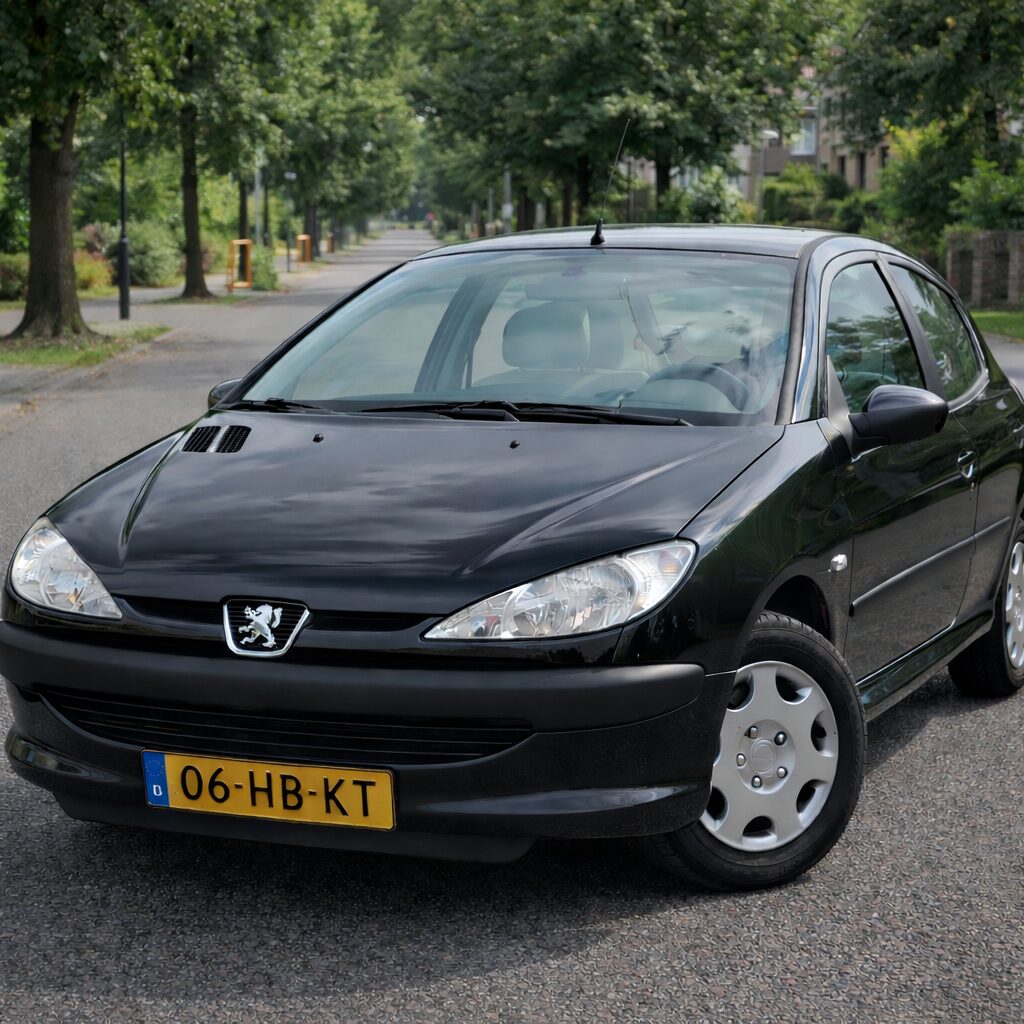
The Peugeot 206 regularly suffers from wear in the steering and suspension, especially after 60,000 to 120,000 kilometres. This leads to wandering handling, play in the steering wheel and problems with the power steering. These issues are typical for models from the period 1998–2009 and require timely inspection to ensure your safety. Want to know what you should look out for?
faulty steering column stalk causing indicator failure
A common problem with the Peugeot 206 is a defective steering column stalk. This part operates your indicators and main beam. Over time, the electrical contacts in the stalk wear out. As a result, your indicators no longer work properly or the main beam cuts out.
Symptoms you may notice include indicators that do not come on, or only work if you hold the stalk in a certain position. Sometimes the left light flashes when you indicate right, or vice versa. This is caused by poor contacts inside the stalk. The main beam can also suddenly fail or stop switching over.
The solution is to replace the complete steering column stalk. This is a relatively simple job where you detach the stalk from the steering column. You will need basic tools for this and it takes about an hour of work. Some owners report that the problem mainly occurs after 80,000 kilometres.
problems with the power steering
The power steering pump of the Peugeot 206 often fails over time. This results in heavy steering, especially when parking or manoeuvring at low speed. You will recognise it by a whining noise from the engine bay or the power assistance dropping out completely.
Possible causes are:
- Defective power steering pump due to internal wear
- Leaks in the hydraulic lines
- Too little power steering fluid
- Air in the system
First check the power steering fluid level. Top it up if necessary and check for leaks around the pump and lines. If the pump itself is faulty, you will need to replace it. After replacement you must bleed the system by letting the engine idle while turning the steering wheel several times from full left lock to full right lock. Keep an eye on the fluid level and top up where needed. Use a tray to prevent spillage onto the alternator.
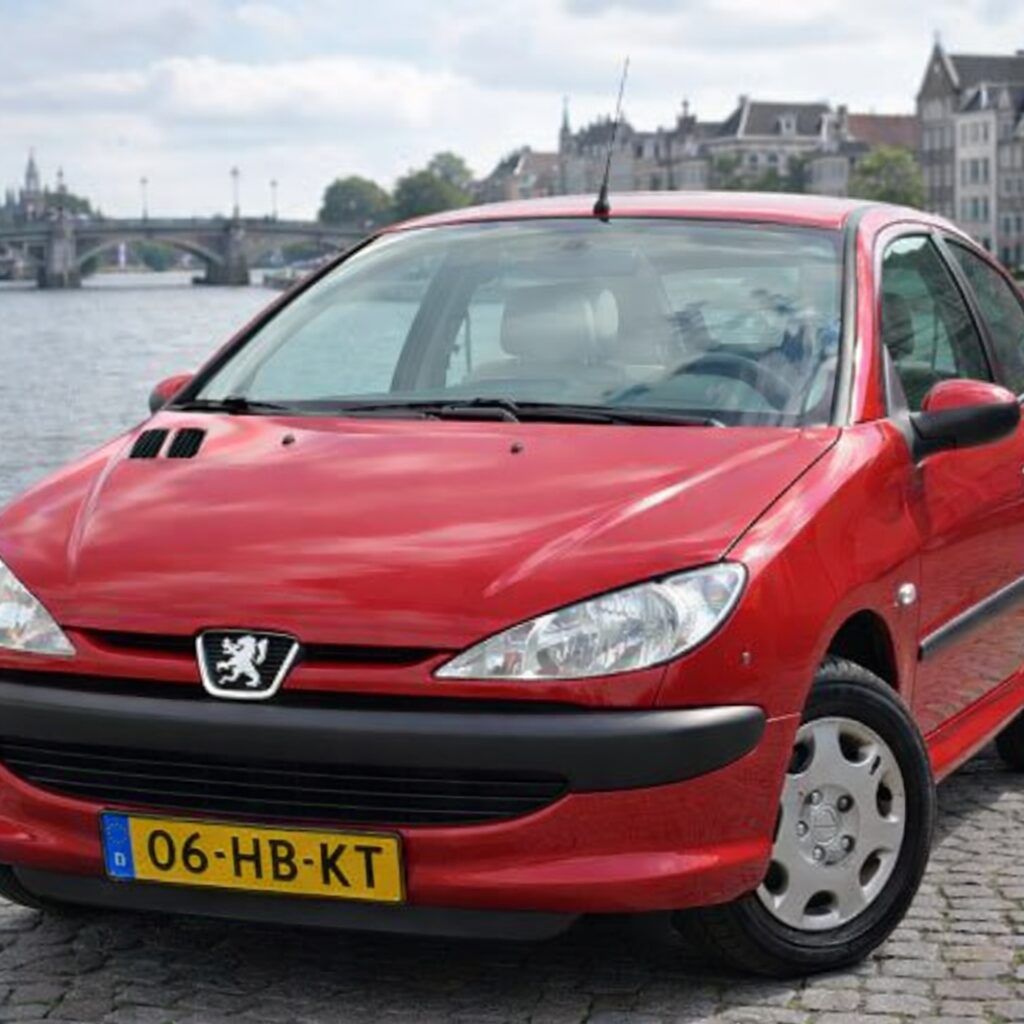
play in the steering rack
Play in the steering rack is a problem that develops gradually. You notice it because the steering feels vague and the car responds with a delay to steering inputs. You first have to take up the slack before the car actually changes direction. This feeling gets worse at higher speeds and undermines driving safety.
This is caused by wear in the steering rack itself, giving the internal components too much clearance. Check this by feeling the steering while the car is stationary. If you have more than a few centimetres of movement before the wheels respond, there is probably wear present. The only solution is to replace the complete steering rack, a job best left to a garage because of the safety aspects.
wear of the wheel suspension
The suspension of the Peugeot 206 is prone to wear, especially on sporty models that are subjected to higher loads. This shows up in various components that wear out over time.
worn anti-roll bar links and bushes
The anti-roll bar links on the front axle provide stability in corners. The bushes in which these links are mounted wear over time. This causes wandering and noises when driving over bumps. You can check this yourself by jacking up the car and wobbling the anti-roll bar links. If you feel movement, the bushes are worn.
Replace the anti-roll bar bushes as a precaution at 80,000 kilometres, especially if you drive on rough roads. The procedure is as follows:
- Jack the car up safely and remove the wheel
- Undo the retaining bolts of the anti-roll bar link
- Remove the old bushes and fit new ones
- Tighten the bolts with a torque wrench (100 Nm for wheel bolts)
- After fitting, check that everything is properly secured
faulty control arms and rear axle
Control arms are suspension components that connect the wheels to the body. On the Peugeot 206 these often wear, leading to poor road holding and wandering. Even after replacement the problem can persist if the wheel alignment is not carried out correctly.
The rear axle often shows play, especially on the right-hand side. This is a well-known issue with the 206. You notice it as an unstable feeling on the motorway and wheels that do not sit perfectly straight. Many owners report that the car drives better after replacing rear axle components, but only if an alignment has also been carried out.
Check the rear axle by visually inspecting the position of the wheels. If they are not parallel, there is probably play. This can be rectified with bolt adjustment or, in some cases, welding work. Always have this checked at a garage with alignment equipment.
handling deteriorated due to suspension problems
If the handling of your Peugeot 206 has deteriorated, the suspension is often to blame. You will notice this as wandering above 80 kilometres per hour, instability in corners or a sense that the car does not maintain good contact with the road. Diesel models such as the 1.4 HDI suffer extra from vibrations due to suspension wear.
Start with a visual inspection under the car. Look for worn bushes, loose bolts or cracks in the suspension bushes. Pay particular attention to the control arms, anti-roll bar links and the mounting points of the shock absorbers. You can recognise worn parts by torn rubber, oil leaks on shock absorbers or rust around the mounting points.
A practical checklist for self-checks:
- Jack up the car and check anti-roll bar links by wiggling them
- Test the power steering for noise with the engine idling
- Do a test drive and note any wandering or play in the steering
- Check whether the wheels are straight when stationary
- Look under the car for leaks or worn bushes
Replace suspension parts preventively at 80,000 kilometres to avoid bigger problems. Always use a torque wrench for all fastenings to avoid over- or under-tightening. This prevents bolts from coming loose or being too tight, which can cause further damage.
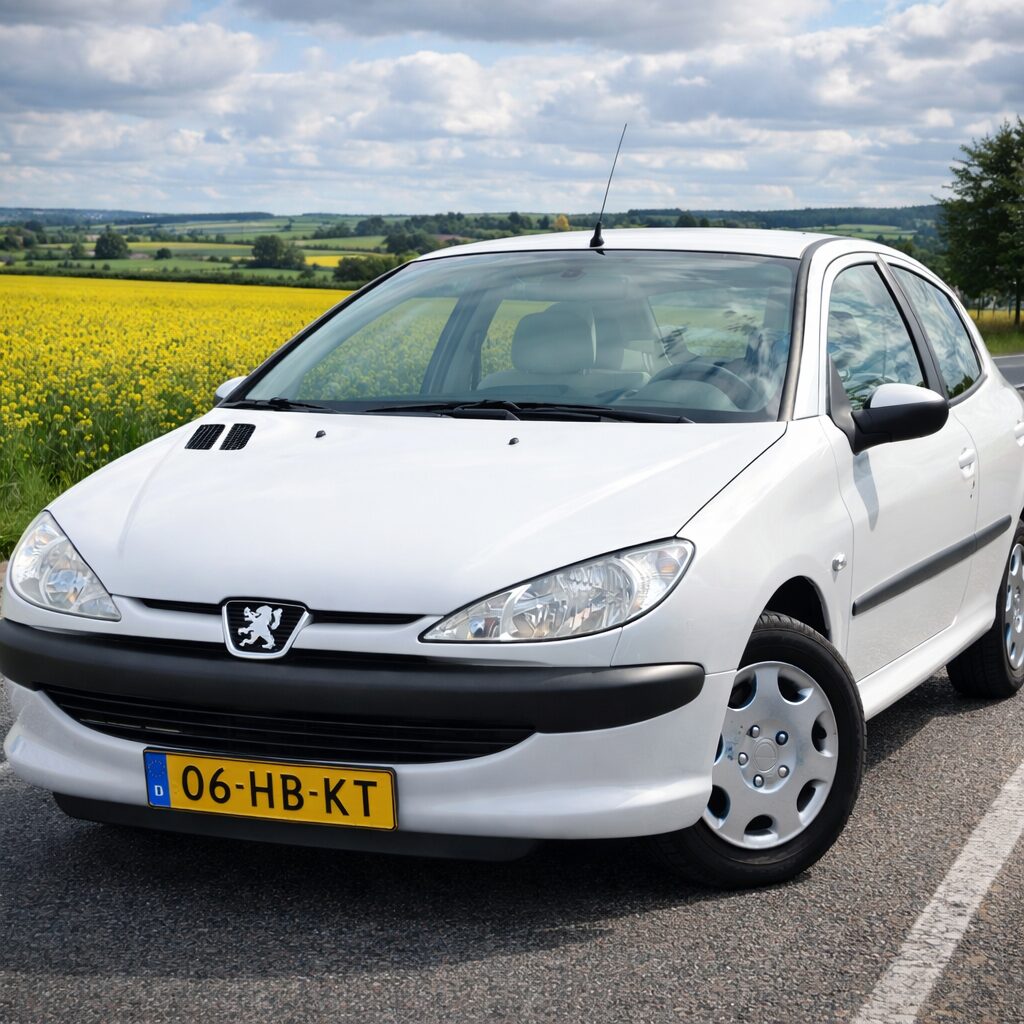
checking the rear axle when buying used
When buying a used Peugeot 206, checking the rear axle is important. This component regularly causes problems and replacement is expensive. During a test drive, pay attention to instability at higher speeds and a pulling sensation to the left or right.
Visually check whether the rear wheels are straight in relation to the car. If they lean inwards or outwards, this indicates play in the rear axle. Ask the seller about previous suspension repairs and check whether a recent wheel alignment has been carried out. This is often listed in the service history or on invoices.
During the test drive, also drive over bumps and uneven surfaces. If you hear knocking noises or the rear feels loose, there is probably wear. This is especially true for models with more than 100,000 kilometres. If in doubt, take an expert with you or have the car inspected before purchase.
always have the wheels aligned after suspension work
After every replacement of suspension components, a wheel alignment is necessary. Without correct alignment, problems such as wandering and uneven tyre wear will persist. This applies to both front and rear axle components.
Alignment ensures that all wheels are at the correct angle to the road and to each other. This improves handling and prevents uneven tyre wear. Have this carried out by a garage with professional alignment equipment. The costs are usually between 50 and 100 euros, depending on the garage.
On the Carnews website you will find much more information about common car problems, maintenance tips and buying advice for various car makes and models. Discover what is possible with your car and stay informed about important technical developments. Good luck with maintaining your Peugeot 206.
frequently asked questions
You can recognise problems in the steering by heavy or irregular steering, play in the steering wheel (car reacts with a delay) and possibly whining noises when turning the wheel. Suspension problems are often noticeable as wandering or floating handling, especially above roughly 80 km/h, and sometimes an unstable feeling in corners or over speed bumps. Ticking or knocking noises over bumps and speed humps can also indicate worn anti-roll bar links, bushes or control arms. If you see that the wheels are visibly not quite straight or a tyre wears unevenly or on one side, there may be play or damage in the rear axle or an alignment issue.
Common causes of steering problems on the Peugeot 206 are a faulty power steering pump and play in the steering rack, which lead to heavy or wandering steering. For the suspension, worn anti-roll bar links and bushes, worn control arms and the well-known play in the rear axle are typical causes. This wear often occurs between around 60,000 and 120,000 km and results in unstable handling and poor road holding. Regular inspection and timely replacement of these parts are therefore crucial.
Common repair options for steering problems are replacing the power steering pump and, if necessary, the steering rack. For the suspension, the work often involves replacing anti-roll bar links and bushes, control arms and (having) the rear axle overhauled or replaced, followed by an alignment. On average, the costs for smaller jobs such as anti-roll bar links or bushes are around a few hundred euros, while larger repairs such as a steering rack or rear axle overhaul can run to many hundreds of euros up to around a thousand euros, depending on labour and parts.
Yes, there are various performance upgrades available for the steering and suspension of a Peugeot 206 to achieve a sportier driving experience. For example, sportier shock absorbers and lowering springs, stiffer anti-roll bars and reinforced bushes in the suspension. Fitting sportier control arms and a better-aligned (or overhauled) rear axle can also noticeably improve the road holding. Do make sure that all components are well matched and professionally installed.
Regularly visually inspecting the suspension and steering for worn bushes, leaks and play (anti-roll bar links, control arms, rear axle and steering rack) and replacing these parts in good time helps prevent problems. After every repair to the suspension or steering, have the car professionally aligned to avoid uneven wear and wandering handling. Check the level and condition of the power steering fluid regularly and bleed the system after any work to prevent overloading the pump. Carry out periodic test drives where you pay attention to vibrations, pulling to one side when driving straight ahead and unusual noises, so that wear is detected at an early stage.