
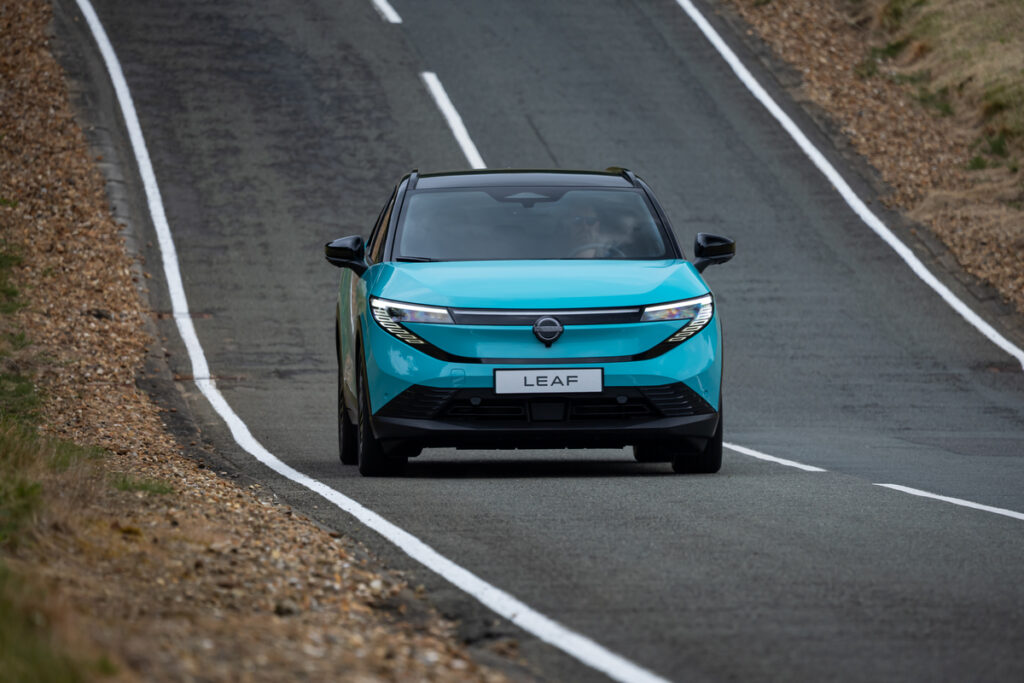
Worn strut towers after around five years of driving is a familiar issue with the Nissan Leaf, but with the right approach it remains easy to manage. You learn to recognise the warning signs in time and carry out simple maintenance. That way you keep the ride comfort of your electric car intact. What are the specific symptoms you need to watch out for?
Why strut towers wear out faster on the Nissan Leaf
The Nissan Leaf is a pioneer among electric cars. The extra weight of the battery brings specific challenges for the suspension. The battery adds up to 400 kilograms of extra weight, which puts additional load on the front axle in particular. Models from 2011–2018 have a 24 kWh or 30 kWh battery. With these versions, complaints about worn strut towers are common between 60,000 and 100,000 kilometres.
Your driving style plays a part in the rate of wear. Lots of city driving with frequent braking puts extra strain on the suspension. Poor road surfaces speed up the wear mechanism. Think of cobblestones and motorway ridges. In the colder months the rubber bushes in the strut towers also become more brittle. This further increases the stress.
‘ Small problems otherwise grow into bigger and more expensive repairs. ’
How to recognise worn strut towers on your Leaf
There are several signs that point to worn strut towers. Pay close attention to these. Otherwise small problems grow into bigger and more expensive repairs.
Uneven tyre wear is a classic sign. Owners often report abnormal wear on the outer edge of the rear tyres. Worn strut towers upset the wheel alignment. As a result, the tyres no longer make even contact with the road surface.
Noises and vibrations are also very telling symptoms. Knocking or rattling noises over bumps often indicate worn strut towers. This especially applies to noises from the front of the car. On bumpy roads you feel after-bounce or a floating driving sensation. This does not belong to a properly functioning suspension. The steering wheel also pulls to one side, or the steering feels vague.
A visual sign is oil leakage around the strut tower. Dark spots or dampness around the strut towers are a clear indication. Internal wear has occurred. This calls for quick action.

What does it cost to replace strut towers
The costs of replacing strut towers on a Nissan Leaf vary. The model year plays a role. Your choice between original or aftermarket parts also affects the price. Models from 2011 to 2015 have a 24 kWh or 30 kWh battery. For a set of front strut towers you pay between 300 and 500 euros, labour included. Models from 2016–2018 with a 30 kWh or 40 kWh battery cost between 350 and 550 euros, while newer models from 2019 onwards with a 40 kWh or 62 kWh battery cost between 400 and 600 euros.
Are you handy yourself with basic tools such as axle stands, jack and torque wrench? Then you can save up to 50 per cent by doing the job yourself. It takes about two to four hours per side. First you compress the coil spring with a compressor. Then you remove the top nut. After installation you carry out a wheel alignment. This prevents new uneven wear.
Aftermarket parts from brands such as Bilstein or KYB are popular. These strut towers often last 20 to 50 per cent longer than original ones. Gas-filled strut towers also provide better damping and a longer service life.
How to prevent wear issues on your five-year-old Leaf
Preventive maintenance avoids premature strut tower wear. Regular inspection helps to detect problems at an early stage before they become serious.
- Check every 20,000 kilometres for leaks, cracks or play in the strut towers.
- Raise the car with a jack and wiggle the wheels back and forth.
More than five millimetres of play is suspicious and requires further investigation. Tyre pressure also deserves regular attention. The Nissan Leaf has a relatively low recommended tyre pressure of often 2.5 to 3.0 bar. Rotate your tyres every 10,000 kilometres. This prevents uneven wear.
After 50,000 kilometres or when fitting new tyres, have a wheel alignment carried out. This costs between 80 and 120 euros. Wheel alignment prevents your strut towers and tyres from wearing unevenly. Your driving style also contributes to a longer service life. Avoid sharp kerbs and overloading the car. Use B-mode for more regeneration and less brake wear. This indirectly also eases the load on the suspension.
‘ Heavy loading or frequent use of rapid charging stops still accelerates wear. ’
Experiences of Leaf owners
Various owners share their experiences with strut tower wear. One owner has a 2016 Leaf with a 30 kWh battery. It has covered 150,000 kilometres on the original front strut towers without issues. Regular wheel alignment and careful maintenance made the difference.
Others run into problems earlier. At 70,000 kilometres strange noises and outer-edge tyre wear at the rear appeared. The owner replaced the strut towers with KYB parts for 450 euros. The car now drives like new again.
The higher weight of the battery remains a factor that owners need to take into account. Models from 2018 onwards have a 40 kWh or 62 kWh battery. These generally perform better. Improved materials in the suspension are the reason. Heavy loading or frequent use of rapid charging stops still accelerates wear, however.
Practical tips for optimum maintenance
There are a few more specific actions you can take to extend the service life of your strut towers.
- Schedule a chassis inspection every two years at a specialist garage. This costs around 50 euros and gives you certainty about the condition of the suspension.
- Do you regularly drive on poor roads? Then consider an upgrade to gas-filled strut towers. These provide better damping and last considerably longer.
- Watch for symptoms such as changes in driving behaviour. These mainly occur after a longer journey or in changing weather conditions.
- When replacing, always change both strut towers on the same axle at the same time. This ensures optimum balance and prevents uneven driving behaviour.
This approach keeps costs down and preserves the comfort of your electric driving. Are you unsure about the condition of your strut towers? Then have a quick check carried out at a garage.
What else you need to know
Strut towers are an important part of the suspension. They are not the only components that deserve attention. Also regularly check the control arms and other suspension components. These are likewise subjected to higher loads due to the extra weight of the battery.
Does your model have more than 100,000 kilometres on the clock? Then also have the rubbers, bushes and track rod ends inspected. These parts often wear at the same time. If you replace them all at once, you save money in the long run.
On the Carnews website you will find extensive information about maintenance, known problems and practical tips for various car makes and models. Would you like to know more about electric driving? Or about repair costs and preventive maintenance? There is always an article that helps you further. Stay well informed about your car.
Frequently asked questions
Early signs of wear on the strut towers of a Nissan Leaf are subtle knocking or rattling noises over speed bumps and irregularities, and a slight ‘after-bounce’ feeling or floating driving behaviour. Initial uneven tyre wear (for example on the outer edge at the rear or inner edge at the front) can also indicate that the strut towers are no longer doing their job properly. A slightly vaguer or less precise steering feel can likewise be an early signal. Visually, a very light oily haze around the strut tower can point to the start of internal leakage.
The specific causes of strut tower wear on an electric car like the Nissan Leaf are mainly the increased axle load due to the heavy battery pack and the frequent, relatively harsh loading of the front axle during city driving and over speed bumps. The extra weight means that the dampers and rubbers are constantly working closer to their limits, which speeds up internal wear (damping oil, valves, rubbers). Regenerative braking shifts a larger share of the deceleration to the front wheels, so the front suspension ‘dives’ more often and is subjected to greater dynamic loads. In combination with poor road surfaces, incorrect tyre pressure and alignment faults, this leads to accelerated strut tower wear.
Worn suspension on a Nissan Leaf results in less stable and predictable driving behaviour, with more ‘after-bounce’, floating and possibly pulling steering. Comfort decreases due to more vibrations, knocking and harsh impact from bumps. Safety is reduced because road holding in corners and during emergency stops becomes worse and the braking distance can increase. In addition, uneven tyre wear can occur, which further reduces grip.
Yes, by adjusting your driving style and maintenance you can clearly extend the service life of the strut towers on a Nissan Leaf. Drive more gently over speed bumps and potholes, avoid kerbs and heavy (or prolonged) maximum loading, and keep tyre pressure strictly to the recommended level. Have the suspension visually inspected at least every 20,000 km and carry out a four-wheel alignment in good time, especially with new tyres or after a heavy impact with a pothole. Regular tyre rotation and – if replacement is needed – choosing quality (gas-filled) aftermarket strut towers can extend the service life even further.
For a Nissan Leaf, the costs of replacing worn strut towers (front set) are usually around €300–€600 including labour, depending on model year and garage. Original Nissan strut towers are generally at the upper end of this range and offer factory specifications and warranty. Aftermarket alternatives such as KYB or Bilstein are often 10–30% cheaper than original, can last 20–50% longer and often provide slightly sharper handling. DIY enthusiasts who only buy the parts and install them themselves pay roughly half of the amounts mentioned above.