
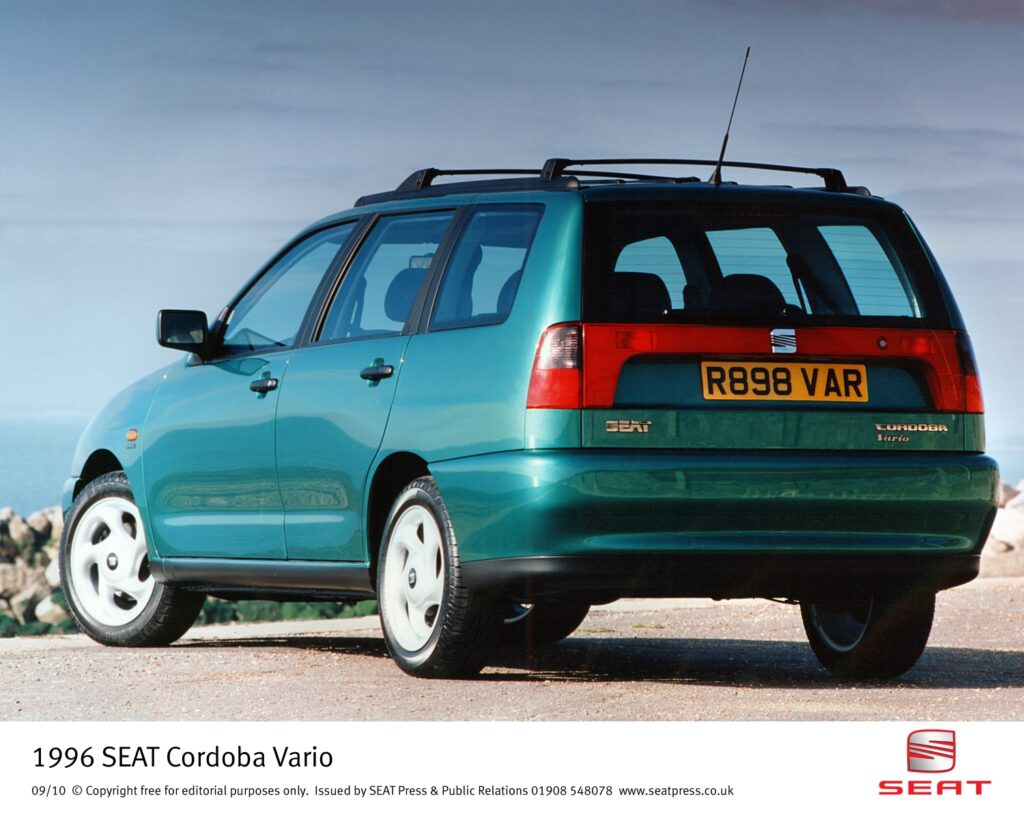
The suspension and wheel suspension of the Seat Cordoba suffer from persistent teething problems that often only appear after several tens of thousands of kilometres. Groaning strut bearings, defective shock absorbers and failing wheel bearings after 30,000 to 60,000 kilometres are common complaints, with uneven tyre wear often being the first warning sign. Are you the owner of a Seat Cordoba and do you recognise strange noises when steering or driving over bumps? Then here you will find what you need to know.
Which suspension problems occur most often?
The Seat Cordoba, produced from 1993 to 2002 in generations 6A and 6K, uses a MacPherson design at the front and a torsion beam at the rear. This layout is shared with related Volkswagen Polo models. The design is affordable and effective, but certain components are prone to premature wear.
Owners often report three specific problem areas. The strut bearings cause issues early on, often recognisable by groaning noises when turning the steering wheel while stationary or at low speed. The shock absorbers lose their damping effect after 30,000 to 60,000 kilometres, making the car uncomfortable on bumpy roads. Wheel bearings mainly reveal themselves through vibrations above 80 kilometres per hour and droning noises that increase with speed.
The following symptoms indicate suspension problems:
- Clattering or groaning noises when steering or over uneven surfaces
- Vibrating steering while driving, especially at higher speeds
- Uneven tyre wear on the inner or outer edge of the tyre
- A sagging, wallowy feeling in bends or when braking
- Increased steering effort or vague steering response
‘ Frequently driving on poor road surfaces noticeably accelerates wear. ’
Why do strut bearings and shock absorbers fail so early?
The MacPherson struts (a type of coilover spring and damper unit) at the front combine spring and damper in one assembly. The bearing at the top of the strut, the strut bearing, rotates with the steering movement. This component is under constant load and is sensitive to moisture and dirt. In the Cordoba, the rubber parts in these bearings are relatively thin, causing them to dry out and split more quickly when used on poor roads or in damp conditions.
The shock absorbers themselves lose their effectiveness due to leakage of the damping oil or internal wear of the valves that control the oil flow. This often occurs as early as around 40,000 kilometres with intensive use on unpaved roads or frequent driving with a full load. The torsion beam (a type of rear axle design) at the rear is less problematic, but the rubber components that connect the axle to the chassis may also need replacing after 50,000 to 70,000 kilometres.
Influence of driving style and road surface
Frequently driving on poor road surfaces noticeably accelerates wear. Owners who regularly drive on unpaved roads or through areas with many speed bumps report that replacement may be necessary after only 30,000 kilometres. Short trips, where the suspension does not properly warm up, also contribute to premature problems with rubber bushes and bearings.
How do you recognise defective wheel bearings?
Wheel bearings on the Seat Cordoba typically fail at around 50,000 kilometres, although there are cases where this happens as early as 30,000 kilometres. The first sign is usually a droning or humming noise that increases in intensity at higher speeds. This noise is caused by wear in the balls or rollers inside the bearing, which creates play.
With continued use, the play increases and vibrations develop in the steering wheel or even throughout the bodywork. In the worst case, a completely failed wheel bearing can seize while driving, which is very dangerous. Always have the car checked in good time if you notice the following signs:
- Droning noise that becomes louder as speed increases
- Vibrating steering wheel between 80 and 120 kilometres per hour
- Heat noticeable at the wheel after longer journeys
- Uneven or one-sided tyre wear
The wheel hubs at both the front and rear are compatible with ABS sensors (anti-lock braking system). When replacing them, it is important to choose bearings suitable for models with ABS, otherwise this safety system will not function correctly.
What does uneven tyre wear mean?
Uneven tyre wear is often the first visible sign of suspension problems. When control arms, bushes or wheel bearings are worn, the wheel alignment changes. As a result, tyres do not wear evenly across the full width, but more quickly on one side than the other.
Wear on the inside usually points to an incorrect camber setting, caused by worn control arms or bushes. Wear on the outside often indicates incorrect toe setting or a defective strut bearing. Irregular wear with cupping or flat spots usually results from failing shock absorbers that no longer keep the tyre properly in contact with the road surface.
A set of tyres typically costs between 200 and 400 euros to replace, depending on brand and size. By resolving suspension problems in good time you prevent unnecessary costs for new tyres. Correct alignment after every suspension repair is essential to make the tyres last as long as possible.
‘ Owners report that original Febi Bilstein parts fit well and last on average 80,000 kilometres, while cheaper alternatives fail sooner. ’
Which parts should you replace when you have suspension problems?
Several components are involved in addressing suspension problems on the Seat Cordoba. The choice depends on the specific complaint and the condition of the car. Replacement is often done per axle or in sets to prevent asymmetrical wear.
Main components for the front axle
The MacPherson struts form the basis of the front suspension. They consist of the strut itself with spring and damper, the strut bearing at the top and the lower control arms. Drop links connect the anti-roll bar to the control arms and are often 270 millimetres long. You need two drop links per axle.
The anti-roll bar itself, including the rubber mounts in which it pivots, may also need to be replaced. This usually happens on cars with more than 100,000 kilometres or when there is visible rust. Owners report that original Febi Bilstein parts fit well and last on average 80,000 kilometres, while cheaper alternatives fail sooner.
Components for the rear axle
The torsion beam at the rear is simpler in design. Here, the rubber bushes that connect the axle to the chassis are mainly replaced. The rear shock absorbers may also need replacing after 60,000 kilometres. On models with the 1.9 TDI engine (a type of turbo diesel engine), the load on the rear axle is higher due to the greater engine weight at the front, so the rear works harder.
A complete overhaul of the front axle costs between 150 and 300 euros in parts. For the rear axle you should allow around 100 to 150 euros. Labour costs are added on top, depending on how many parts need to be replaced and the condition of the mounting bolts.
How do you approach replacement in practice?
Replacing suspension components on the Seat Cordoba requires standard tools and a lift or jack with axle stands. The difficulty level is moderate for experienced DIY enthusiasts. When replacing parts, pay attention to the following points.
Always replace control arms and drop links in pairs, so left and right at the same time. This prevents asymmetrical steering response and uneven distribution of forces. Use a torque wrench to tighten the bolts. The recommended tightening torque for control arm bolts is between 50 and 70 Nm, depending on position and year of manufacture.
Rubber bushes can be replaced with polyurethane alternatives. These last longer, especially in damp environments, and offer slightly firmer handling. However, they are more expensive and can initially transmit a bit more noise to the body. For everyday use, standard rubber bushes are usually sufficient.
After every replacement of suspension components, an alignment is necessary. Without correct alignment, uneven tyre wear will reappear within a few thousand kilometres. The cost of an alignment is between 50 and 80 euros and will save you hundreds of euros in tyre wear in the long run.
Preventive maintenance for a longer service life
Regular inspections help to prevent major problems. Lift the car once a year and visually inspect the rubber bushes for cracks or drying out. Also check for play in the control arms by rocking the wheel while it is off the ground. Noticeable play indicates worn bearings or bushes.
Grease the propshaft (the driveshaft between gearbox and differential) on models with four-wheel drive, although these are rare on the Cordoba. On models from rust-prone regions, pay extra attention to corrosion at the mounting points of the anti-roll bar and control arm bolts. Rust makes replacement more difficult and can lead to bolts snapping off.
For enthusiasts who want to use the Cordoba in a sporty way there are adjustable anti-roll bars (bars that limit body roll) or shorter springs available. These upgrades improve cornering behaviour without disturbing the original geometry, provided they are fitted and aligned correctly. Such modifications are suitable for track days or for drivers who want a more direct steering response.
‘ On the Carnews website you will find extensive information about other common problems, maintenance tips and owners’ experiences. ’
Discover more about the Seat Cordoba
The suspension is only one aspect of maintaining your Seat Cordoba. On the Carnews website you will find extensive information about other common problems, maintenance tips and owners’ experiences. Discover more about engine issues, electrical systems and practical DIY guides that help you keep your car in top condition.
Frequently asked questions
The most common wear points are the rubbers and bushes of the control arms and anti-roll bar links, the struts/damper cartridges and the wheel hubs/wheel bearings. You recognise worn rubbers and bushes by clattering or knocking noises over uneven surfaces and a nervous or floating road holding. You notice worn shock absorbers from the car almost “bouncing on” after a bump, reduced comfort and instability in bends. Defective wheel bearings are recognised by a droning or humming noise that increases with speed and sometimes vibrations in the steering wheel or bodywork.
Popular upgrades for the wheel suspension of the Seat Cordoba are lowering springs or a coilover kit, stiffer or adjustable anti-roll bars and polyurethane (PU) bushes. Lowering and coilovers improve cornering and reduce body roll, giving the car more direct steering. Reinforced or adjustable anti-roll bars provide more stability and grip when driving sportily. PU bushes provide sharper steering and a longer lifespan than standard rubber, although comfort can decrease slightly.
A modified suspension (for example stiffer springs, sports dampers or polyurethane bushes) makes the Seat Cordoba more direct and stable in bends, with less body roll and more precise steering feel when driving sportily. The downside is that comfort in everyday use decreases: bumps and speed humps are transmitted more harshly and clearly, especially with low-profile tyres. A well-balanced upgrade (mildly sporty, no extreme lowering) can offer a compromise where cornering stability improves without completely sacrificing comfort. Incorrect installation or failure to align the car after modifications can also cause nervous handling and uneven tyre wear.
For replacing essential suspension components on a Seat Cordoba (complete set of control arms + front anti-roll bar links) you can expect to pay around €150–€300 for parts. An overhaul or replacement of the complete rear axle/rear suspension often comes to around €400 in parts. At a garage you normally have to add about €200–€400 in labour costs, depending on the hourly rate and the size of the job. A full replacement of the most important suspension parts all round can therefore roughly total between €350 and €800.
Yes, there are specific adjustment options, especially in terms of alignment (camber, caster and toe) that allow you to optimise handling and tyre wear. For performance you can also opt for stiffer (for example polyurethane) bushes and possibly adjustable anti-roll bars without drastically changing the basic geometry. It is advisable to have the car professionally aligned after every modification to achieve the best results.