
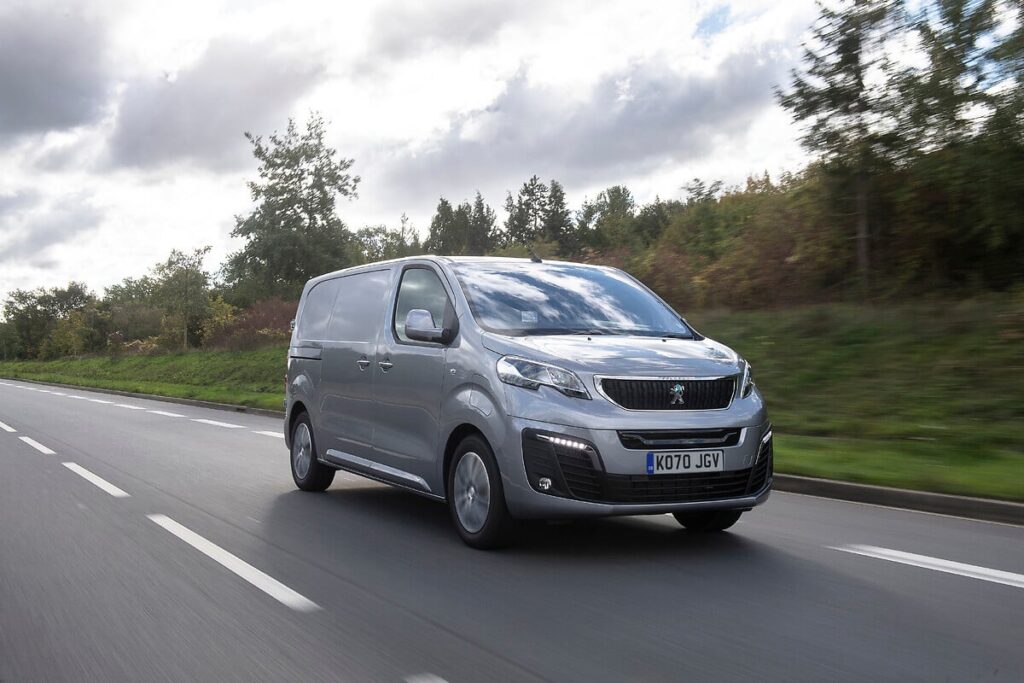
Tyre problems are the most common defect with the Peugeot Expert, with incorrect tyre pressure in 24% of cases in 2019. This leads to safety risks and can result in MOT failure. Why are the tyres on this van so sensitive, and which measures help to prevent this problem?
The Peugeot Expert is subjected to heavy use on a daily basis. This van combines frequent city driving with regular long journeys and varying loads. That combination is a tough challenge for the tyres. Many owners of the Peugeot Expert notice that the front tyres wear faster than expected and that tyre pressures need to be adjusted regularly.
Underestimating correct tyre maintenance on a work van has direct consequences. Incorrect pressure affects not only the lifespan of the tyres, but also fuel consumption and driving safety. On a heavily loaded van, safety risks arise more quickly than with passenger cars.
Why does the Expert regularly lose tyre pressure
Loss of tyre pressure on the Peugeot Expert occurs regularly. There are several causes for this. Temperature fluctuations play an important role. Tyres lose approximately 0.1 bar per 10 degrees temperature difference. Driving heavily loaded during the day and standing outside in the cold at night causes fluctuating pressure.
Gradual air loss due to natural permeation is a second cause. Air molecules slowly escape through the rubber. This process is faster in tyres that are subjected to heavier loads. The Expert often carries a full load, which increases the stress on the rubber. Small damages to valves, rims or the tread make the problem worse.
Some owners report that the tyre pressure monitoring systems on older models do not always work reliably. Do not rely blindly on warning lights. Regular manual checks remain essential.
‘ A flat spare tyre is of little help if you break down on the road. ’
The correct tyre pressure for each version
The correct tyre pressure for the Peugeot Expert differs per version and load. The factory recommendations are shown on a sticker in the door or on the fuel filler flap. These values show at least two situations: unladen and fully loaded.
For an unladen Expert the pressure is usually between 2.5 and 2.8 bar for the front tyres and between 3.0 and 3.5 bar for the rear tyres. With a full load these values often rise to 2.8 to 3.0 bar at the front and 4.0 to 4.5 bar at the rear. These differences are significant and have a major impact on handling and wear.
Many users do not adjust tyre pressure when the load changes. This leads to uneven wear and increased fuel consumption. Always check the pressure before longer journeys and after changes in load.
How often to check
Check tyre pressure at least once a month. For intensive business use or frequently changing loads, mechanics recommend a check every two weeks. Always measure the pressure on cold tyres, so before setting off or after standing still for at least two hours.
Don't forget the spare tyre. A flat spare tyre is of little help if you break down on the road. Also check the pressure of the spare wheel at every inspection.
Recognisable wear patterns on the Expert
Uneven tyre wear tells you a lot about the condition of the vehicle. With the Peugeot Expert several patterns occur regularly. Wear on the outer edges of the front tyres indicates tyre pressure that is too low. The tyre sags in the middle, causing the edges to scrub more harshly over the road surface.
Wear in the centre of the tread indicates pressure that is too high. The tyre then bulges too much, so the centre section has the most contact with the road. One-sided wear on the inner or outer edge indicates a problem with alignment or shock absorbers.
Patchy wear is often caused by incorrect balancing or defective shock absorbers. The tyres then make irregular contact with the road. This pattern occurs more often with vans that do a lot of city driving with frequent stop-start traffic.
When to replace
The legal minimum tread depth is 1.6 mm. However, mechanics recommend replacement at 3 mm. This offers sufficient safety in wet conditions. Because of its higher weight and load, the Expert needs more tread depth for effective water dispersion.
Check tread depth with a tread depth gauge or the one-euro method. Insert a one-euro coin into the groove. If the golden rim remains fully visible, replacement is necessary. Check several points across the tread, as wear can be uneven.
Influence of tyre choice on performance
The choice between summer, winter and all-season tyres affects performance and safety. Summer tyres offer the best grip and handling at temperatures above 7 degrees. They are made of a harder compound and wear less quickly in warm weather and on longer journeys.
Winter tyres become softer at low temperatures and offer better grip on wet, cold and snowy roads. For an Expert that has to be on the road all year round, all-season tyres are a practical solution. They combine properties of both tyre types, but never reach the top performance of season-specific tyres.
When choosing tyres, pay attention to load capacity. The Expert requires tyres with a sufficient load index. This is indicated on the sidewall of the tyre. Always choose a load index that matches the maximum permitted axle load of your specific version.
Practical tips for longer tyre life
Good tyre maintenance significantly extends their lifespan. Adjust your driving style. Aggressive acceleration and hard braking accelerate wear. This applies especially to the Expert's front tyres, which absorb both steering forces and a large proportion of the braking force.
Have the tyres balanced when they are replaced and regularly change the position of the tyres. This ensures even wear. Some mechanics recommend swapping front and rear tyres every 10,000 kilometres. This only works if the tyre size is the same front and rear.
Avoid overloading. The Expert has a high load capacity, but constantly exceeding the maximum weight puts severe stress on the tyres. This leads to faster wear and an increased risk of structural damage to the tyre.
Checklist for tyre inspection
Regularly carry out a full tyre check:
- Check tyre pressure with a reliable tyre pressure gauge
- Measure tread depth at several points on each tyre
- Inspect the tread for damage, cuts or bulges
- Look at the sidewalls for cracks or bulges
- Check the valves for damage or air leaks
- Watch out for unusual wear patterns that point to technical problems

When to go to the garage
Some tyre problems require professional help. Go to the garage in case of repeatedly rapid loss of tyre pressure without a visible cause. This may indicate small punctures, valve damage or rim damage that are difficult to detect yourself.
Have the alignment checked in case of one-sided wear or when the vehicle pulls to one side while driving. Incorrect alignment accelerates wear and negatively affects handling. If you experience vibrations while driving, imbalance or damage to tyres or rims may be the cause.
Take accelerated wear seriously. Front tyres that wear significantly faster than rear tyres may indicate problems with the steering, suspension or brakes. A mechanic can inspect these systems and trace any faults.
Impact on inspection and safety
Insufficient tread depth leads to MOT failure. In 2019, tyre problems were the main reason for failure with the Peugeot Expert. Besides tread depth, the inspection body pays attention to visible damage, bulges and the general condition of the tyres.
The safety risks of poorly maintained tyres are considerable. Longer braking distances on wet roads, reduced grip in corners and an increased risk of aquaplaning all jeopardise road safety. On a fully loaded Expert with a weight of up to 3,000 kilograms, these risks have greater consequences than on lighter vehicles.
Avoid unpleasant surprises at the inspection by replacing tyres in good time. Schedule replacement a few weeks before the inspection date, so that any additional problems discovered during fitting can still be resolved.
‘ Dive into the full overview and get the most out of your van. ’
Discover more about the Peugeot Expert
Tyre problems are just one aspect of maintaining your Peugeot Expert. On the Carnews website you'll find extensive information about other common issues, maintenance tips and owners' experiences. Discover more about the Expert and compare models, specifications and practical user experiences. Dive into the full overview and get the most out of your van.
Frequently asked questions
The most common tyre problems with the Peugeot Expert are too low or incorrect tyre pressure, accelerated and often uneven wear (especially on the front tyres) and sometimes driving with an incorrect tyre size or load index. Early signs include nervous or “wandering” steering behaviour, increased road noise, vibrations in the steering or steering wheel and visibly unevenly worn tread on one side of the tyre. Regularly checking pressure (measured cold), tread depth and wear patterns across the full width of the tyre helps to detect these problems in time. Also pay attention to the manufacturer's prescribed size and load capacity on the sidewall of the tyre and in the owner's manual.
For the Peugeot Expert, in practice mainly summer tyres, winter tyres or all-season tyres are recommended, tailored to actual use and season. It is important that you choose tyres in the exact size prescribed by the manufacturer and with the correct load capacity for your version. In addition, ensure correct tyre pressure according to the factory specification and regularly check for (irregular) wear, especially on the front axle. This way you prevent most problems and improve both stability and driving comfort.
Optimise tyre pressure by always following the values from the owner's manual/the sticker in the door pillar and by checking them monthly and before long, heavily loaded trips with a reliable gauge, then adjusting if necessary. Make sure the tyre size and load capacity correspond exactly with the factory specifications, as deviations negatively affect wear and braking distance. Have the alignment checked and, if necessary, adjusted if you notice signs such as uneven wear, pulling to one side or nervous steering, especially after hitting a kerb or pothole. Combine this with timely rotation and replacement of the tyres to maximise both service life and safety.
Yes, load and driving style have a major impact on tyre wear on a Peugeot Expert, because this van is often heavily loaded and the front tyres suffer extra from steering and braking. Heavy or unevenly distributed loads increase the stress on the tyres, while hard acceleration, frequent braking and high cornering speeds accelerate wear. Minimise wear by always maintaining the tyre pressure prescribed by the manufacturer (especially with varying loads) and distributing the load as evenly as possible. In addition, drive calmly and with anticipation, regularly check the tread, and replace or rotate tyres in good time in the event of irregular wear.