
The Volkswagen ID.4 suffers from a structural ergonomic problem: drivers taller than 1.90 metres hit their head when getting in if the seat is set high enough for comfortable driving. This makes the electric SUV less suitable for taller people, despite the spacious promise of the electric vehicle (EV) platform. Is this a dealbreaker for you?
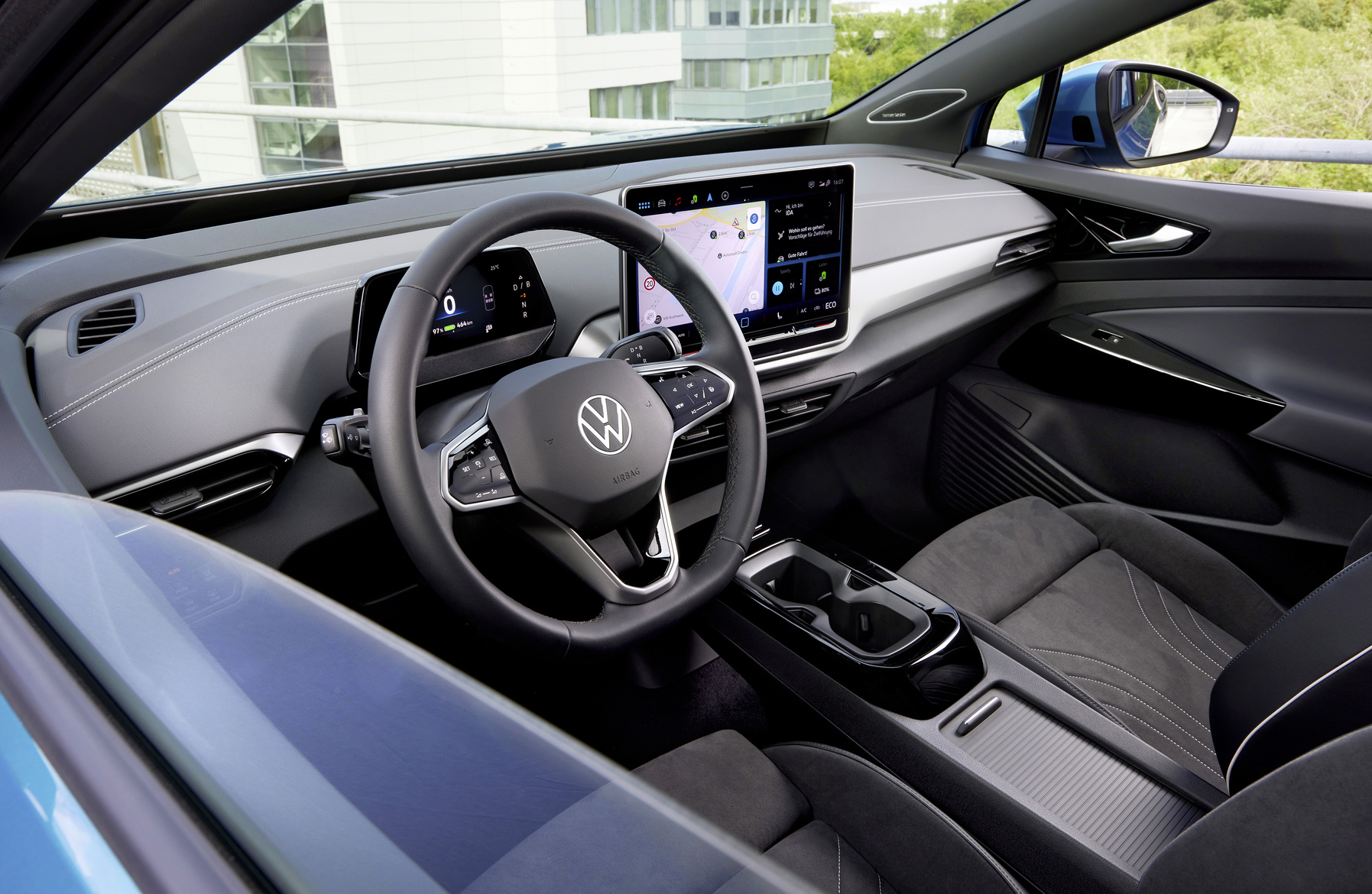
The interior design of the ID.4 looks modern and uncluttered, with a sleek dashboard and digital instruments. In practice, however, things turn out differently for taller owners. The combination of seat height and roof shape forces a difficult choice: comfort or headroom. A problem that cannot easily be solved.
Owners of a Volkswagen ID.4 report this regularly on forums and in reviews. It is not an isolated incident, but a recurring pattern of complaints that is linked to the basic dimensions of the interior. For anyone who is in doubt about buying one and is on the tall side themselves, these ergonomic limitations are important to be aware of.
What exactly is the ergonomic problem?
The core of the problem lies in the relationship between seat height and entry height. When the driver’s seat is set high enough for a good view of the road and a comfortable driving position, the space between the seat and the roof decreases. As you get in, you bend forwards and downwards, causing your head to sit higher than in the seated position. This leads to contact with the roof or headlining.
This problem mainly affects people who are 1.90 metres and taller. They have to choose between two undesirable situations:
- Set the seat high for comfortable driving and good visibility, but hit your head when getting in
- Set the seat lower so you can get in and out freely, but thereby limit your view and increase blind spots
Both options lead to discomfort. The first causes physical irritation and possibly pain on every journey, the second makes driving less safe and less pleasant. Neither scenario is acceptable for daily use.
How do I set the seat height for comfortable driving?
The ID.4 has electrically adjustable seats with a height adjustment control on the left-hand side of the seat base. You can move the seat up and down by pumping the lever up and down or by holding it down. In addition, you can slide the seat forwards and backwards and adjust the backrest.
These guidelines apply for a good driving position:
- Adjust the seat so that you can comfortably reach the steering wheel without fully stretching your arms
- Make sure you have a clear view of the road and instruments without having to bend your neck
- Set the seat height so that your eyes are roughly at two-thirds of the windscreen height
- Check that you can fully depress all pedals with your heels on the floor
For tall drivers, this ideal setting often results in the raised seat position where the headroom problem arises. The trade-off between safe driving and comfortable entry and exit remains. A low seat position reduces your overview of the road and increases blind spots around the A-pillars, which poses a safety risk in everyday driving.

Are there solutions for this ergonomic shortcoming?
The options for fixing the problem are limited. It concerns a structural design feature of the bodywork and interior, not something you can easily adjust. Even so, there are a few ways to reduce its impact.
You can try using a different movement when getting in: first sit down on the seat with your legs still outside the car, and only then turn and bring your legs inside. This prevents the forward bending movement that causes your head to move upwards. This works for some people, but it remains inconvenient and feels unnatural.
Another option is to adjust your expectations and accept that you have to compromise. That might mean setting the seat slightly lower than ideal and getting used to a less than optimal view. Or keeping the seat high and accepting that you will come into contact with the roof every trip.
Aftermarket solutions such as modified seat adapters or rails exist in theory, but are not widely available for the ID.4. They can also affect the safety of the seat and seatbelt positioning, which is not advisable.
Which electric SUVs have better ergonomics for tall drivers?
If the ergonomics of the ID.4 are an obstacle, there are alternatives in the same segment that offer more space. Several electric SUVs have a more generous interior with more head and legroom.
The Tesla Model Y has a higher roof and more vertical space between the seat and the ceiling. The glass roof extends further back, which adds to the feeling of space. Owners who are 1.95 metres and taller report fewer problems with entry and headroom.
The Hyundai Ioniq 5 also offers remarkable interior space thanks to the flat floor platform and long wheelbase. The seats are relatively low, but there is plenty of room above your head. The entry is wide and high, meaning you have to bend less.
The Kia EV6 shares its platform with the Ioniq 5 and has similar interior space. The seat design is slightly sportier, but again there is ample headroom for tall drivers. The entry height is comparably comfortable.
The Ford Mustang Mach-E has a more traditional SUV layout with more height. The interior feels more spacious than that of the ID.4, especially in terms of headroom. Drivers over 1.90 metres fit without issues.
When buying an electric car, it pays to take an extended test drive, not only driving but also getting in and out several times. Test different seat positions and check if you can sit comfortably without compromising on visibility or safety. For tall people this is not a small detail, but a decisive factor for everyday driving enjoyment.
‘ Even so, ergonomic complaints come up regularly in reviews and on forums. ’
What do owners say about the ID.4 interior?
Owners of the ID.4 generally appreciate the clean finish and digital interface. The dashboard looks modern and the materials feel solid. Even so, ergonomic complaints recur frequently in reviews and on forums.
In addition to the headroom issue, users also report that the centre console is wide, which pushes the driver’s seat slightly to the left. On longer journeys this can lead to a less natural seating position. The touchscreen-based controls are not appreciated by everyone, as there are no physical buttons for climate control and volume.
According to owners, the rear bench offers more space than the driver’s seat would suggest. Passengers of 1.85 metres can sit comfortably in the back, even on longer trips. The boot is spacious and the load capacity is good for an electric SUV in this segment.
Sound insulation and ride comfort receive positive reviews. The ID.4 drives quietly and stably, with little wind and road noise. The suspension absorbs irregularities well, contributing to a comfortable experience for all occupants.

Is the ID.4 suitable if you are taller than 1.90 metres?
The honest conclusion is that the ID.4 is not the optimal choice for drivers over 1.90 metres. The ergonomic problem with seat height and entry space is structural and not easy to resolve. This makes daily use less comfortable than it should be.
That does not mean the car is unusable for tall people, but it does mean you will have to make concessions. You can choose a compromise in seat height, accept an awkward way of getting in, or simply get used to the fact that you regularly bump your head. For some people that is acceptable; for others it is a reason to consider a different model.
A test drive is essential to determine whether the problem is a dealbreaker for you personally. During the test drive, make sure you get in and out several times, try different seat positions and take a longer drive to see whether the driving position remains comfortable in the long run. Also pay attention to the view from the driver’s seat with different settings.
For anyone who is unsure and on the tall side, alternatives such as the Tesla Model Y, Hyundai Ioniq 5 or Kia EV6 are worth considering. These models offer more interior space and better ergonomics for taller drivers, without sacrificing electric range or equipment level.
On the Carnews website you will find extensive information on common problems with different car brands and models, comparisons between electric cars and practical tips for purchase and maintenance. Discover more about the Volkswagen ID.4 and other EVs that may better suit your height and requirements.
Frequently asked questions
The interior design of the ID.4 is focused on comfort and calm, with well-supportive seats and plenty of leg- and headroom, which reduces fatigue on long journeys. The ergonomic layout of buttons and screens ensures drivers are less distracted and can keep more focus on the road. The sound insulation and the minimalist, uncluttered dashboard reinforce the sense of calm, especially at constant motorway speeds. During more spirited driving, the high seating position combined with the clear, well-organised interior gives a reassuring feeling of control, although the experience remains more comfortable than truly sporty.
The ID.4 uses a lot of hard plastics in the interior, simple soft faux leather and fabric upholstery, with some glossy black accents and limited ambient lighting. Although the overall build quality is solid, some materials look and feel cheaper than you would expect in this price segment. Compared with rivals such as the Skoda Enyaq, Hyundai Ioniq 5 or Tesla Model Y, the ID.4 lacks some refinement in material choice and finish. As a result, many car enthusiasts rate the overall ‘premium’ experience as average to disappointing.
The digital cockpit of the ID.4 is fully integrated around the driver, with a compact digital instrument cluster directly behind the steering wheel and a centrally positioned infotainment screen. Important driving information, such as speed, navigation instructions and driver assistance systems, is displayed high up and directly in the driver’s line of sight. Thanks to the logical layout, large icons and minimal distractions, the presentation of driving information remains clear and easy to read. Optional features such as the head-up display with augmented reality also project key information onto the windscreen, so the driver can keep their eyes on the road.