Volkswagen Touran: overview of common problems
The Volkswagen Touran is known as a reliable and spacious family car, but like any car, this model also has its specific points to watch. A well-informed owner is prepared for possible defects and prevents high repair costs. This overview offers an in-depth insight into the most common problems, from the engine and DSG transmission (Direct Shift Gearbox) to the electronics and suspension. Read on to know exactly what to look out for when buying and maintaining your Touran.
Knowing about potential faults is not a reason to worry, but rather a tool for peace of mind. By understanding which components are susceptible to wear or failure, you can identify problems at an early stage and act appropriately. This article is intended as a practical guide for current and future Touran drivers. We discuss the symptoms and provide insight into causes and preventive measures. Although the Touran shares much of its technology with other models, there are specific car problems with Volkswagen that occur more frequently in this model.
Engine problems: the beating heart of the Touran
The engine is the most important and most complex component of the Touran. In particular, the TSI and TDI engines used in the various generations have some known weak points that deserve attention. Timely diagnosis and correct maintenance are crucial here to avoid serious and costly engine damage.
Timing chain on TSI engines
One of the most talked-about problems with the earlier generations of 1.2 and 1.4 TSI engines is the timing chain. Over time this chain stretches, which leads to a rattling noise when starting from cold. If this is not rectified in time, the chain can jump or break, resulting in serious engine damage. The cause often lies in a combination of material choice and a less than optimal functioning chain tensioner. In later model years this problem has largely been solved by design modifications.
Oil consumption and contamination
Some engine variants, particularly the earlier TSI engines, are known for increased oil consumption. This is often caused by the design of the piston rings. Over time they become contaminated and seize up. As a result, the oil is not scraped off properly and ends up in the combustion chamber. It is therefore important to check the oil level regularly. Internal engine contamination, especially carbon build-up on the inlet valves, is another consequence of direct fuel injection. This leads to reduced power and rough running.
Turbo, EGR and DPF faults
On both petrol and diesel engines the turbo regularly causes problems. Symptoms of a faulty turbo are loss of power, a whistling noise and blue smoke from the exhaust. The cause is often wear or insufficient lubrication. On diesel engines (TDI) the EGR valve (Exhaust Gas Recirculation) and the DPF (Diesel Particulate Filter) are well-known points of concern. The EGR valve can seize up due to soot build-up. This leads to engine faults. The particulate filter becomes clogged, especially on cars that are mainly used for short trips. Clogged filters result in error messages. The engine then switches to a limp-home mode.
‘ Repair or replacement of the mechatronics unit is an expensive job. ’
DSG transmission: smooth shifting with points to watch
Volkswagen’s DSG automatic (Direct Shift Gearbox) is praised for its fast and smooth gearchanges, but it is not free from problems. In particular, the DQ200 7-speed automatic with dry clutch, which is fitted to many Touran models, has built up a reputation. Good maintenance and the right driving style are important for the service life of this transmission.
Mechatronics unit and clutch wear
The most common fault with the DSG gearbox is a failure in the mechatronics unit, the complex module that controls the gearbox. Symptoms include jerky shifting, loss of drive or a flashing gear indicator on the dashboard. Repair or replacement of the mechatronics unit is an expensive job. In addition, the dual clutch is a wear item. Vibrations when pulling away or a slipping sensation during acceleration often indicate worn clutch plates. The life of the clutch depends heavily on driving style; lots of city traffic and stop-start congestion accelerate wear.
Electronics and sensors: the nervous system under strain
Modern cars such as the Touran are packed with electronics and sensors that enhance comfort and safety. This complexity also brings an increased risk of faults. Electrical problems range from minor annoyances to serious safety risks.
Common electronic faults are related to:
Suspension and steering: comfort and stability on the road
The Touran’s suspension is designed to deliver comfortable and stable handling, in keeping with a family car. Due to the weight and typical use of the vehicle, certain parts are susceptible to wear. Pay attention to noises or changes in driving behaviour that may indicate this.
Points to watch on the suspension include the control arm bushes and the shock absorbers. Worn control arm bushes cause vague, wandering steering and knocking noises when driving over speed bumps. Leaking or worn shock absorbers reduce comfort and road holding. Wheel bearings also wear over time. This is noticeable by a droning or humming noise that increases with speed. In addition, play can develop in the steering system. This is noticeable as a “clonk” when turning the steering wheel or a less direct response to steering inputs.
‘ Regular servicing of the air conditioning system prevents problems. ’
Other points to watch: from air conditioning to interior
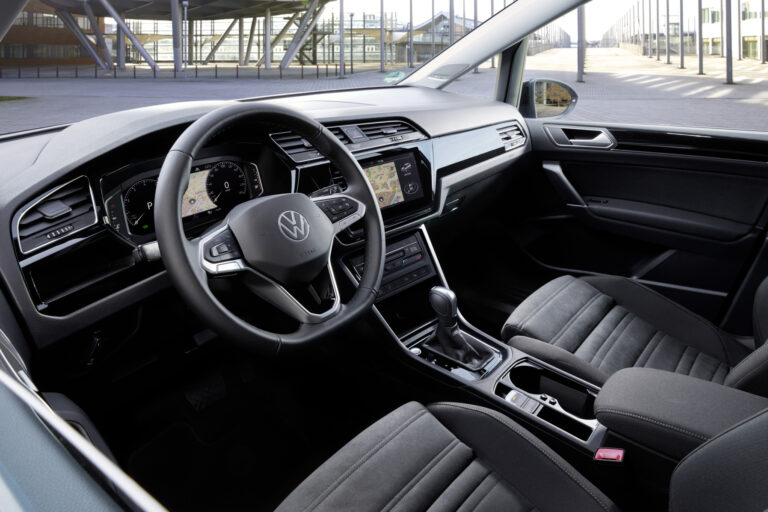
In addition to the larger technical systems, there are a few smaller, but not insignificant, aspects that deserve attention. Poorly functioning air conditioning is a frequently heard complaint. This is often caused by a leaking condenser or a faulty air conditioning compressor. Regular servicing of the air conditioning system prevents problems. Inside, the seat upholstery, particularly on the entry bolster of the driver’s seat, tends to wear relatively quickly. In addition, there have been cases of water ingress, often via a blocked drain channel of the panoramic roof or due to poorly sealing door rubbers.
Prevention is better than cure: tips for preventive maintenance
Many of the problems described can be prevented or detected at an early stage by consistent and preventive maintenance. Adhere strictly to the maintenance intervals prescribed by the manufacturer. Ensure timely oil changes using the correct specification oil, both for the engine and for the DSG transmission. Be alert to warning signs such as unusual noises, vibrations or warning lights on the dashboard. If in doubt, always have your car checked by a specialist who has experience with Volkswagen models.
What to do if you have problems? Diagnostics and repair
If you suspect there is a problem with your Touran, an accurate diagnosis is the first step. Reading out the fault codes in the on-board computer often gives a good indication of the cause, but this does not always tell the whole story. A good mechanic combines this data with a physical inspection and their experience. For complex issues, such as those with the DSG gearbox or persistent engine problems, it is advisable to consult a specialist company. They often have more in-depth knowledge and equipment than a general garage, leading to a faster and better solution.
‘ A well-considered choice and thorough inspection beforehand will save you a lot of worries and costs later on. ’
Buying tips and decision-making
Are you considering buying a used Touran? Always request the full service history and, preferably, have the car inspected by a specialist before purchase. Pay extra attention to the points mentioned, such as the condition of the DSG transmission, the timing chain on TSI engines and the state of the suspension. An MPV (Multi-Purpose Vehicle) such as the Touran is often used intensively for family transport, which means wear occurs more quickly. A well-considered choice and thorough inspection beforehand will save you a lot of worries and costs later on.