
Volvo V60: reliable estate car with known weak spots
The Volvo V60 is an estate car. It stands for Scandinavian design, safety and comfortable driving. The model combines practical usability with a contemporary look and offers space for families looking for a versatile car. However, like almost every car, the V60 has its weak points. Certain problems can occur regularly. That depends on the generation and engine type. Models that have been on the road for several years are extra sensitive. Is it worth choosing this Volvo, or are there hidden risks lurking beneath the surface?
Reliability of the Volvo V60 varies by generation
The Volvo V60 has two generations: the first appeared in 2010 and the second generation came onto the market in 2018. In general, the V60 scores from reasonable to good in terms of reliability, but not all variants are equally trouble-free. First-generation models (2010–2018) more often suffer from engine problems and electronics issues. The second generation performs better. Here too, there are still teething problems in the early production years. Diesel variants suffer from problems more often than petrol engines. Emission systems are prone to faults. With problems with Volvos you often see that they involve components that are relatively expensive to replace. Anyone considering buying a V60 would be wise to check the service history carefully and pay attention to the mileage and engine type.
‘ A common problem is a defective EGR valve (a valve in the exhaust gas recirculation system). ’
Engine problems mainly affect diesel and older petrol versions
With the first-generation V60 there are frequent complaints about the diesel engines, particularly the 2.0 D3 and D4 variants. A common problem is a defective EGR valve (a valve in the exhaust gas recirculation system). Over time the EGR valve becomes dirty. This causes faults in the exhaust gas recirculation. It can lead to loss of power, higher fuel consumption and vibrations while driving. The particulate filter on diesels often becomes clogged. This mainly occurs with cars that mainly do short trips. A blocked particulate filter can cause limp mode and requires costly replacement.
On petrol engines, owners sometimes see problems with the timing chain. This applies mainly to the 1.6 T3 and T4 engines. Wear on the chain or tensioners can cause engine damage. This happens if the problem is not detected in time. Symptoms include rattling noises on start-up and an irregular idle speed. Have the chain checked during services and replace it preventively at around 150,000 kilometres.
Solutions for engine problems
- Have the EGR valve cleaned regularly or replaced by a specialist.
- Drive a longer distance on the motorway at least once a month to burn off soot in the particulate filter.
- When buying, check whether the timing chain has already been replaced and ask for service records.


Transmission and drivetrain can cause problems
The Volvo V60 is available with both manual and automatic gearboxes. The six- and eight-speed automatics supplied by Aisin are generally regarded as reliable. Nevertheless, some owners report jerky shifting or delayed responses. This mainly occurs on cold starts. It can indicate worn transmission fluid or software issues. On the manual versions complaints are rarer, but clutch wear does occur at higher mileages.
The drivetrain of AWD models (four-wheel drive) sometimes has faults in the rear-axle drive. This happens especially in combination with the Haldex coupling (a system that distributes power between the front and rear axles). This coupling takes care of the distribution of power between the front and rear axles. The coupling can hesitate or slip, particularly if the oil is not changed regularly. Signs include loss of traction and warning lights on the dashboard.
Common causes of transmission problems
- Ageing or contaminated transmission fluid.
- Software errors in the transmission control unit.
- Wear on the Haldex coupling in AWD models.
Solution
Have the transmission fluid changed every 60,000 kilometres, even if the manufacturer does not explicitly recommend this. Ask your dealer for a software update if shifting is jerky. On AWD variants, the Haldex oil must be changed every 40,000 kilometres to prevent problems.
Electronics and infotainment system prone to faults
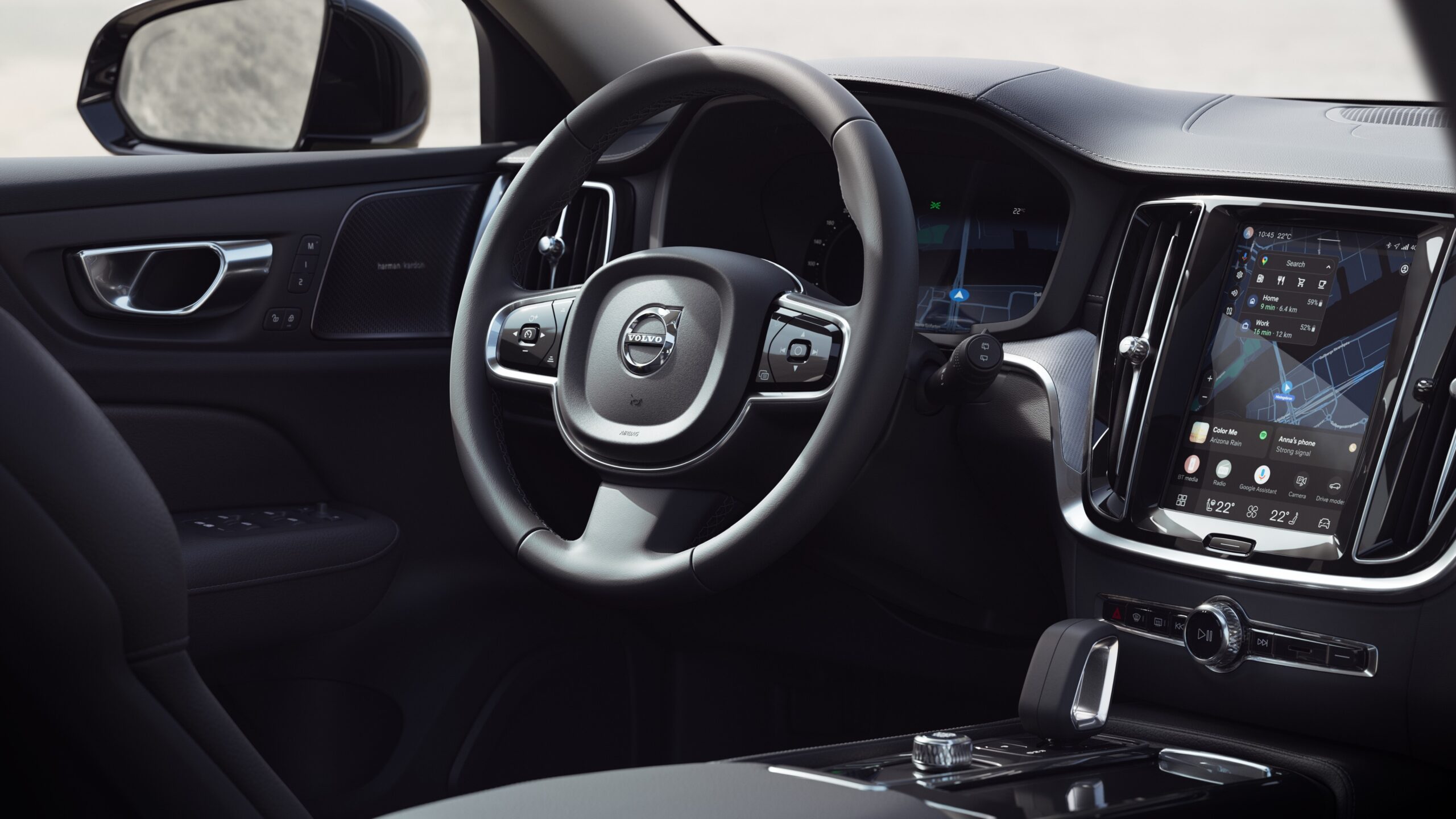
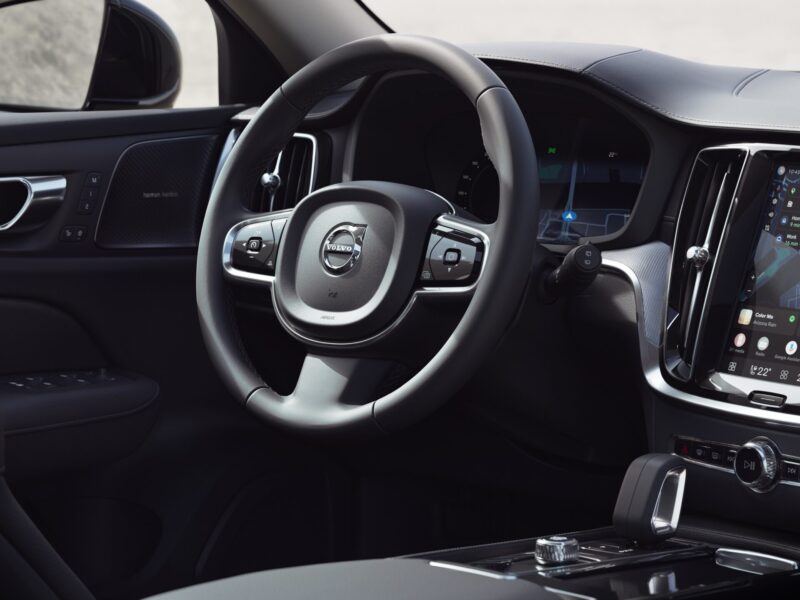
From the second generation V60 onwards, Volvo fitted a new infotainment system (the central system for information and entertainment). First, the brand introduced the Sensus platform (a multimedia system with touchscreen and voice control). Later, Google integration followed. These are modern systems. Owners regularly report software faults. Examples include frozen screens, stuttering navigation or problems with Bluetooth connections. A reboot often solves the problem temporarily, but in persistent cases a software update from the dealer is required.
In addition, sensor faults occur. This mainly happens around parking sensors and cameras. Dirt or moisture ingress can cause sensors to give false warnings or fail completely. The start-stop function also sometimes causes issues, particularly due to an ageing or weak battery.
Tips for electronics issues
- Keep the infotainment system up to date via the dealer or over-the-air updates.
- Clean parking sensors and cameras regularly to prevent error messages.
- Replace the battery in good time, especially if the start-stop function drops out more often.
‘ Defective shock absorbers lead to less stable handling and longer braking distances. ’
Chassis and suspension wear normally but with some points to watch
The suspension of the Volvo V60 is designed for comfort. As a result, certain components have a shorter service life. Shock absorbers sometimes start leaking as early as around 80,000 kilometres, especially on models with sports suspension. Defective shock absorbers lead to less stable handling and longer braking distances.
The front wishbones and bushes are prone to wear. Wear occurs more quickly if the car often drives on poor road surfaces. Symptoms include knocking noises when steering. Uneven tyre wear is also common. Wheel bearings can develop play over time, noticeable as droning noises while driving.
Chassis maintenance tips
- Have shock absorbers checked during the MOT and replace them if they are leaking.
- Check wishbones and bushes annually for cracks or play.
- Watch out for unusual noises and have wheel bearings replaced in time to prevent further damage.


Braking system and safety systems require attention
The brakes on the Volvo V60 generally perform well. There are, however, some points to watch. Models with larger wheels have higher wear. Brake discs and pads wear faster on these variants. Some owners report vibrations when braking. The cause is often warped discs. This mainly occurs if the car is used for many short trips where the brakes do not fully warm up.
The active safety systems (City Safety and adaptive cruise control) are sensitive to sensor issues. Dirt on the radar or camera behind the windscreen can cause these systems to fail or give false warnings. In many cases, cleaning solves this. With persistent problems the sensor must be calibrated.
Common causes of brake problems
- Warped brake discs due to uneven heating.
- Worn brake pads due to sporty driving or heavy loads.
- Dirty or damaged sensors for safety systems.
Solution
Have brake discs checked and replaced if there are vibrations. Occasionally drive a longer distance using the brakes to warm them up properly. Keep sensors clean and have them calibrated after replacing the windscreen.
Bodywork and interior with smaller but annoying problems
The bodywork of the Volvo V60 is solid. Some owners report water leaks around the tailgate and doors. This occurs more often on first-generation models and can lead to damp carpets or mould. Check the seals around the doors and tailgate for wear.
Rattles occur in the interior. This mainly happens in the dashboard and centre console. It is often the result of loose clips or poorly fitting panels. In addition, buttons and switches sometimes break. Examples include the window switches or the tailgate handle. These problems are not critical but can be irritating.
Interior points to watch
- Check seals regularly and replace them if they are cracked or hardened.
- Have rattles fixed by replacing clips or refitting panels more securely.
- Test all electrical functions when buying to uncover hidden defects.
‘ Make sure you have proof of completed recalls before buying a used V60. ’
Recalls and factory defects on the V60
Several recalls have been carried out for the Volvo V60. A well-known campaign concerned the fuel line on certain diesel models. This line could leak, creating a fire risk. There have also been recalls for problems with airbags and seat belts. This mainly affected models from the early production years. In addition, there have been campaigns for software problems in the engine management and emission systems.
Known factory defects include the weak timing chain on some petrol engines and the sensitive EGR valves (valves in the exhaust gas recirculation system) on diesels. The electronics on older models also have teething troubles, particularly the infotainment system and sensors.
Check recalls
Ask the dealer whether all recalls for your specific V60 have been carried out. You can also check this via the RDW website by entering the registration number. Make sure you have proof of completed recalls before buying a used V60.
Preventive maintenance significantly extends service life
Regular maintenance is advisable for the Volvo V60. It is also essential to prevent major problems. Have the car serviced every 15,000 kilometres or annually. Check and change all fluids during this service. For diesels, it is important to keep an eye on the EGR valve and the particulate filter. On petrol engines you need to watch the timing chain.
It is also worthwhile to have sensors and electronics checked regularly, especially if you see warning lights. Keep the software of the infotainment and engine management systems up to date via the dealer. For AWD models, changing the Haldex oil is a must. This prevents problems with the drivetrain.
Practical maintenance tips
- Follow the manufacturer’s service schedule strictly and keep all invoices.
- Regularly drive longer distances to allow the engine and exhaust system to warm up properly.
- Have the battery checked and replace it after five years to prevent electronics issues.
- Use quality fuel and occasionally add additives to diesels to keep the fuel system clean.
Recognise symptoms and act quickly
Many problems with the Volvo V60 can be prevented or limited if you react quickly to symptoms. Rattling noises on start-up can point to a worn timing chain. Jerky shifting often indicates transmission problems. Loss of power or an illuminated engine warning light demands immediate attention, especially on diesels with EGR or particulate filter issues.
Do you see warning lights for safety systems? First check whether the sensors are dirty. Vibrations when braking are a warning sign. Droning noises while driving also point to problems. Components are due for replacement. Do not ignore these, as postponed maintenance often leads to higher costs.
What to do with specific complaints
- Engine warning light on: have the fault codes read by a specialist.
- Jerky shifting: check transmission fluid and ask for a software update.
- Knocking noises underneath the car: have the chassis and suspension inspected.
- Infotainment freezes: try a reboot or ask the dealer for an update.
‘ This way you avoid expensive surprises and enjoy years of carefree driving. ’
The V60 remains a good choice, with some reservations
Planning to buy a V60 soon? Always ask for the service book and check whether important components have already been replaced. Have the car inspected before purchase by a specialist who is familiar with Volvo. Pay extra attention to the timing chain, the EGR valve and the condition of the Haldex coupling on four-wheel drive versions. After purchase, schedule a service straight away to replace worn components in time. This way you avoid expensive surprises and enjoy years of carefree driving.