
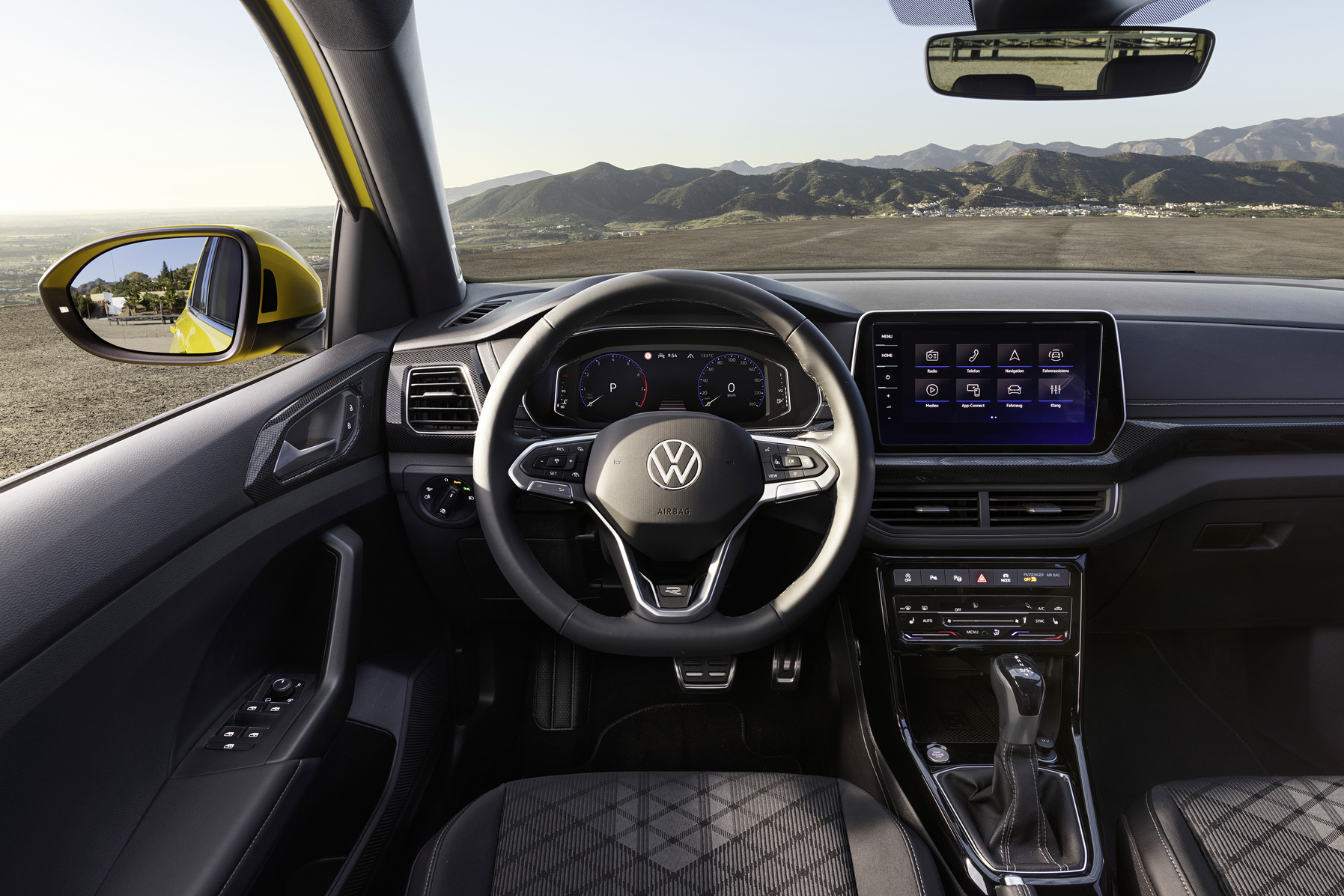
The new Volkswagen T-Cross 2026 promises a lot, but delivers a disappointing performance when it comes to steering and driving dynamics. The fahrgefühl – the overall driving feel – is less well balanced than you would expect from a modern Volkswagen, and the stiff suspension offers strikingly little in the way of real sportiness. For a compact city SUV that ought to be agile and comfortable, this model feels unexpectedly rigid. But what exactly makes the driving experience of the T-Cross 2026 so unbalanced?
Stiff suspension without sporty benefit
The suspension of the T-Cross 2026 is characterised by a firm setup you would expect from a car with sporty ambitions. In practice, however, this choice delivers very little. The springs feel firm and harsh, especially in town where you frequently drive over imperfections. This results in a restless driving experience where you can clearly feel every bump and every speed hump.
Volkswagen has opted for stiffer bushings and recalibrated engine mounts, but the result is a compromise that misses out on the best of both worlds. The suspension is too stiff for comfortable city use, yet not precisely enough tuned to truly deliver sporty performance. Owners familiar with Volkswagen T-Cross problems from previous years report that ride comfort has now become the main point of concern.
Over uneven surfaces the suspension does absorb impacts effectively, but without the smoothness you would expect from a modern SUV. The chassis feels planted on the road, which provides stability, but the price you pay is a lack of refinement. For everyday use in town this is a drawback you cannot ignore.
‘ For fans of dynamic driving this is a missed opportunity. ’
Is the T-Cross 2026 tuned for sportiness?
The short answer is: no, not really. Although Volkswagen presents the T-Cross 2026 with a sportier design and improved driving dynamics, this is largely marketing talk. The car has no four-wheel drive and lacks powerful hybrid options in the base trims. What you get is a compact SUV that feels slightly firmer than its predecessor, but does not offer genuinely sporty characteristics.
The steering is light and precise at low speeds, which supports agile city driving. At higher speeds the steering becomes heavier and more stable, which gives a secure feeling on the motorway. However, the direct feedback and lively character you expect from a sportily tuned car are missing. The responsive setup does react instantly to steering inputs, but this does not make up for the lack of real sportiness in corners.
On faster journeys or twisty routes the firm setup delivers little fun. The car feels predictable with limited body roll, but lacks the liveliness and enthusiasm that a hot hatch or sporty SUV does provide. For drivers who enjoy dynamic driving, this is a missed opportunity.
Cornering without spark
In corners the T-Cross 2026 behaves neatly but without excitement. The lighter chassis gives slightly more agility than the previous model, and grip on wet roads has been improved by traction software updates. Even so, the car does not feel truly lively when cornering. The suspension offers little compliance, so the driving experience feels more rigid than sporty.
The electronic stability systems do their job well and keep the car safely on course. But where a truly sporty car lets you feel what is happening under the wheels, the T-Cross keeps you at arm’s length. It is safe and dependable, but does not encourage enthusiastic driving. For a Sunday afternoon B-road blast this is not ideal; you will come up short if you are seeking real driving enjoyment.
How is the suspension tuned?
The suspension of the T-Cross 2026 is tuned to what Volkswagen calls a “balance between comfort and control”. In practice this means a firm setup with stiff dampers and bushings that allow little movement. The springs respond quickly to steering commands, but compensate less well for road imperfections than you would hope.
On smooth tarmac this setup works reasonably well, although the car never really feels comfortable. On poor surfaces or cobblestones the stiffness becomes a clear issue. Passengers will notice this particularly in the rear, where the lack of suspension comfort is most apparent. The combination of a higher seating position and the stiff suspension creates a strange paradox: you sit higher up for better visibility, but feel every bump as if you were in a lower sports car.
Compare this with rivals in the compact SUV segment and the T-Cross feels noticeably harsher. While other brands opt for adaptive dampers or softer base setups, Volkswagen continues to stick with a firm approach that offers little flexibility.
Can you make the T-Cross sportier?
For owners who still want more dynamism there are limited options. Upgrading to performance tyres can improve grip slightly and give more confidence in corners. However, this does not change the fundamental suspension setup. Some owners consider aftermarket suspension kits, but these are expensive and may affect the warranty.
The available driving modes do offer some adjustment. In Sport mode you get a sharper throttle response and slightly heavier steering via the link to the seven-speed DSG automatic or six-speed manual gearbox. This makes the steering feel more direct, but does not alter the suspension itself. The paddle shifters give you manual control over the gears, which adds some involvement, but the underlying setup remains unchanged.
Regular maintenance does help to preserve performance. Check tyre pressures consistently and keep them at the recommended 2.5 to 2.8 bar for optimal grip. Replace suspension bushings in good time if you drive a lot in town, to prevent rattles and avoid further deterioration in handling. These are practical steps, but they will not make the car any sportier than the design allows.
‘ It is a missed opportunity in a segment where rivals are increasingly choosing more driving involvement. ’
Does the T-Cross feel dynamic in corners?
The honest answer is: not particularly. The T-Cross 2026 feels controlled and stable, but lacks the lively character you expect from a sportily tuned car. Body roll is limited thanks to the stiff suspension, which in theory sounds good. In practice, however, this results in a flat, predictable experience without the fun of real driving dynamics.
During rapid changes of direction the car responds adequately, but without the lively feedback that enthusiastic drivers look for. Traction is good thanks to improved software and a better-tuned chassis, but this does not translate into an exciting driving experience. You feel planted on the road, which brings a sense of safety but little emotion.
For everyday commuting or doing the shopping this is sufficient. The T-Cross does what a compact SUV is supposed to do: transport people and luggage with a reasonable dose of comfort. But for car enthusiasts in search of driving fun, this setup offers little satisfaction. It is a missed opportunity in a segment where competitors are increasingly opting for more driving involvement.
Practical tips for more driving pleasure
Even though the T-Cross is no sporting high-flyer, with a few tweaks you can still get a bit more out of it. Try the following tips:
- Switch to Sport or Custom driving mode for a more direct throttle response and heavier steering on twisty routes
- Use the DSG paddle shifters for manual control of the gears; this increases driver involvement
- Check tyre pressures every month and keep them at the recommended value for optimal grip and handling
- Plan a test drive on different road types before you buy, so you can properly assess how stiff the suspension feels
- Consider performance tyres if you often drive on twisty roads; this improves grip without changing the suspension
These changes will not turn the T-Cross into a sports car, but they can slightly increase driving pleasure within the limits of the design. Do not expect miracles, but modest improvements are certainly possible.
What does the T-Cross 2026 stand for?
The Volkswagen T-Cross 2026 is designed as a practical compact SUV for everyday use. The focus is on agile city driving, stable motorway behaviour and sufficient ground clearance for light off-road use. Sportiness is not central to the design, despite marketing claims suggesting that this model is more dynamic than its predecessor.
The fahrgefühl – that sense of how a car feels on the move – remains less well balanced than you would expect from a modern Volkswagen. The stiff suspension creates a restless feel in town without offering the sporty benefits that could justify such a setup. On faster journeys the firm tuning delivers little in the way of dynamism or driving pleasure. The car performs adequately in terms of comfort and stability, but lacks the refinement and balance that this segment demands.
For buyers looking for a reliable, compact SUV for daily use, the T-Cross is a solid choice. But if driving dynamics and sportiness are high on your wish list, this is not the right model. Competitors often offer better setups that combine both comfort and fun. The T-Cross remains a practical choice, but is not inspiring when it comes to driving experience.
On the Carnews website you will find much more information about compact SUVs, driving dynamics and practical car-buying guides. Discover comparisons with rivals, maintenance advice and owner experiences to help you make the best choice for your situation.
Frequently asked questions
The steering precision of the VW T-Cross 2026 has clearly improved and feels direct and predictable, but it is still aimed more at comfort and confidence than at pure sporting sharpness. Steering feedback is sufficient to sense grip and direction well, but is more filtered than in the more sport-focused rivals, which often provide more road feel and heavier, more communicative steering. In fast corners the T-Cross remains stable and controllable with limited body roll, but it lacks the more playful, dynamic rear axle and the lively steering feel of truly sporty compact SUVs. As a result, it positions itself as safe and capable, but less engaging than the clearly sport-tuned alternatives in this segment.
On the VW T-Cross 2026, the suspension has been recalibrated with stiffer suspension bushings and modified engine mounts to limit body movements and provide more control in corners. In addition, the chassis has been made lighter, which contributes to more direct handling and less roll in bends. Taken together, these changes create more stable, taut road manners without completely sacrificing comfort.
Yes, the T-Cross 2026 offers driving modes including a Sport mode that sharpens throttle response and steering feel. In Sport the steering becomes noticeably heavier and more direct, and the DSG shifts later, which makes the car feel livelier. Even with a sportier suspension tune and larger wheels it looks and feels more dynamic. Nevertheless, the effect remains limited to a clearly sportier feel in everyday use, without turning it into a genuinely high-performance sports model.
Body control on the T-Cross 2026 has been noticeably optimised, with recalibrated suspension and a lighter, stiffer chassis that clearly reduce body roll in corners. As a result, the car remains more stable and predictable than its predecessor in quick changes of direction. This demonstrably contributes to a more dynamic driving experience, although the setup still represents a compromise between comfort and sportiness. It therefore feels nimble and confident, but not distinctly sporty in the way a true hot hatch would.
The engines with the highest power output and a flat, broadly usable torque curve – particularly the more powerful TSI variants (for example the 1.5 TSI with turbocharger) – best support the sporting ambitions of the T-Cross 2026. Turbocharged engines with sufficient capacity and modern boost control deliver their maximum torque from low to mid revs and maintain it for longer, which results in brisk in-gear acceleration and a direct throttle response. In combination with the 7-speed DSG, which keeps the engine in its optimal rev range, the sporty driving experience comes across most strongly. A lighter, less powerful TSI is lively enough for city use, but lacks the power and torque reserves needed for truly spirited driving.