
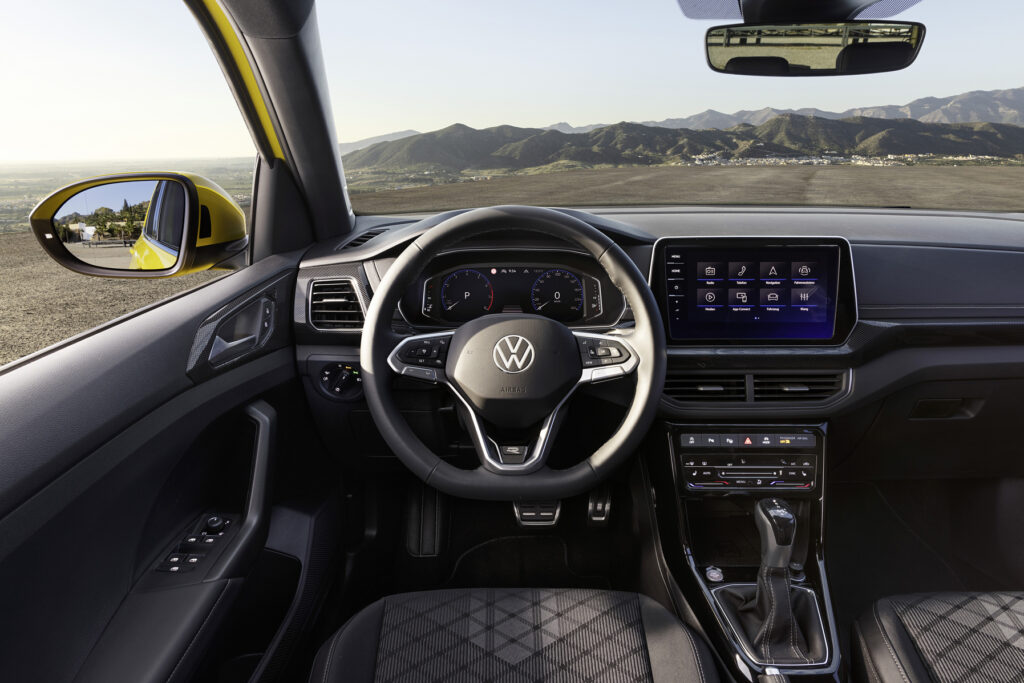
The VW T-Cross 2026 introduces Level 2 autonomous driving functions via the IQ Drive System. The car partly steers, brakes and accelerates by itself. You must always stay alert. This partial automation makes long journeys more comfortable and safer. The systems monitor speed and distance, recognise lanes and read traffic signs. The compact SUV combines practical driving characteristics with modern safety for everyday use and long distances. Discover how Level 2 technology changes your driving experience.
What is the IQ Drive System in the T-Cross 2026?
The IQ Drive System brings together multiple driving assist features into one coherent package. Travel Assist forms the core of this system. It operates from 30 kilometres per hour. This function automatically keeps a distance from vehicles ahead, adjusts speed based on traffic signs and gently steers within the lane. You activate Travel Assist via the multifunction steering wheel, ideal for traffic jams or motorway journeys.
The Volkswagen T-Cross integrates Lane Assist as a lane-keeping assistant. You unintentionally drift out of your lane. The system automatically corrects with subtle steering inputs. The car stays between the lines. Front Assist with City Emergency Braking detects pedestrians, cyclists and cars. The system performs an emergency stop when necessary. These features are available as standard or as options via the IQ Drive package.
Side Assist warns of vehicles in the blind spot. This is useful when overtaking. The optional IQ.Light LED Matrix adjusts the headlights to avoid dazzling oncoming traffic, making night driving safer. Driver fatigue detection and traffic sign recognition complete the system. All assist features work together to provide coordinated support while driving.
‘ The driver remains responsible for steering at all times. ’
Does the VW T-Cross 2026 drive fully autonomously?
The T-Cross 2026 does not drive fully autonomously. Level 2 automation involves certain limitations. The car maintains course and speed. You always keep your hands on the wheel. The system takes over lane-keeping and distance control. It still depends on your continuous attention. You take your hands off the wheel for too long. A warning follows. The assistance switches off.
Travel Assist reads the lane markings on the road. It combines this information with Adaptive Cruise Control. The result is smooth journeys. The system works best on straight road sections with clear markings. Lane Assist sometimes reacts too sensitively when driving on twisty roads. Temporarily switch the function off in that case. The driver remains responsible for steering at all times.
The system excels in traffic jams. It automatically moves along with the flow of traffic. The T-Cross brakes and accelerates smoothly with the vehicles in front, down to a standstill. The traffic starts moving again. Travel Assist activates automatically. Be aware of turbo lag with the DSG automatic gearbox. This can delay acceleration during overtaking manoeuvres.

How well does the self-driving technology of the T-Cross 2026 work?
The weather is good. The road markings are clear. The driver assistance systems function reliably. Rain, snow or roadworks with unclear lines reduce effectiveness. Lane Assist and Travel Assist then work less well. The system no longer detects the lane. It gives a notification. It temporarily switches over to distance control only. Test the functions at purchase on different types of roads to get used to how they work.
The systems respond more naturally and smoothly than previous generations. The steering corrections feel natural, without jerky movements. Front Assist reacts alertly to vehicles in front that brake suddenly. The system gives timely warnings. Automatic braking is often not even necessary. The distance control maintains a consistent gap to vehicles ahead. This also applies when speeds vary.
Update the software regularly via the Volkswagen app. This delivers optimum performance. During the test drive, ask about the Digital Cockpit Pro with 10-inch screen. It displays real-time information about active assist systems. Combine the IQ Drive package with parking sensors and a reversing camera. This gives you a complete overview in city driving. The T-Cross scores highly in Euro NCAP crash tests, partly thanks to these assistance systems. The systems protect vulnerable road users.
What is Level 2 automation in the T-Cross 2026?
Level 2 automation refers to partial driving automation. The vehicle carries out two core tasks at the same time: steering and controlling speed. The T-Cross independently maintains its position within the lane. The system monitors the distance to other vehicles. This combination works together, but the driver always remains responsible and must keep their hands on the wheel.
Level 3 autonomy works differently. You must remain constantly alert with Level 2. With Level 3, the driver may temporarily carry out other tasks, but the T-Cross 2026 does not offer that technology. Level 2 comes with requirements. You intervene within a few seconds when the system requests it. You keep your hands off the wheel for an extended period. Fines threaten in case of careless use.
Level 2 functions in the T-Cross
- Travel Assist with Adaptive Cruise Control for combined speed and steering control
- Lane Assist for automatic lane correction in case of unintentional drifting
- Front Assist with emergency braking function when obstacles are detected
- Side Assist for blind spot warnings
- Traffic sign recognition that displays speed limit signs on the dashboard
‘ Software updates via the dealer keep the system up to date. ’
Practical tips for using driving assist systems
Activate Travel Assist on motorways above 30 kilometres per hour. That delivers the best results. Start by testing on straight stretches. Get familiar with how it works. Keep your hands lightly on the wheel without applying force. This is how the system detects your presence. Temporarily switch off Lane Assist on winding roads. That way you avoid unnecessary steering corrections.
Keep the windscreen clean. The camera behind the interior mirror must be able to see the road markings. Mud, snow or dirt impairs operation. Dirt on the windscreen also disrupts the assist systems. Regularly check that the sensors around the car are free of obstructions. Remove stickers or dirt. Software updates via the dealer keep the system up to date. This way you get the latest improvements.
The T-Cross offers up to 1281 litres of luggage space with the rear seat folded down. The car remains suitable for weekend trips and practical transport. The warranty is four years. This covers the electronics of the driver assistance systems. Add keyless entry and park assist via the IQ Drive package. That way you get a full equipment level. You are going to overtake. Anticipate possible delay from the DSG automatic gearbox.

Safety and performance of the T-Cross 2026
The T-Cross 2026 achieves high scores in Euro NCAP safety tests. Crash protection for occupants and pedestrians is strong. The driver assistance systems contribute to preventive safety. They help to prevent accidents. Front Assist with City Emergency Braking operates from low speeds in urban traffic. Sudden situations involving cyclists and pedestrians occur more often there.
Driver fatigue detection analyses your steering behaviour. It warns you when there are signs of reduced alertness. The system detects irregular steering corrections. It also recognises long driving periods. It then advises taking a break. The combination of preventive and protective safety systems makes the T-Cross suitable for everyday use. Families and commuters benefit from this.
Level 2 automation makes long journeys less tiring. The system takes over routine tasks. It maintains distance in traffic jams. It keeps the car centred in the lane. You stay more alert to unexpected situations. These still require your direct response. The technology supports without taking over. This suits a compact SUV for versatile use.
Discover more on Carnews
On the Carnews website you will find extensive information about the latest car technology. You will find practical maintenance advice and comparisons between models. Explore other advanced driving assistance systems. Read about experiences with different Volkswagen models. Discover tips for optimal use of modern car electronics. Stay informed about developments in autonomous driving technology and safety systems. Visit regularly for new articles.
Frequently asked questions
In the VW T-Cross 2026, the Level 2 driving functions will include Travel Assist with Adaptive Cruise Control (ACC), which automatically keeps distance, adjusts speed and steers within the lane. In addition, Lane Assist (lane-keeping assistant) and Front Assist with City Emergency Braking are included, with pedestrian and cyclist detection. Side Assist (blind spot assistant) is also part of the package. Optionally, IQ.Light LED Matrix headlights are available, which automatically adjust the light beam.
Level 2 systems such as Travel Assist and ACC make driving calmer and less tiring, especially on long motorway journeys, which makes the driving feel more comfortable but also a bit more detached. Because the car partly steers, brakes and accelerates, the driver’s role shifts from actively ‘attacking’ to more monitoring and supervising, which may feel less satisfying for a motorsport enthusiast. The subtle steering corrections from Lane Assist can also give the impression that you are not fully choosing your own lines, especially on twisty sections. On the other hand, you can consciously use these systems only in boring or congested traffic, so that you retain full control and involvement on interesting stretches.
The autonomous functions of the VW T-Cross 2026 (Level 2) perform best in good visibility, with clear road markings and predictable traffic, such as on motorways and in traffic jams. In rain, poor visibility or roadworks, the accuracy of systems such as Travel Assist and Lane Assist decreases noticeably, meaning the driver must steer more actively. Front Assist with City Emergency Braking continues to provide support in town and in dense, complex traffic, but is intended as an emergency assistance system and not to replace the driver’s attention. In twisty or unclear situations, Lane Assist can be perceived as too sensitive, causing some drivers to temporarily switch the system off.
The systems are limited to Level 2: they can steer, brake and accelerate, but the driver remains fully responsible and must always keep their hands on the steering wheel; operation also depends on clear road markings and good weather conditions. The user interface runs via the multifunction steering wheel, the instrument panel (Digital Cockpit Pro) and visual symbols in the display, often supplemented by acoustic signals. The driver is informed via warnings on the screen, sound signals and sometimes steering wheel vibrations when they need to intervene or have taken their hands off the wheel. If the driver does not respond to warnings, the system can partially switch itself off and reduce or stop the assistance.
The Level 2 system of the VW T-Cross 2026 (with Travel Assist and ACC) is comparable in effectiveness to that of its main competitors: it reliably maintains distance, reads traffic signs and remains stable within the lane, especially on motorways and in traffic jams. In terms of ease of use, it is in line with the market thanks to simple operation via the steering wheel and clear display in the Digital Cockpit, although Lane Assist can be perceived as somewhat sensitive on twisty roads. Compared with some competitors, the T-Cross mainly excels in the intuitive integration of multiple assistance systems into a single package (IQ.Drive). This positions it as a user-friendly, but not exceptionally more advanced, player within the Level 2 segment.