
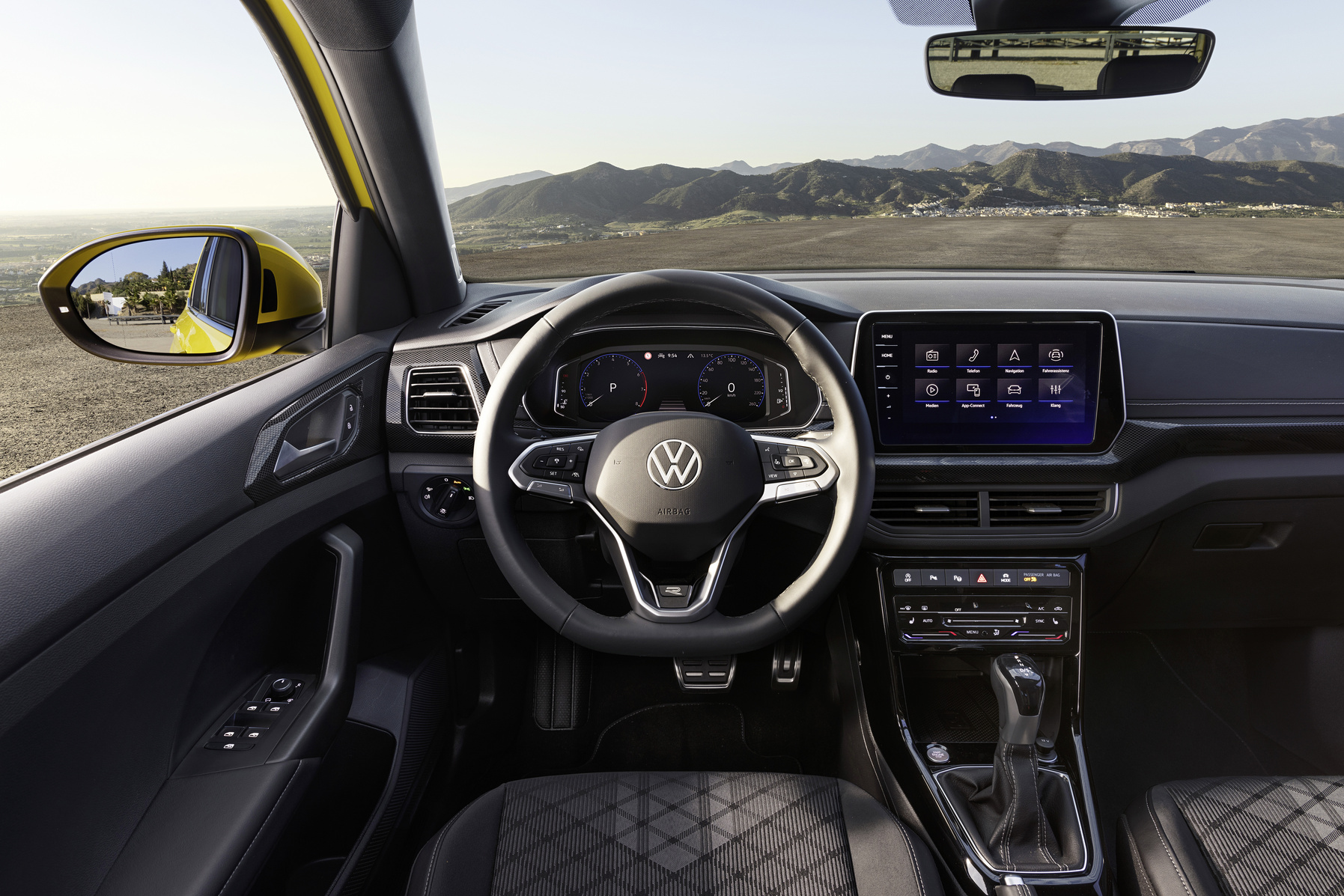
The three-cylinder 1.0 TSI in the VW T-Cross 2026 produces noticeably more noise than the four-cylinder 1.5 TSI. This is especially audible at higher speeds. Wind and road noise can be heard from motorway speeds upwards. Thanks to the improved sound insulation these noises are not intrusive. This is good news if you are looking for a compact SUV. The car remains pleasantly quiet on uneven roads and on the motorway. Read on to discover how this engine performs in everyday driving.
How loud is the three-cylinder engine in daily use
The 1.0 TSI three-cylinder in the Volkswagen T-Cross is available with two power outputs. You can choose between 95 hp and 116 hp. Both engines give a cheerful growl when accelerating, but stay in the background acoustically during normal use. The engine features turbo technology and direct injection. As a result, the engine never sounds intrusive. When driving gently in town and on country roads, the noise level is acceptable.
At higher speeds the character of the engine changes. From 180 km/h upwards, the engine noise becomes dominant. On the motorway, engine noise above this speed is loud. Holding conversations or listening to the radio becomes more difficult. The top speed is around 193 km/h, a pace at which the three-cylinder is clearly audible. For everyday use within normal speed limits this is not an issue.
‘ Mild-hybrid technology is a light electric system that supports the combustion engine to reduce fuel consumption and emissions. ’
Comparison between 1.0 and 1.5 TSI engine variants
The 1.5 TSI four-cylinder with 150 hp is considerably quieter. The 1.0 TSI produces more noise. This engine features cylinder deactivation. Under low load, the system shuts off two cylinders for more efficient driving. The result is a more refined sound pattern, especially at a constant speed. The four-cylinder runs more smoothly and produces fewer vibrations. You feel these vibrations through the steering wheel or in the seats.
Both engines are purely petrol. They are not equipped with mild-hybrid technology. Mild-hybrid technology is a light electric system that supports the combustion engine to reduce fuel consumption and emissions. This keeps the sound more authentic. The insulation is less effective than in hybrid versions. The 1.5 TSI comes as standard with a DSG automatic transmission. This gearbox shifts smoothly. At low speeds the gearbox sometimes hesitates. This hesitation can cause additional vibrations. This is especially noticeable in combination with the start-stop system.

Which engine is quieter in real-world use
The 1.5 TSI four-cylinder is clearly the winner in terms of noise levels. At all speeds this engine remains calmer and more refined. Compared to the 1.0 TSI it has two extra cylinders. These provide better balance and fewer audible vibrations. This makes it more suitable for longer trips and motorway use.
The 1.0 TSI three-cylinder is still a very good choice if you mainly drive in town. Its compact character suits the size of the T-Cross. Choose the 116 hp version with manual gearbox. This combination offers the best balance between price and acoustic comfort. With the three-cylinder, the DSG automatic can actually amplify vibrations while shifting.
Wind and road noise on the motorway
At higher speeds wind and road noise are audible in the T-Cross 2026. This is normal for a compact SUV with a relatively upright body shape. The A-pillars and door mirrors cause light wind noise from around 100 km/h. Air flows along the window pillars create this noise. These sounds are noticeable but not disturbing.
The improved sound insulation in the 2026 version delivers a noticeable step forward. VW has added extra acoustic insulation in the doors and wheel arches. Acoustic insulation consists of special materials such as foam layers and damping mats that block sound. This reduces unwanted noise on uneven roads. The insulation also works well on the motorway. On smooth Dutch motorways, the cabin remains pleasantly quiet.
‘ The DSG transmission shifts quickly but does not always work perfectly in combination with the start-stop system. ’
Droning and vibrations on different road surfaces
The T-Cross chassis offers plenty of reserves for sporty driving. On poor road surfaces the car feels a little firmer. With 16 or 18 inch wheels you feel vibrations more strongly. Smaller tyres provide better cushioning. On manhole covers and bumps you clearly notice the sporty set-up.
The DSG transmission shifts rapidly but does not always work perfectly in combination with the start-stop system. When pulling away from a standstill you sometimes feel a thump. This vibration is clearly transmitted through the car. It is most noticeable with the three-cylinder engine. Front doors and wheel arches can amplify these vibrations. You notice this in city traffic with frequent stopping and starting.
Tips for better acoustics
There are practical ways to improve the noise level in the T-Cross. Consider the following changes:
- Choose the manual gearbox with the 1.0 TSI for less sensitivity to vibrations
- Avoid 18 inch wheels on Dutch roads to reduce vibrations
- Always test on the motorway and poor road surfaces during a test drive
- Upgrade the audio system with DSP and door insulation if engine droning annoys you
- Opt for the Life Edition with 115 hp for a balance between price and noise levels
These choices make an immediate difference to acoustic comfort. Extra insulation in the doors significantly reduces vibrations. The additional materials dampen vibrations effectively. The effect is particularly noticeable at higher speeds and on rough road surfaces.
Positive experiences with noise levels
On cruise control the T-Cross 2026 is quiet and comfortable. The excellent view from the driver’s seat reduces stress. This also contributes to the perceived sound balance. At a normal motorway speed of 120 km/h the cabin remains pleasantly quiet.
The start-stop system and recuperation work smoothly together in town. Recuperation is the recovery of energy when braking, where the car generates electricity to recharge the battery. This system works silently. It contributes to a calm sound pattern. In city traffic the car remains pleasantly quiet. As long as you stay within normal speed limits, the noise level is acceptable for this compact SUV class.
‘ This combination makes driving at this speed for long periods tiring. ’
Points of attention at high speeds
Above 180 km/h the interior becomes noisy. This is especially noticeable with the three-cylinder engine. Engine noise, wind noise and road noise add up. This combination makes driving at this speed for long periods tiring. You will reach the top speed, but acoustic comfort drops sharply.
In city traffic the DSG automatic can hesitate. This creates extra vibrations. This is not a fault, but inherent to how this transmission operates at low speeds. It takes a bit of getting used to, but is not problematic for the car’s lifespan.

Testing your personal noise tolerance
Every driver experiences noise differently. The cheerful growl of the three-cylinder gives some people driving pleasure. Others find it annoying. A thorough test drive is therefore essential. Test on different types of road and at different speeds.
Pay particular attention to how you experience the noise with your normal driving style. If you drive a lot on the motorway, the 1.5 TSI is probably more suitable. For mainly city driving, the 1.0 TSI with 116 hp is more than adequate.
On the Carnews website you will find much more information. You can find technical specifications, maintenance costs and real-world experiences with various VW models. Discover more articles about engine performance. There are comparisons between different variants and useful tips for your next car choice.
Frequently asked questions
Volkswagen reduces droning and vibrations in the T-Cross 2026 mainly by using a relatively smoothly tuned 1.0 TSI three-cylinder and the more refined 1.5 TSI engine, which at normal speeds remain in the background acoustically. The chassis is set up to offer plenty of reserves and to filter out most irregularities, although vibrations on poor road surfaces are still noticeable with larger wheels. The DSG automatic and the start-stop system have been further optimised to limit jolts and additional vibrations when pulling away. For extra comfort, Volkswagen recommends smaller wheels and – where desired – additional insulation for the doors and wheel arches to dampen any remaining droning in the interior.
For the 2026 VW T-Cross, no explicit new structural measures are mentioned that are specifically aimed at extra damping or redesigning the engine mounts, suspension or body structure to tackle intrusive resonances and vibrations. The documentation mainly describes the acoustic character of the existing engines (1.0 TSI and 1.5 TSI) and the influence of the DSG gearbox, wheel sizes and road surface on vibrations and droning, without referring to concrete technical changes such as extra insulating material, modified engine mounts or specific dampers against resonances.
In normal use, the 2026 VW T‑Cross offers a relatively low noise level, with the 1.0 TSI three-cylinder remaining largely in the background acoustically, especially at low to medium speeds. At higher speeds and on poor road surfaces, however, engine noise, droning and vibrations clearly increase, making the interior noisier. Compared with key rivals in the compact SUV segment, it is therefore average to slightly noisier, particularly at motorway speeds and with larger wheels. Competitors with better insulation or (mild) hybrid drivetrains generally let less engine and tyre noise penetrate the cabin.
The noise level in the 2026 VW T-Cross is generally low at normal speeds, so long journeys remain relatively comfortable. At higher speeds, especially close to the top speed, engine noise, droning and tyre roar increase noticeably, which can make conversations and listening to the radio more difficult. On poor road surfaces, vibrations and resonances in the doors and wheel arches negatively amplify the acoustic experience. With smaller wheels and additional acoustic insulation, the cabin can feel quieter, improving comfort on long distances.
For the 2026 VW T-Cross, no specific factory options are mentioned that explicitly add extra sound insulation or vibration comfort beyond the standard equipment. However, choosing smaller wheels (for example, avoiding 18 inch) can noticeably improve vibration comfort. In practice, owners also often opt for aftermarket acoustic insulation for the doors and wheel arches to further reduce droning and engine noise.