
The VW T-Cross 2026 makes no compromises on safety. This compact SUV combines protection with convenience. With advanced Travel Assist, autonomous emergency braking functions and a comprehensive range of driver assistance systems, this model offers protection at every level. From cross-traffic detection to Emergency Assist: the T-Cross thinks along with you and intervenes in critical situations. Discover how this technology makes your journeys safer and more relaxed.
Travel Assist makes long journeys relaxing
Travel Assist combines Adaptive Cruise Control with Lane Assist for semi-automated driving. The system controls acceleration, braking and steering at the same time. The car stays centred in the lane. It also keeps its distance from vehicles ahead. The latest version responds predictively. When the car approaches a speed limit, it slows down smoothly. When a limit is lifted, it accelerates in anticipation.
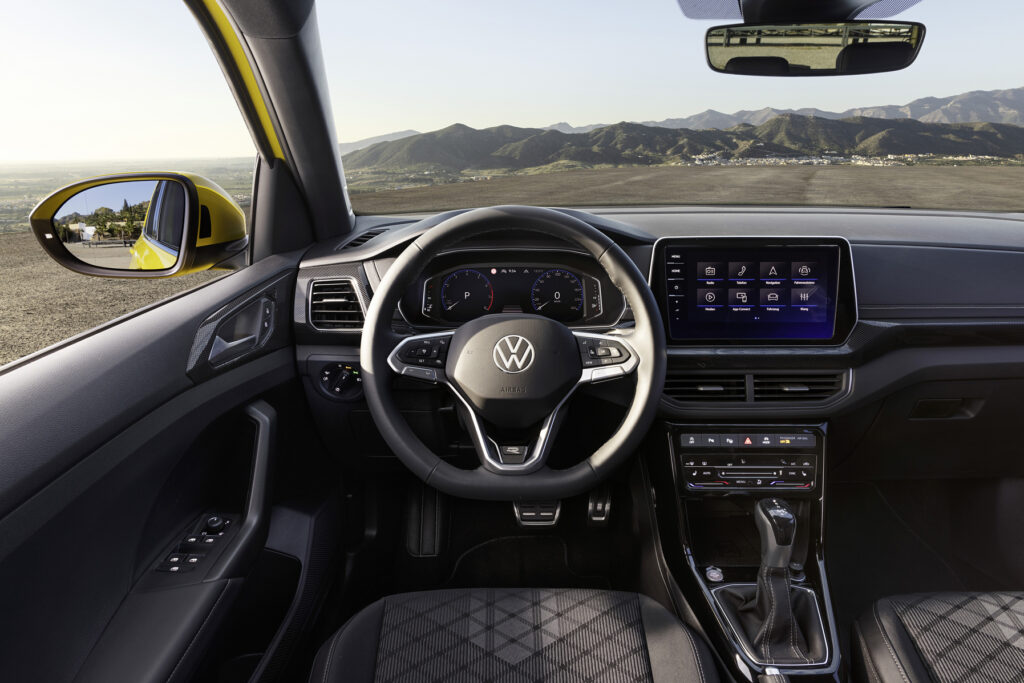
On the motorway, Travel Assist now supports assisted lane changes using swarm data (crowdsourced data from other vehicles). Activate the system via the steering wheel by pressing the ACC button, followed by the Travel Assist button. A green indication on the digital cockpit display confirms activation. You set the desired following distance in five levels, from short to long, and adjust the speed using the SET and RES buttons.
Anyone who regularly uses the motorway will notice the difference straight away. Owners of the Volkswagen T-Cross report less stress in traffic jams thanks to the smooth acceleration and lane centring. The system supports the driver over longer distances. You remain alert, but the driving task becomes lighter. For optimum performance, choose Eco mode on long journeys for more economical driving, or Comfort for everyday use.
‘ This function is crucial in cases of fatigue or medical issues and is part of the Travel Assist package. ’
Emergency Assist responds in medical emergencies
When the driver no longer responds, Emergency Assist is automatically activated. This system steers the car towards the hard shoulder, activates the hazard warning lights and brings the vehicle to a safe stop. This function is crucial in cases of fatigue or medical issues and is part of the Travel Assist package.
The T-Cross 2026 is also equipped with a Drowsiness Monitor (fatigue detection). This system analyses steering behaviour and warns the driver at signs of fatigue. On longer journeys or at night, this offers an extra safety layer that can prevent accidents caused by falling asleep at the wheel.

Front Assist prevents collisions
Front Assist provides standard collision warning for forward traffic. The system detects pedestrians and cyclists. In the event of imminent danger, the car brakes automatically. Even at low speeds, for example in urban traffic, the automatic emergency braking function actively helps to prevent collisions or reduce their impact.
This assistance system works together with the other safety functions and forms the basis of the protection package. Combined with Lane Assist, it ensures that the T-Cross remains vigilant both in front and to the sides, which is particularly valuable in heavy traffic.
Side Assist and Rear Traffic Alert cover blind spots
Side Assist provides blind spot monitoring with lane change support. The system warns when a vehicle is driving in the blind spot, thereby preventing dangerous lane changes. Rear Traffic Alert extends this protection to the rear. This system has an automatic braking function for cross-traffic when reversing.
These functions are optional or standard on higher trim levels. For city drivers who deal with many junctions and busy car parks, investing in the Driver Assistance Pack is worthwhile. New sensors detect cross-traffic more effectively than previous generations, greatly reducing the risk of damage when reversing.
Park Assist and 360° camera system simplify parking
The 360° camera system shows a complete bird’s-eye view of the surroundings. This makes parking easier. The system combines images from several cameras into one clear image on the central display. Front and rear parking sensors supplement this with audible signals when there are obstacles.
Park Assist is available from the mid trim levels and includes:
- Reversing camera with dynamic guidelines
- 360° view for complete oversight
- Front and rear parking sensors
- Automatic parking assistance for parallel parking spaces
The systems work accurately and respond quickly to obstacles. Keep cameras and sensors clean for optimum performance, especially in bad weather.

Light Assist adjusts lighting automatically
Light Assist automatically controls the main beam based on traffic conditions. The system switches off the main beam when there is oncoming or preceding traffic and switches it back on when the road is clear. Dynamic Light Assist is available on top versions. This system adjusts the light beam even more precisely, ensuring you do not dazzle other road users.
This automatic main beam control significantly improves visibility when driving at night without you constantly having to switch manually. Combine this with the rain sensor for a lighting system that fully adapts to the conditions.
Passenger protection goes beyond airbags
The T-Cross 2026 comes as standard with a comprehensive airbag system with airbags for driver and front passenger, plus curtain and side airbags. Three head restraints in the rear provide protection for all passengers. The proactive protection system tightens the seat belts and closes the windows in the event of an impending collision.
Additional safety features include:
- Hill start assist when starting on inclines
- Tyre pressure monitoring for timely warnings
- Keyless entry with automatic locking
- Rain sensor for automatic windscreen wipers
These functions increase everyday convenience and safety without you having to think about them actively. The tyre pressure monitoring system, for example, warns you in good time if the pressure is too low, which can help prevent blowouts.
‘ In the compact SUV class, with this Travel Assist the T-Cross is among the frontrunners in terms of driver assistance systems. ’
Practical tips for optimum use
For those who commute every day, Travel Assist comes into its own on motorways. First test the system at quieter times. That way you build confidence in how it works. Always keep your hands on the steering wheel, because the system will not just brake without a vehicle in front and still requires you to stay alert.
Increase the following distance in wet conditions by choosing a wider setting. This increases your reaction time if the system does not assess a situation perfectly. Keep the sensors behind the VW badge and around the car clean for reliable operation, especially after rain showers or in winter.
In the compact SUV class, with this Travel Assist the T-Cross is among the frontrunners in terms of driver assistance systems. Choose the full IQ.DRIVE package for the complete range of safety technology and drive with the confidence that the car is actively thinking along with you.

Discover more about the Volkswagen T-Cross
The VW T-Cross 2026 shows how modern safety systems transform compact SUVs into vigilant driving partners. From semi-automated driving to automatic emergency braking: these assistants work continuously to protect you. View the full overview of specifications, trim levels and practical maintenance advice to make optimum use of this technology.
Frequently asked questions
Travel Assist in the 2026 VW T-Cross offers a relatively advanced level of semi-automated driving in this segment by combining ACC, Lane Assist and predictive speed adjustment, including anticipatory deceleration and acceleration at speed limits. Compared with many direct competitors, the system goes further with functions such as assisted lane changes with swarm data, which results in smoother lane changes. Operation is tightly integrated into the steering wheel and digital cockpit with clear, simple activation (one button, green status indication) and intuitive distance setting. In the compact SUV class, this package ranks among the more user-friendly and technically complete solutions, lowering the threshold for everyday use on motorways and in heavy traffic.
In the VW T-Cross 2026, the assistenzsystemen respond faster and more predictively, especially Travel Assist, which now decelerates and accelerates more smoothly when speed limits change. Lane centring and Adaptive Cruise Control have been refined for a more stable course and more constant following distance, even in stop-start traffic. Thanks to swarm data, lane changes and motorway assistance are smoother and more consistent under varying speed and traffic conditions. In addition, Emergency Assist intervenes more reliably by bringing the vehicle to a controlled stop if the driver does not respond, increasing safety in unexpected emergencies.
The VW T-Cross 2026 does offer settings for the ACC following distance, driving mode (e.g. Eco/Comfort) and (partly) the intensity of certain assistance systems, but there is no central menu that lets you set the overall “intensity” of all assistenzsystemen as a single balance between assistance and control. You can therefore adjust certain parameters per system or switch systems on and off, but you cannot use a single overarching assistance-level slider.
The veiligheidsfeatures and assistenzsystemen of the 2026 VW T-Cross are part of the IQ.DRIVE platform, but it is not specified that they can be updated via over-the-air (OTA) software updates. The emphasis is on the current integrated functions such as Travel Assist, ACC, Lane Assist, Emergency Assist and the various parking and driving assistance systems. As a result, it is unclear whether future functional extensions (for example improved lane centring, additional automation levels or more extensive swarm data functions) will be made available via OTA.
The new assistenzsystemen and Travel Assist make the driving experience in the VW T-Cross 2026 calmer and more relaxed, especially on motorways and in traffic jams. Because acceleration, braking and steering are partly taken over, the car feels more predictable and less tiring to drive. At the same time, the feeling of a direct, “mechanical” connection with the road can diminish somewhat, because systems such as Lane Assist and ACC constantly make subtle corrections. For drivers who like to drive dynamically and actively, this means they will consciously need to switch functions off more often to feel fully in control themselves.