
The Volkswagen T-Cross 2026 features improved sound insulation that makes journeys on motorways and uneven roads noticeably quieter and more relaxing. The elevated seating position offers practical everyday convenience, while sharp bumps are neatly filtered out. The suspension is set up relatively firmly, which results in less dynamism but does provide a controlled and predictable driving experience. Curious how this compact SUV performs when it comes to comfort and quietness?
Sound insulation that makes the difference
The T-Cross 2026 stands out with excellent sound insulation. The interior is fitted with optimised insulation that clearly reduces road noise. This results in a calm cabin, especially on longer motorway stretches. The combination of strategic insulation and well-tuned suspension ensures your surroundings feel composed. External conditions play less of a role. Heavy traffic and poor road surfaces are kept noticeably more outside.
Compared with direct rivals such as the Ford Puma and Nissan Juke, the T-Cross performs better in terms of quietness. The Volkswagen T-Cross is slightly less comfortable than the Skoda Kamiq or VW T-Roc, but remains a solid choice within its class. Wind noise and engine sound stay well under control, even at higher speeds.
The sound insulation directly helps to reduce fatigue while driving. You have to compensate less for ambient noise, which is especially pleasant on business trips or long holiday journeys. This makes the T-Cross suitable for a range of uses, from commuting to weekend getaways.
‘ The suspension is set up relatively firmly, which provides stable handling but offers less flexibility in dynamic situations. ’
Suspension and ride comfort in balance
The suspension of the T-Cross 2026 absorbs imperfections well. Short, sharp bumps are cleanly filtered out without carrying through into the cabin; think of expansion joints in the road surface or small potholes. The suspension is set up relatively firmly, which provides stable handling but offers less flexibility in dynamic situations.
On smooth motorways the T-Cross feels composed and predictable. The chassis responds calmly to changes in the road surface. On rougher roads or gravel tracks comfort remains reasonably intact, though larger bumps can still be felt. The firm suspension means you notice sharp jolts more clearly than in some other compact SUVs.
The handling can be described as stable and trustworthy. The car tracks straight and true, which inspires confidence on motorway journeys. Some drivers seek a sportier driving feel; for them, the set-up may feel a little too conservative. For everyday use and comfort, the suspension offers a good balance.
Raised seating position for better visibility
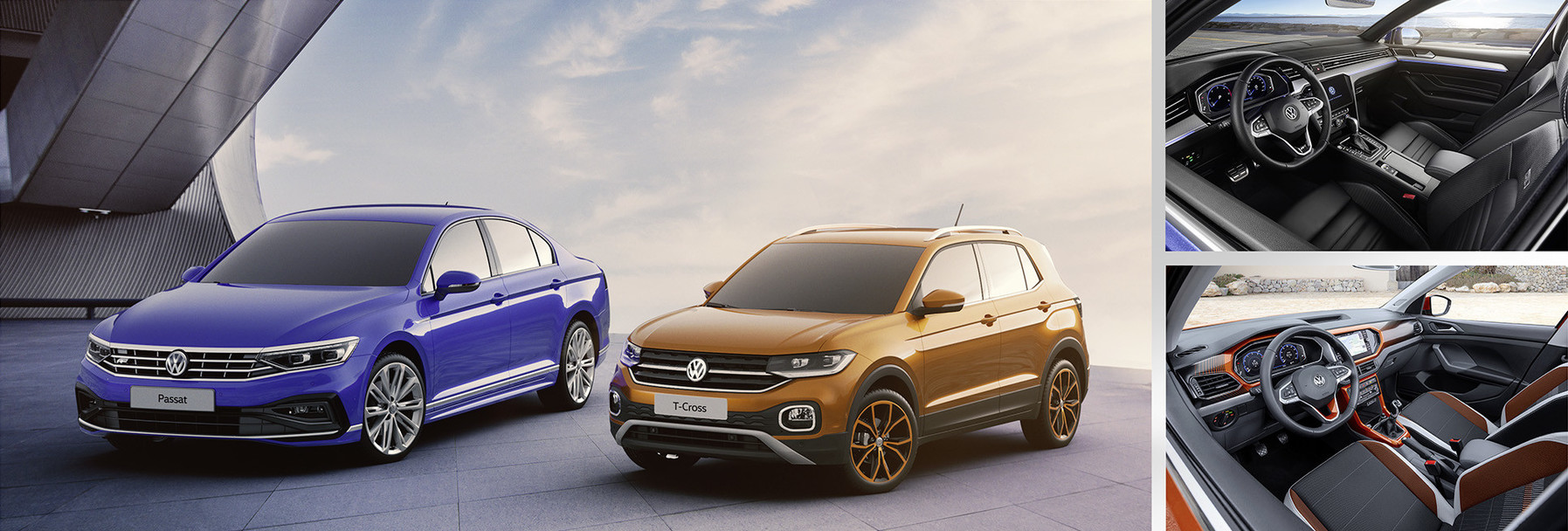
The high seating position is a clear advantage of the T-Cross. You get a commanding view of the road, which improves visibility in traffic. This is practical in busy urban environments, when parking and during overtaking manoeuvres. The SUV character really comes to the fore here.
The seats are ergonomically designed with improved padding and lumbar support. This provides sufficient support on both short trips and longer journeys. The combination of seating position and seat comfort contributes to a relaxed posture behind the wheel.
Taller drivers enjoy ample legroom in the front. Headroom is as generous as in a VW Polo, meaning people up to about 1.80 metres can sit in the front without issues. The seat adjustment range is wide, making it easy to find a comfortable driving position.
Steering that adapts to driving conditions
The steering of the T-Cross 2026 is responsive and adapts to different situations. In town the steering feels light and agile, making manoeuvring in tight car parks and narrow streets easier. At higher speeds the steering gains more weight, which gives extra confidence on motorways.
The steering response is direct without becoming nervous. You feel enough of the road to anticipate well, but excessive feedback is avoided. This makes the T-Cross accessible to different types of drivers, from beginners to experienced motorists.
The steering contributes to the stable character of the vehicle. In corners the car remains easy to control, without giving the impression it wants to break away. The combination of steering and suspension delivers predictable handling in a range of conditions.
‘ The T-Cross offers more legroom and headroom than rivals such as the Ford Puma and Seat Arona. ’
Space and flexibility in a compact format
Despite its compact exterior dimensions, the T-Cross offers an impressive amount of interior space. The car is 4,127 mm long, 1,977 mm wide and 1,573 mm high. Thanks to clever design choices and efficient use of space, the interior feels roomier than you would expect from the measurements.
Rear space is a strong point. The T-Cross offers more legroom and headroom than rivals such as the Ford Puma and Seat Arona. Two adults of 1.80 metres can sit comfortably in the back, even behind front occupants of the same height. This makes the T-Cross suitable for families or for regularly carrying passengers.
A unique feature is the sliding rear bench, which is standard on all models. This allows you to prioritise either rear passenger space or boot capacity, depending on your needs at that moment. In the rearmost position it offers considerable legroom, while sliding it forwards maximises luggage space.

Practical boot space with flexibility
Boot capacity ranges from 385 to 455 litres, depending on the position of the sliding rear bench. Fold both rear seats down completely and total capacity rises to 1,281 litres. That provides enough room for everyday shopping, sports gear or suitcases for a weekend away.
The load floor is flat, which makes transporting larger items easier. You do not have to contend with awkward ridges or slopes, which is practical when loading and unloading. Thanks to the flexibility of the sliding bench, the T-Cross can be used in many different ways.
Modern cockpit with digital instruments
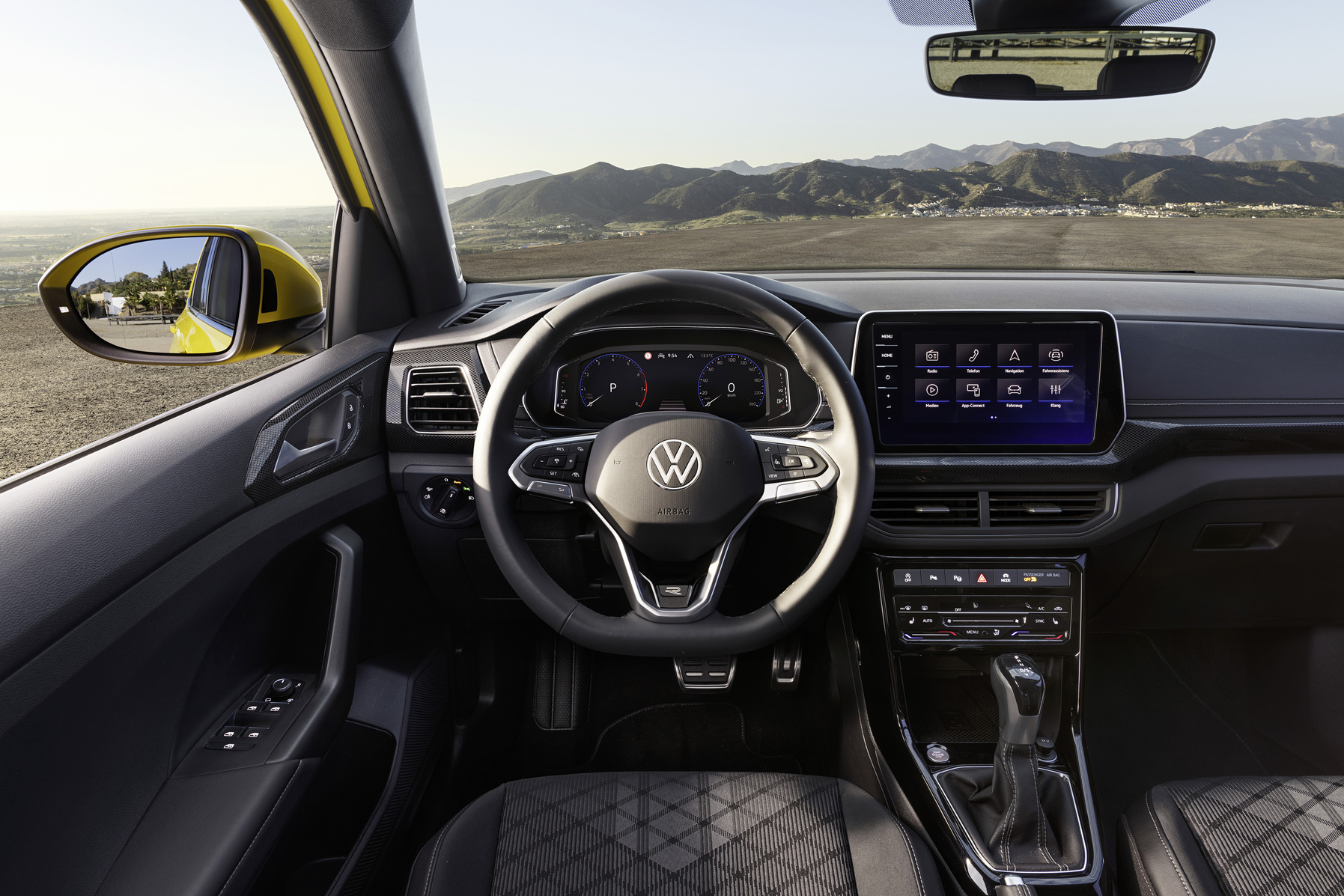
The T-Cross 2026 comes as standard with a fully digital instrument cluster. The trim level determines whether you get an 8-inch or a 10.25-inch display. The larger screen offers navigation maps directly in your line of sight, which is handy while driving and a feature that many rivals do not include as standard.
The infotainment system supports wireless Apple CarPlay and Android Auto, enabling seamless smartphone integration. USB-C ports are provided, together with wireless phone charging on higher trims. The dashboard layout is logical, with controls within easy reach.
Higher trims have touch-sensitive controls for the climate system, which can be distracting while driving. Cheaper trims, by contrast, have physical knobs for manual air conditioning. These are more user-friendly, allowing you to make adjustments without taking your eyes off the road.
‘ The combination of sound insulation, comfortable seats and raised seating position makes the T-Cross suitable for longer journeys. ’
Is the VW T-Cross 2026 suitable for long journeys?
The combination of sound insulation, comfortable seats and raised seating position makes the T-Cross suitable for longer journeys. The quiet cabin reduces fatigue, while the ergonomic seat support ensures you still feel comfortable even after several hours behind the wheel. The firm suspension can feel a little less comfortable on very uneven roads, but on normal motorways and A and B-roads the vehicle performs well.
The boot space and flexible rear bench make it easy to take enough luggage for a weekend away or holiday. Fuel consumption of the petrol engines is reasonable, which keeps longer trips economically viable. For families or couples who regularly cover longer distances, the T-Cross is a sound option.
Engines and safety systems
The T-Cross 2026 is only available with petrol engines. The range includes a 1.0-litre turbo with outputs from 95 to 150 PS. The engines are fuel-efficient and provide sufficient power for everyday use. Gearbox choices range from a 5-speed or 6-speed manual to a 6-speed automatic or 7-speed DSG automatic. DSG refers to a dual-clutch automatic transmission that allows you to change gears quickly and smoothly.
Modern safety systems are fitted as standard:
- Adaptive cruise control for relaxed driving on long journeys
- Lane assist to help you stay within your lane
- Emergency braking function for increased safety in critical situations
- High Beam Assist for automatic switching between dipped and main beam
- ISOFIX mountings for child seats
These systems contribute to a safe driving experience and position the T-Cross as a reliable family vehicle. The combination of active and passive safety features offers protection in a wide range of traffic situations.
On the Carnews website you will find much more information about the Volkswagen T-Cross and other compact SUVs. Discover comparisons, practical tips and detailed specifications to help you make the best choice for your circumstances.
Frequently asked questions
Volkswagen has refined the ride quality of the T-Cross 2026 by tuning the chassis more precisely, so the suspension absorbs imperfections more efficiently and the car feels calmer and more composed than its predecessor. The steering has been adjusted so that it is lighter and more agile in town, but gains weight and stability at higher speeds. As a result, the chassis offers more confidence and more predictable feedback, with more stable and secure road manners. The improved sound insulation reinforces this sense of refinement, as unwanted vibrations and tyre roar are better filtered out.
No specific concrete technical changes are mentioned (such as extra damping mats, acoustic glass or a modified subframe mounting), only that the sound insulation in the 2026 T-Cross has been “optimised” and effectively reduces road noise. The quietness in the cabin is mainly attributed to strategically placed insulation and the tuning of the suspension. Compared with rivals, it is stated that the T-Cross is quieter and more comfortable than most small SUVs, but slightly less comfortable than, for example, a Skoda Kamiq or VW T-Roc. Exact technical differences from rivals in the segment are not specified.
Yes, there are noticeable improvements in seating comfort for both driver and passengers, partly thanks to ergonomically designed seats with improved padding and better lumbar support. These changes are specifically aimed at long-distance comfort, so longer journeys feel less tiring.
The steering of the 2026 T-Cross has been refined with a well-tuned chassis and responsive steering that adapts to driving conditions. In town the steering is light and agile, while at higher speeds it gains weight for extra confidence. This set-up provides a more engaging driving experience without compromising everyday ease of use. Imperfections are also efficiently absorbed, so comfort and the filtering of poor road surfaces are maintained.
The T-Cross 2026 uses optimised sound insulation around the cabin, with extra attention given to sealing body seams and improved insulating materials in the doors, floor and wheel arches to further reduce both wind noise and tyre roar. In addition, the chassis has been tuned so that vibrations and resonances from the underbody are less likely to enter the cabin. As a result, the noise level at motorway speeds remains low and consistent, which noticeably increases overall calmness on long motorway journeys. Passengers experience a more relaxed, “larger car” feeling than you would expect from its size.