
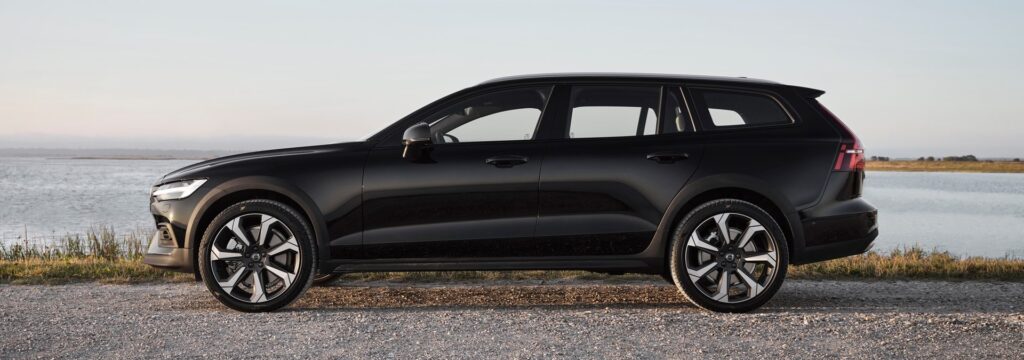
The Volvo V60 II suffers from a persistent problem: brake discs warp more quickly. Heat build-up is the culprit. The relatively small diameter of the brake discs makes the problem worse. Owners experience annoying vibrations under braking from 100 km/h upwards. The problem is irritating. It also causes dangerous situations. Read on to find out why this happens and what you can do about it.
Why do the brake discs warp on the V60 II
The Volvo V60 comes with brake discs as standard with a diameter of around 300 millimetres. This relatively small size means there is less surface area over which heat can be dispersed. With every braking action the discs become extremely hot because of the friction between pads and disc. Under intensive use or heavy braking from higher speeds, temperature peaks occur. These peaks rise to several hundred degrees.
The problem lies in the repeated heating up and cooling down. These extreme temperature fluctuations create internal stresses in the metal (unequal pressure in the material) of the brake disc. The material expands in the areas with the most heat. The disc then cools down again. It then contracts unevenly. Repeated cycles eventually lead to permanent deformation (the disc remains permanently distorted): the brake disc is no longer perfectly flat.
In addition, installation plays a role. Mounting bolts are sometimes tightened with uneven force. This creates stress in the disc. The stress accelerates the warping. Neglected maintenance also increases the risk: worn brake pads press unevenly against the disc. This creates hotspots. At these points the temperature rises even further.
How do you recognise warped brake discs
Vibrations in the steering wheel or brake pedal are the most characteristic sign. You notice them while braking. In the V60 II these vibrations mainly occur at speeds from 100 km/h upwards. The car seems to judder or vibrate. This happens as soon as the brake pedal is pressed. The brake pads no longer make even contact with the distorted surface of the disc.
Other recognisable symptoms are:
- The car pulls to the left or right while braking
- Scraping or squealing noises under braking
- A longer stopping distance than normal
- Uneven wear (the wearing away of material) on the brake pads
- A pulsing resistance in the brake pedal
In severe cases the vehicle becomes harder to control, especially during emergency stops. This is a direct safety risk that must not be ignored.
When should you replace the brake discs
Volvo uses a replacement interval of around 50,000 kilometres for the V60 II. This is not a fixed figure. Your driving style has a major impact on service life. Sporty driving with lots of hard braking significantly accelerates wear (the wearing away of material). Frequently driving in hilly or mountainous areas or with a trailer also increases the load on the braking system.
Have the brake discs checked in the meantime if you notice the following signs:
- Vibrations or juddering under braking
- Unusual noises while braking
- Dashboard warning about the braking system
- MOT inspection report mentions wear
Modern V60 II models have sensors. These indicate when replacement is required. Do not ignore these warnings. Warped brake discs progressively worsen braking performance. They will cause the car to fail the MOT.
What are the consequences of postponed maintenance
If you wait too long to replace them, the problems pile up. The stopping distance increases. The braking force is distributed unevenly (the force is not distributed evenly everywhere) over the surface of the disc. This increases the risk of collisions, especially in emergencies. Every metre counts in those situations.
The entire braking system suffers from warped discs. The brake pads wear out faster because of the uneven pressure distribution (the force is not distributed evenly everywhere). The brake callipers have to work harder to deliver the same braking force. As a result they become damaged. This later leads to higher repair costs.
In extreme cases the vehicle becomes uncontrollable under braking. The car pulls unpredictably to one side. This is dangerous in traffic. The Dutch Vehicle Authority (RDW) checks brake discs that are too badly deformed. A driving ban then follows.
‘ One new and one old disc cause uneven braking performance. ’
Preventive measures against warping
The problem is partly inherent in the design of the V60 II. Even so, you can extend the service life of the brake discs. Brake more smoothly. Do not brake abruptly. Anticipate situations early. You will then brake less hard. This reduces temperature peaks in the discs.
Have the braking system checked regularly and components replaced where necessary according to Volvo’s schedule. This includes checking the brake pads, brake fluid (the hydraulic fluid in the braking system) and the condition of the discs. Always replace brake discs in pairs on the same axle. One new and one old disc cause uneven braking performance. This is dangerous.
When replacing brake discs, also replace the brake pads. Old brake pads have adapted to the shape of the worn disc and do not sit properly on a new, flat disc. Make sure the mechanic thoroughly cleans the wheel hub and treats the contact surface with ceramic grease (heat-resistant lubricant). The mechanic will then fit the new discs without any stress in them.
Options for replacement and upgrades
There are various brake discs available for the Volvo V60 II. Genuine Volvo parts guarantee the correct quality and specifications. They are more expensive. Good alternatives are aftermarket brands (brands that produce parts for existing cars) that meet OEM specifications (the quality requirements of the original manufacturer). Prices vary between 21 and 112 euros per disc, depending on brand and design.
Ventilated brake discs (discs with internal channels for heat dissipation) are standard on the V60 II. These have internal channels that dissipate heat better than solid discs. Some owners opt for drilled discs (discs with holes) or grooved discs as an upgrade. These variants improve heat dissipation even further. They are especially useful for sporty driving or frequent mountain trips.
Complete replacement kits with both discs and pads cost between 78 and 405 euros per axle. The chosen quality determines the exact price. The difference between original and alternative parts also affects the price. In addition, you need to factor in labour costs at a garage. If you have practical experience working on cars and the right tools, you can do this job yourself.
Professional replacement or DIY
Replacing brake discs requires specific tools and practical experience working on cars. The wheel hub needs to be released. Loosen the wheel hub with Torx T50 bits (a star-shaped hex bit). Tap the old discs loose. Do not damage other components in the process. Clean the contact surface carefully. Then fit the new discs.
Incorrect installation causes new problems. Bolts tightened unevenly create stress in the new discs. These will then warp again more quickly. Bleed the braking system correctly after replacement. This guarantees optimum braking performance. This requires practical experience with braking systems.
For most owners, professional help is the best choice. An authorised garage or Volvo dealer has the right tools and expert knowledge. They also check immediately whether other components of the braking system need attention. You then avoid having to pay for further work shortly after replacement.
Warped brake discs on the V60 II are caused by the combination of heat build-up and the relatively small disc diameter. Regular maintenance, an adjusted driving style and timely replacement limit the risks. If in doubt, always have a specialist check whether replacement is necessary.
Frequently asked questions
The most common causes of ‘warped brake discs’ on a Volvo V60 II are thermal overload (heat build-up from frequent or hard braking), uneven pressure or wear on the brake pads, driving for a long time with worn braking components and installation errors (mounting them crooked or tightening unevenly). Driving behaviour has a major impact: lots of braking downhill, abrupt and hard braking, or frequent heavy loads (e.g. caravan, fully loaded car) all generate more heat and thus increase the risk of deformation. Calm, anticipatory driving, less unnecessary braking and occasionally using engine braking reduce the risk of ‘warped’ brake discs. Regular maintenance and timely replacement of discs and pads also help prevent deformation.
Signs of warped brake discs on a Volvo V60 II are mainly vibrations or juddering in the steering wheel and/or pedal while braking, sometimes also at higher speeds. You may notice that the car pulls slightly to one side under heavy braking and that the stopping distance increases or the braking force becomes less predictable. Uneven wear of the brake pads and scraping or squealing noises while braking can also occur. In severe cases, the car feels unsettled or hard to control when braking hard.
You mainly prevent ‘warped’ brake discs on a Volvo V60 II by managing heat carefully: brake briefly and firmly instead of dragging the brakes for a long time, and avoid coming to a stop with glowing hot brakes while holding the pedal down hard (especially after slowing from high speed or driving downhill). Make sure discs and pads are checked and replaced in good time, always per axle, so pressure and wear remain even. When replacing, choose high-quality ventilated brake discs with matching pads, and have the wheel hubs cleaned thoroughly and the discs fitted with the correct tightening torques. Periodic maintenance of the entire braking system (keeping guide pins free-moving, brake fluid at the correct level and replaced on time) limits uneven loading and thus the risk of deformation.
The best option for warped or worn brake discs on a Volvo V60 II is almost always full replacement of the discs, preferably combined with new brake pads and always per axle (both left and right). For maximum service life and reliability, people generally choose ventilated brake discs of OEM quality or premium brands (such as ATE), which cope well with thermal loads and are checked/replaced roughly every 50,000 km depending on driving style. Anyone wanting better performance (less fading, more consistent braking force when driving in mountainous areas or driving sportily) can upgrade to high-quality ventilated discs with matching performance brake pads, provided these are specifically approved for the V60 II. For every upgrade or repair, ensure correct installation (correct torque, clean hub, use of ceramic grease) to prevent vibrations, uneven wear and deformation.