
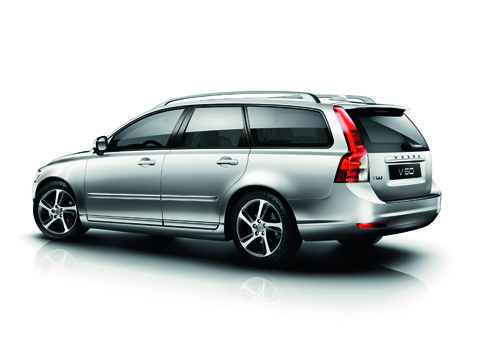
A defective water pump and advancing rust together form a dangerous duo for the Volvo V50. Faults in the water pump cause engine overheating, while rust on the chassis, wheel bearings and suspension components accelerates wear and threatens road safety. For owners and potential buyers of this popular model, knowing about both problems is essential to avoid major repairs.
Symptoms of a defective water pump on the Volvo V50
The water pump plays a central role in the cooling system. If the pump fails, the engine does not receive sufficient cooling and the temperature will quickly rise. On the Volvo V50, the water pump is often replaced preventively during the timing belt service, because on many versions both components require the same labour-intensive disassembly.
Recognise a defective water pump by these signs:
- Visible coolant leakage under the car or around the pump
- Squealing or grinding noises from the engine bay
- Temperature gauge that reaches the red zone more often or more quickly
- Play or loose parts when visually inspecting the pump
- Sweet coolant smell in the garage or after parking
Do you recognise one or more of these symptoms? Then have the pump checked immediately. Continuing to drive with a defective water pump leads to serious engine damage. With the Volvo V50 that risk is particularly high due to the relatively compact engine bay and the fact that overheating occurs quickly when the cooling cycle falters.
Costs and maintenance tips for replacing the water pump
The replacement cost for a water pump on the Volvo V50 averages between €690 and €1,005. This amount includes both parts and labour. The parts themselves range from about €50 to €240, depending on the quality and brand.
The high total price is mainly due to labour costs. On many V50 versions, the timing belt has to come off to reach the water pump. That is why it is sensible to replace both components at the same time. This prevents double labour and saves money in the long term.
Pay attention to the following points during a replacement:
- Also replace the belt tensioner and idler pulleys if they are worn
- Always use fresh coolant that meets Volvo specifications
- Check hoses and clamps for cracks or leaks
- Ask the mechanic about the condition of the timing belt and ask for a replacement recommendation
Some owners carry out this repair themselves. Disassembly requires knowledge of engine mounts, drive belts and timing components, in other words the parts that control the engine timing. For experienced DIY mechanics the repair is feasible, but for most owners a workshop is the better choice because of the precision required when setting the timing.
Rust problems on the chassis of the Volvo V50
Besides the water pump, rust is a well-known concern on older examples of the Volvo V50. This model shares the P1 platform, a structural base that is also used for the Volvo S40 and C30, and owners regularly report rust in specific spots. This vulnerability becomes especially apparent in cars that have spent a long time in salt-rich environments or have been driven through many winters.
When buying a used V50, always check the following areas for rust:
- Sills and inner edges of the rear wheel arches
- Exhaust mounting points
- Subframe and suspension components
- Bottom edges of the doors and door trims
- Wheel arches and the area around the brake lines
- Strut towers and shock absorber mounting brackets
Rust on these components often starts invisibly on the inside. By the time the first rust spots appear on the outside, the damage on the inside can already be significant. For buyers, a thorough inspection of the underside and wheel arches is therefore essential.
Preventing rust problems on the chassis
Prevention is the best strategy against rust. By regularly cleaning and treating the underside, you can extend the life of the V50 by years. Cars that are driven on salty roads in winter need extra care in particular.
Follow these steps to prevent rust:
- Rinse the underside clean at least twice a year, preferably after winter and in the autumn
- Have loose rust and salt deposits removed before applying a preserving coating
- Treat cavities and hard-to-reach areas with a hohlraumversiegelung, a product that seals hollow spaces against moisture and rust
- Check the paint for stone chips and parking damage and repair scratches in good time to stop rust
- Ensure good drainage in wheel arches and sills by keeping drain holes clear
An annual inspection by a specialist can detect early rust before it spreads. For a V50 that you want to keep on the road for many more years, this is a worthwhile investment. Treating small rust spots costs less than repairing perforated bodywork.
Replacing wheel bearings on the Volvo V50
Rust accelerates the wear of wheel bearings. On the Volvo V50, corrosion around the bearings leads to play, rattling noises and uneven tyre wear. When wheel bearings fail, the driver often notices a droning or rumbling noise that becomes louder at higher speeds.
You can recognise a defective wheel bearing by these signs:
- A droning or rumbling noise that gets worse in corners
- Vibration in the steering wheel or through the body at higher speeds
- Noticeable play when rocking the wheel while the car is jacked up
- ABS or ESP warning light that stays on during normal use
The cost of replacing a wheel bearing on the Volvo V50 ranges between €150 and €350 per wheel, including labour. The price depends on the location, the quality of the part and whether the hub also needs replacing. Rear wheel bearings are sometimes easier to replace than front ones, because fewer components have to be removed.
Always have a defective wheel bearing replaced immediately. Continuing to drive with a worn bearing can lead to the wheel coming loose, damage to the brakes and loss of control of the car. For road safety, this is not a repair you should postpone.
Checking service history before buying
When purchasing a used Volvo V50, the water pump, rust and wheel bearings are key items to check. A car with documented servicing of the timing belt and water pump is often more reliable than one without paperwork, even if the asking price is a bit higher.
Always ask the seller for:
- Date and mileage of the last timing belt and water pump service
- Inspection report of the underside and any rust treatment
- Replacement history of wheel bearings, shock absorbers and other chassis components
- Proof of regular servicing and coolant checks
If this documentation is missing, have the car inspected by an independent garage. A thorough inspection costs less than repairs later on. Rust on the chassis and a neglected water pump together can cause repair bills running into thousands of euros.
Find out more about the Volvo V50 and maintenance tips
The Volvo V50 offers owners reliability and everyday practicality, provided the maintenance is in order. By having the water pump replaced preventively during the timing belt service and tackling rust at an early stage, this family car can continue to run reliably for many years. On the Carnews website you will find much more information about the V50 and similar models, from common faults to practical maintenance tips. Discover everything about your car and make a real difference to its lifespan and driving enjoyment.
Frequently asked questions
The most common causes of rust formation on the water pump of a Volvo V50 are long-term use of old or incorrect coolant, which causes the anti-corrosion additives to lose their effectiveness. In addition, leaks (for example along the seal or gaskets) play a role, because coolant and moisture then accumulate around the pump and promote rust. Regular driving in a damp or salty climate (road salt) without regularly flushing or renewing the cooling system also accelerates corrosion. Finally, poor or irregular maintenance of the cooling system can cause internal rust formation to occur sooner.
Early signs of a defective water pump include light coolant traces or damp patches around the pump, a dropping coolant level and sometimes a whistling or scraping noise when the engine is running. Also watch for higher coolant temperatures or unexplained temperature fluctuations. You can recognise rust problems on a Volvo V50 by brown blisters or bubbles in the paint on the sills, wheel arches and lower edges of the doors, and by flaking or pitted areas under the car (subframe, brake lines, suspension). Regularly check the car on a lift or over an inspection pit so you can properly view the entire underside and wheel arches.
Always use the correct, specified type and mixture ratio of coolant (never plain water) and renew it according to the schedule, so that internal rust and corrosion in the cooling system are limited. Regularly check for leaks, damp patches or discolouration around the water pump and, if in doubt, have the pump and belts inspected preventively, for example during a timing belt service. Flush the cooling system according to the manufacturer’s instructions when the coolant is heavily contaminated, in order to remove deposits and corrosion products. Finally, make sure the engine does not run too hot for prolonged periods (for example due to a clogged radiator or defective thermostat), as overheating accelerates wear of the pump and seals.
If you ignore rust formation on the water pump, the pump may eventually start to leak, causing you to lose coolant and the engine to overheat. Overheating can lead to serious engine damage, such as a warped cylinder head or a blown head gasket. The pump bearing or shaft can also seize, which will affect the drive of the timing belt. This can result in engine failure and very costly repairs.
Replacing a water pump is usually a complex job that often involves working with the timing belt, and is therefore generally left to a specialist. Assessing rust damage and treating light surface rust are things you can often do yourself with the right products. For structural rust (on the chassis, load-bearing parts or brake lines), however, it is wise to call in a specialist. So consider your own experience: if you have little hands-on mechanical experience, both water pump replacement and serious rust repairs are jobs best left to a professional.
There are no aftermarket water pumps or special coolants known that demonstrably provide a much longer service life than an OE-quality pump on the Volvo V50. The most important factor for service life and for preventing rust/corrosion in the cooling system is using the correct coolant specified by Volvo (type and mixture ratio) and renewing it in good time. When replacing, choose a water pump of OE or premium brand quality (for example the same supplier as the factory-fitted part), combined with new coolant that meets Volvo specifications. Cheap universal coolants or inferior pumps can actually lead to premature wear, leakage and internal corrosion.