
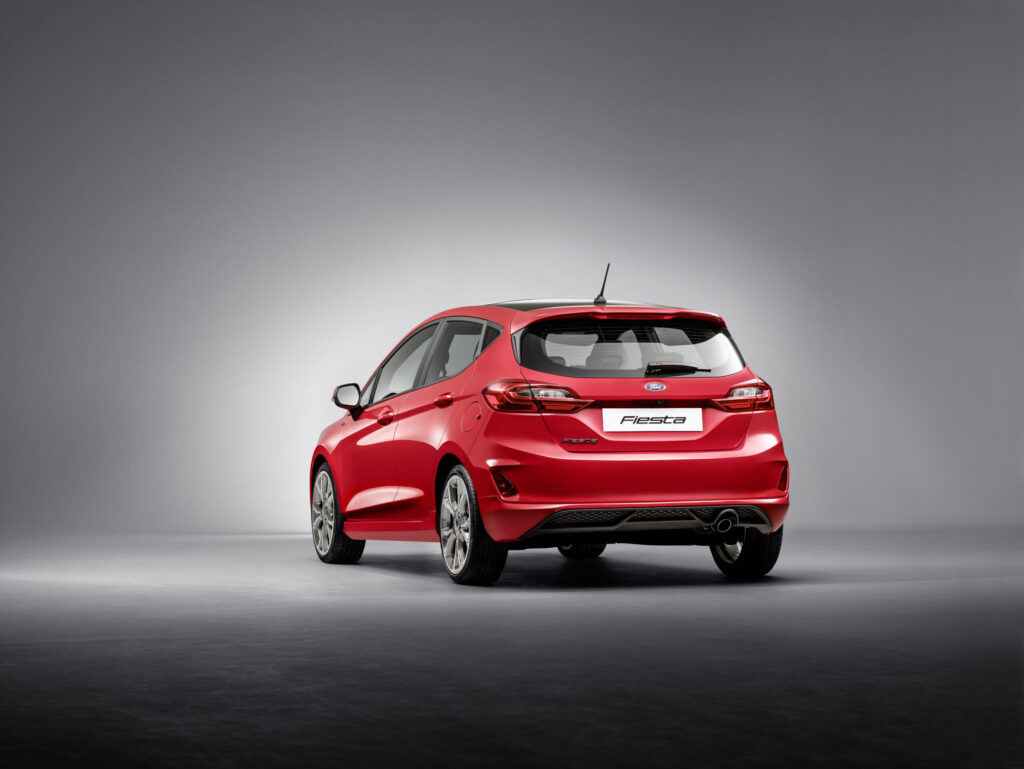
The Ford Fiesta is relatively reliable, but maintenance and repair costs can quickly add up, especially for the transmission, cooling system and turbocharger. Good insurance and maintenance plans are therefore important to keep unexpected expenses under control. What costs can you expect exactly?
What is the average annual maintenance cost of a Fiesta
Maintenance of a Ford Fiesta follows the factory service schedule with intervals of 15,000 to 20,000 kilometres or yearly. The costs vary greatly. The type and age of your car determine the amount. A minor service costs on average between 110 and 142 euros, including oil and fluids. Larger engines and diesel models are at the upper end due to higher oil quantities.
You pay more for a major service. A Ford Fiesta 2.0 16v ST150 has the following service cost schedule:
- 1 year / 20,000 km: €149
- 2 years / 40,000 km: €219
- 3 years / 60,000 km: €299
- 4 years / 80,000 km: €219
- 5 years / 100,000 km: €149
- 6 years / 120,000 km: €369
For other models, the prices are at a similar level. A 2008 Fiesta with a 1.6 diesel engine costs between 269 and 438 euros per service. Petrol models from 2012 with a 1.2, 1.4 or 1.6 engine range between 243 and 390 euros. After 100,000 kilometres, costs rise due to more complex work. This includes, for example, filter changes and the replacement of rubber mounts.
A monthly maintenance plan offers fixed costs. Thanks to collective purchasing, this plan can save you up to 300 euros. The package usually includes summer and winter checks, roadside assistance, collection and delivery service and topping up fluids. New Fiestas will display a dashboard message themselves when maintenance is needed.
‘ Petrol models turn out to be cheaper in the long term. ’
What are the most expensive repairs on a Fiesta
Certain repairs can be very costly. Transmission problems, cooling system faults and turbocharger issues are among the most expensive repairs on a Fiesta. These easily exceed 1,000 euros. The severity and the specific part involved determine the final costs.
After 120,000 kilometres you often see rising costs. This is due to wear on parts such as suspension bushes and control arms. Replacing a control arm, for example, costs 155 euros excluding labour. With a 2015 Fiesta 1.5 TDCI there are additional costs for a fuel filter, suspension rubbers and diagnostic work of 88 euros.
Diesel models are generally more expensive to maintain because of extra filters and more complex engines. Petrol models turn out to be cheaper in the long term. Having the car serviced at Kwik-Fit or a dealer has advantages. You keep the factory warranty for up to five years and usually get a year of roadside assistance included.
Should I buy a maintenance package for my Fiesta
A maintenance package offers fixed costs and convenience. The Ford Service Plan provides fixed monthly amounts, trained technicians and genuine parts. This gives budget certainty and prevents surprises.
The advantages of such a package are clear:
- Fixed monthly costs without peaks
- Use of genuine Ford parts
- Trained technicians who know the brand
- Roadside assistance and collection and delivery service
- Savings of up to 300 euros through collective purchasing
Older Fiestas need less frequent maintenance. For cars over five years old, a service every 15,000 kilometres or every two years is sufficient. You carry out maintenance yourself or use a reliable independent garage. In that case you save 20 to 30 per cent on costs. Do pay attention to your warranty. With some dealers it lapses if you do not maintain the car according to the brand’s schedule.
A pre-travel check for 29 euros before going on holiday can help prevent problems on the road. This is especially useful for older models. These cars often have more kilometres on the clock.
Which insurance is best for a Fiesta
The insurance costs for a Fiesta are often lower than for larger cars. Its compact size and reliability mean a low risk profile. As a result, the premiums are attractive. This is especially true with a good no-claims discount. This discount means that claim-free years lead to a lower premium.
For young Fiestas up to five years old, third party, fire and theft (WA plus beperkt casco) is a sensible choice. It covers damage due to theft, fire and broken glass, but keeps the premium manageable. For new models, fully comprehensive (all-risk) cover provides the greatest certainty. Weigh up the level of cover against the value of your car.
Older Fiestas are often fine with third party (WA) insurance. The low vehicle registration tax (BPM) and road tax keep total ownership costs low, which makes a Fiesta attractive for budget-conscious motorists. Always compare different providers. Premiums vary greatly between provinces and insurers.
Pay attention to the excess. This is the amount you pay yourself in the event of damage. Also look at the cover for damage to parts. Some policies exclude certain repairs. Other policies apply a maximum reimbursement. Read the terms and conditions carefully before you sign.
Tips for keeping costs down
Timely maintenance keeps costs low. Replace oil and fluids according to the schedule and regularly check the tyres, brakes and battery. Fiestas are reliable when properly maintained. Neglect leads to expensive problems.
Consider these practical tips:
- Plan maintenance in advance and make use of offers at dealers or chains
- Regularly check oil levels and tyre pressure yourself
- Have small problems repaired immediately before they get bigger
- Keep all maintenance invoices to help preserve the car’s value
- Compare prices between main dealers and independent garages
For ST models, costs peak around 120,000 kilometres. The cause lies in more demanding service requirements for sports models. Take this into account if you are considering a used sporty Fiesta. The higher performance requires more frequent maintenance. These models also need more intensive servicing.
Make sure you top up all fluids in good time. Have the cooling system checked annually on older models. This reduces the risk of overheating and costly engine repairs. A simple check costs little but can save you hundreds of euros.
You can find more information on the Carnews website. This includes maintenance schedules, common problems and practical tips for Ford models. Discover what experiences other owners are sharing. You can also read how to maintain your Fiesta in the best possible way.
Frequently asked questions
Common wear and defect points that have the greatest impact on the maintenance costs of a Ford Fiesta include suspension rubbers and control arms, especially after around 120,000 km. In diesel versions, extra components such as fuel filters and soot-related parts cause higher costs. In addition, costs increase at the larger service intervals (such as around 60,000–120,000 km) due to more extensive inspections and replacements. Regular oil and fluid maintenance helps to prevent expensive engine damage and therefore high maintenance costs.
The maintenance costs of a Ford Fiesta are generally at the lower end within the compact B-segment; minor and major services are often slightly cheaper than or comparable with models such as the Opel Corsa, Renault Clio and Volkswagen Polo. Thanks to relatively simple technology and good parts availability, repairs and wear parts also usually remain affordable. Insurance premiums are generally favourable because the Fiesta falls into a low risk category in terms of power, weight and claims figures. Compared with similar compact cars, the Fiesta therefore tends to sit in the lower to mid-range in terms of total insurance and maintenance costs.
The insurance premium of a Ford Fiesta is mainly influenced by the engine type and power: more powerful engines and sporty versions (such as ST models) fall into higher premium groups. The age and list price of the car also play a role: newer, more expensive versions are generally more expensive to insure than older, more basic models. The chosen level of cover (WA, WA+ or fully comprehensive) also has a major impact on the size of the premium. Trim levels with more expensive options (such as alloy wheels, infotainment systems or sport packs) can increase claim amounts and therefore the premium.
Yes, Fiesta drivers can often save on their premium by choosing a higher excess, provided they have enough savings to pay for damage themselves. Build up as high a no-claims discount as possible by paying for minor damage yourself instead of claiming, especially for cosmetic or limited damage. Also compare insurers and cover (WA, WA+ or fully comprehensive) every year specifically for your model year and mileage, because an older Fiesta is often cheaper and sufficiently insured with WA or WA+. Finally, limiting annual mileage, having a security system and driving without claims can reduce the premium even further.
A calm, anticipatory driving style (early upshifts, not constantly accelerating/braking hard and not revving the engine high) reduces wear on the engine, brakes, clutch and tyres, meaning you can stick to standard service intervals for longer and get by with cheaper services. Lots of short trips, cold starts and city driving, on the other hand, lead to faster contamination of oil, spark plugs and filters, so parts need to be replaced sooner. If you often drive fully loaded, tow a trailer or drive in a sporty way (lots of motorway at high speed, high revs), tyres, brakes, dampers and the drivetrain wear out faster and the maintenance bill goes up. By accelerating gently, changing down in time, keeping tyre pressures correct and following the intervals prescribed by the manufacturer, you keep the maintenance frequency and costs of your Fiesta as low as possible.