
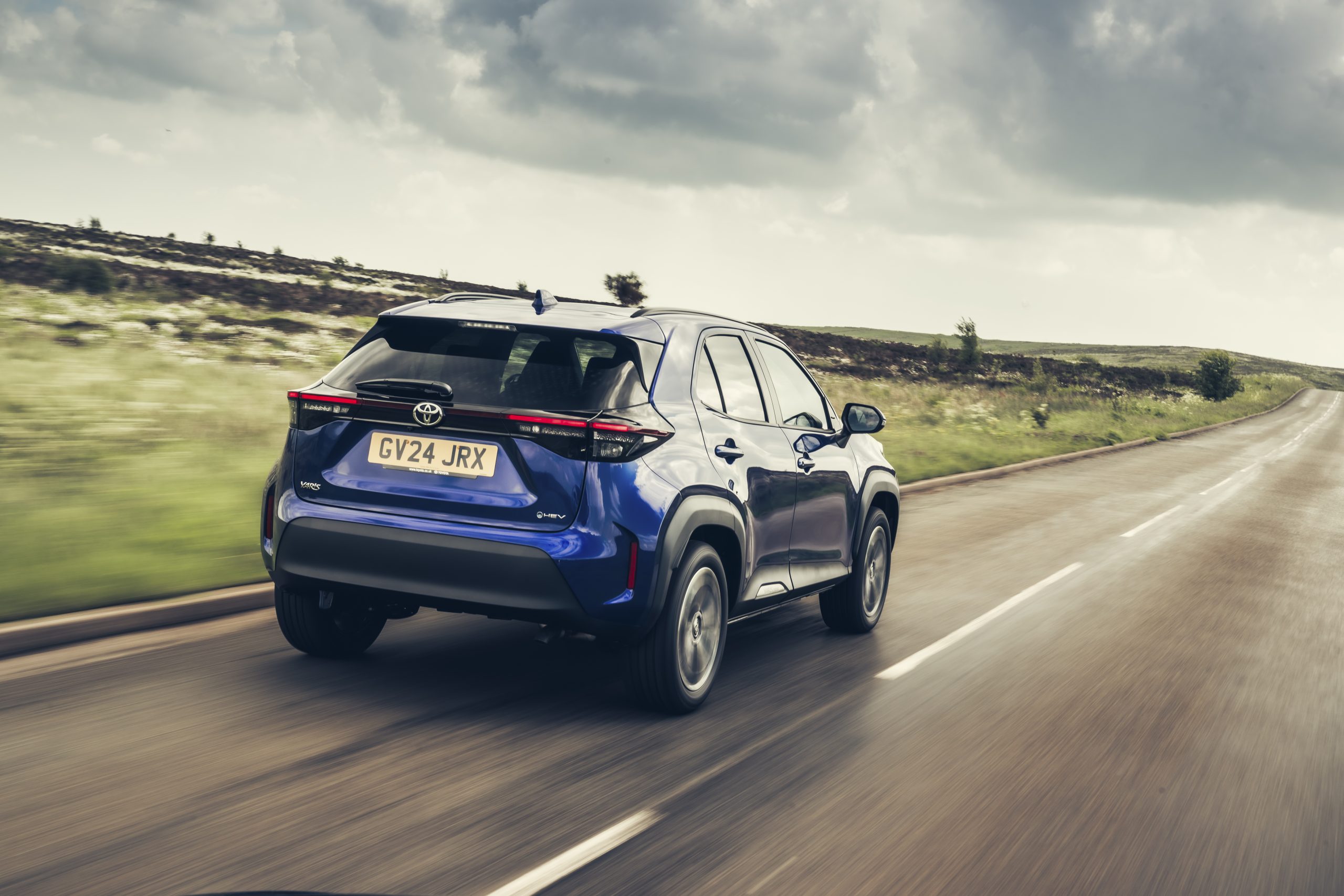
In real life, the Toyota Yaris Cross often fails to achieve the favourable fuel consumption promised by the manufacturer, especially on short journeys where the hybrid technology hardly gets a chance to show its strengths. This gap between theory and reality frustrates owners who specifically chose a hybrid for its frugality. Find out why your fuel consumption turns out higher and what you can do about it.
The difference between official figures and reality
Toyota quotes fuel consumption figures for the Yaris Cross of 4.4 to 4.8 litres per 100 kilometres according to the WLTP standard. These figures apply to the Hybrid 130 version with 130 hp, while the entry-level Hybrid 115 even comes in at 4.5 litres per 100 kilometres. In practice, however, owners regularly record higher consumption figures.
An extensive real-world test over 7,567 kilometres resulted in an average of 4.43 litres per 100 kilometres, which is close to the official specifications. Even so, many owners of the Toyota Yaris Cross report fuel consumption that is sometimes more than a litre higher. This difference is mainly caused by specific driving conditions that do not fully match the standardised test procedure.
The WLTP values are broken down according to load. With a low load, the Hybrid 115 Adventure uses only 3.7 litres per 100 kilometres, while under high load this rises to 4.4 litres per 100 kilometres. This spread shows that fuel consumption depends heavily on how and where you drive.
‘ This is in stark contrast to the frugal image of the hybrid powertrain. ’
Short journeys disrupt hybrid efficiency
The Yaris Cross’s hybrid technology works best on journeys that are long enough to charge the battery and make optimal use of the electric motor. On short trips of just a few kilometres, the engine hardly reaches operating temperature and the battery remains insufficiently charged. As a result, the petrol engine has to run more often and for longer to both drive the car and recharge the battery.
The Yaris Cross is a conventional hybrid without a plug, which means there is no possibility to charge the battery electrically in advance. The energy in the battery comes solely from regenerative braking and from the petrol engine itself. In cold weather this system works less efficiently because the engine needs more time to reach operating temperature.
Owners who mainly make short urban trips therefore see consumption figures rising to 6 or 7 litres per 100 kilometres. This is in stark contrast to the frugal image of the hybrid powertrain. The CVT transmission does contribute to smooth power delivery, but cannot compensate for the disadvantage of cold starts and insufficient battery charge.
Factors that further increase your fuel costs
Besides journey length, several other elements play a role in actual fuel consumption. Driving style has a significant impact on fuel costs. Aggressive acceleration and late braking prevent the regenerative braking system from recovering energy. Gentle acceleration and anticipating ahead noticeably reduce consumption.
Ambient temperature also affects efficiency. At temperatures below freezing, the hybrid battery loses capacity and the engine has to step in more often. The main factors are:
- Outside temperature and season
- Vehicle load between 1,085 and 1,305 kilograms
- Type of tyres and tyre pressure
- Use of air conditioning or heating
- Ratio between urban and motorway kilometres
The A energy label indicates that the Yaris Cross performs efficiently within its class, but this label is based on standardised conditions. In reality, the factors mentioned cause variation that can be up to 30 per cent compared with the WLTP figures.
Battery problems that affect fuel consumption
The 12-volt battery and the hybrid battery may gradually perform less well over time. A weakened 12-volt battery causes starting problems and can disrupt the hybrid system’s energy management. The hybrid battery itself can gradually lose capacity in older models, meaning the electric motor can assist less often.
Some owners report that after a few years the battery charges and discharges less effectively. This forces the petrol engine to step in more often, which increases fuel consumption. A diagnosis at the garage can show whether the battery is still within specification or whether there is wear that is negatively affecting consumption.
The Toyota Yaris Cross has a fuel tank capacity of 36 to 42 litres, which under optimal conditions provides a range of 720 to 749 kilometres. When battery performance deteriorates, this range drops noticeably, which can be a sign that maintenance is needed.
‘ Owners who count on saving 2 litres per 100 kilometres are in for a disappointment. ’
Comparison with non-hybrid variants
A non-hybrid petrol version of the Yaris Cross with the same 1.5-litre engine uses around 5.7 litres per 100 kilometres. This makes it clear that the hybrid technology does offer an advantage under normal conditions. The difference of more than 1 litre per 100 kilometres translates into hundreds of euros in lower annual fuel costs.
However, this advantage is smaller than the 4.4 litres suggested by the manufacturer’s promise. Owners who expect to save 2 litres per 100 kilometres are in for a disappointment. In reality, the saving is usually between 1 and 1.5 litres per 100 kilometres, depending on the driving profile.

Practical tips to reduce fuel consumption
You can take steps yourself to get closer to the promised consumption figures. Where possible, drive longer distances in a single trip so that the engine reaches operating temperature and the battery can charge sufficiently. Anticipate traffic and make optimal use of regenerative braking by easing off the accelerator in good time.
Check tyre pressures regularly. Tyres that are too soft increase rolling resistance and therefore fuel consumption. Remove unnecessary loads from the car to reduce weight. Use air conditioning and heating sparingly, as these systems demand a considerable amount of power from the petrol engine.
Have the hybrid battery and the energy management system checked periodically at a workshop. Small deviations in battery performance can often be detected at an early stage and can prevent fuel consumption from gradually creeping up. Make sure the engine regularly reaches operating temperature by taking a longer drive now and then.
When a visit to the dealer or garage is necessary
If fuel consumption suddenly increases without an obvious reason, there may be a technical issue. A faulty sensor, a deteriorating hybrid battery or problems with the energy management system can noticeably increase consumption. Have this checked before costs rise further.
Some owners report that fuel consumption improves slightly after a software update. Ask your dealer whether updates are available for the hybrid system. A thorough service can also contribute to better efficiency by resolving minor faults in good time.
In cases of extremely abnormal fuel consumption, bear in mind potential warranty claims. If the car consistently uses more than 20 per cent above the WLTP values without a clear cause in driving style or conditions, there may be a defect underlying this that is covered by warranty.
‘ Very short journeys of under 5 kilometres offer hardly any benefit compared with a conventional petrol engine. ’
Realistic expectations about hybrid fuel costs
The Yaris Cross is still an economical car, but expectations need to be realistic. For mixed use, assume fuel consumption of between 5 and 5.5 litres per 100 kilometres instead of the official 4.4 to 4.8 litres. With mainly short journeys this can rise further to 6 litres or more.
The hybrid system delivers its best results with a mix of urban and out-of-town driving. Commuting journeys of 20 to 30 kilometres are ideal to make full use of the technology. Very short journeys of under 5 kilometres offer hardly any benefit compared with a conventional petrol engine.
CO₂ emissions remain favourable at a minimum of 101 grams per kilometre, which may bring tax advantages. The low maintenance costs of the hybrid components also partly offset the higher purchase price. When making your purchase decision, take your actual driving profile into account to avoid disappointment about fuel consumption.
On the Carnews website you will find much more information about fuel consumption, common problems and practical tips for different car models. Discover which experiences other owners share and get advice on maintenance and efficient driving.
Frequently asked questions
Many drivers complain that real-world fuel consumption is clearly higher than the optimistic WLTP factory figures, especially with a lot of motorway driving. Some find that in practice the car sits more around 5–6 l/100 km or more than around 4.5 l/100 km. You also hear criticism that with the CVT the engine revs relatively high under acceleration, which reduces the feeling of “driving economically”. It is also often mentioned that short trips and a cold engine make the promised frugality hardly achievable.
In practice, the Yaris Cross’s fuel consumption generally comes close to the WLTP values, provided you drive calmly and in mixed conditions. Under normal driving conditions, differences are often limited to a few tenths of a litre per 100 km higher than WLTP. Compared with competing (non-hybrid) models in the same segment, the Yaris Cross is on average more economical. Compared with other hybrid rivals it is among the more efficient, but not always the absolute most economical.
The efficiency of the Yaris Cross is mainly influenced by an anticipatory, calm driving style versus aggressive acceleration and heavy braking. In addition, the share of motorway kilometres compared with urban traffic plays a major role in fuel consumption. Ambient temperature (cold engine, use of heating/air con) and the car’s load also significantly affect fuel consumption. Finally, tyre type and tyre pressure have a noticeable impact on efficiency.
Yes, Yaris Cross drivers can optimise fuel consumption by accelerating very gradually and “coasting” on the engine as much as possible (anticipating traffic lights and braking moments). It pays to use ECO mode in heavy city and stop–start traffic and to use cruise control mainly on level roads. Also make sure tyre pressures are correct and avoid unnecessary weight or roof boxes. Short, cold journeys increase fuel consumption; combine trips where possible so the engine has to start from completely cold less often.
Toyota has not announced any specific “official updates” or technical recalls explicitly aimed at resolving reported efficiency complaints with the Yaris Cross. However, Toyota does emphasise driving style, operating conditions and tyre choice as the main factors for optimising fuel consumption. No large-scale software or hardware changes have been made public that structurally alter the official consumption figure.