
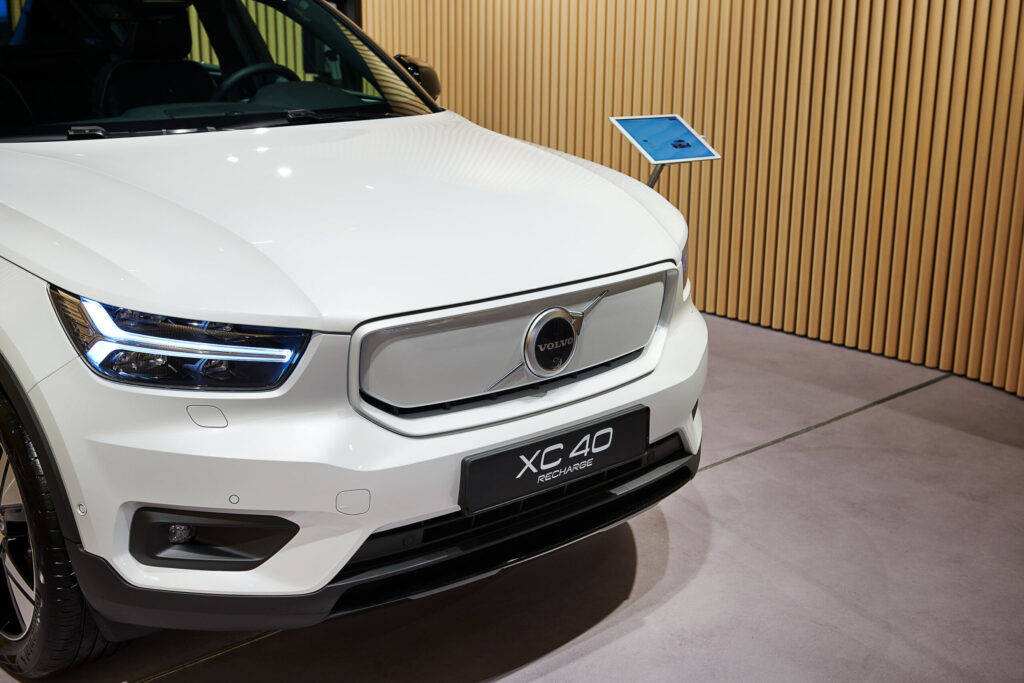
Electronic faults and long periods of inactivity cause the battery in the Volvo XC40 to discharge quickly. This leads to starting problems. Regular checks are essential. This issue mainly affects the 12V battery, but the traction battery in electric versions can also contribute to a completely dead car. Do you want to know why this happens and what you can do about it?
The Volvo XC40 is known as a modern, well-equipped SUV with extensive electronics. Those electronics require a continuous power supply, even when the car is parked. Especially during longer periods of inactivity this can lead to a flat battery. Your car will then no longer respond to the remote key or start button.
The problem occurs with mild-hybrid versions, plug-in hybrids and fully electric variants. In every type the 12V battery plays a key role, even in electric models with a large traction battery (the drive battery). If that small battery is flat, the car remains completely “dead”, regardless of how much energy is still left in the main battery.
What do you notice when the battery is draining?
A discharging battery gives various signals. The car no longer unlocks or responds slowly when you try to open the door. The dashboard stays off when you press the start button. Sometimes you do see a warning about battery problems, but more often nothing happens at all.
The start/stop function no longer works as you are used to. In some cases the car will still start after a short stop. After parking for a few hours it becomes completely unusable. The infotainment system can also behave erratically, with slow responses or unexpected restarts.
Less obvious signals are faults that appear and disappear without a clear cause. The electronics then work slowly or show strange error messages. In cold weather or after long periods of parking these problems are often amplified.
‘ “This stationary and standby power consumption is normal, but over longer periods of inactivity it can completely drain the battery.” ’
Why does my Volvo XC40 battery drain when it is parked?
Modern cars such as the XC40 constantly use small amounts of power, even when they appear to be switched off. Security systems, connectivity modules and internal electronics remain active to keep the car immediately available. This stationary and standby power consumption is normal, but over longer periods of inactivity it can completely drain the battery.
Short journeys contribute to the problem. The battery then does not get enough time to recharge fully. If you regularly drive only short distances without making longer trips in between, the charge level will gradually keep dropping. After a few days the battery can then fall below the minimum level.
Faults can also be a cause. Software faults (errors in the vehicle’s operating software) are also seen. A blown fuse or a fault in the charging system means that the battery is not properly recharged while driving. In that case, driving long distances will not solve the problem because the underlying fault remains.
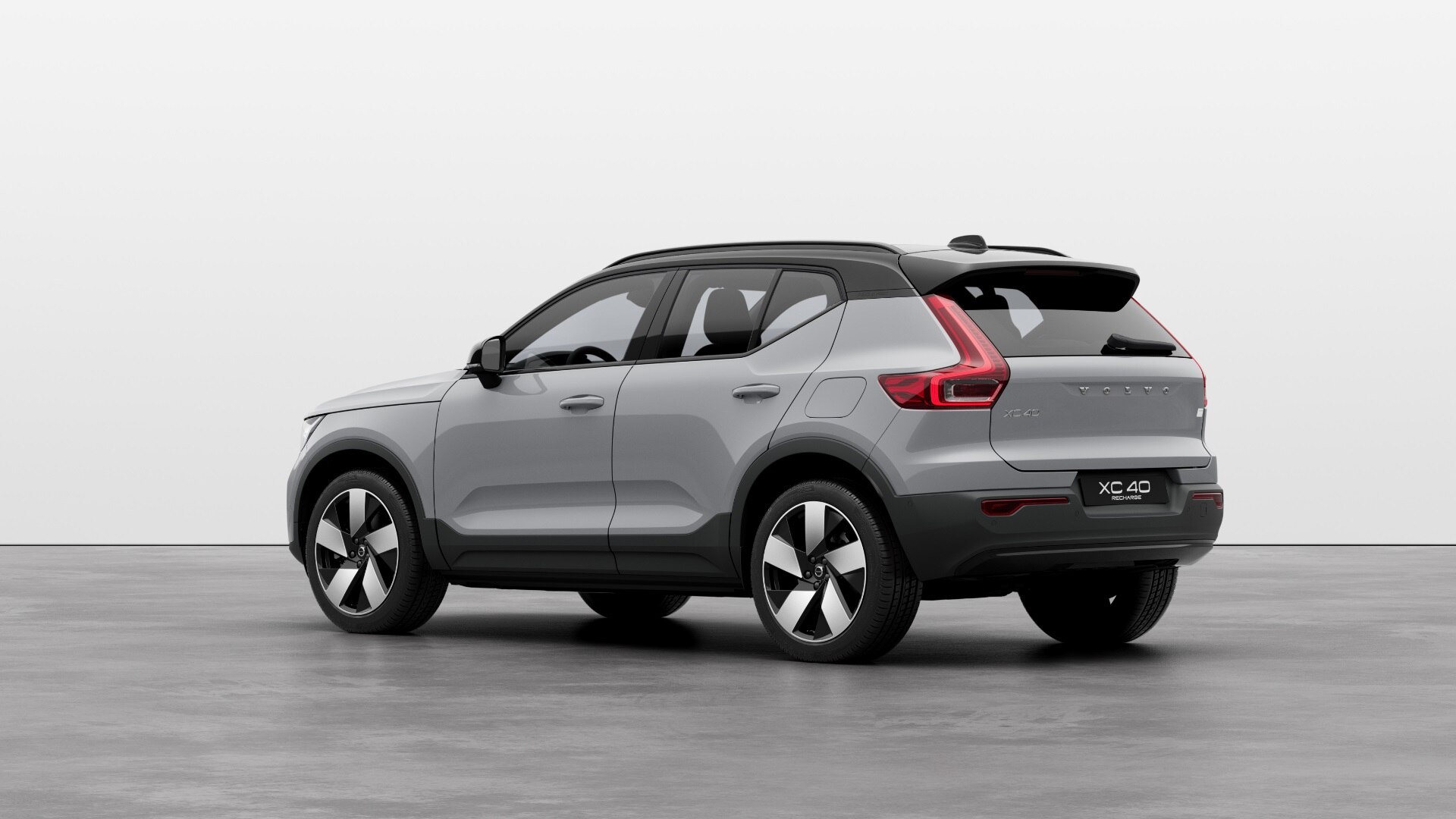
The difference between the 12V battery and the traction battery
In electric and plug-in hybrid XC40 variants there is, in addition to the traction battery (the drive battery), also a separate 12V battery. The traction battery supplies power for drive and climate control (heating and air conditioning). The small 12V battery, on the other hand, powers the control electronics, the locking system and other systems needed to wake up the car.
Without a working 12V battery the traction battery cannot be switched on. So even with a fully charged main battery the car remains unusable. This explains why an electric XC40 sometimes does not respond at all, while the range according to the last message still seemed sufficient.
The traction battery can also influence the 12V supply. If the main battery becomes too low, it can no longer support the 12V battery. At a charge level below 20% this risk increases. If the car remains parked below this level for a long time, both batteries can become discharged. The car can then no longer be started or charged without external assistance.
How can I prevent battery problems in a Volvo XC40?
Avoid parking for long periods with a low state of charge. For electric versions it is wise to keep the charge level between 40 and 60 per cent if the car will be standing still for several weeks. The same applies to plug-in hybrids: keep the traction battery at a mid-level during long periods of inactivity.
Regularly drive longer distances to fully recharge the 12V battery. Short journeys of a few kilometres are not enough to restore the battery level after a period of standing still. Therefore, plan a drive of at least half an hour now and then to allow the charging system to do its job properly.
Use an external battery charger (a separate charger that you connect to the 12V battery) if the car has to remain parked for a long time. This is especially advisable in situations where the car is not used for more than two weeks. Connect the charger to the 12V battery to keep the voltage at the correct level. For electric variants you can also connect the car to a charging point and set a charge limit of around 50 per cent.
Practical tips for long periods of inactivity
- Keep the charge level above 20 per cent if the car is parked for longer than a week
- Use a timer or smart charger to prevent overcharging during long-term connection
- Regularly check whether the car is actually charging and is not showing any error messages
- After a period of inactivity, drive the car for at least 30 minutes before you start alternating with short parking again
‘ For electric variants, jump-starting is often discouraged because of the potential risk of damage to the high-voltage system. ’
What should you do if the car is completely dead?
First try to charge the 12V battery with an external battery charger. Many XC40 owners report that the car functions normally again after a few hours of charging. Use a charger suitable for modern cars with sensitive electronics. Check the manual for the correct way to connect it, because some models have a specific charging point.
Jump-starting can also work, but first check whether this is permitted for your specific version. For electric variants, jump-starting is often discouraged because of the possible risk of damage to the high-voltage system. Always use the official connection points and follow the steps in the manual carefully.
After a successful start it is wise to go for a longer drive straight away. Drive for at least half an hour to recharge the battery sufficiently. If the problems keep coming back, this points to an underlying fault. In that case have the charging system, the battery and the electronics checked by a specialist.
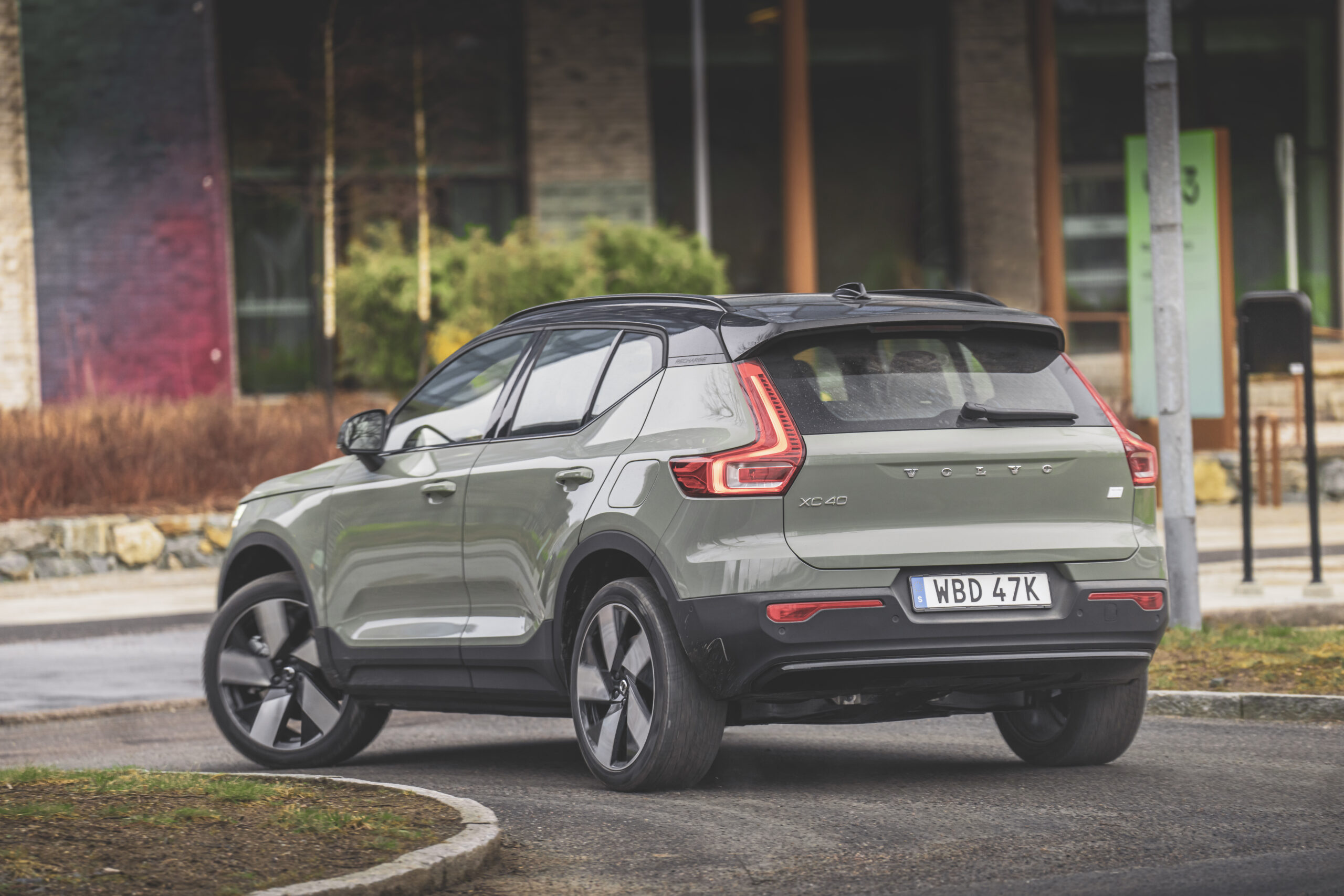
When is it a real battery fault?
A recurring problem usually indicates more than just an old battery. If the car regularly fails to start after a few days of standing still, there may be a software fault (an error in the operating software) or a defect in the charging system. A fuse that frequently blows or electronics that behave strangely are also signs that diagnostics are required.
In modern XC40 models software updates can sometimes cause temporary electrical problems. Some owners report that after an update battery consumption is temporarily higher or that certain systems no longer work together properly. In such cases a visit to the dealer can help to reinstall or update the software.
A defective 12V battery itself is also possible. After a few years of use the battery can lose capacity, causing it to drain more quickly. Have the battery tested to determine whether replacement is necessary. Note: a new battery will only solve the problem if the underlying cause is standing still or short journeys, not if there is a system fault.
Tips for cold weather and winter use
Cold weather makes battery problems worse. The chemical processes in the battery run more slowly at low temperatures, which reduces the available capacity. At the same time, the car demands more power for heating, seat heating and demisting. This makes the XC40 particularly vulnerable to a flat battery in winter.
Whenever possible, park the car in a sheltered place to avoid extreme cold. Use pre-heating if available, but in that case connect the car to a charging point or mains socket. Pre-heating from the battery uses a lot of energy and can push a weak battery over the edge.
Before winter, check whether the battery still has sufficient capacity. Have this tested at a garage or dealer. Replace a weak battery before the winter season starts to prevent problems. Also bear in mind the higher standby consumption during cold nights, especially if the car is parked outside.
‘ On the Carnews website you will find extensive information on all kinds of common faults. ’
Want to know more about problems with the Volvo XC40?
Battery problems are just one of the technical challenges that XC40 owners may face. On the Carnews website you will find extensive information on all kinds of common faults. You will also find maintenance tips and practical solutions for this model and other Volvos. Discover more articles and expand your knowledge of your car.
Frequently asked questions
The most common technical causes are a weakened or faulty 12V battery, a charging system that does not recharge the 12V battery properly (for example alternator/charging module), parasitic drain from electronic systems during long periods of inactivity and, in some cases, software or fuse issues. You can first check yourself whether the 12V battery has sufficient voltage (multimeter, around 12.4–12.7 V at rest), drive the car for a longer period after charging or jump-starting and see whether the problem returns. Check that when the car is parked it is not left for long periods with consumers (lights, infotainment, accessories) switched on and that it is actually charging when you connect it to a charger. If the battery still runs flat again quickly despite good charging voltage and limited consumption while parked, this often points to a defective battery or charging system and professional diagnostics are required.
Do not leave the car standing for too long without driving or charging it and avoid a lot of extremely short trips so that the 12V battery can be properly recharged each time. Regularly check that the car is charging correctly and keep the state of charge (for PHEV/EV) at around 40–60% during long periods of inactivity, or connect the car to a suitable charger with a charge limit. If necessary, periodically use a suitable battery charger to keep the 12V battery in good condition, especially in cold weather or when the car is used infrequently. Take recurring starting or battery problems seriously straight away and then have the 12V system, fuses and software checked by a specialist to prevent permanent damage or repeated failures.
There are no publicly confirmed, unique software or electronics faults in the Volvo XC40 that demonstrably lead to battery problems more often than in comparable modern models, but its complex electronics and energy management do make it sensitive to parasitic drain and charging faults. In practice, specialists see that battery problems often go hand in hand with incomplete charging cycles, many short journeys, long periods of inactivity and occasional software or charging system faults that prevent the 12V battery from recharging sufficiently. The solution usually consists of thorough diagnostics of the charging system and on-board electronics, any necessary software updates, checking or replacing the 12V battery and fuses, and optimising charging and usage patterns. In the case of recurring problems, dealer or brand diagnostic tools are often used to detect fault codes in energy-management and comfort systems and rectify them in a targeted way.
Advanced methods for tracking down parasitic current draws include a professional quiescent-current measurement with a precise ammeter or data logger, using a current clamp on individual circuits and systematically pulling fuses while logging the current. In modern Volvo XC40s, the dealer can also use diagnostic tools and software logs to see which modules remain awake unnecessarily or consume too much power in standby mode. These methods reveal which electronic components or accessories are draining the 12V battery, even if the consumption varies or only appears after some time. Undetected parasitic consumers put extra strain on the on-board electronics, can cause fault codes and unstable system behaviour, and will, in the long term, shorten the service life of both the 12V battery and certain electronic modules.