
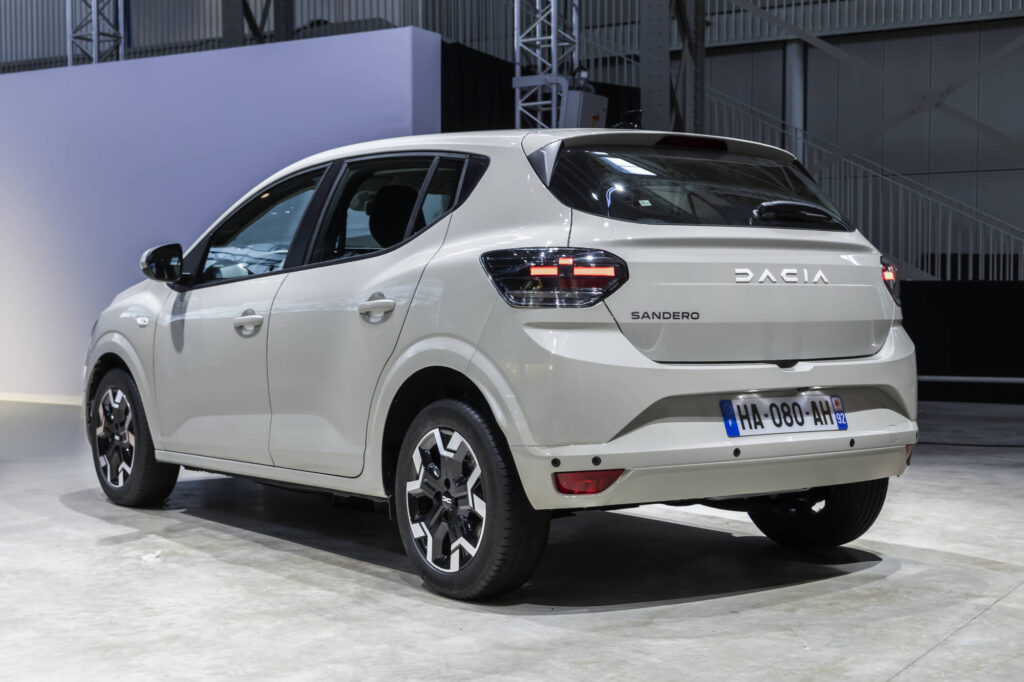
Buying a used Dacia Sandero is a sensible choice if you are looking for an affordable, spacious car with reliable technology. Always check the service book for stamps, watch out for rust and rattles, and thoroughly test the sensor on LPG models. Curious what you should check in detail?
Why the Dacia Sandero is popular as a used car
The Dacia Sandero offers an unbeatable price–quality ratio. This compact hatchback shares its technology with the Renault Clio, which makes it reliable and easy to maintain. For its size, the car offers surprisingly generous boot space, over 300 litres, and enough interior space for four adults. That makes it ideal for everyday use.
Many used examples come from approved dealers with a warranty and a valid MOT. The maintenance network is extensive and spare parts are affordable. These are important advantages if you plan to keep the car for a longer period. Fuel consumption for the petrol models is around 5 to 6 litres per 100 kilometres, which is economical for a car of this size.
The Dacia Sandero does have a number of points you need to watch out for as a buyer. Older models can be prone to rust, and some owners report rattles in the interior. With models fitted with the 1.0 TCe engine, it is wise to have the timing chain checked, because if maintenance has been neglected it can cause problems.
‘ Note that many used cars are offered below the average market value, which creates opportunities for sharp deals. ’
Prices and what you get for them
The market offers a wide range of used Sanderos in different price brackets. Older models from around 2013 to 2017 can be found from €8,000. These cars often have higher mileages, but with proper maintenance they can last for years.
For more recent model years between 2020 and 2022 you pay on average between €15,000 and €21,000. These models are often equipped with more modern safety systems and multimedia such as Apple CarPlay. The Stepway version, the crossover variant with higher ground clearance and a tougher look, is usually at the top end of this price range.
Newer examples from 2021 onwards can go up to almost €28,000, especially at dealers that offer extra options such as a 360-degree camera and navigation. Note that many used cars are offered below the average market value, which creates opportunities for sharp deals.
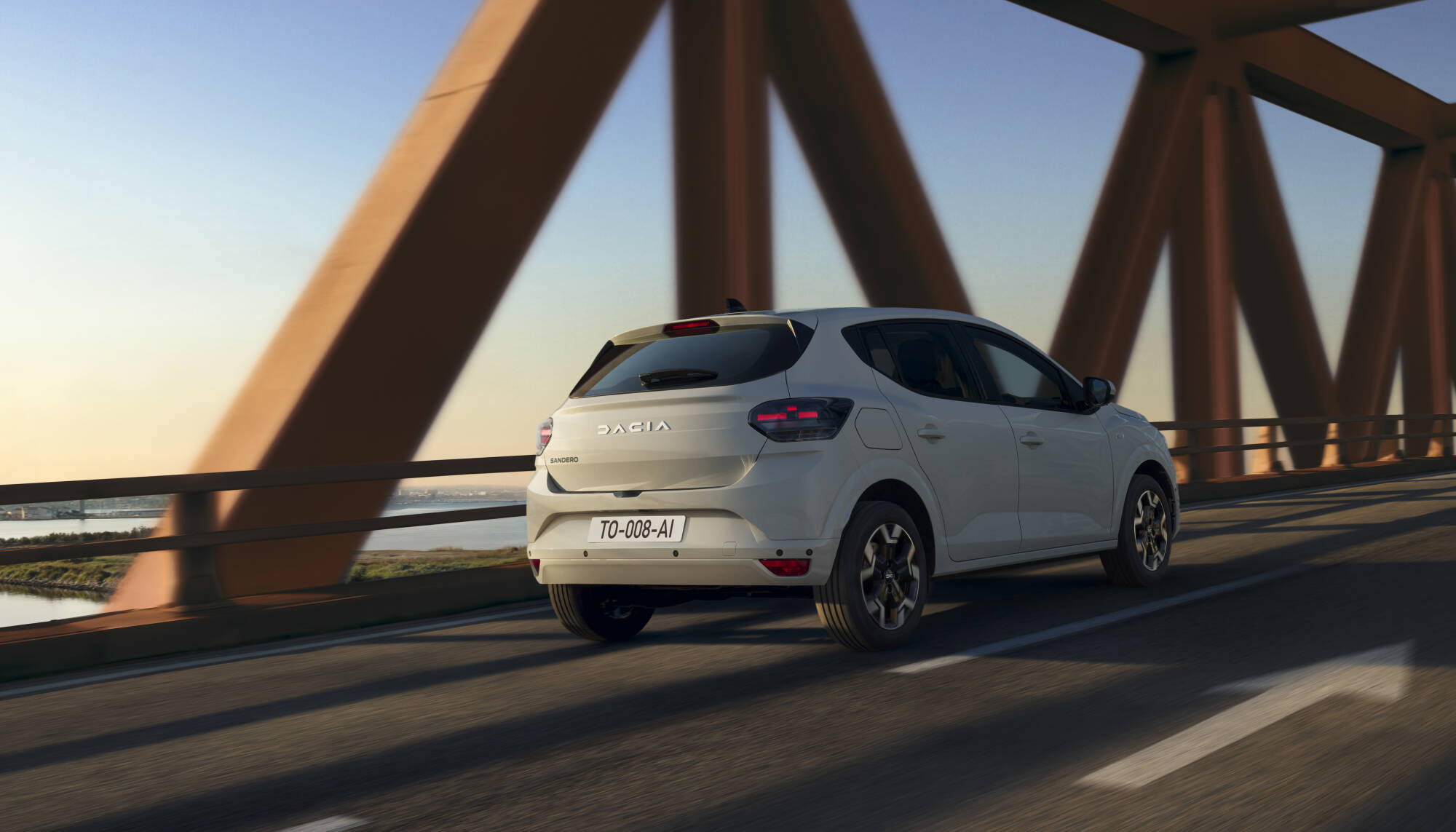
What to look out for with 2021 Dacia Sandero used cars
With 2021 examples you get the third generation Sandero, which is a step forward in finish and equipment. These models often come with a 1.0 TCe engine with 90 or 100 bhp, paired with a manual gearbox or a CVT automatic. Check which type of transmission you get, because the CVT automatic requires specific maintenance.
Check the service book for complete and regular servicing. The TCe engine is reliable, but only with correct maintenance using the right engine oil. Ask the seller or dealer about the maintenance history and check whether all stamps are present. Missing stamps may indicate neglected servicing.
During the test drive, listen for unusual noises from the dashboard or doors. Some owners report rattles on poor road surfaces. That is not a structural problem, but it is something to note in terms of driving comfort. Also check the air conditioning: it should cool quickly and must not give off unpleasant smells.
Known problems with used Dacia Sandero Stepway models
The Stepway variant is popular because of its higher seating position and rugged looks. This version shares most of its technology with the standard Sandero, but it has a few specific points of attention. Check the condition of the wheel-arch protection and the underside, as this variant is often used on unpaved roads.
Inspect the shock absorbers thoroughly. Due to the slightly higher build and larger wheels, they can wear out faster under intensive use. When the car is stationary, push down on the corners; the body should not continue to bounce. During the test drive, check whether the car remains stable in faster bends and over road imperfections.
On older Stepway models from before 2019, rust occurs around the wheel arches and on the underside of the doors. Use a torch to look under the car and in the wheel arches. Superficial rust can be treated, but perforated areas require costly welding work. Ask whether the car has had an anti-rust treatment.
‘ Some owners report faults with the lambda sensor when running on LPG, which can mean high repair costs. ’
LPG models: extra points of attention
Many used Sanderos are fitted with an LPG system, which significantly reduces running costs. With these models, always check whether the system was installed by an approved company and whether the tank is still certified. The LPG tank must be inspected every ten years.
Test the LPG sensor during the test drive. Switch from petrol to LPG and back again; this should happen smoothly without hesitation or loss of performance. Some owners report faults with the lambda sensor when running on LPG, which can mean high repair costs.
Ask for the maintenance schedule of the LPG system. Filters must be replaced regularly, and the injectors require periodic cleaning. If this maintenance has been skipped, starting problems and an irregular engine idle can develop.
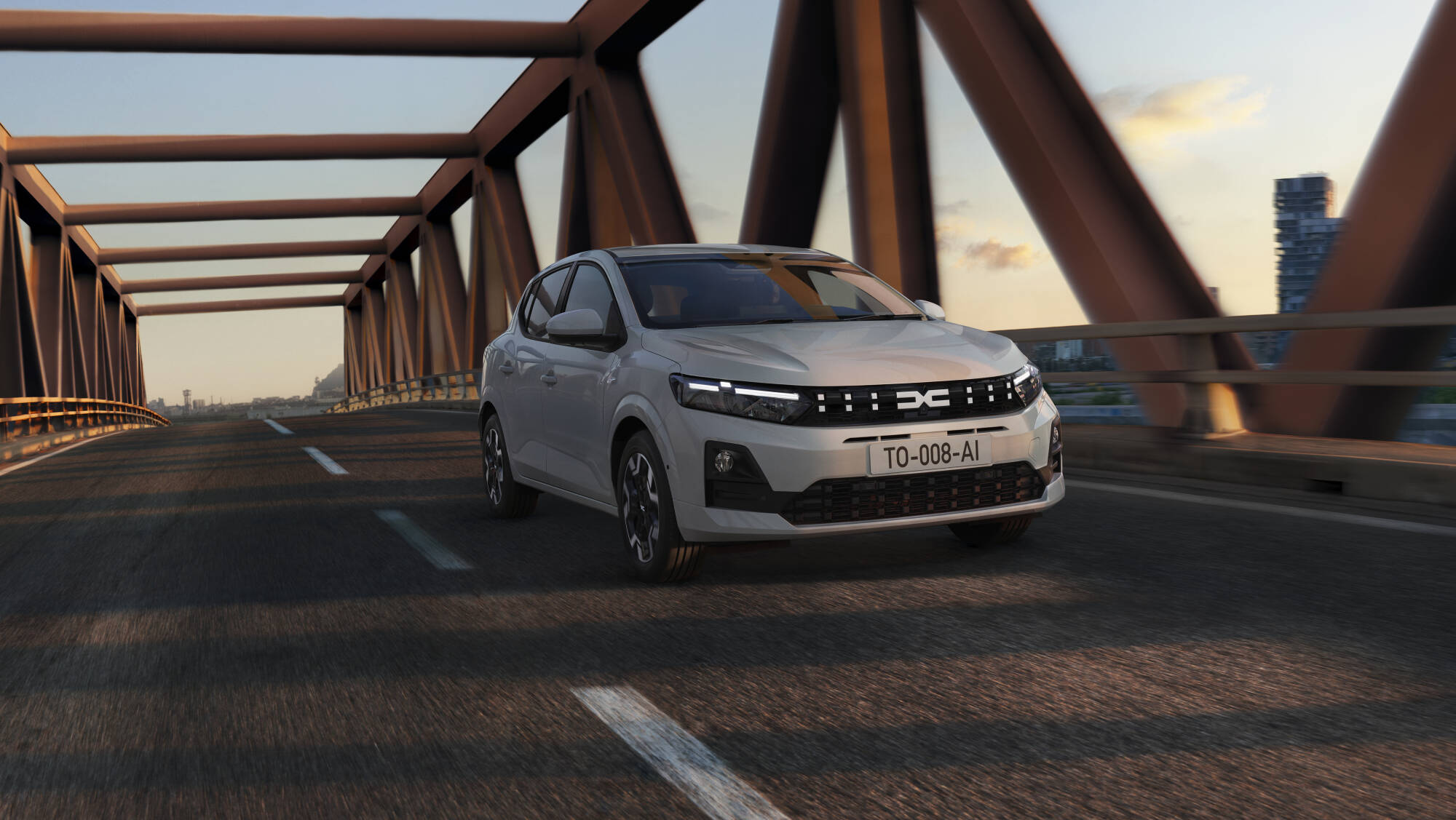
Is the Dacia Sandero reliable as a used car?
The reliability of the Sandero depends heavily on maintenance and usage history. Cars that have been serviced according to schedule at an approved garage rarely suffer major problems. The Renault technology under the bonnet is proven, and spare parts are widely available at keen prices.
Owners on forums mainly mention small annoyances such as creaks in the interior and worn upholstery at high mileages. These are not technical faults, but they do affect comfort. The engine and drivetrain receive mostly positive reviews.
Avoid examples without a warranty or with an unclear maintenance history. Preferably buy from a BOVAG dealer who offers an exchange guarantee and a recent service. That gives you peace of mind and a point of contact if unexpected problems arise shortly after purchase.
Choosing models and engine variants
The choice between the standard Sandero and the Stepway depends on how you are going to use the car. The standard version is lighter and more economical, ideal if you mainly drive in town. The Stepway offers more ground clearance and a tougher image, suitable if you also drive on country roads or light unpaved tracks.
For engines you can choose between the 1.0 SCe with 65 to 75 bhp for economical city use, or the 1.0 TCe with 90 to 110 bhp for more power on the motorway. The turbocharged TCe engine is livelier but requires more precise maintenance. Choose the SCe if you mainly do short trips and the TCe if you regularly drive longer distances.
The transmission is usually a manual with five or six gears. Some models offer a CVT automatic, mainly in combination with the more powerful TCe engine. The automatic makes driving in the city more comfortable, but it is more sensitive to wear and more expensive to maintain.
Checklist for purchase
Use these points during your visit to the seller to assess the car thoroughly:
- Check the service book for complete stamps and regular servicing
- Inspect the underside and wheel arches for rust or damage
- Test all electrical features: windows, mirrors, lights and air conditioning
- During the test drive, listen for unusual noises from the engine and interior
- On LPG models, check the system, certifications and operation of the fuel changeover
- Inspect the tyres for wear and ask when they were last replaced
- Ask for a recent MOT and any repair history
- Check whether a warranty and exchange options are provided
Take your time for the test drive. Try the car on different types of road: town, motorway and bumpy roads. Pay attention to the steering behaviour, brakes and gearshift smoothness. A good used car feels stable and responds immediately to steering inputs.
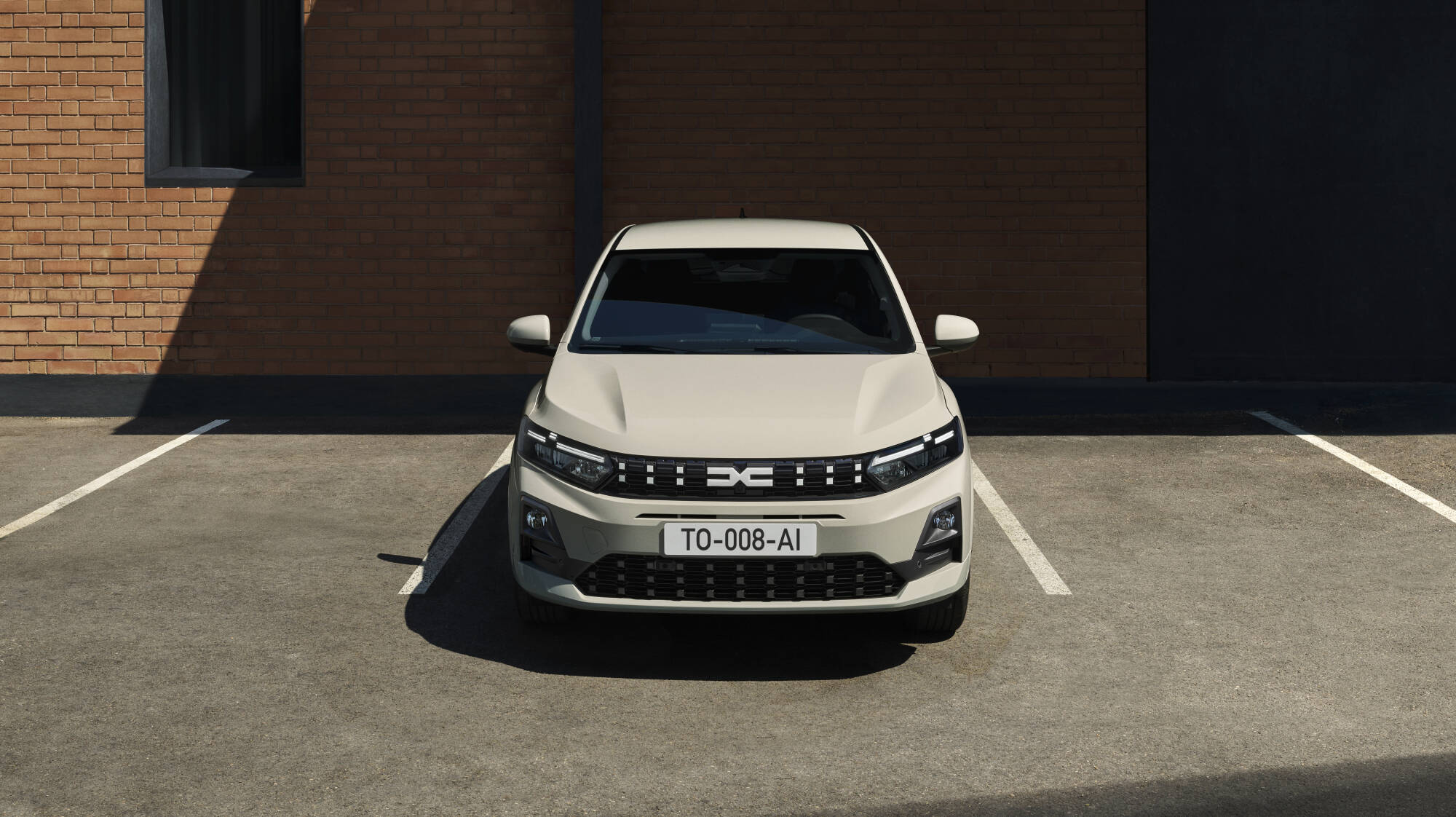
Where to find the best deals
The used Sandero market is large, with hundreds of examples from private sellers and dealers. Compare listings on several platforms to see price differences. Keep an eye out for used cars advertised below the average market value; these are often attractive deals from dealers who want to rotate their stock quickly.
Approved Dacia dealers often offer trade-in options and finance, which simplifies the buying process. BOVAG dealers must provide a minimum warranty and deliver the car ready to drive, including a fresh service. That gives extra security compared with private sales.
With private sales, the price is often lower, but you do not get a warranty. If in doubt, take a specialist with you for an opinion, or have the car inspected before you buy. The cost of an inspection is worth it against the risk of hidden defects.
After purchase: maintenance and costs
Compared with its rivals, the Sandero has low maintenance costs. A standard service costs between €150 and €250, depending on the garage and the parts required. Choose genuine or high-quality aftermarket parts to avoid problems.
Change the engine oil according to the manufacturer’s schedule, usually every year or every 15,000 kilometres. With TCe engines this is especially important to keep the timing chain in good condition. Regularly check the coolant level and the condition of the belt, as these wear faster under intensive use.
Spare parts such as brake pads, filters and bulbs are widely available at competitive prices. Many parts are also suitable for Renault models, which improves availability. For specific Dacia parts you can go to the dealer or specialist online suppliers.
‘ There is always more to discover. ’
Discover more on Carnews
On the Carnews website you will find extensive information on known problems, maintenance tips and comparisons with other models in the same class. Unsure between different brands? Do you have specific questions about your upcoming purchase? There is always more to discover. Dive deeper into the world of used cars and make a well-informed choice.
Frequently asked questions
How do the ‘driving dynamics’ and ‘steering characteristics’ of the Dacia Sandero compare with those of its class rivals, and are there specific engine options that offer a more ‘engaging driving experience’?
The driving dynamics and steering characteristics of the Dacia Sandero are safe and predictable, but less sharp and communicative than those of many rivals, which often have a firmer chassis and more direct steering. The Sandero is mainly tuned for comfort and simplicity, so it feels less “playful” in corners. For a relatively more engaging driving experience within the range, the more powerful 1.0 TCe engines (90–110 bhp), preferably with a manual gearbox, are the most suitable. These offer brisker acceleration and a bit more driving fun than the basic versions, although the Sandero still is not a true driver’s car.
What are the most common mechanical or electrical problems to look out for with a used Dacia Sandero, and what are the estimated ‘repair costs’ for these?
On a used Dacia Sandero, clutch wear and exhaust system wear are common; expect around €700–€1,100 for a clutch and €200–€500 for exhaust components. With TCe petrol engines, it is important to have the timing chain and tensioners checked; replacement roughly costs €600–€1,000. In addition, the brakes (discs/pads) and suspension components (bushes, control arms) may be worn; for these you will usually pay €250–€600 per axle. Finally, it is sensible to check older models for rust; local welding and treatment can range from a few hundred to well over a thousand euros, depending on how severe it is.
What options are there for ‘performance upgrades’ or ‘aftermarket modifications’ that are popular among Dacia Sandero owners, and are these ‘cost-effective’?
Popular performance upgrades on Dacia Sanderos are mainly software tuning (chiptuning) of the TCe engine, fitting better tyres, sportier brake pads and sometimes lowering springs or firmer dampers for tighter handling. Simple intake and exhaust modifications are also seen, but these usually deliver more sound than real extra power. Chiptuning on the turbo engines can provide noticeably more pulling power and is often the most cost-effective option in relation to the gains, provided it is done by a specialist. Suspension and tyre upgrades are also cost-effective, as they improve driving safety and feel without extreme investment.
How does the used Dacia Sandero position itself against ‘direct rivals’ such as the Skoda Fabia or Renault Clio in terms of ‘total running costs’ and ‘driving enjoyment’?
A used Dacia Sandero generally has lower total running costs than direct rivals such as the Skoda Fabia and Renault Clio, thanks to its lower purchase price, simpler technology and low maintenance and insurance costs. However, it feels less refined and less dynamic than, in particular, the Clio, which scores higher for driving enjoyment. The Sandero offers ample comfort and space, but its steering and suspension are less precise than those of a Fabia. This makes it especially attractive for buyers who consider costs more important than pure driving fun.
What can be expected in terms of ‘depreciation’ and ‘residual value’ for a Dacia Sandero in the long term, particularly given its ‘budget position’?
Because of its keen list price and budget positioning, the absolute depreciation in euros is usually lower than for more expensive brands, but in percentage terms the Sandero can depreciate at an average to slightly faster rate. As demand for affordable, economical cars remains structurally high, the residual value after a few years generally remains reasonably stable, as long as the mileage and maintenance are in order. In the very long term (10+ years), the value mainly drops to the level of a functional “budget used car”, where luxury and image hardly play a role. Compared with more expensive rivals, the Sandero therefore offers a favourable cost–benefit ratio over its lifetime, despite its limited prestige factor.