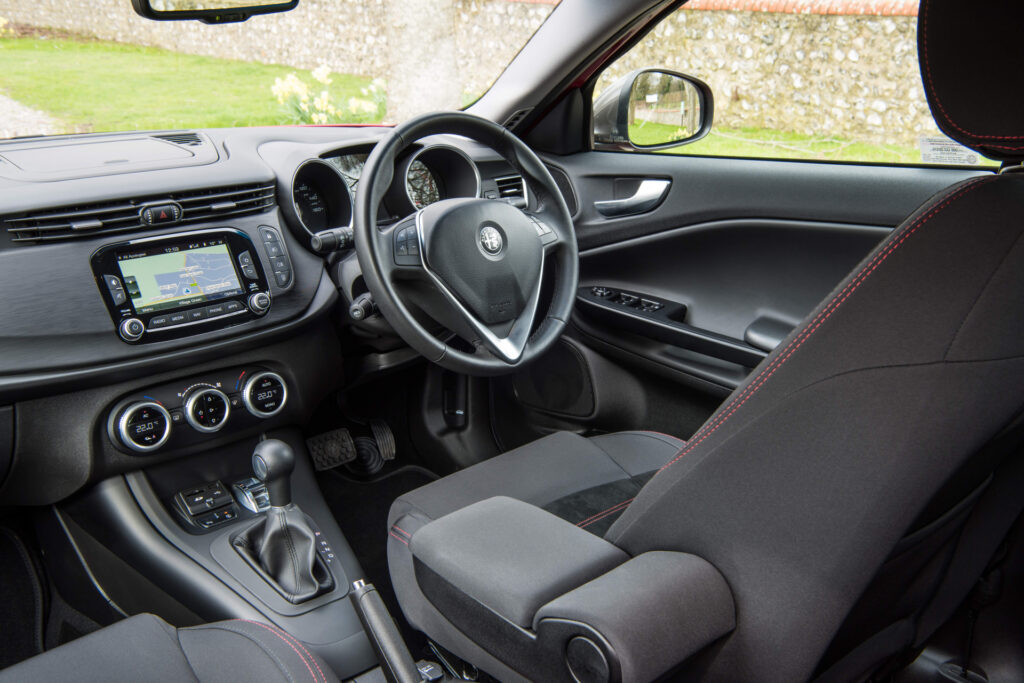
The Alfa Romeo Giulietta is an attractive car, but electrical faults are a much-discussed topic among owners. From a failing start-stop system to ECU faults (faults in the engine control unit) and alternator problems: all of these lead to starting issues and warning lights on the dashboard. Anyone who knows what to look out for is at an advantage. Read on to discover what can go wrong and how to tackle it.
Common electrical complaints in the Giulietta
Giulietta owners regularly report that electrical faults show themselves in various ways. The car starts with difficulty, or a light flashes on the dashboard without any clear cause. More of these recurring complaints are documented on the overview page about Alfa Romeo Giulietta problems.
The most commonly reported electrical complaints are:
- Starting problems due to a weak or faulty battery
- Failing start-stop system
- Faulty alternator (the component that charges the battery while driving)
- ECU faults causing error messages or poor starting
- Failure of the electric power steering
- Problems with the air conditioning, electric windows or central locking
- Wire breakage in the wiring loom, especially near the tailgate
Many of these problems are linked. A weak battery affects several electronic systems at once, making the fault seem broader than it really is.
Why won’t my Alfa Romeo Giulietta start any more?
In many cases, a Giulietta that will not start has a battery or alternator problem. The alternator keeps the battery topped up while the car is being driven. If the alternator is not working properly, the battery will slowly run flat and, in time, the car will not have enough power to start.
Besides the alternator, a faulty sensor in the engine management system can sometimes be the cause. Think of a crankshaft or camshaft sensor. These sensors provide the engine’s electronic control unit — the ECU — with information about engine position. If that signal is lost, the engine will refuse to start. In that case, a fault code scan (reading the car’s electronic fault codes) at a garage will quickly provide clarity.
Possible causes of starting problems at a glance:
- Flat or weak battery
- Faulty alternator
- Fault in the ECU or engine management
- Faulty crankshaft or camshaft sensor
- Poor earth connection or loose plug connection
How do you solve battery problems in the Giulietta?
Battery problems are a common cause of complaints in the Giulietta, such as slow electric windows, flashing lights on the dashboard and comfort functions that do not respond properly. The battery is often weakened if the lights visibly dim when starting, or if comfort functions such as the electric windows respond slowly. Sometimes fault messages on the dashboard disappear by themselves once the battery has been replaced.
Steps you can take for battery problems:
- Have the battery tested for capacity and voltage at a garage or motor factor. A battery that looks fine on the outside may still be weakened internally.
- Check the earth connections. These are the cable connections between the battery and the bodywork. Corrosion at these points causes voltage loss throughout the system.
- Have the alternator checked if the battery keeps going flat repeatedly. A good alternator keeps battery voltage stable while driving.
- Replace the battery if it is more than four or five years old and showing problems. In the Giulietta, a healthy battery is the foundation of a properly functioning electrical system.
What to do when the engine warning light flashes in the Giulietta?
A flashing or illuminated engine warning light (also known as the engine management light) indicates that the engine management system has detected an anomaly. This can mean all sorts of things: a faulty lambda sensor, a sensor fault or a problem with exhaust gas treatment. Do not ignore this light, especially if it flashes rather than staying on continuously. A flashing light points to an active fault that can damage the catalytic converter.
The right approach is to have a fault code scan carried out. A garage uses this to read the fault codes from the ECU and can establish which system is causing the warning. The symptoms of an ECU fault are wide-ranging and often overlap with other electrical complaints, so a scan saves a great deal of searching.
Also look out for additional signs:
- Increased fuel consumption without a clear reason
- Irregular idling of the engine
- Poor driving behaviour or loss of power
Have the car checked as soon as possible if these signs appear together. The longer an ECU fault goes untreated, the greater the risk of further damage.
‘ In the Giulietta, this system is a well-known source of faults. ’
Start-stop system that keeps failing
The start-stop system automatically switches the engine off when stationary, for example at a red light, and starts it again when you press the accelerator. In the Giulietta, this system is a well-known source of faults. Owners report that the car shuts down unexpectedly or that the system switches itself off without any clear reason.
A weak battery is often the cause here too. The start-stop system places greater demands on the battery than a normal driving profile. With every restart, the battery must deliver enough energy. This requires a special AGM battery (a battery without free liquid, suitable for frequent starting). If that is replaced with a standard battery, faults in the system can result.
If problems with the start-stop system persist, have the correct battery type checked and ensure that the system is properly calibrated via the car’s on-board computer after the battery has been replaced.
Moisture and wire breakage as an underestimated cause
A cause that regularly surprises owners: moisture ingress into plugs and cable routes. In the Giulietta, wire breakage in the wiring loom by the tailgate is a recurring point of attention. Due to the repeated movement of opening and closing, wires can break over time, leading to faults in the rear lights, the reversing camera or the locking system.
When buying a used car, always check that the rear lights and tailgate function correctly. Also have the plugs and visible cable routes visually inspected for corrosion or loosened connections. This takes little time, but can prevent a great deal of electrical troubleshooting afterwards.
Read more about car problems and maintenance tips?
On the Carnews website you will find much more information about common problems with specific models, maintenance tips and practical advice for car enthusiasts. Discover the extensive overviews and articles about other makes and models on Carnews.nl.
Frequently asked questions
The most common electrical faults in the Alfa Romeo Giulietta are sensor problems (such as lambda, crankshaft and camshaft sensors) that can cause error messages and starting problems. On-board computer and display faults, battery problems and voltage fluctuations are also common, which can lead to flickering lights and warning lamps. Faults in comfort electronics such as the air conditioning controls, electric windows and central locking are also regularly reported. In addition, there are reports of failure of the electric power steering and problems caused by poor earth or plug connections, sometimes due to moisture.
In the Giulietta, sensors in particular (such as lambda, crankshaft and camshaft sensors), the battery and the control of systems (control units/on-board computer) are susceptible to faults. In addition, electric power steering, comfort electronics (windows, central locking, air conditioning) and wiring in moving parts such as the tailgate often cause problems. Important causes are an aged or weak battery, poor earth or plug connections, moisture ingress into plugs and control units, and wire breakage. This leads to voltage fluctuations, fault codes, function failures and starting problems.
There are no clearly distinguished model years or specific production periods of the Giulietta known to have demonstrably more electrical problems than others. Electrical faults are mainly linked to general factors such as battery condition, age, moisture and cable/earth problems.
Owners can recognise symptoms early by looking out for difficult or delayed starting, flickering or dimming lights and warning lights appearing spontaneously on the dashboard. Comfort functions that temporarily stop working, such as windows, central locking or air conditioning, are also early signs. Recurring fault messages that disappear again on their own often point to voltage or contact problems. Regular checks of battery condition and earth and plug connections help to spot emerging faults in time.
Effective diagnosis starts with a fault code scan (OBD) and a check of battery voltage and charging voltage, because a weak battery and voltage fluctuations can disrupt many electronic systems at once. Next, inspect earth and plug connections visually for corrosion, looseness and moisture, paying extra attention to known weak points such as wiring looms by the tailgate and around the power steering. Confirm or rule out suspicions by testing in a targeted way: measure sensors (such as crankshaft/camshaft, lambda) or temporarily replace them, and make problem areas traceable by bending/moving cables while observing the system. Repair loose or corroded connections, fix damaged sections of wiring looms and, where necessary, replace the battery or faulty sensors/control units, are the most common effective solutions.
Giulietta owners can reduce electrical problems by having the battery tested/replaced regularly and by having all earth and plug connections checked periodically for corrosion or looseness. It is sensible to prevent moisture problems by visually inspecting rubber grommets, tailgate wiring and wiring looms, and having them sealed or repaired if necessary. It also helps to have a fault code scan carried out straight away whenever a warning light or starting problem appears, rather than driving on with it. During maintenance, extra attention should be paid to the tailgate wiring, lighting and comfort electronics (windows, locking, air conditioning), so that emerging faults can be fixed in good time.