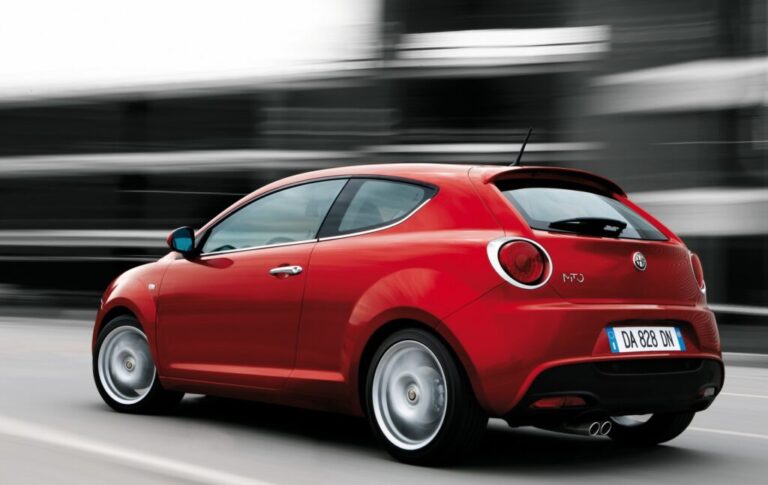
A failing cooling system in the Alfa Romeo MiTo usually is not caused by a cracked radiator. More often, a faulty coolant temperature sensor is the culprit. A poor battery can also cause a fault. The result is clearly noticeable: the overheating warning light comes on and the engine must be stopped immediately to prevent damage. This problem is one of the common problems with the Alfa Romeo MiTo and affects both petrol and diesel versions from the model years 2008 to 2018.
For owners, it is important to distinguish between a problem with the engine cooling system. A fault in the air conditioning can also cause confusion. Both complaints are often mixed up, even though the cause and the solution differ greatly. In this article, you will read which signs point to a failing cooling system and what you can check yourself. You will also read when a trip to the garage is necessary.
What are the symptoms of a broken water pump or cooling system?
The most common message on a MiTo is a dashboard warning light. This light warns about the coolant temperature. This is not always caused by a physical leak. In many cases, the sensor sends incorrect values to the control unit. As a result, the car incorrectly reports overheating.
If you recognise the following symptoms, further inspection is needed:
- The warning light stays on, even after a short drive.
- The coolant in the reservoir is below the MIN mark.
- There is visible fluid loss under the engine or around the radiator.
- The engine feels hotter than normal, despite a calm driving style.
A striking, lesser-known cause is a poor battery. A poor earth point (ground point) on the bodywork can also play a role. This can cause electronic faults. These faults make the coolant temperature register as abnormally high. In reality, there is nothing wrong with the coolant itself.
Difference between engine cooling and air conditioning problems
Many MiTo owners report that the cooling is not working. In reality, however, the air conditioning (A/C) is the culprit. An A/C fault gives warm air from the vents, but does not activate a warning light for engine temperature. Causes are often a faulty compressor or a discharged line. A faulty pressure sensor can also cause the complaint. An engine cooling-system fault, by contrast, does trigger the warning light. If ignored, this can lead to engine damage.
‘ Always have the car read out before replacing parts yourself. ’
Should you replace the water pump and timing belt at the same time?
On many models, replacing the water pump is combined with maintenance on the timing belt. Both parts are in the same area of the engine. Doing the work at the same time also saves labour costs. For the MiTo, a faulty sensor is more often the cause of an overheating warning than the water pump or radiator itself. Even so, when carrying out maintenance on the cooling system, it is always wise to have the timing belt checked to see whether it also needs replacing. That way, you avoid paying labour twice for parts that are close together.
Always have the car read out before replacing parts yourself. This can be done at the garage. A dealer is also a good option. A diagnosis gives the exact fault code. This helps you avoid unnecessary costs on, for example, a compressor or radiator. Often, the real problem lies with the sensor.
What does repair cost and how do you prevent overheating?
The cost of repairing a cooling system problem depends heavily on the cause. A faulty sensor is generally cheaper to replace than a compressor or radiator. That is all the more reason to have a proper diagnosis carried out first. If the warning light comes on, follow these steps:
- Switch the engine off immediately and wait for it to cool down.
- After a few minutes, carefully open the cap of the coolant reservoir and check the level.
- Top up the coolant to between the MIN and MAX marks if the level is too low.
- Check visually for leaks under the engine or at the radiator.
- Start the engine again and let it run for 2 to 3 minutes with light throttle for faster circulation.
- If the light still stays on, stop the car and contact the Alfa Romeo service network.
Practical prevention tips
Experience from owners highlights a few practical tips. These are not always included in the handbook:
- Do you have an electronic temperature problem with no visible leak? Then have the battery and the body earth point checked.
- Use a pressure gauge to measure the gas pressure of the air conditioning. A rapidly falling pressure points to a leak.
- Spray detergent on the A/C lines and check for bubbles to locate a leak.
- Never ignore a warning light. This can lead to complete failure of the cooling system and consequential engine damage.
An overheating warning in the MiTo is often fairly easy to fix. Act in time and have the right diagnosis made. If you are unsure of the cause, always have the car checked. Only then should you replace major components.
On the Carnews website you will find many more articles about common problems with popular models. You will also find maintenance tips and practical advice for car enthusiasts. Discover more about the Alfa Romeo MiTo and other models on Carnews.
Frequently asked questions
Typical symptoms are a coolant temperature warning light on the dashboard that is on or flashing, and a clearly excessive indicated engine temperature. You may see a low coolant level in the reservoir or signs of leakage around the radiator, hoses or under the engine. If the engine is genuinely overheating, it may run unevenly, produce less power or give off a burning smell.
The most common causes of cooling-system failure in the Alfa Romeo MiTo are a faulty coolant temperature sensor and actual leaks in the cooling system, for example at the radiator or hoses. In addition, a poor battery and/or bad earth point often cause electronic faults, making the temperature appear incorrectly too high. This makes it seem as though the system is failing, even though there is sometimes no physical cooling problem.
If a failing cooling system in the MiTo is left untreated, the engine can overheat, leading to serious engine damage such as warped cylinder heads or a seized engine. Prolonged overheating can also further damage the cooling system itself, resulting in leaks and faulty sensors or a faulty radiator. An overloaded or malfunctioning A/C compressor can also create extra heat and engine damage. Ultimately, this can result in complete failure of the cooling system and very high repair costs.
Have the coolant level checked regularly and replaced in time according to the maintenance schedule, and inspect the system preventatively for leaks around the radiator, hoses and connectors. During periodic servicing, have the coolant temperature sensor, the fan operation and the thermostat read out and tested so faults can be identified early. Ensure you have a good battery and clean, secure earth points, as voltage problems can give incorrect temperature signals. Always stop immediately if the coolant temperature warning light comes on and have the car read out to prevent more serious engine damage.
Regularly check the coolant level in the reservoir (between MIN and MAX) and immediately look for signs of leakage around the radiator, hoses and under the engine. Keep an eye on the coolant temperature warning light: if it comes on, stop immediately, let the engine cool down and check the level and any visible leaks again. If you cannot see a leak and the level is correct, have the battery and earth points checked, because electronic faults in the MiTo often give incorrect temperature signals. If the light remains on after topping up and checking, have the car read out at a garage as soon as possible to prevent damage caused by real overheating.
The most common repairs for cooling-system failure in the MiTo are replacing the coolant temperature sensor, fixing leaks (hoses/radiator) and dealing with electrical issues around the battery and earth points. Replacing the coolant temperature sensor costs roughly £85–£215 including labour. Finding and repairing coolant leaks (hose/radiator) usually costs between about £130 and £520, depending on the exact part. Checking and, if necessary, replacing the battery and improving earth connections usually costs around £85–£215.