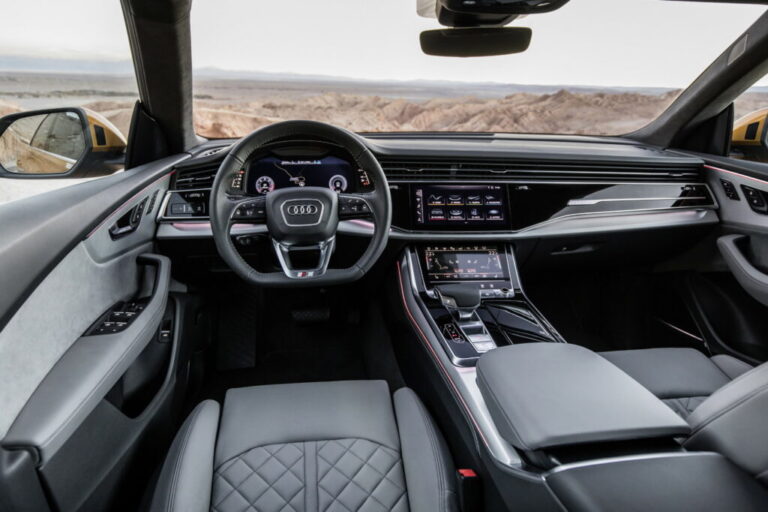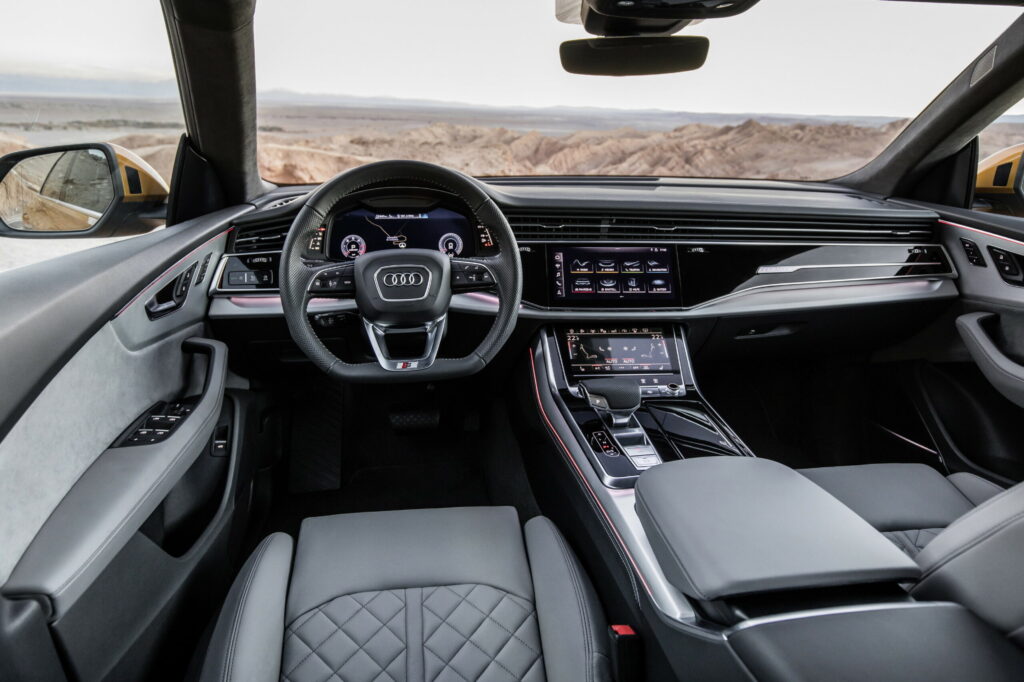
A power steering leak in an Audi Q8 requires a targeted diagnosis. The Q8 typically has electromechanical steering assistance. As a result, the car does not always use a traditional power steering pump or hydraulic fluid. Heavy steering, a humming noise or a steering warning may point to a problem with the steering rack, wiring, seals or water ingress. If you recognise the signs early, you reduce the chance of an expensive repair. You also retain more control over the car. Pay particular attention to what the car does during slow manoeuvring.
Why a power steering leak in the Audi Q8 is different
The Audi Q8 has been sold on the MLB Evo platform since 2018 and uses electromechanical steering. Steering assistance comes from an electric motor and a control unit at the steering rack. That is why a low level of power steering fluid is not always the cause of heavy steering in a Q8.
That distinction matters when searching for the cause. In older cars with hydraulic assistance, a leaking hose, pump or shaft seal often leads directly to fluid loss. In a Q8, similar symptoms can also be caused by a fault in the electric steering assist, the steering rack unit, a connector or a sensor. If multiple warnings or electrical faults appear at the same time, look at the known Audi Q8 problems.
Technical reports from owners on specialist forums point to some Q8s with sudden heavy steering and a fault in the steering system. These reports are not proof of a general defect, but they do make it clear that a visible oil stain is not the only clue. A garage should check both the mechanical and electronic sides of the system.
How do I recognise a power steering leak in the Audi Q8?
A genuine leak around the steering system is usually recognised by moisture or oil around components at the front of the car. After the car has stood overnight, check the ground under the engine bay and beneath the subframe. Bear in mind that oil from the engine, transmission or air suspension can also end up in the same place. So the colour of a fluid alone does not provide a reliable diagnosis.
The signs that need attention are:
- Heavier turning of the steering wheel when parking or making a turn.
- A humming, groaning or squeaking noise when turning the wheel.
- Jerky or fluctuating steering assistance.
- A yellow or red steering warning symbol on the instrument panel.
- Moisture around the steering rack, steering boots or connections under the car.
- Symptoms that appear after heavy rain, a car wash or deep puddles.
In a Q8 with electromechanical steering, a warning on the dashboard and heavy steering are important signs. If these symptoms appear together, they often point to a fault in the steering system. Audi states in its driver instructions that you should stop safely and seek professional help if a fault occurs. A red warning symbol certainly deserves immediate attention.
Steering boots tell you a lot about the steering rack
The bellows, also known as steering boots, are rubber protective covers on both sides of the steering rack. They protect the inner track rod ends from dirt and moisture. A torn boot can allow water and sand to enter. In a hydraulic steering rack, fluid can also collect inside such a boot when an internal seal leaks.
If there is any doubt, have a mechanic carefully remove the boots. Oil or moisture inside the boot is a different sign from a wet outside surface caused by spray from the road. A torn boot without any further fault is often still repairable to a limited extent. However, if moisture remains present for a long time, wear in the steering rack may follow.
Which causes match heavy steering?
A leak is one possible cause of heavy steering. The Q8 has complex steering technology, especially when fitted with four-wheel steering. With that option, the rear wheels turn slightly via a separate actuator for the rear axle. So a complaint about heavy steering at the front does not necessarily come from the same component as a fault message about rear axle steering.
The most likely causes vary depending on the confirmed symptom:
- Damage to a steering boot, line or seal.
- Wear or internal damage to the steering rack.
- Water ingress at plugs, wiring or the steering rack control unit.
- A fault in the electric motor that provides steering assistance.
- Problems with the 12V battery or power supply, causing steering modules to store fault codes.
- A defective steering angle sensor or a fault in communication between control modules.
- Damage after contact with a kerb, pothole or the underside of the car.
Low on-board voltage deserves more attention than many drivers think. The Q8 uses several control modules that exchange data with one another. A weak 12V battery can cause fault messages that do not immediately point to a mechanical defect. Checking the fault codes, battery voltage and charging voltage should therefore be done before replacing a steering rack.
Is it safe to drive with a leaking Q8 power steering system?
Do not keep driving if the steering suddenly becomes noticeably heavier, provides uneven assistance or shows a red steering fault. The car remains mechanically steerable, but the effort required can increase sharply. Especially at low speed, in a car park or during an emergency manoeuvre, that reduces control.
With a small, confirmed leak and no warning light, a short trip to a specialist is sometimes possible. That is not permission to keep using the Q8 normally. Fluid on rubbers, wiring or hot components can cause additional damage. In the event of an electrical fault, the assistance can also reduce further without any warning.
Take these steps as soon as the issue appears:
- Stop in a safe place and check whether a steering warning is visible.
- Do not keep turning the steering wheel to full lock for long periods, as this puts extra load on the system.
- Take photos of fluid traces and any messages on the dashboard.
- Check whether the symptom changed after rain, washing, kerb damage or a flat battery.
- Have the car scanned with diagnostic equipment that can access Audi steering modules.
- If there is heavy steering, a red warning or visible leakage, arrange transport.
‘ A good diagnosis prevents an expensive part being replaced on the basis of a warning alone. ’
Repair costs for an Audi Q8 power steering leak
The repair costs for a power steering leak on an Audi Q8 vary considerably. A single damaged steering boot, connection or cable repair usually costs less than replacing the entire steering rack. The real price depends on the cause, the specification, four-wheel steering and whether the steering rack has to be coded and aligned after installation.
A good diagnosis prevents an expensive part from being replaced on the basis of a warning alone. Ask the garage for a clear breakdown of fault codes, visual findings, voltage measurements and the possible source of the leak. When steering components are replaced, it is sensible to check the wheel alignment. If the steering angle sensor must be recalibrated, that should also be listed on the job sheet.
When looking at a used Q8, pay extra attention during the test drive. Park several times with the steering at full lock, drive slowly over an uneven road and listen with the radio off. Then check for fresh traces under the car. Also ask about steering racks that have been replaced before, software updates carried out and work on the front axle.

Targeted investigation prevents unnecessary repairs
A power steering leak in an Audi Q8 is not always a classic fluid problem. The electromechanical steering system needs an inspection that goes beyond simply looking under the car. Heavy steering, noises and fault messages deserve prompt diagnosis, because they can affect both safety and the bill.
On the Carnews website you will find information about faults, maintenance and technical problems in Audi models. You can also read what to look out for when buying a used car and which issues can occur in modern vehicles. That way you can compare symptoms more effectively before having a repair carried out.
Frequently asked questions
What are the specific technical causes of a leaking power steering system in an Audi Q8?
Specific technical causes include leaking seals in the steering rack, damaged hoses, couplings or return lines, and — in hydraulically assisted versions — wear or failure of pump components. Water ingress into the steering box can also damage seals, sensors and electronics, thereby causing steering problems. However, in many Audi Q8 variants, a power steering warning is more likely to be the result of a fault in the electric steering module or a sensor than of an actual fluid leak.
Which parts of the hydraulic ‘steering rack’ show the most ‘wear’ on this model?
In particular, the seals in the steering rack and the rack-and-pinion unit show wear, which can cause leaks and play. In addition, hydraulic pump components and the hoses, connections and return lines can wear or start to leak.
What are the early ‘symptoms’ by which you can recognise the start of a power steering leak?
Early symptoms include heavier steering, especially at low speed or when parking, and a groaning, squeaking or humming noise when turning. Steering response may also become slower, jerky or inconsistent. Also watch for a dropping fluid level, wet patches around the steering rack, the pump or hoses, and oil traces under the car. Sometimes a steering fault warning also appears on the dashboard.
How complex is it to remove and replace the ‘seals’ or the complete steering rack itself?
This is a complex job that is not recommended for most DIY enthusiasts. Replacing seals requires disassembly and precise overhaul of the steering rack; specialist tools are often needed. Replacing a complete steering rack also requires safe vehicle support, wheel alignment, fault-code reading and possibly electronic calibration. It is best carried out by a steering rack specialist or an experienced garage.
What ‘preventive measures’ can motorsport enthusiasts take to prevent hydraulic problems?
Check the hydraulic fluid level regularly and inspect pumps, hoses, seals and connections for wear or leaks. Use only the specified fluid and replace it according to the maintenance schedule. Avoid prolonged overload, such as holding the steering against the lock, and have noises, heavy steering or warning lights investigated immediately.