
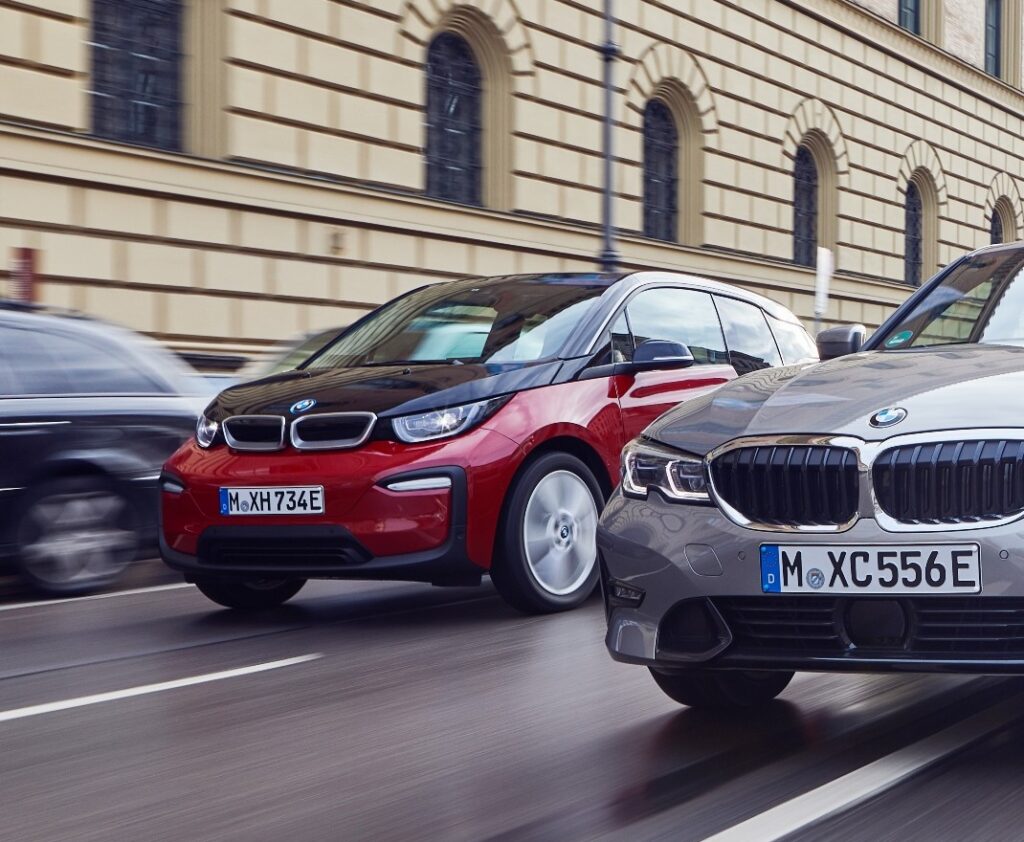
A new battery pack offers the definitive solution to battery degradation in the BMW i3. Wear and intensive use gradually reduce the range over time, especially in older models with high mileages. Degradation is a natural process in which the battery cells gradually store less capacity, but with the right approach your electric BMW i3 remains roadworthy for the long term. Discover how to recognise battery problems and which solutions are available.
How to recognise battery degradation in your BMW i3
Battery degradation shows itself in a noticeable reduction in range. After around 100,000 kilometres, capacity often drops to 120 kilometres, whereas the original range was around 190 kilometres. That means a loss of about 70 kilometres.
Several signs point to battery degradation:
- The car regularly covers fewer kilometres on a full charge than it used to
- The battery indicator shows less remaining capacity after the same charging time
- The range drops more quickly when using air conditioning or driving on motorways
- The battery calibration (the software-based measurement of battery capacity) shows 2 to 3 kWh less than expected
A degraded battery does not mean the car is unusable straight away. With normal wear, the vehicle continues to function, but with a shorter range. For anyone who drives short distances every day, limited degradation is often not a problem.
What causes battery degradation in the BMW i3
Degradation is caused by a combination of factors that age the battery cells. It is a chemical process that occurs in every lithium-ion battery, but the speed at which it happens varies according to how the car is used.
The main causes are:
- High mileages and intensive daily use
- Regularly charging fully to 100 per cent
- Frequent rapid charging at high temperatures
- Leaving the car parked for long periods with a very low or high charge
- Use in extreme climates, both cold and heat
The BMW i3 was supplied between 2013 and 2022 with various battery packs. Early models had a 60 Ah battery with a capacity of around 18.8 kWh, while later versions went up to 22 kWh. Older batteries degrade more quickly because of less advanced cell technology. However, with correct treatment, the battery remains usable for years, as shown by examples of BMW i3 owners with more than 330,000 kilometres on the clock.
BMW i3 battery lifespan under normal conditions
The BMW i3 battery lifespan depends heavily on maintenance and use. With careful charging habits and regular checks, the battery remains functional well beyond 200,000 kilometres. Some owners even report a battery still working well after 330,000 kilometres.
The battery ages gradually, but the rate differs from situation to situation. Several factors positively affect battery life:
- Charging daily to 80 per cent instead of 100 per cent
- Avoiding frequent rapid charging sessions in high temperatures
- Regular recalibration to 100 per cent, a few times a year
- Parking with a charge between 20 and 80 per cent during long periods of inactivity
BMW now explicitly recommends charging to 80 per cent daily when you do not need the full range. This significantly slows degradation. Charging fully to 100 per cent is mainly useful for long journeys or when you would normally never use the full capacity.
Replacing the BMW i3 battery as the definitive solution
When the range becomes insufficient for your daily use, replacing the BMW i3 battery offers a solution. A new or larger battery not only restores capacity, but often provides an even longer range than the original pack.
There are several replacement options:
- Upgrading to a 53 kWh pack with a range of around 200 kilometres
- Installing a 94 Ah battery for later models
- Replacing it with a reconditioned original pack of similar capacity
Specialists such as Tauros Engineering offer upgrade packs that are compatible with various BMW i3 models. The process requires technical expertise and takes place in several stages.
Replacing the BMW i3 battery pack in practice
Replacing the BMW i3 battery pack is a specialist job carried out at an approved workshop. Installation requires electrical knowledge and experience with high-voltage systems. The process takes several days, depending on the availability of parts and the complexity of the upgrade.
The installation follows a fixed step-by-step process:
- Preparation and assessment of the current battery pack
- Draining the cooling system and disconnecting the high-voltage wiring
- Removing the old battery from the floor pan
- Installing the new or upgraded battery pack
- Connecting the electrical systems and cooling system
- Calibration and software update so the new capacity is recognised
Check in advance whether the upgrade is compatible with your BMW i3’s model year and configuration. Always have the installation carried out by an approved specialist to ensure warranty and safety.
BMW i3 battery replacement costs and considerations
The cost of replacing a BMW i3 battery varies greatly depending on the type of replacement and the capacity chosen. A completely new battery pack with greater capacity requires a higher investment than a reconditioned original pack. Expect an upgrade to 53 kWh to cost a sum comparable with replacing a small engine in a conventional car.
The costs consist of several elements:
- The new or reconditioned battery pack itself
- Labour costs for removal, installation and calibration
- Any software updates and system modifications
- Removal and recycling of the old battery
Weigh the cost against the residual value of your BMW i3 and your expected period of use. For owners who intend to keep their i3 for years, an upgrade can be worthwhile. The investment results in a longer range and makes the vehicle fully usable again for longer journeys.
Can you prevent battery degradation in a used BMW i3
Some degradation is often already present in a used BMW i3. At that stage, prevention is no longer possible, but further decline can be slowed. With careful charging habits and regular maintenance, the remaining capacity stays available for longer.
Several measures help to limit further degradation:
- Have the battery status checked by a specialist when buying
- Carry out a full recalibration to 100 per cent once a year
- Charge daily to a maximum of 80 per cent
- Avoid parking for long periods with a very low or high charge
- Limit the use of rapid chargers in warm conditions
The BMW i3 REX version (REX stands for range extender) offers extra reassurance thanks to a small combustion engine that steps in when the battery charge drops below 8 per cent. This range extender acts as a buffer for longer trips, but it does not replace a working battery. In a used BMW i3 with severe degradation, the REX version can nevertheless be a practical choice.
‘Charging fully to 100 per cent every day actually speeds up degradation.’
Recalibration as an interim solution for limited degradation
Before you move on to replacing the battery, recalibration is a useful interim solution. A full recalibration to 100 per cent restores the accuracy of the capacity reading. This does not solve physical degradation, but it does correct an incorrect display of the remaining capacity.
The battery calibration becomes unbalanced over time when you never charge to 100 per cent. The car then shows a lower capacity than is actually available. An annual full recalibration, carried out by a BMW specialist, brings the reading back into line with the actual capacity. This can sometimes provide a few extra kilometres of range without any physical modifications.
Do this only a few times a year if you normally charge to 80 per cent. Charging fully to 100 per cent every day actually speeds up degradation. Recalibration is intended to maintain measurement accuracy, not as the standard charging method.
On the Carnews website you will find extensive information about electric cars, maintenance advice and practical tips for BMW models. Discover more articles about battery maintenance, common problems and solutions for electric driving.
Frequently asked questions
The cost of replacing or upgrading the battery in a BMW i3 is roughly in the range of several thousand to well over ten thousand euros, depending on capacity (for example a 53 kWh upgrade) and the supplier. This does deliver a significantly greater range and a longer lifespan for the car, which can make it financially attractive if the rest of the car is in good condition and you want to keep driving the i3 for several more years. However, if you are already looking at a newer model with modern safety and comfort systems, the extra cost compared with a battery upgrade can be limited, especially with part-exchange. The choice is therefore financially attractive בעיקר when your current i3 is technically sound, you are happy with the car and you clearly extend its usable life with the new battery.
After replacing the battery with a newer, larger pack (for example 94 Ah or around 53 kWh), you can increase your practical range from about 120 km with a worn 60 Ah battery to roughly 200 km or more, depending on driving style and conditions. Performance remains essentially the same, but because the new battery has less voltage sag under load, the car often feels stronger and more consistent when accelerating. Even in cold weather and at higher speeds, the available power remains more stable, so the i3 feels less like it is “running out of puff” during full acceleration or on long hills. You will also notice that the on-board computer gives a more realistic (and usually higher) estimate of remaining kilometres, meaning you need to charge less often and have more reserve.
Yes, technically it is entirely possible to upgrade the BMW i3 battery to a newer or larger pack, for example to 94 Ah or even around 53 kWh, via specialist companies such as Tauros Engineering. Financially, this makes the most sense if you want to keep the car for several more years and the current range is clearly insufficient, because the costs are significant but often lower than buying another (younger) EV. Available options include an original BMW upgrade to a larger factory specification (if still offered) or an aftermarket upgrade pack with higher capacity, including removal of the old battery pack and installation plus recalibration. Always have a cost-benefit analysis and compatibility check carried out beforehand by an EV/BMW specialist.
Battery replacement on a BMW i3 involves removing the complete high-voltage battery pack from the floor pan, disconnecting the cooling system, removing the old battery and fitting a reconditioned or upgraded pack (for example 94 Ah or 53 kWh), which is then coded into the software. This is always done using special lifting and safety equipment and by an HV-certified technician, including checks of the cooling system, seals and an extensive functional test after installation. In practice, this is carried out expertly by specialist EV companies such as Tauros Engineering (known for i3 battery upgrades) and a number of EV specialists/workshops that focus specifically on the BMW i3 and battery reconditioning. Many regular BMW dealers only replace batteries under the factory warranty or supply a new pack at high cost, whereas the specialist EV garages focus specifically on reconditioning and upgrades.
A new or reconditioned BMW i3 battery often lasts 8–15 years or 200,000–300,000 km in practice, depending on use and charging habits. The factory warranty on the high-voltage battery is typically 8 years or around 100,000–160,000 km up to a certain minimum remaining capacity. A professionally reconditioned or higher-capacity upgrade battery with a warranty gives buyers more confidence, which usually increases the residual value clearly compared with a car with a worn original battery. By contrast, an undocumented or poorly reconditioned battery can have a negative effect on the residual value.