Dacia Spring: common problems you need to know about
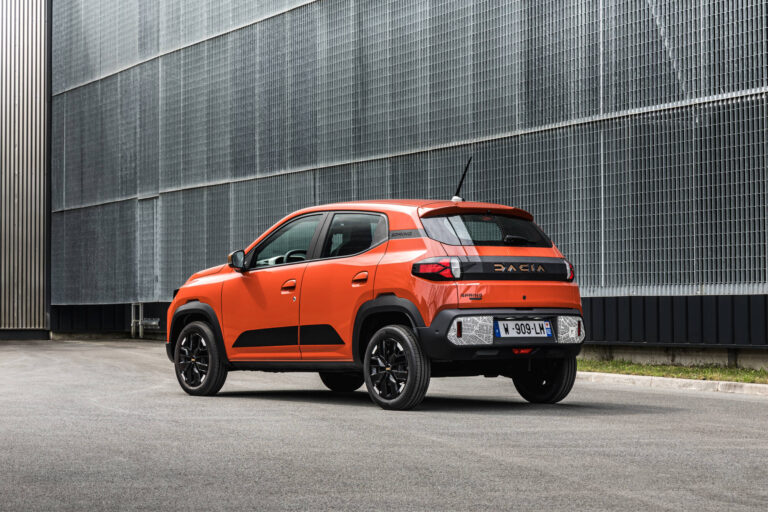
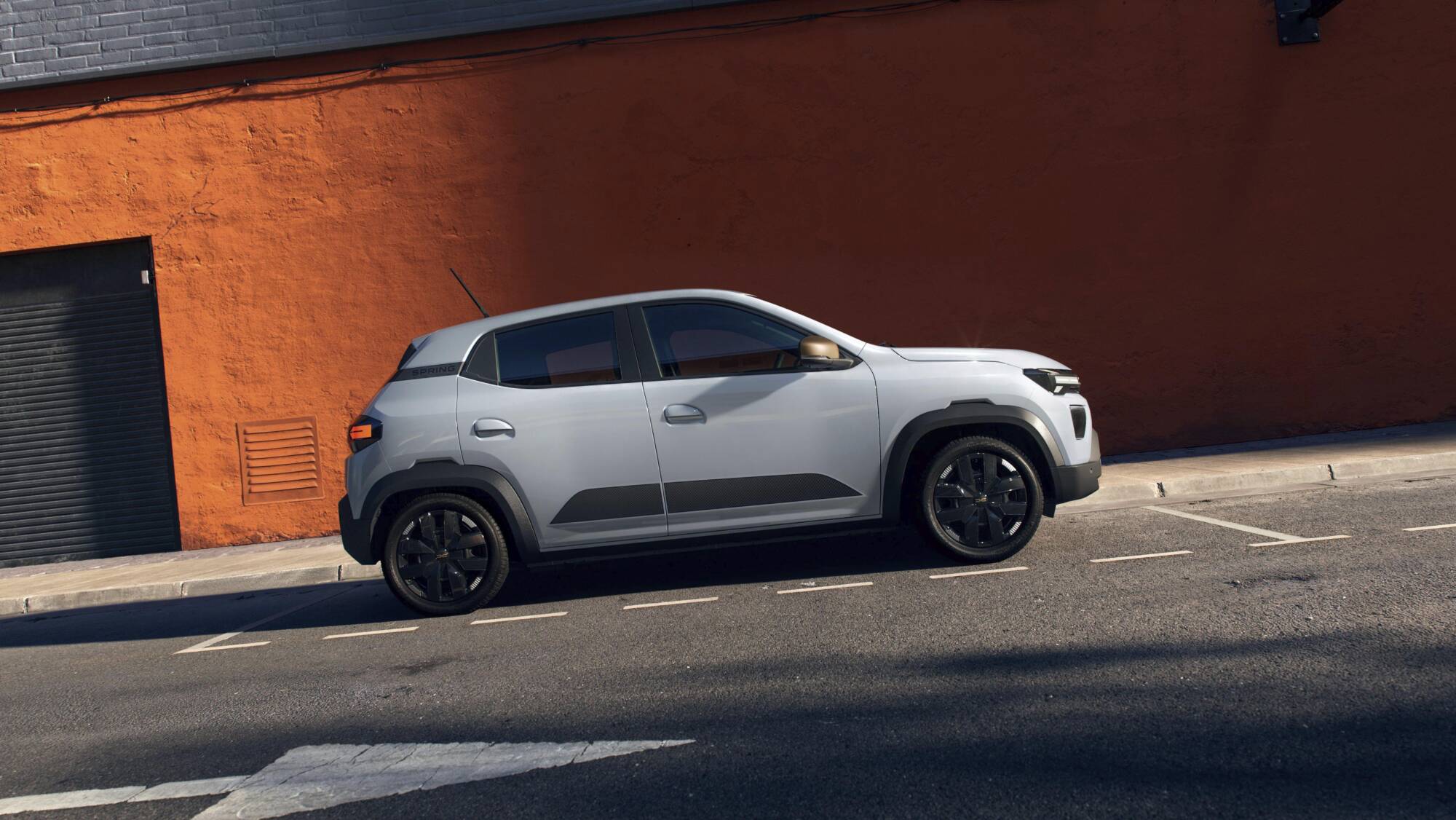
The Dacia Spring is the cheapest electric car on the Dutch market, with prices starting at around €15,000 and a WLTP range of 225 kilometres. However, this affordable EV suffers from various teething problems that can seriously affect everyday use. Owners regularly report issues with batteries, charging failures, software bugs and construction defects. These challenges go beyond the compromises you would expect from an entry-level model. Do you want to know what to look out for before buying a Spring? How can you, as an owner, prevent these problems?
Do you already own a Dacia and are you running into other technical problems? Then have a look at the common car problems with Dacia for a complete overview of brand-specific faults and their solutions.
Limited real-world driving range
The official WLTP range of 225 kilometres sounds acceptable for a city car, but in practice this figure is hard to achieve. The Dacia Spring has a 26.8 kWh battery, of which 26.3 kWh is usable. Under ideal conditions this delivers around 180 to 200 kilometres. In cold weather, however, the range drops drastically. Owners report that the range in winter can fall to 140 to 160 kilometres, depending on use of the heater and the outside temperature.
This is because lithium-ion batteries are less efficient at low temperatures. Lithium-ion batteries are rechargeable batteries in which lithium ions move between the electrodes. The chemical processes in the cells slow down in the cold, reducing the available energy. Cabin heating uses a lot of power, on average 2 to 3 kW per hour. For short urban trips this is manageable, but anyone who regularly covers longer distances will need to plan carefully.
Battery degradation also plays a role. After several years of intensive use, capacity can drop by 5 to 10 percent. This further reduces the practical range. This is a normal phenomenon with electric cars, but given the already tight range of the Spring, it is more noticeable. Some owners report clearly noticeable capacity loss after just two years. This happens especially when the car frequently undergoes fast charging. Regularly discharging down to almost 0 percent also accelerates capacity loss.
Tips to optimise range
- Use Eco mode (economy driving mode) consistently for city trips; this can reduce consumption by 10 to 15 percent
- Preheat the car while it is still connected to the charger to save battery power
- Drive proactively and make optimal use of regenerative braking (braking that recharges the battery)
- Avoid speeds above 100 km/h, as consumption then rises exponentially
- Preferably park the car indoors or in a sheltered spot in winter
‘ Both AC charging (alternating current) via the wallbox and DC fast charging (direct current) suffer from various faults that frustrate owners. ’
Problems with the charging process
Charging the Dacia Spring does not always run smoothly. Both AC charging (alternating current) via the wallbox and DC fast charging (direct current) suffer from various faults that frustrate owners. A common complaint is that the charging session stops unexpectedly or does not start at all. This can have several causes, ranging from communication problems between the car and the charge point to temperature-related issues with the battery.
When AC charging with a 7 kW wallbox (fixed charge point on the wall), a full charge takes about 4 hours. Some owners report that charging speed suddenly drops halfway through, or that the car indicates that charging is not possible even though the cable is correctly connected. This problem mainly occurs at extreme temperatures. Both heat and cold can cause the battery management system (the system that controls and monitors the battery) to limit or pause charging to protect the cells.
DC fast charging (fast charging with direct current) is possible at up to 30 kW. This means you can go from 20 to 80 percent in about 45 minutes. However, the charging curve flattens quickly: above 80 percent the speed drops to 15 kW or less. Owners also report that the Spring refuses to charge at all at some rapid chargers or stops after a few minutes. Incompatibility with older charge points and software bugs in the charging management system are the underlying causes.
Another point of concern is the CCS charging port. CCS stands for Combined Charging System, a type of fast-charging connector. With intensive use the contacts can become dirty or slightly damaged, leading to connection problems. Check the port regularly and carefully clean it with a dry cloth. Also make sure your charging cables are clean and dry before you connect them.
Software and infotainment faults
The infotainment system in the Dacia Spring is basic. Even that causes hiccups. The 7-inch touchscreen in the Extreme trim sometimes responds slowly or freezes completely, making functions such as navigation, phone pairing and climate control temporarily unavailable. Restarting the system usually fixes this temporarily. To do this, press and hold the on/off button. However, the problem regularly recurs.
Bluetooth connections frequently drop out or refuse to pair with smartphones. This is particularly annoying for hands-free calling and streaming music. Owners report that connectivity becomes unstable especially after software updates. Resetting the network settings in the system can help, but does not guarantee a permanent solution.
The My Dacia app, intended for functions such as preconditioning and monitoring the charging status, does not always work reliably. Sometimes the app shows an incorrect battery level or it is not possible to start the climate control remotely. This is because data communication between the car and the app runs via the mobile network, and the built-in SIM card does not always establish a stable connection everywhere.
Software bugs in the battery management system (the system that controls and monitors the battery) can also trigger error messages on the dashboard. Some owners see warnings about the charging system appear even though technically nothing is wrong. A dealer can read the fault codes via a diagnostic computer and possibly install a software update. Unfortunately, this does not always solve all problems, because Dacia does not have a patch available for every reported issue.
Build quality and interior defects
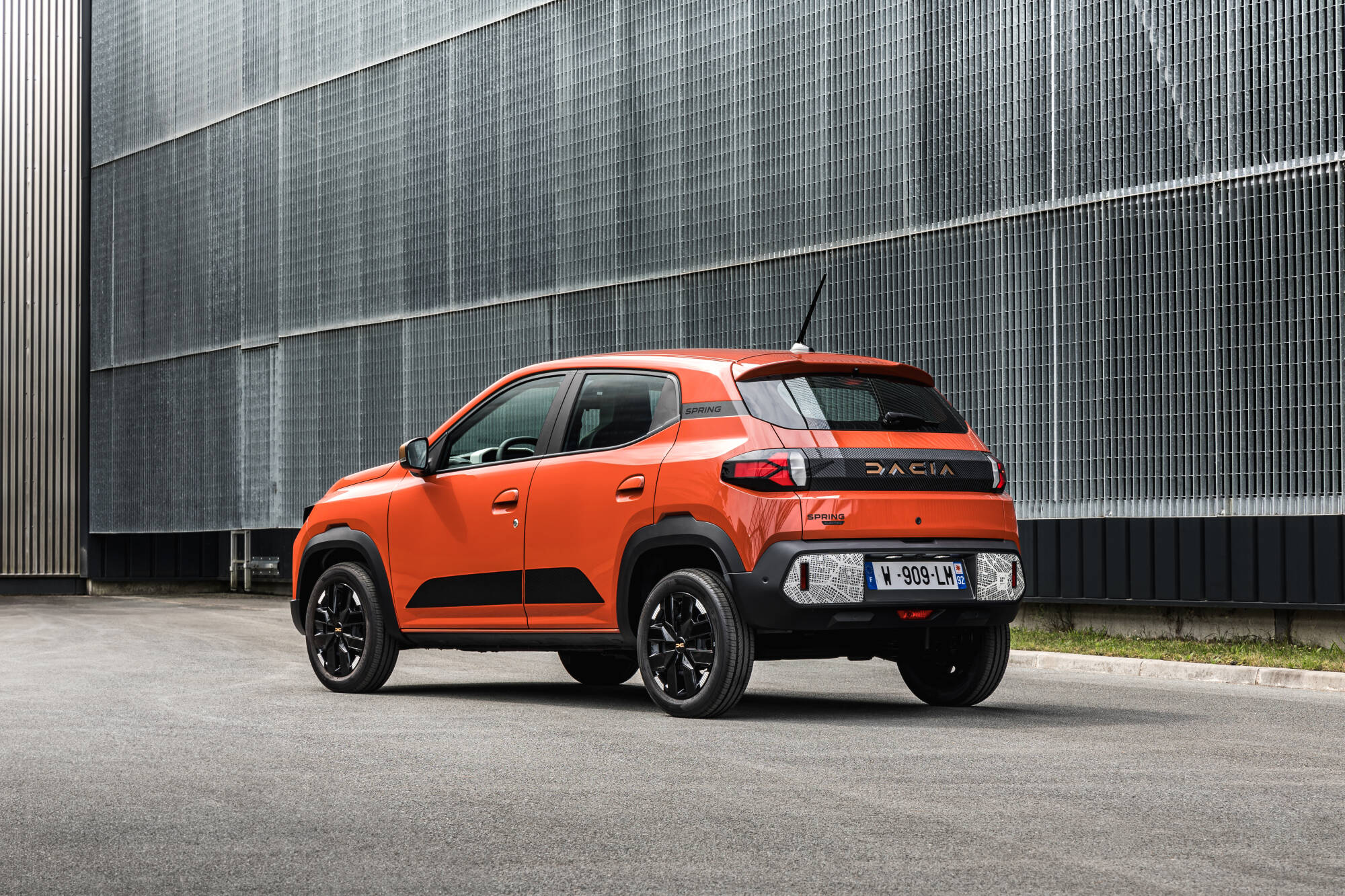
The Dacia Spring is built with simple materials to keep costs low. This is clearly noticeable. The interior consists largely of hard plastic that can creak and rattle as temperatures change. Especially after a hot day in the sun or during cold winter months, owners report that the dashboard and door panels make noises while driving.
Rattles and vibrations are more common. The cause lies in loose clips, poorly aligned panels and cheap upholstery. The centre console can sometimes feel wobbly and buttons may become looser over time. This does not immediately affect functionality, but it does undermine the feeling of solidity.
The seat upholstery is functional but not hard-wearing. Some owners see wear marks on the driver's seat after just one year, especially with daily use. The finish around seams and edges is not always neat, which can result in small frays or loose threads.
The sealing of doors and windows is also not ideal. In heavy rain or in a car wash, water can leak into the car, particularly around the tailgate and door frame. This can lead to moisture in the interior and, in the long term, to rust or mould. After rainfall, check the floor mats and boot for damp and have any leak points sealed by a dealer.
‘ On the motorway the Spring shows its limitations. ’
Driving behaviour and performance on different roads
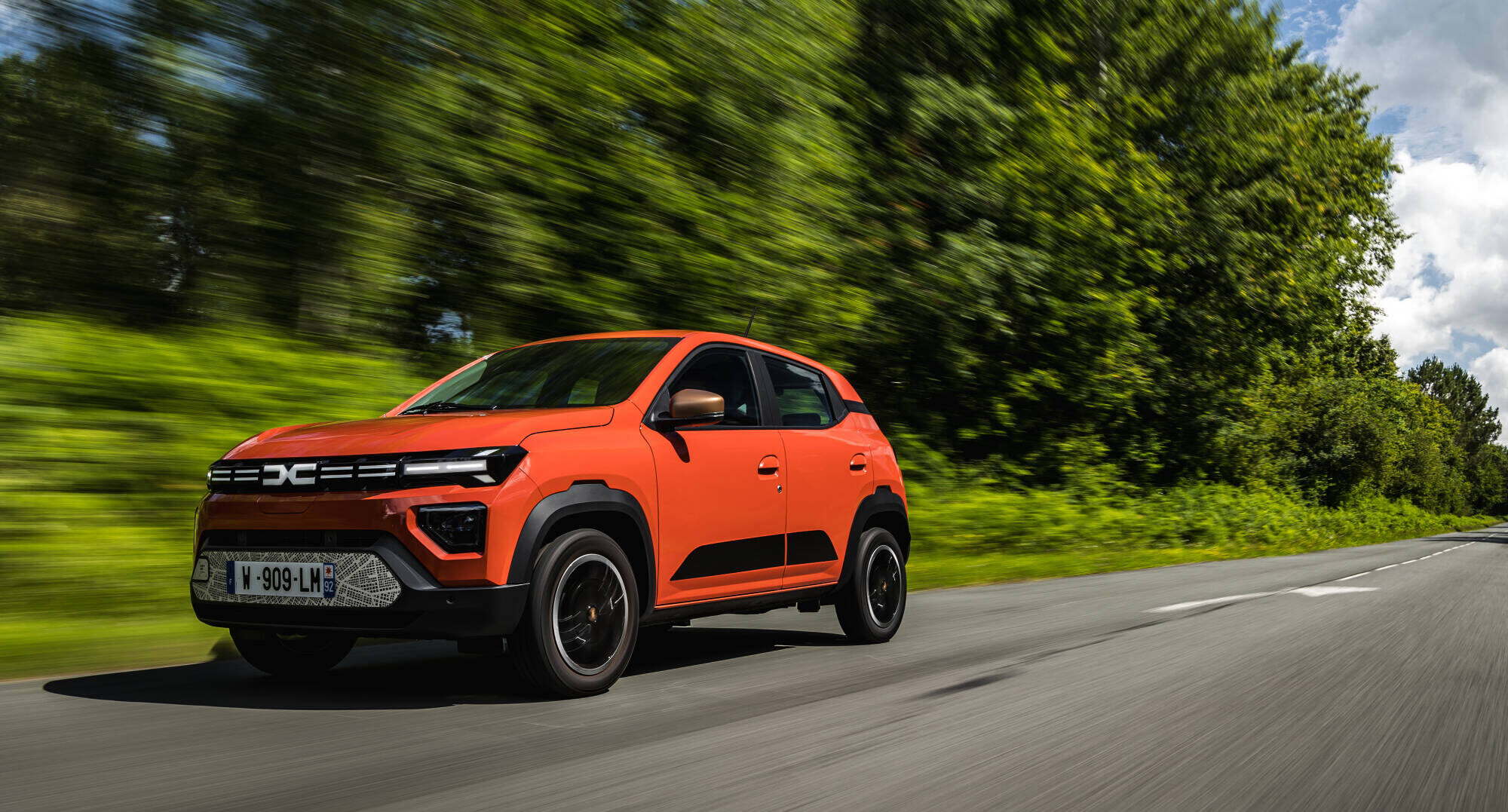
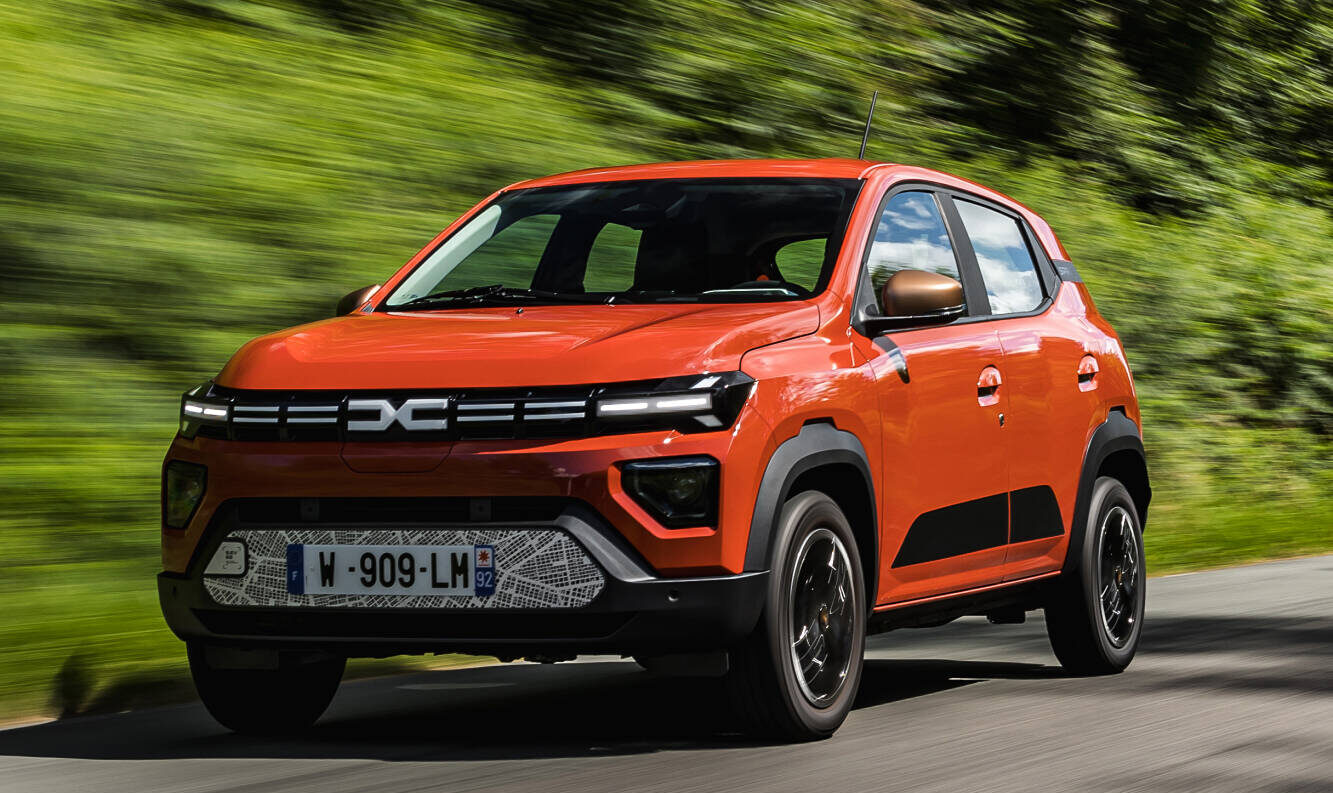
The Dacia Spring was developed as a city car. That is where it feels most at home. Power output is 70 hp. Older versions had 45 hp; newer models have 100 hp. Acceleration in town is adequate: 0 to 50 km/h is reasonably brisk thanks to the instant torque of the electric motor. However, the 0 to 100 km/h sprint takes 12.3 seconds in the 70 hp version, which feels noticeably slow on slip roads or when overtaking.
On the motorway the Spring shows its limitations. The top speed of 125 km/h is achievable, but the car feels nervous and sensitive to crosswinds. The low weight (around 1,000 kg including driver) and short wheelbase mean the car is less stable than larger EVs. At speeds above 100 km/h, wind noise also increases significantly due to the limited sound insulation.
The steering is light and direct, which is useful in tight parking spaces, but at higher speeds it lacks feedback and precision. The turning circle of 9.63 metres makes manoeuvring in the city easy. The brakes are powerful enough for the car's weight, but sometimes feel spongy due to the combination with regenerative braking. Newer models have been given stronger brakes for better pedal feel and shorter stopping distances.
The suspension is set on the firm side. This helps roadholding in corners, but reduces comfort on poor road surfaces. You feel bumps and tram tracks directly in the cabin. Some model years received an anti-roll bar and improved shock absorbers, which benefit stability.

Safety and recalls
The Dacia Spring scored one star in the Euro NCAP crash test. Euro NCAP is the European car safety testing programme. This score is strikingly low for a modern car. This is not because the car is inherently unsafe, but mainly because the test protocol has become very strict and the Spring has few advanced driver assistance systems on board. Basic safety systems such as active emergency braking, lane assist, traffic sign recognition and blind spot warning are fitted as standard.
There are no major recalls known that specifically affect the Spring. However, some owners report faults with the airbag warning light or error messages relating to the seat belt system. These warnings may be false alarms caused by software errors, but they must always be checked by a dealer to ensure that the safety systems are working correctly.
The structural safety of the bodywork is adequate for normal collisions, but the limited length and low weight mean that the car offers less protection in a serious crash than larger models. Drive defensively and avoid risky situations such as tailgating or aggressive overtaking.
Maintenance and preventive measures
Electric cars generally require less maintenance than combustion-engined cars. The Dacia Spring does have a number of points to watch. Schedule an annual service at a Dacia dealer or specialist workshop. During such a service, the brakes, suspension, steering and all electrical systems are checked. The software is also updated if new versions are available.
The battery itself requires little maintenance, but it is sensible to have its health monitored. After three to four years, a capacity test can show how much degradation has occurred. Take the warranty conditions into account: Dacia offers an 8-year or 160,000-kilometre warranty on the battery, provided that capacity has not fallen by more than 30 percent. If degradation is significantly worse within this period, replacement may take place under warranty.
Pay attention to the 12V battery. Despite the large traction battery (the large battery that drives the electric motor), this small battery is essential for starting all systems. This small battery can run flat in cold weather or after long periods of inactivity, preventing the car from starting. Replace this battery preventively after 4 to 5 years.
Check tyre pressures regularly. The recommended pressure is between 2.3 and 2.5 bar, depending on the load. Tyres that are too soft increase rolling resistance and therefore consumption. Rotate the tyres after 10,000 kilometres to distribute wear evenly.
Practical tips for a longer lifespan
- For daily use, try to keep the battery between 20 and 80 percent charge
- Avoid regularly fully discharging or charging to 100 percent, as this accelerates degradation
- Do not leave the car unused for long periods in extreme heat or cold
- Clean the underside of the car regularly to remove salt and dirt
- Lubricate the hinges of doors and tailgate to prevent creaking
‘ Repair costs are generally lower than for more expensive EVs, mainly because the technology is simpler. ’
Warranty and repair costs
Dacia offers a standard warranty of 3 years or 100,000 kilometres on the car and 8 years or 160,000 kilometres on the battery. However, this battery warranty only covers serious capacity loss of more than 30 percent. Normal degradation up to that level is not covered and has to be accepted.
The warranty covers manufacturing defects and material faults. Normal wear and tear or damage caused by misuse are not included. Software bugs and electronic faults are usually covered by the warranty, provided that you have had the car properly serviced by an authorised dealer. Always keep your service history and receipts for work carried out.
Repair costs are generally lower than for more expensive EVs, mainly because the technology is simpler. Replacing the 12V battery costs around €100 to €150 including labour. A new set of brake pads costs around €150 to €250 per axle. Software updates are usually free if they fall under warranty.
Parts for the Dacia Spring are reasonably available through the dealer network, but some specific components may have a longer lead time. Plan major repairs well in advance and always ask for a quote before agreeing to any work. For small parts such as filters and wiper blades you can also go to online car parts retailers, which is often cheaper.
Is the Dacia Spring worth it despite the problems?
The Dacia Spring remains the cheapest electric car on the market and therefore offers a unique entry point into zero-emission driving. For those who mainly make short city trips, can charge daily and do not have high expectations in terms of luxury or performance, the Spring can be a workable solution. The low purchase price, limited maintenance costs and tax benefits make it attractive as a second car or for those who consciously choose a basic model.
However, the shortcomings cannot be ignored. The limited range, especially in winter, makes the car unsuitable for anyone who regularly drives longer distances without extensive charging stops. The software bugs, charging problems and construction defects require patience and understanding. Anyone planning to keep the car for many years should take into account increasing signs of wear and potentially rising maintenance costs after the warranty expires.
Only buy the Spring if you consciously weigh up what you do and do not need in a car. Test it thoroughly during a test drive on different types of roads and in different conditions. For used examples, check the condition of the battery and the service history. And be prepared for regular dealer visits for software updates and minor repairs.
For those who accept the limitations, this can be an affordable and practical electric car. The Spring is suitable for short distances, urban use and daily charging. Within these strengths the car offers a workable solution. Do not, however, expect carefree driving pleasure on a par with more expensive EVs.