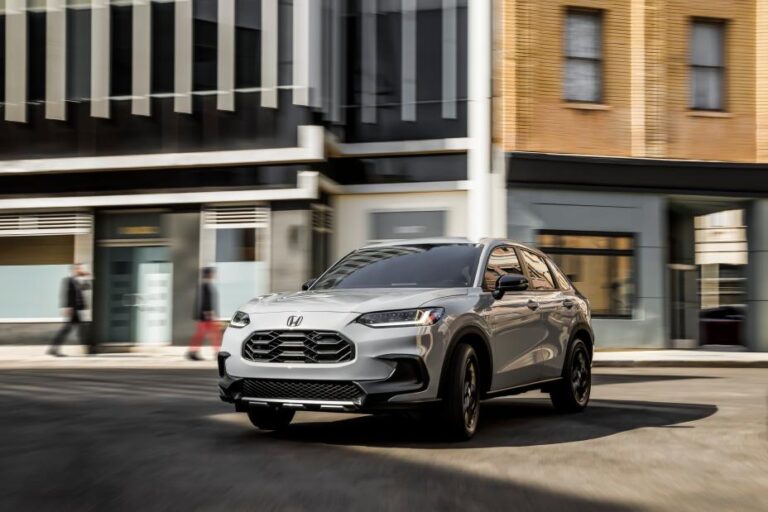
Hybrid battery and e-HR-V issues call for a targeted diagnosis: a warning about the hybrid system does not automatically mean the high-voltage battery is defective. On the European Honda HR-V e:HEV, the 12V battery, software and communication between control modules also play a role. A freezing Android Auto in a 2025 HR-V calls for separate investigation. Where do you start?
How reliable is the HR-V hybrid system?
The European HR-V e:HEV is a hybrid without a charging socket. A petrol engine, generator, electric motor, inverter and high-voltage battery work together. The battery recovers energy during braking and can also be charged by the petrol engine. The system decides when electric driving is possible.
There are no reliable figures available in the information provided about how often battery faults occur on this model. Making a general statement about reliability would go too far. What is clear, however, is that the same warning can have different causes. The battery management system monitors cell voltage, temperature and insulation, among other things; a fault outside the battery can also trigger a powertrain warning.
According to Honda’s European warranty terms, the hybrid system components covered include the electric motor, generator, inverter, DC-DC converter and battery management system. For private use, Honda states a five-year term with no mileage limit. The eight-year or 100,000-mile term with at least 70 per cent battery capacity for electric models should not be applied automatically to the HR-V e:HEV. If in doubt, have the terms for your car checked.
Recognising a battery fault in the Honda HR-V hybrid
A battery or system fault can show itself in several ways. Pay particular attention to any change from your car’s normal behaviour. Possible signs include:
- A message about the hybrid system or powertrain.
- Limited power or a car that will not enter READY mode.
- A petrol engine that keeps running noticeably often.
- A sudden increase in fuel consumption or barely any electric driving available.
- Fan noise from the battery combined with a warning.
Not every sign points to a defect. The HR-V uses the petrol engine more often in cold weather, at higher speeds, under heavy load or when the battery charge is low. A running battery fan can also be normal in warm conditions or under load. If you also get a warning or noticeably less power, have the fault codes read before anyone replaces parts.
Keep the battery ventilation opening clear of luggage and clothing. Also check whether dust or hair is hindering the airflow. That is simple maintenance, but it is no substitute for a diagnosis if the car shows a temperature or system warning.

Why does a weak 12V battery trigger so many warnings?
Alongside the high-voltage battery, the HR-V e:HEV also has a conventional 12V battery. This powers the control electronics and helps the control modules communicate with each other. If the voltage is too low, several warnings can appear at once, for example for Brake Hold, the parking brake and driver assistance systems. The car may also refuse to switch to READY.
Several warnings at the same time do not prove that the 12V battery is poor. They do, however, make a check of voltage, earth connections and communication sensible. A reading at rest is not enough: a battery can show a normal voltage and still collapse under load.
On early examples, owners report a 12V battery that goes flat after a few days standing still. In the information supplied, software for the Body Control Module, which controls body and comfort functions, is mentioned as a possible cause; these reports mainly involve cars with an electric tailgate. That does not establish a fault in every HR-V. Based on the vehicle identification number, have a Honda dealer check whether there is a relevant software campaign for your car.
How to investigate a hybrid fault in a targeted way
Clearing fault codes may make a warning disappear, but it does not tell you why it appeared. First ask the workshop to read out all control modules and record the conditions when the fault occurred. A useful order is:
- Save the fault codes and their associated live data before a reset.
- Test the 12V battery under load and check the battery terminals and earth connections.
- If discharge keeps recurring, measure the parasitic drain after the car has gone to sleep.
- Check software campaigns, connectors, wiring and any signs of moisture ingress.
- Then investigate the battery, inverter and other hybrid components in a targeted way.
Also pay attention to the air conditioning. An electric compressor that stops cooling and shuts down at the same time as a hybrid warning deserves investigation as part of the fault. High-voltage components should only be checked by a workshop equipped for the job; never touch orange cables.
If a red warning appears, power drops away or you smell burning, stop safely. Do not keep driving to see whether the message disappears. If the warning is temporary and there is no loss of power, you can photograph the message and conditions, stop safely and restart after a few minutes. If the warning returns, have the codes read anyway.
‘ Without diagnosis, it is impossible to establish which component is causing the lock-up. ’
Android Auto freezing in the 2025 Honda HR-V
Android Auto freezing in a 2025 Honda HR-V is annoying, but on its own it is not an indication of a defective hybrid battery. Android Auto involves the phone, the connection and the infotainment system in displaying content. Without diagnosis, it is impossible to establish which component is causing the lock-up. The available information does not confirm a general problem or a specific software fix for the 2025 HR-V.
So start by narrowing down the complaint. Does it happen only with one phone or cable, only with a particular app, or even when no phone is connected? Check for available updates for the phone and apps, try another suitable cable if applicable, and note when the connection freezes. Ask the dealer which infotainment software is available for your vehicle if the problem persists.

Assessing performance and sound insulation honestly
A HR-V that runs on petrol more often does not necessarily perform worse because of a battery problem. Temperature, load, state of charge and the selected driving mode all affect how the powertrain responds. Compare behaviour under similar conditions. A clear change, especially together with higher consumption, power loss or a warning, is a reason for investigation.
There are also no confirmed data here showing an improvement in performance or sound insulation for a specific trim or the 2025 model year. Assess such claims on a test drive on the same road and at the same speed. Pay separate attention to engine, tyre and wind noise; a more audible petrol engine under load does not prove a battery defect.
Checkpoints when buying a used e:HEV
Before buying, ask for the service history and have the vehicle identification number checked for outstanding campaigns. Be present for the first start when the car is cold and check whether it goes into READY immediately. During the test drive, also test Brake Hold, the parking brake, driver assistance systems and air conditioning. Ask for a diagnostic report if the battery has been replaced before or if warnings have recurred, not just an invoice.
On the Carnews website you can find more about problems, maintenance and buying checks for the Honda HR-V and other cars. Explore the related articles and use the key points to ask more focused questions on a test drive or at the workshop.
Frequently asked questions
Honda has issued a software update for the Body Control Module (BCM) to combat excessive parasitic drain and discharge of the 12V battery, particularly on early models with an electric tailgate. No other specifically named battery-related software updates are mentioned; applicability should be checked with a Honda dealer by market, model year and VIN.
A lower state of health reduces the hybrid battery’s ability to deliver high current quickly and absorb regenerative energy. During acceleration and other dynamic manoeuvres, the battery management system may therefore limit electric assistance, making the car respond less strongly and causing the petrol engine to step in more often or for longer. In severe degradation, power limitation, higher fuel consumption and hybrid system warnings can also occur.
The HR-V e:HEV is not a plug-in, so charging faults relate to internal charging via regeneration and the petrol engine-generator. The cause is often a weak or flat 12V battery, outdated BCM software, poor earth connections or CAN bus communication errors. Other possible causes include abnormal cell voltage, temperature or insulation faults in the high-voltage battery, or defects in the battery management system, generator, inverter, DC-DC converter, high-voltage wiring or electric air-conditioning compressor. Blocked battery ventilation can also cause overheating and charging or power restrictions.
Keep the battery pack ventilation opening clear of luggage, dust and hair, and park in the shade where possible in extreme heat. Have the hybrid battery’s health checked periodically and carry out software updates and maintenance campaigns in good time. Take overheating warnings and unusual fan noise seriously and have the system checked.