Buying advice for a Renault Scenic starts with a thorough check of the service history, electronics and engine running, because a tidy test drive does not reveal every fault. A Scénic can be a practical family car. Check the EGR, sensors, belts and electrical functions before you sign. Take your time for a cold start and a longer test drive, then you reduce the risk of unexpected repairs. Read on and buy with more confidence.
What should you look for in a used Renault Scenic?
The Renault Scénic is popular because of its high seating position, spacious interior and practical layout. That makes it an interesting second-hand family car. At the same time, servicing, engines and how the car has been used vary greatly from one example to the next. So assess more than just the mileage, year and asking price.
Start with the service history. A stamped service book is useful, but invoices give more clarity. They show whether the scheduled work was actually carried out. On a Renault Scenic with known attention points that is especially important.
Ask specifically about parts that have been replaced and any previous faults. A seller does not always have to disclose a defect, but you should ask targeted questions. Pay particular attention to work on the timing system, EGR, sensors, battery and wiring. Missing information is a reason to have the car checked more thoroughly.
Service records give you something to go on
Compare the servicing with the age and mileage of the car. Also check whether the same garage carried out the servicing, as it will often know more about recurring complaints. An invoice showing parts and work carried out gives more clarity than a bill that simply says “service carried out”.
These documents are the most useful for a used Renault Scénic:
- invoices for servicing and repairs;
- proof of replacement of the timing belt and water pump, if the engine uses a belt;
- details of fault diagnostics and replaced sensors;
- information about the battery and electrical repairs;
- MOT reports and earlier advisory items.
Also check whether servicing was carried out on time. Long gaps often show that a previous owner delayed maintenance. That does not necessarily mean an immediate problem, but it is a reason to have the technical condition assessed independently.
‘ Do not rely on the claim that a warning light “went out again by itself”. ’
Common pitfalls with a used Scenic
With a used Scenic, engine management and electronics require attention. Not every car has the same complaints, and faults in these systems can sometimes be hard to trace without diagnostic equipment. So have fault codes checked, even if no warning light is on during viewing.
EGR and sensors can cause engine faults
The EGR valve recirculates some exhaust gases back into the engine. This system is designed to reduce emissions. Especially with lots of short journeys, contamination can affect how it works. Possible signs include less smooth acceleration, rough running or an engine warning light.
Sensors provide data to the engine management system. When a sensor sends abnormal values, the engine may respond differently from expected. Think of power loss, higher fuel consumption or a fault that appears only from time to time. Do not rely on the claim that a warning light “went out again by itself”.
If an engine fault is reported, ask what caused it. Also ask what repair the garage carried out. Simply clearing a fault code does not always solve the underlying problem. During a pre-purchase inspection, a garage can check whether fault codes return and whether the engine readings make sense.
Belts deserve a targeted check
Check which type of engine is fitted to the Scénic on offer and what maintenance it requires. Some engines have a timing belt. This belt makes sure important engine components move at the correct moment. If you replace the belt too late, the engine can suffer damage.
Do not rely on a sticker under the bonnet or a verbal assurance. Ask the seller to show an invoice with the date, mileage and work carried out. Is it not clear whether the belt has been replaced? Then factor replacement into your buying budget or choose another example.
Also listen for unusual noises during the test drive. Squealing or rattling can have various causes, for example from auxiliary components or tensioners. A noise is not automatically serious, but it does deserve investigation before you buy.
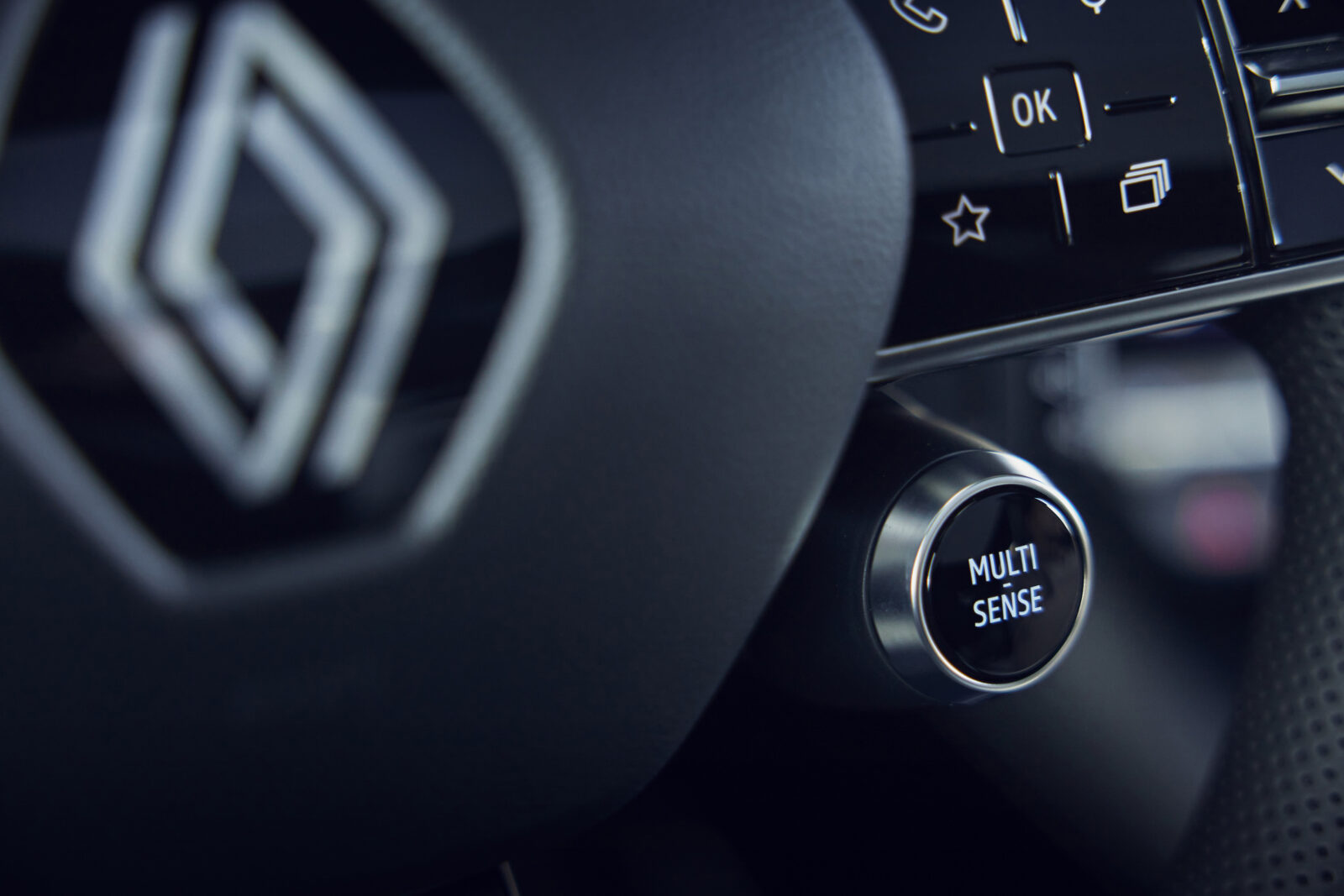
Spot Renault Scenic electrical problems in time
Electrical problems in a Renault Scenic are often visible through functions that do not behave consistently. So check every feature separately. Think of windows, central locking, mirrors, air conditioning, fan, radio, navigation and parking assist, if fitted.
A weak battery can trigger electronic messages, but it is not always the only explanation. Cables, plugs, switches and sensors can also play a role. Do not let a seller skip functions simply because, according to them, they are rarely used.
Give the lighting extra attention. Check the headlights, indicators, brake lights, fog lights and interior lighting. Ask someone to check the rear lights. A faulty bulb is usually easy to fix, but multiple faults may point to a wider electrical issue.
Check warning lights after a cold start
Arrange to view the car while the engine is still cold. A warm engine can hide an irregular start or starting problem more easily. Touch the bonnet carefully before you start, if possible. If it already feels warm, ask for a new appointment at which the car has not been started beforehand.
When the ignition is switched on, various warning lights on the dashboard illuminate. That is normal, because the system is checking itself. After starting, lights for the engine, battery, oil, brakes and airbags should go out again. If a light stays on or a message appears, have a diagnosis carried out first.
Used Renault Scenic test drive checklist problems
Do not just take a short drive around the forecourt. A used Renault Scenic problems test drive checklist only works properly if you drive the car in different conditions. Allow enough time to include town, country roads and motorway driving. Turn off the radio and fan and listen to the car.
Follow these steps during the test drive:
- Start the engine cold and pay attention to how it starts, idles and to any warning lights.
- Pull away gently and check the clutch, gearbox and throttle response.
- Accelerate smoothly on a safe road and listen for hesitation, smoke or unusual noises.
- Brake a few times in a controlled manner and check whether the car continues to drive straight.
- Drive over uneven road surfaces and listen for noises from the suspension, dashboard or interior.
- Test the air conditioning, fan, windows, lighting and other electrical functions.
- Park the car and, afterwards, look under the engine bay for any visible leaks.
Also keep an eye on the temperature gauge. The engine should reach normal operating temperature during the drive without warnings or large fluctuations. If you smell fuel, oil or coolant inside or around the car, ask for an inspection. A clean engine bay looks good, but it does not give a reliable picture of the car’s mechanical condition.
‘ If a fault cannot be judged clearly, do not take a risk on the basis of a promise. ’
A pre-purchase inspection prevents uncertainty
An independent pre-purchase inspection is sensible when service records are incomplete, when the dashboard has previously shown faults, or when you are unsure about noises during the drive. The inspector can check fault codes, look underneath the car and assess wear. That gives you more information than a visual inspection by the seller.
Record any defects before you complete the purchase. Note down which repairs the seller will carry out and ask them to prove with invoices that the work has been done. If a defect cannot be judged clearly, do not take a risk on the basis of a promise. Another Scénic may be the better financial choice.
Carnews provides information on Renault, car problems, maintenance and buying advice for used cars. Explore related topics and go into your search for your next car well prepared.
Frequently asked questions
The electric Renault Scénic drives briskly, but less sportily than its traditional rivals. With 220 hp and a 0 to 100 km/h sprint in 7.9 seconds, the performance is more than sufficient, while the comfortable suspension tuning and less direct steering are aimed mainly at relaxed family driving.
The Renault Scénic E-Tech Electric offers a powertrain with 220 hp and 300 Nm, paired with an 87 kWh battery. That allows it to accelerate from 0 to 100 km/h in 7.9 seconds and achieve up to 606 km of WLTP range. The performance is lively, but the Scénic is set up primarily for comfort and is less overtly sporty.
Practical tests show that the Renault Scénic has a comfortable, stable ride and is tuned mainly for relaxed family driving. The electric version feels sufficiently brisk with 220 hp and 300 Nm, but it is not particularly sporty. The steering, especially on earlier generations, is sometimes felt to be less direct.
With up to 606 km WLTP, the Renault Scénic E-Tech Electric is among the stronger electric family cars in terms of range. Its 150 kW charging capability is solid, but it lags behind some performance-oriented rivals that can charge faster. With 220 hp and 0 to 100 km/h in 7.9 seconds, it is brisk, but clearly more focused on comfort and efficiency than on overtly sporty performance.