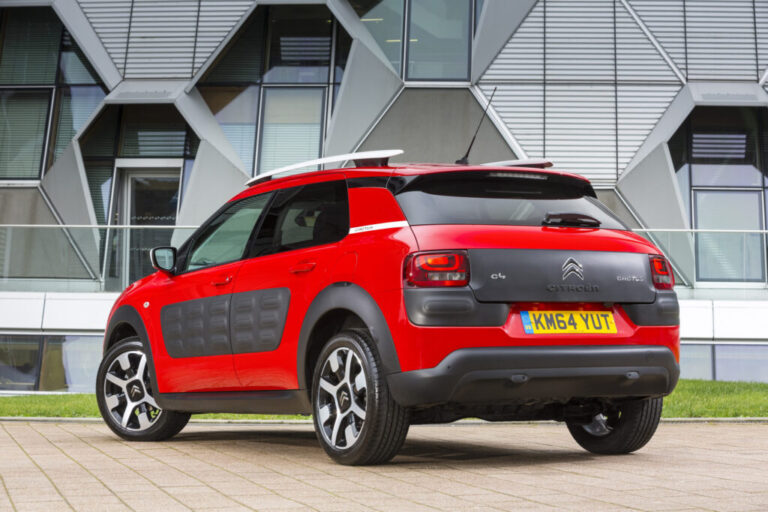
The automatic transmission of the Citroën C4 Cactus is not an example of carefree, comfortable shifting. In particular, the ETG automated manual gearbox suffers from jerky gear changes, slow responses and unpredictable behaviour during cold starts. Owners report that these problems are often related to aged transmission fluid or software errors in the shift logic. Do you want to know exactly what to watch out for and how to prevent the worst issues?
The Citroën C4 Cactus was developed as a comfortable and quirky model, but received a lot of criticism for its automatic transmission. The first generations with the ETG automatic in particular turned out to be a weak point. This gearbox is not a classic automatic with a torque converter, but an automated manual gearbox. That results in a less refined driving experience than you may expect from an automatic.
In some versions, the C4 Cactus also received a CVT-type transmission (Continuously Variable Transmission, a continuously variable gearbox) in combination with hybrid drive. This version is less common and in practice receives fewer complaints. The ETG automatic remains by far the most frequently reported source of irritation.
Which shift delays occur most often?
The ETG gearbox does not shift smoothly between gears. When pulling away and changing up, many owners experience a noticeable jolt or bang. This mainly occurs at low speeds, such as in city traffic or when parking.
In addition, the automatic responds slowly to the accelerator pedal. Owners report that the car hesitates when moving off, or simply cannot find the right moment to change up. This behaviour can vary: one day the gearbox changes gear reasonably smoothly, the next day every shift point feels unsettled.
Another frequently reported problem is hesitation after a standstill. The car does not respond immediately when you want to pull away again after parking. This points to issues in the electronic control or shift logic, and cannot always be traced back to a mechanical defect.
‘ This is related to the viscosity (thickness and flow behaviour) of the transmission fluid and the stiffness of internal components at lower temperatures. ’
Why does the automatic shift so erratically, especially when cold?
The complaints about shifting problems increase when the engine is still cold. Especially in the morning or after standing still for longer periods, owners report harsh or jerky upshifts. This is related to the viscosity (thickness and flow behaviour) of the transmission fluid and the stiffness of internal components at lower temperatures.
Once the car is up to temperature, the intensity of the complaints often decreases. Even then, though, the shifting remains less comfortable than with a classic automatic with torque converter. The ETG gearbox works with an automated clutch that reacts differently from a fluid coupling.
Use the car gently when the engine is cold. Give the oil and components time to reach operating temperature before flooring the accelerator or pulling away aggressively. This can help to limit the worst jolts.
What are the known transmission defects of the C4 Cactus?
In addition to jerky shifting, there are also technical defects. These can often be traced back to a combination of software and sensitivity to maintenance:
- Aged or contaminated transmission fluid, causing the internal valves and pressure control to function poorly
- Software errors in the shift logic, meaning the automatic does not correctly predict when to change up
- Mechanical wear to the clutch or actuators, especially on cars with high mileage
- Problems with sensors that pass the position of the gearbox to the engine management system
The ETG gearbox was no longer offered on the C4 Cactus after a number of years. This corresponds with owners’ experiences and suggests that Citroën itself also realised that the gearbox did not meet expectations.
How often should you change the oil in the automatic?
Transmission fluid ages and becomes contaminated by metal particles and heat. This has a direct impact on shift performance. On the ETG automatic, good maintenance is especially important to keep problems to a minimum.
Have the transmission fluid checked at service intervals or when you experience problems. Some garages recommend changing it between 60,000 and 80,000 kilometres, depending on usage and driving conditions. In city traffic with many short journeys, the oil ages faster than with relaxed motorway mileage.
An oil change can reduce shift delays and extend the life of the transmission. Always use oil that meets Citroën’s specifications, as using the wrong oil can actually cause new problems.
Practical warning signs to look out for
You can recognise shift delays and defects by a number of clear symptoms while driving:
- A jolt or bump when pulling away or changing up
- The automatic hesitates when you accelerate, especially in town or in stop-start traffic
- A loud bang or unsettled transition between gears
- Unpredictable behaviour after a short standstill, for example at traffic lights
- The car feels less refined at low speeds than it does at higher speeds
If you recognise several of these signs, it is sensible to have a garage check the car. Have the transmission read out with diagnostic equipment (an electronic testing device used by the garage to read fault codes from the system), so that any fault codes become visible. Sometimes a software update already resolves part of the complaints.

Tips for buying a used C4 Cactus with automatic
Want to buy a used C4 Cactus with automatic? Then pay close attention to the type of transmission. The ETG version is the biggest risk factor. Always ask for the service history and check whether the transmission fluid has been changed recently.
Take an extensive test drive in which you try out different situations. Pull away with the engine cold, drive through town, park and pull away again. Pay attention to how the automatic responds when accelerating, in traffic jams and when changing speed. Jerky shifting is not always a reason to walk away from the car, but it is definitely a point for negotiation.
Ask the seller whether software updates have been carried out and whether complaints have been reported in the past. Sometimes these problems are already known to the garage and there is a history of repairs or adjustments. This gives you a better idea of what to expect.
Why is a classic automatic more reliable?
Technically speaking, the ETG gearbox is not a real automatic, but an automated manual gearbox. That means there is a clutch that is operated electronically. This system is more sensitive to software errors and wear than a classic automatic with torque converter.
A torque converter automatic works with fluid coupling and shifts much more smoothly. This type of transmission is less sensitive to temperature fluctuations and offers a more comfortable driving experience. The ETG gearbox was mainly used to save fuel and reduce production costs, but that came at the expense of driving comfort.
If you are looking for a reliable automatic, a model with a classic torque converter automatic is a safer choice. The C4 Cactus is mainly interesting if you consciously choose it for its design and practical layout, and you are prepared to accept the shifting issues or tackle them with good maintenance.
‘ Early detection can prevent things from getting worse. ’
What can you do yourself to limit problems?
You can take several measures yourself to reduce the worst shift delays. Make sure the transmission fluid is checked regularly and replaced according to the garage’s advice. Drive gently when the engine is cold and avoid aggressive acceleration until the engine has reached operating temperature.
Ask the garage to check whether the manufacturer has released software updates for the transmission. Citroën has sometimes issued updates that improve the shift logic. This can reduce problems without the need for mechanical repairs.
Pay attention to abnormal behaviour while driving and report it to your garage in good time. Early detection can prevent things from getting worse. Has the automatic suddenly started shifting very differently, or have warning lights come on? Then do not keep driving. Have the car checked immediately.
On the Carnews website you will find more information about common car problems, maintenance tips and buying advice for various models. Discover what else you can expect from the Citroën C4 Cactus and similar cars.
Frequently asked questions
The most common problems with the automatic (especially the ETG automated manual) of the Citroën C4 Cactus are jerky shifting, slow response to throttle input, and hesitant or unpredictable shift behaviour. You can recognise this from jolts or shocks when pulling away and changing up, especially at low speed and in city traffic. It also occurs that the gearbox does not respond immediately to the selection of a driving mode after starting or briefly parking. Complaints are often more severe with a cold engine, with unsettled or harsh upshifts in the first few kilometres.
The main causes of the transmission problems are the design of the ETG automated manual itself and aged or contaminated transmission fluid, which makes the shift logic and mechanics operate less smoothly. Cold-start situations also worsen the jerky and sluggish shift behaviour. Preventively, it helps to have the transmission fluid checked/changed regularly, to let the drivetrain warm up gently, and to have the gearbox checked periodically for software updates. When buying a used C4 Cactus, it is wise to pay specific attention to the ETG version and to test the shift behaviour in various situations during an extensive test drive.
For diagnosis of automatic transmission problems on a Citroën C4 Cactus, independent garages and dealers generally charge between about €80 and €150, depending on the testing time required and the diagnostic equipment used. Simpler jobs such as changing the fluid or servicing the automated gearbox typically start at around €200–€400. For actual mechanical or electronic repairs to the ETG/automatic gearbox, costs can rise significantly, often between roughly €800 and €2,000. In the worst case – overhauling or replacing the transmission – you may be looking at amounts approaching or exceeding €3,000.
The jerky gear changes and slow reactions of the ETG automatic make the driving experience less comfortable and refined, especially at low speeds and when pulling away. Drivers therefore experience less smoothness than with a classic automatic, which negatively affects the impression of the car in daily use. Because this transmission is often mentioned as a weak point in user experiences, it generally has a depressing effect on the residual value. Potential buyers will be more critical during test drives and more likely to opt for examples with a different transmission or for rival models.
Yes, in particular the early Citroën C4 Cactus versions with the ETG automated manual (first-generation automatic) are most frequently mentioned in connection with automatic transmission problems. These ETG versions regularly received complaints about jerky shifting, slow reactions and uncomfortable driving behaviour. Later production years in which this ETG automatic was no longer fitted suffer from these specific problems far less often. When buying, therefore pay particular attention to whether it is an ETG version from the earlier production period.