
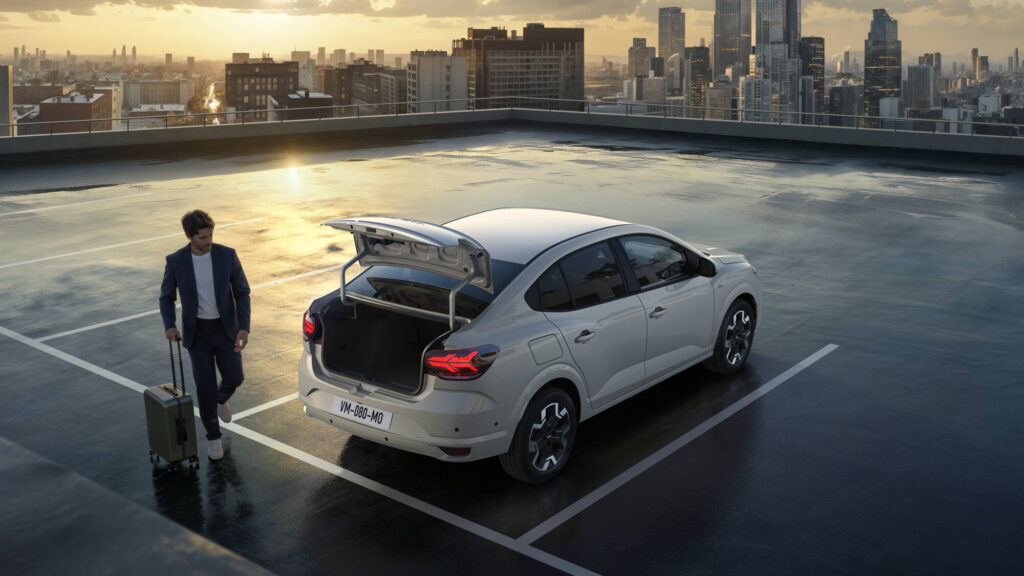
The Dacia Logan offers maximum space and reliable Renault technology at a price that competitors cannot match, but it has weaknesses in electronics, transmission and passive safety that not every budget model suffers from. Anyone choosing between the Logan and alternative budget cars such as the Kia Rio, Fiat Panda or Hyundai i20 ultimately weighs up price advantage against technical refinement. Discover where the Logan performs well and where alternatives may score better.
Why the Dacia Logan is so cheap
The Logan was deliberately designed to keep costs down. The aerial is placed at the front of the roof to shorten the wiring loom. Bumper strips and door mirrors are identical left and right and interchangeable. The dashboard consists of only five parts and body panels are hardly curved to simplify production. The result is a car that is functional without refinement or extras that increase everyday comfort.
The Dacia Logan uses proven Renault components, which keeps maintenance costs low. Petrol versions use roughly 1 in 14 to 1 in 15, while the diesel version achieves around 1 in 21. The 1.6-litre petrol engine delivers 87 to 105 hp and provides sufficient power for daily use. The simple and tried-and-tested technology is not prone to failure, although there are a few known weak points.
‘ Dacia was not allowed to draw on Renault’s advanced safety expertise, which is why crash test scores remain modest. ’
Known problems with the Dacia Logan
Ignition coils in the Logan sometimes fail, according to warnings from roadside assistance organisations. This is an electrical component that ensures spark ignition in the engine. Some owners also report rough running of the 1.6-litre petrol engine under certain conditions. The electronics generally remain basic and functional, which on the one hand means there is less that can go wrong, but on the other hand also that modern driver assistance systems are missing.
Another point of attention is passive safety. Dacia was not allowed to draw on Renault’s advanced safety expertise, which is why crash test scores remain modest. Active safety, on the other hand, is well developed with effective brakes and ABS. The maximum towing capacity is only 1,100 kilograms, which makes the Logan less suitable for caravan towing.
How reliable is the Dacia Logan compared with the Kia Rio?
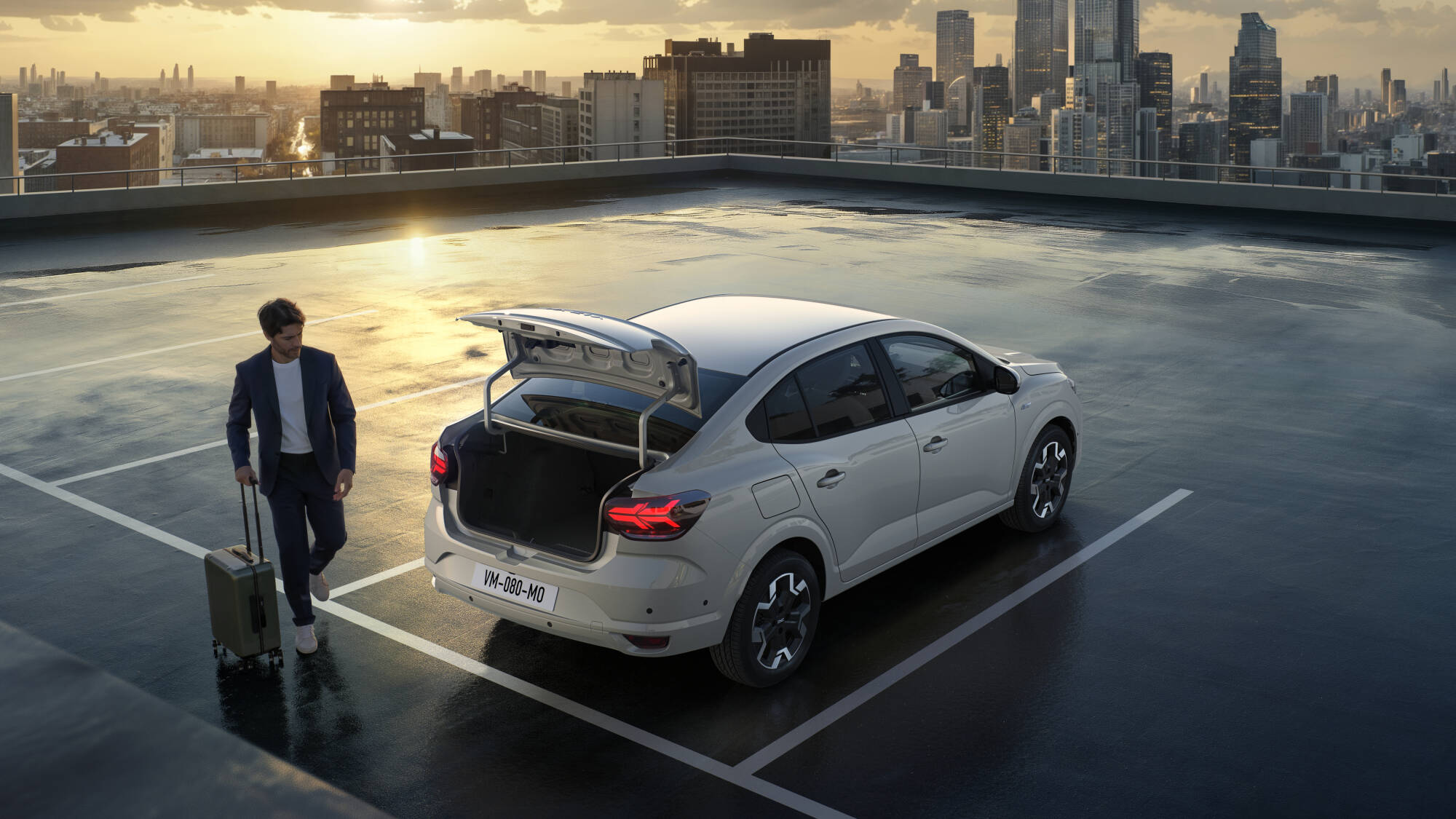
The Kia Rio is known for its excellent seven-year or 150,000-kilometre warranty. This offers buyers more certainty than the standard warranty that Dacia provides. The Rio features more modern electronics and driver assistance systems that are missing from the Logan or are only optional. The interior of the Rio is more finely finished, with better materials and ergonomics.
However, you pay considerably more for the Rio than for a comparable Logan. The purchase price can run to several thousand euros extra. The Logan offers more luggage space with 510 litres versus 325 litres in the Rio. For those seeking maximum practical value at minimum cost, the price advantage of the Logan often outweighs the Rio’s refinement.
Dacia Logan problems versus Fiat Panda
The Fiat Panda is more compact than the Logan and focuses on urban use. With a length of approximately 3.7 metres, the Panda fits more easily into narrow parking spaces. Luggage capacity is only 225 litres, which is significantly less than the Logan’s 510 litres. The Panda is fitted with the 0.9-litre two-cylinder TwinAir engine, which is economical but can be prone to faults.
Owners of the Fiat Panda regularly report problems with the MultiAir technology in the engine, which can lead to costly repairs. The Logan does not use this technology and is therefore less complex. The Panda scores better for manoeuvrability and city use, while the Logan excels in space and road holding over longer distances. Maintenance costs for the Logan generally remain lower due to the simple Renault technology.
‘ Older i20 models can develop problems with the timing chain on the 1.2-litre petrol engine, which can lead to engine damage if neglected. ’
Is the Dacia Logan more reliable than an older Hyundai i20?
The Hyundai i20 offers more comfort and a more modern finish than the Logan. Older i20 models from the 2009–2014 period are now affordable on the used market and are price competitors for the Logan. The i20 has a better-finished interior with more sound insulation and ergonomically shaped seats.
Older i20 models can develop problems with the timing chain on the 1.2-litre petrol engine, which can lead to engine damage if neglected. The Logan does not suffer from these issues because its engines are built differently. The i20 has a smaller luggage compartment of about 295 litres compared with 510 litres in the Logan. Anyone looking for a family car with lots of load space will find more practical value in the Logan.
Space and everyday practicality
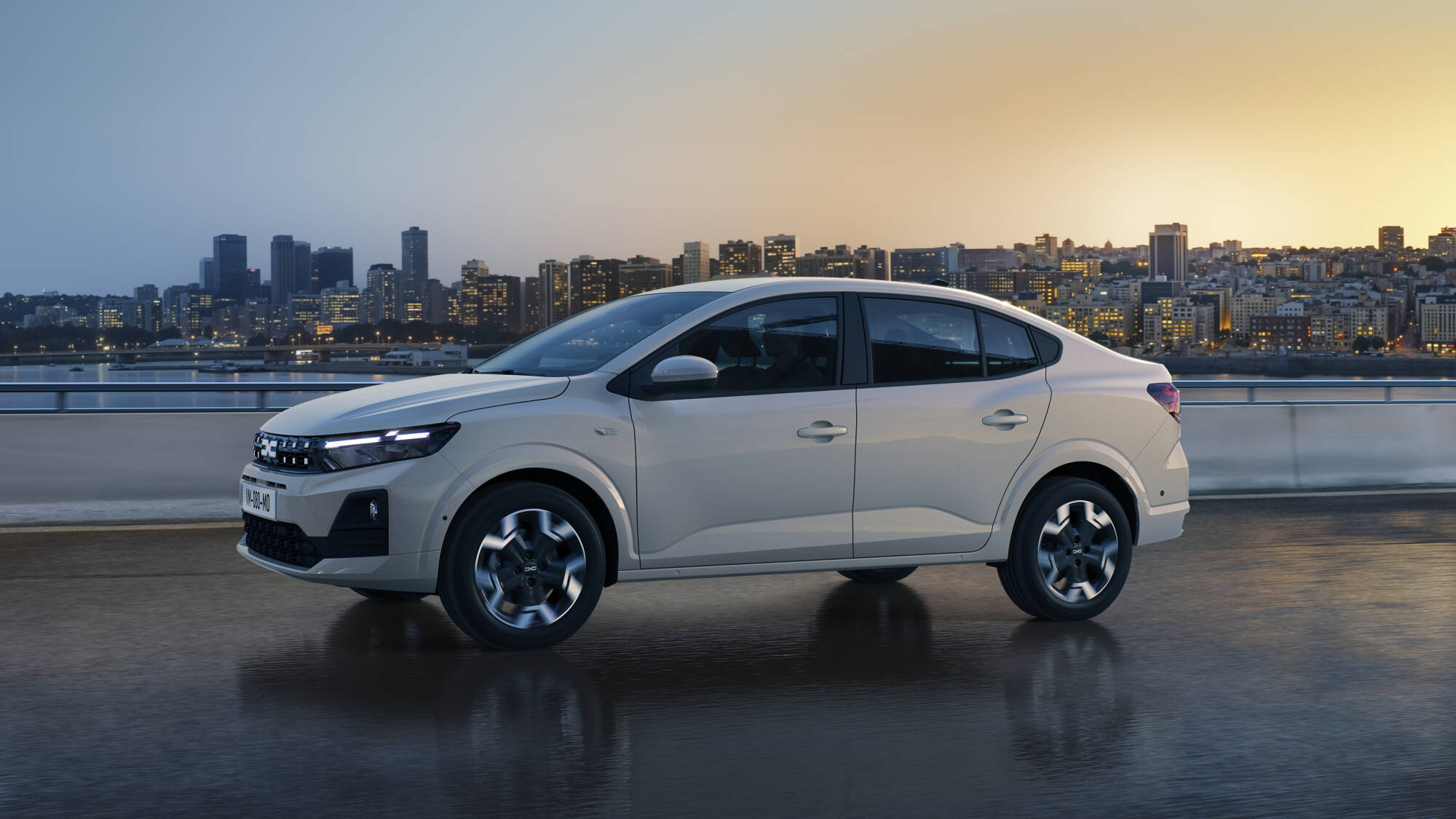
The Logan is 4.25 metres long with a wheelbase of 2.63 metres. This provides generous legroom on the rear bench, even for taller passengers. The Logan MCV estate stretches to 4.45–4.49 metres and offers up to 2,350 litres of luggage space with the seats folded down. This makes the MCV particularly suitable for families or anyone who regularly has a lot to transport.
Rivals such as the Kia Rio, Fiat Panda and Hyundai i20 offer considerably less load space. The Rio offers 325 litres, the Panda 225 litres and the i20 around 295 litres. For those needing to carry a lot of luggage or who regularly make large purchases, the Logan therefore has a clear advantage. The Logan’s practical focus is also evident from the low loading sill and wide tailgate.
Road holding and ride comfort
Despite its budget positioning, the Logan scores surprisingly well on road holding. The soft and comfortable suspension filters out many bumps effectively. Thanks to its larger size and borrowed Renault underpinnings, the Logan feels noticeably more composed on the road than lighter competitors. The brakes perform well and ABS ensures safe evasive manoeuvres even at high speed.
The Kia Rio offers a more sportily tuned suspension that provides less comfort on poor roads but better steering in bends. The Fiat Panda is agile in the city but feels less stable on motorways due to its low weight and short wheelbase. The Hyundai i20 combines reasonable comfort with decent handling but does not reach the level of composure that the Logan offers on longer journeys.
‘ “For those who want to control long-term costs, the Logan remains one of the most predictable choices.” ’
Maintenance costs and repairs
The Logan uses tried-and-tested Renault components that are widely available from dealers and independent garages. This keeps costs low. Parts are relatively inexpensive and mechanical simplicity means repairs take less time. Regular servicing according to the manufacturer’s schedule prevents most problems.
The Kia Rio has slightly higher maintenance costs due to its more modern technology but does offer a longer warranty. The Fiat Panda can be more expensive when repairs are needed to the TwinAir engine or the MultiAir technology. The Hyundai i20 generally has reasonable maintenance costs, although timing chain problems can be costly. For those who want to control long-term costs, the Logan remains one of the most predictable choices.
Safety and technical equipment
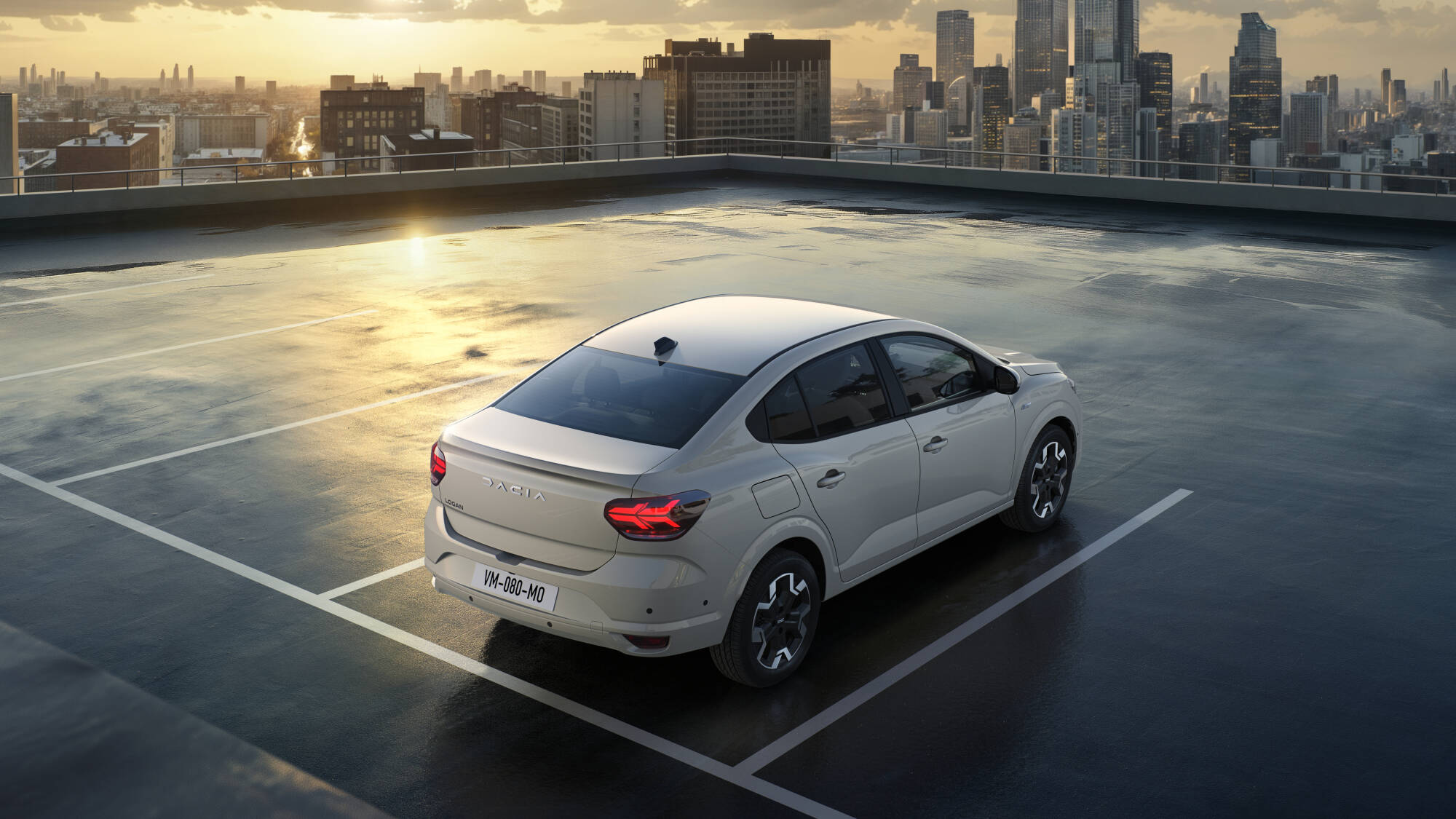
The Logan scores modestly on passive safety with average crash test results. Modern driver assistance systems such as blind-spot monitoring, adaptive cruise control or automatic emergency braking are missing from many versions. The Kia Rio offers more standard safety equipment and achieves better crash test scores. The Fiat Panda and Hyundai i20 also score better in this area.
For those who consider passive safety and modern assistance systems important, the Logan is less suitable than its alternatives. Active safety, however, is well developed with ABS and good brakes. Anyone willing to accept that the Logan focuses on basic safety without modern electronics will in return enjoy a considerable price advantage.
Used cars and second-hand value
On the used market, second-generation Logan models can be found from around 4,500 euros with high mileages. Newer examples from 2019–2020 with lower mileage cost around 15,000 euros. Since 2020 the Logan has no longer been available as a new car; only the MCV version remained in production a little longer.
The Kia Rio generally retains better second-hand value thanks to its longer warranty and stronger image. The Fiat Panda loses value more quickly but remains affordable on the used market. The Hyundai i20 has stable prices on the used market. Anyone buying a Logan should take into account a reasonable loss of value but benefits from low purchase and maintenance costs that help offset that loss.
‘ The choice depends on personal priorities and budget. ’
Who is the Dacia Logan suitable for?
The Logan is ideal for budget-conscious families who need a lot of space without wanting to buy an expensive vehicle. First-car buyers who value reliability over luxury will find the Logan a sound choice. Anyone who often has to carry loads and drives on rural roads benefits from the large luggage space and good road holding.
The Logan is less suitable for those who tow heavy caravans because of its limited towing capacity of 1,100 kilograms. Those who regard passive safety as a top priority are better off choosing alternatives with better crash test scores. Anyone who attaches great importance to interior quality and ergonomics will find more comfort in the Kia Rio or Hyundai i20. The choice depends on personal priorities and budget.
On the Carnews website you will find more comparisons between budget cars, extensive information on common car problems and practical maintenance tips. Discover which car best suits your situation.
Frequently asked questions
The Dacia Logan offers a comfortable, fairly soft driving experience that focuses mainly on calmness and practical use rather than sportiness. Compared with other budget cars, its road holding is strikingly stable and composed, partly thanks to its larger size and Renault underpinnings. Engine response is adequate but not particularly sharp; the petrol engines in particular feel a bit rough and basic, which fits the budget character. In this segment, the Logan stands out positively for its comfortable suspension and predictable, safe road holding.
The Dacia Logan is known for being above-average reliable, partly because it uses simple and proven Renault technology. Its main weak points are occasional failing ignition coils, but serious structural defects are rare. Thanks to its simple technology and inexpensive parts, maintenance and repair costs are consistently lower than for many similarly aged, cheap competitors. In the long term, this usually results in a more favourable cost per kilometre in the budget segment.
In a Dacia Logan you can mainly expect basic standard equipment such as simple seats, manually operated windows (in lower trims), a simple audio system and limited comfort features, complemented by ABS and usually front airbags. Advanced safety features such as extensive airbag systems, driver assistance systems (lane assist, adaptive cruise control, emergency braking) and high-grade body reinforcement are more limited than with more expensive brands and are often not standard. Compared with other budget models in the same price range, the Logan generally scores well on active safety (brakes, road holding) but average on passive safety and finish. Alternative budget cars sometimes offer a little more refinement or extra safety systems, but rarely the same amount of space and practical usability for the same money.
The main compromises with a Dacia Logan are the basic finish, limited luxury and ergonomics, modest passive safety and low towing capacity. In return you get an exceptionally spacious car, solid engineering and low running costs for a very low purchase price. Compared with alternative budget cars, almost no model offers as much practical space for the same money. For buyers who mainly value price, space and simplicity and who attach less importance to luxury and top-level safety, these compromises are generally quite acceptable.
With the Dacia Logan you should take into account a relatively rapid loss of value, because its image and brand appeal are weaker than those of many other entry-level models. The simple finish and basic interior quality can depress its resale value compared with better-appointed rivals. Its average passive safety (crash protection) can also put off future buyers and further reduce residual value. Finally, the limited equipment (comfort and safety options) can make it less attractive as a used car, which likewise puts downward pressure on its value.