
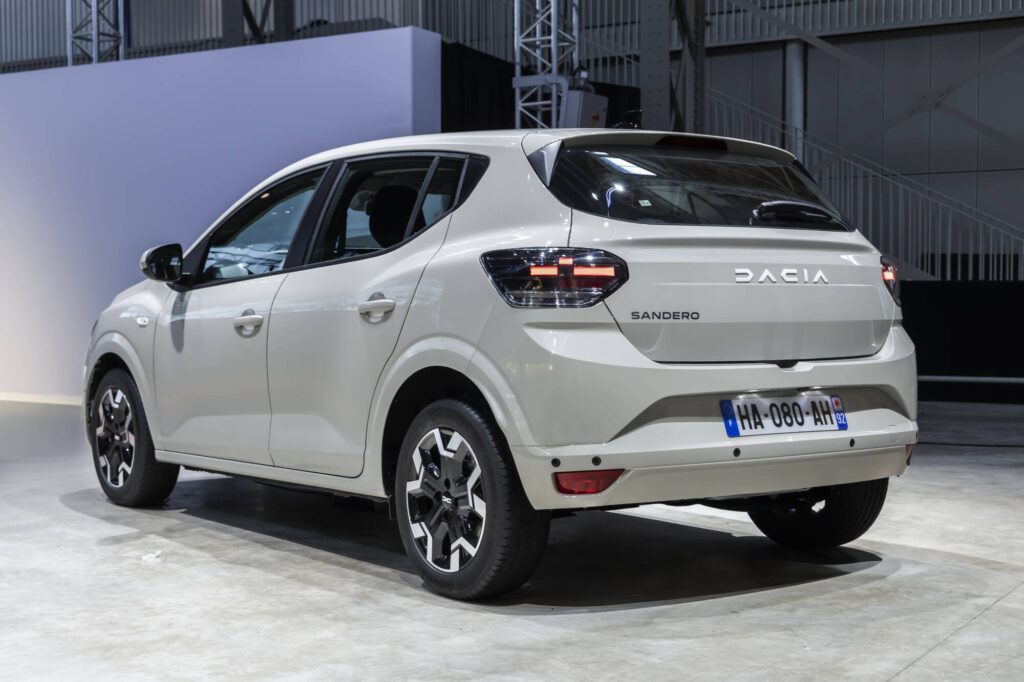
The engine warning light on the Dacia Sandero regularly lights up due to faults in sensors or problems with the EGR valve, often leading to loss of power and overheating. This warning light is more than a minor inconvenience: it indicates a fault in the engine or emissions system that needs to be investigated quickly. Read on to find out why this problem is so common with the Dacia Sandero and what you can do about it.
Why does the engine warning light come on in the Sandero?
The engine warning light appears on the dashboard when the on-board computer detects a deviation in the operation of the engine or exhaust system. The electronic engine management unit constantly monitors the air–fuel ratio and the exhaust gases. As soon as something is not right, the warning light is activated.
With the Dacia Sandero, there are specific causes that occur more often than with other models. Sensor faults are among the most frequently reported problems. The lambda sensor, which measures the oxygen concentration in the exhaust gases, can fail. The mass air flow sensor also regularly gives unreliable readings, causing the engine to receive an incorrect fuel mixture.
Another common cause is the EGR valve. This component ensures that part of the exhaust gases is fed back into the engine to lower the combustion temperature. Due to contamination or mechanical faults, this valve does not always function correctly, which activates the engine warning light.
Common problems with the TCe engine
The Dacia Sandero TCe is fitted with a turbocharged engine that is known for specific technical vulnerabilities. Owners of this model frequently report that the engine warning light appears in combination with noticeable loss of power.
The turbo pressure sensor on the TCe engine often sends incorrect signals. As a result, the on-board computer assumes there is a problem with the turbo, while it is often just a sensor fault. This causes the warning light to come on and sometimes triggers a limp-home mode in which the engine runs with limited power.
The ignition coil and spark plugs can also cause problems. When they are worn or contaminated, misfires occur, allowing unburnt fuel to end up in the exhaust system. This not only activates the engine warning light, but can also damage the catalytic converter if not resolved in time.
Symptoms that often occur together with the warning light
When the engine warning light is on, owners often experience several symptoms at the same time:
- Noticeable loss of power, especially at higher speeds
- Irregular engine speed when idling
- Increased fuel consumption
- Engine running roughly or hesitating during acceleration
- Engine overheating on longer journeys
These symptoms indicate that the problem is directly affecting engine performance. In some cases, the car switches to a protection mode that limits the maximum speed to prevent further damage.
What to do if the warning light stays on?
Ignoring the engine warning light is not an option. Although you can often keep driving for a while, there is a risk of more serious damage to the engine or exhaust system. The first step is to read out the fault codes.
An authorised Dacia dealer or qualified garage has diagnostic systems that can read the stored fault codes. These codes provide a concrete indication of which component or system is causing the fault. Without this information, you are guessing at the cause.
In many cases, after reading out the codes it turns out that a simple sensor replacement solves the problem. Sometimes there is more to it and the EGR valve needs to be cleaned or replaced. In the case of ignition faults, replacing spark plugs or ignition coils is often sufficient.
Temporary measures and prevention
If the engine warning light is on but the car still drives normally, you can drive to the garage. However, keep an eye on any changes in engine behaviour. If the warning lights are flashing or you notice clear loss of power, it is wise to stop the car immediately and call a recovery service.
Preventive maintenance helps to avoid faults. Replace air and fuel filters according to the service schedule. Use fuel from reliable stations to minimise contamination of injectors and sensors. Have the EGR valve cleaned periodically, especially if you mainly make short trips where the engine does not fully reach operating temperature.
Costs and repair time
The cost of fixing an illuminated engine warning light varies greatly depending on the cause. Reading out fault codes costs between €30 and €60 at most garages. This amount can often be deducted from the repair bill if you have the work carried out on the spot.
Replacing a faulty lambda sensor, including labour, costs roughly €150 to €250. For cleaning or replacing the EGR valve, you should expect €200 to €400. If there are problems with the turbo pressure sensor, the total price is around €150 to €300, depending on the type of sensor and labour time.
The repair time is usually limited. Replacing sensors or spark plugs takes a few hours. For more complex problems such as a complete EGR valve replacement, the car may need to stay in the workshop for a full day.
‘ Replacing a catalytic converter quickly costs €600 to €1,200, far more than fixing the original fault. ’
Long-term effects of postponed maintenance
Postponing repairs carries risks. An illuminated engine warning light indicates a fault that makes the engine work harder or causes incomplete combustion. This leads to faster wear of expensive components.
The catalytic converter is particularly vulnerable. When unburnt fuel reaches the catalytic converter, it can become damaged or even melt. Replacing a catalytic converter quickly costs €600 to €1,200, far more than fixing the original fault.
The turbo is also at risk in the case of long-term faults. Excessively high exhaust gas temperatures or incorrect air pressures can damage the turbo. Fitting a new turbo costs between €800 and €1,500, depending on the engine type.
How serious is the problem?
The seriousness of an illuminated engine warning light depends on the type of fault and the accompanying symptoms. A light that comes on briefly and then goes out again often indicates a temporary deviation that the on-board computer has registered but that has since been resolved.
A light that stays on continuously without any noticeable change in performance requires a diagnosis within a few days. The car is often still safe to use, but an inspection is needed to prevent a small problem from escalating.
A flashing engine warning light, or a light in combination with clear loss of power, requires immediate action. This points to serious engine problems that can lead to damage. Stop using the car and have it taken to a garage.
Find out more about car problems
The engine warning light is just one of the technical aspects you may have to deal with as a Dacia Sandero owner. On the Carnews website you will find extensive information about common problems with various car makes and models. Discover useful tips on maintenance, prevention and recognising faults before they escalate. Check out the other articles and expand your knowledge of cars.
Frequently asked questions
An illuminated engine warning light in a Dacia Sandero means that the on-board computer has detected a fault in the engine or emissions system. If the light stays on while driving, this points to a serious issue that should be checked as soon as possible. In severe cases, the car can go into limp-home mode to prevent major engine damage. Have the fault codes read out as soon as possible at an authorised Dacia dealer or by a mechanic.
Common causes of the engine warning light in the Dacia Sandero include faults in the emissions system (such as catalytic converter problems), the air intake system, exhaust system, poor fuel delivery or defective sensors. You will notice this because the light does not go out after starting, or suddenly comes on while driving. If the light stays on continuously, there is a persistent problem; if it starts flashing, there may be a more serious fault and continuing to drive is more risky. In all cases, it is sensible to have the fault codes read out at a garage as soon as possible to determine the exact cause.
You cannot safely make an exact diagnosis “by eye” yourself; you at least need tools to read out the fault codes. With an OBD2 diagnostic tool (for example a simple OBD2 Bluetooth adapter with app, or a stand-alone fault code reader) you can read the fault codes from the on-board computer and get an indication of the problem. Basic knowledge of engine management and a reliable source for looking up fault codes (manual, online database) are also required. For a definitive diagnosis and repair, a visit to an authorised Dacia garage or mechanic is strongly recommended.
In the short term you may experience reduced engine power, increased fuel consumption and irregular engine behaviour, and the car may go into limp-home mode. If you continue driving, small problems can develop into serious engine damage and faults in the exhaust or emissions system, such as the catalytic converter. This can lead to expensive repairs and possibly the car breaking down completely. Have the system read out as soon as possible and have the problem resolved.
The most common causes of an illuminated engine warning light in a Dacia Sandero are faults in the emissions system (such as the lambda sensor or catalytic converter), air intake system, fuel delivery and various engine sensors. Typical repair options include cleaning or replacing sensors, tracking down and sealing leaks in the air or exhaust system and, if necessary, replacing parts such as the catalytic converter. For smaller jobs (replacing a sensor, fixing a leak) costs are often roughly between €150 and €400, while replacing a catalytic converter or complex emissions components can run to €600–€1,200 or more. An exact price can only be given after reading out the fault codes and carrying out a diagnosis at a garage.