
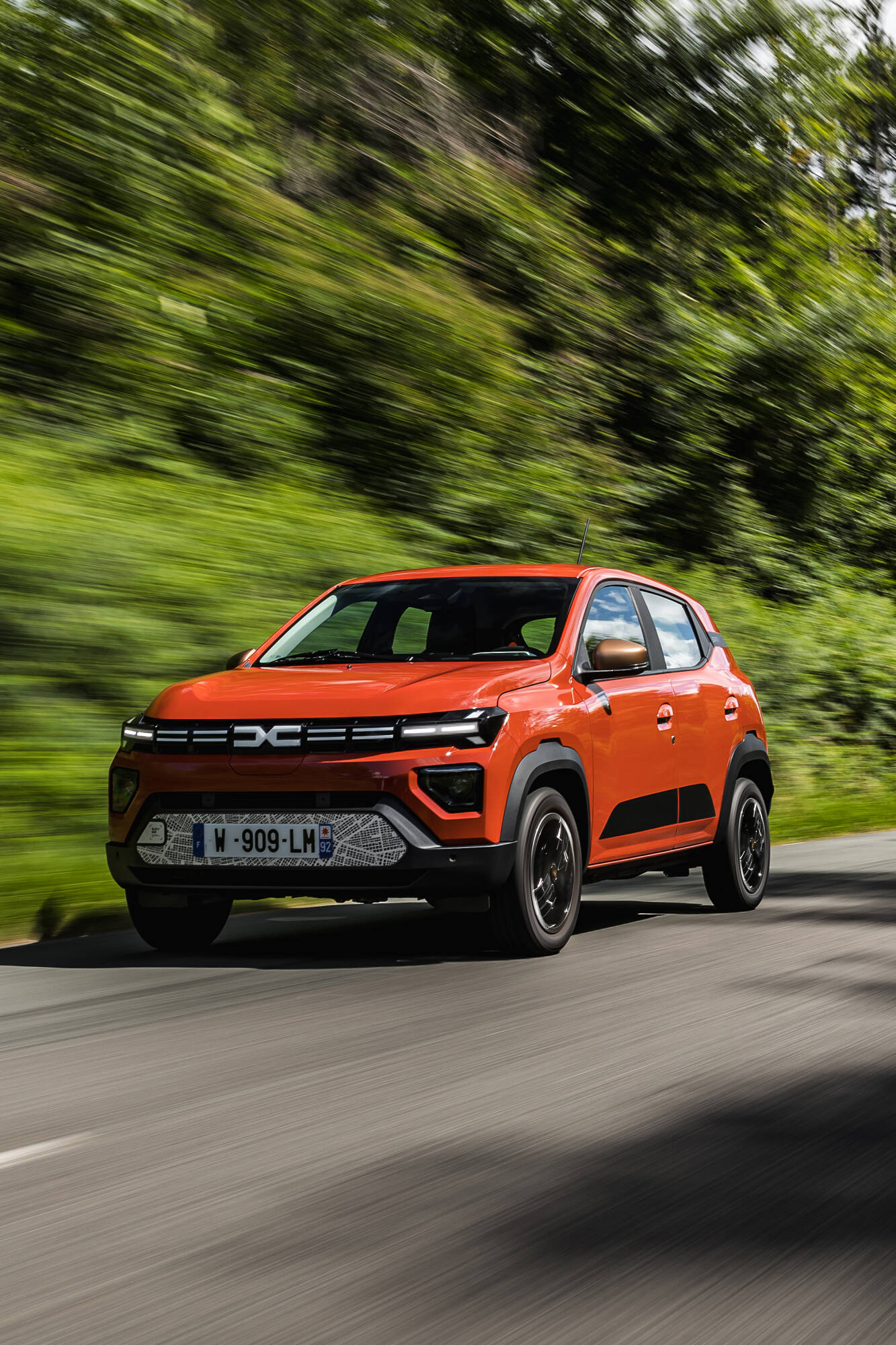
The Dacia Spring promises a range of up to 230 kilometres according to WLTP measurements. In practice, this is often limited to 150–200 kilometres. Causes include slow acceleration, weather conditions and charging issues. The actual range can be particularly disappointing in winter. The new LFP battery promises improvement, but current owners regularly struggle with sensor faults and battery complaints at higher mileages. What should you expect from the Dacia Spring and how do you tackle these problems?
What is the real range in winter?
The Dacia Spring is fitted with a 27 kWh gross battery pack. On paper this gives a range of around 230 kilometres. Tests in mixed use, however, show consumption of 13.9 to 14.4 kWh per 100 kilometres, which translates to 180 to 230 kilometres of range. On the motorway, consumption rises to 17.9 kWh per 100 kilometres, resulting in roughly 185 kilometres at the maximum speed of 125 kilometres per hour.
Winter conditions reduce the range by 20 to 30 per cent. In real-world tests, owners consistently report 160 to 190 kilometres in winter, compared to 220 kilometres in summer. Cold temperatures affect the chemical processes in the battery, which reduces the available capacity. On top of that, the heating system requires extra energy, driving up consumption further.
The range is also determined by driving style and road conditions. Excessive acceleration or driving above 100 kilometres per hour halves the range. Activate Eco mode and use regenerative braking to increase the range by 20 to 25 per cent. One user with 134,000 kilometres on the odometer recorded 11.7 kWh per 100 kilometres on medium-length trips, which gives a potential range of 234 kilometres.
Common battery complaints with the first generation
The Spring, produced in China, regularly suffers from battery complaints at higher mileages. For most cars, battery degradation remains limited to less than 10 per cent after three to five years of use. Problems, however, arise due to sensor faults or wear of supporting systems.
Owners report the following symptoms:
- Severe battery discharge, even when stationary
- Error messages on the dashboard
- Weak or flickering lights
- Unexpectedly low range or charging errors
Possible causes of battery problems
A faulty battery sensor leads to incorrect readings. This sensor also causes unexplained discharge. It communicates with the system about the state of charge. In the event of a fault, the car may appear to be fully charged, while the actual capacity is lower. Conversely, the car may show a low state of charge with a full battery. Owners on forums regularly report this problem at around 130,000 kilometres. The solution is often a sensor reset or replacement by the dealer.
The 12V auxiliary battery can also cause problems. This smaller battery powers the onboard computer and steering systems. It is normally charged from the main battery. An empty 12V battery blocks charging of the main battery. Check this battery monthly and replace it once it is more than three years old.
The cooling and heating system can use an excessive amount of energy in cold conditions. At 150,000 kilometres some cars show 15 to 20 per cent degradation, but this remains rare. A sensor or software update resolves most complaints.
How can you effectively extend battery life?
For daily use, charge the battery to 80 to 90 per cent. Only charge to 100 per cent for long trips. This prevents unnecessary stress on the battery cells and slows down wear. Use the Green’Up cable for optimal charging: from 0 to 100 per cent in less than nine hours, compared with thirteen hours using the standard cable.
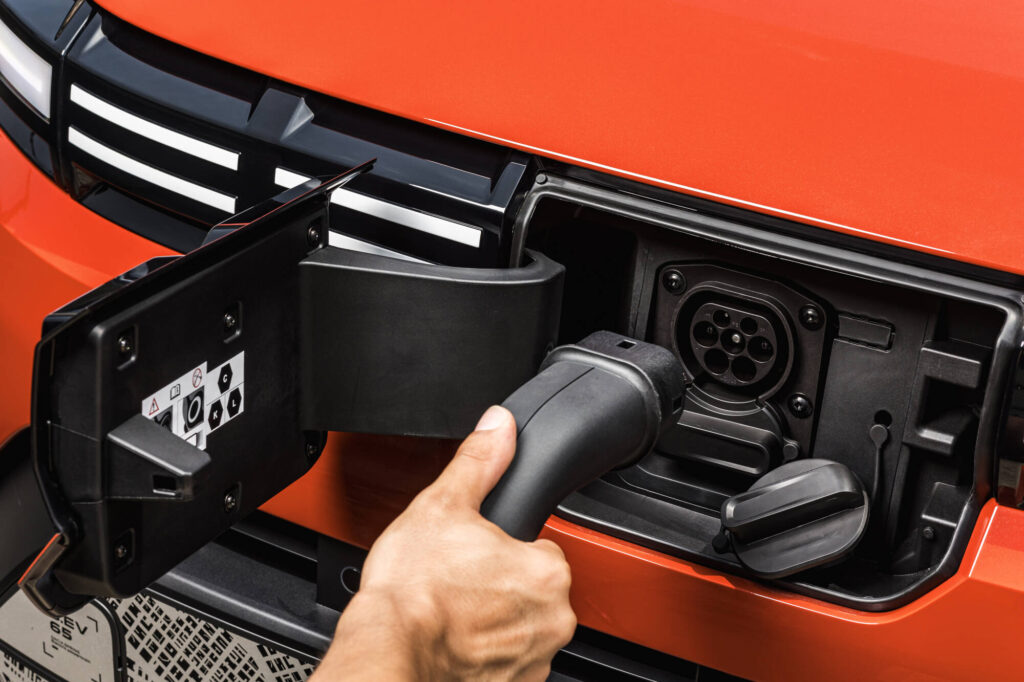
Fast charging with the optional CCS connector delivers a maximum of 33 kW and brings the battery from 10 to 80 per cent in forty minutes. Avoid frequent fast charging, as this causes the battery to degrade more quickly due to the higher temperatures during the charging process.
Practical tips for more range
Activate Eco mode and regenerative braking to recover energy while slowing down. Avoid using air conditioning and heating where possible. Otherwise, precondition the car via the app while it is still plugged in. Regularly check tyre pressure: the 165/70R14 tyres perform best at 2.5 to 3 bar.
Gentle acceleration and anticipatory driving can save up to 25 per cent energy. Keep your speed constant and anticipate traffic situations to avoid unnecessary braking. A full load or a lot of luggage increases consumption by 10 to 15 per cent, so remove unnecessary items from the car.
Avoid fully discharging the battery. In winter, preferably park the car in a warm space such as a garage. This keeps the battery temperature stable and prevents loss of capacity due to the cold.
Warranty and diagnostics in case of problems
Dacia offers an eight-year or 160,000-kilometre warranty on the battery, guaranteeing at least 70 per cent capacity. If problems arise, you can read sensor errors via an OBD scanner. This scanner connects to the car’s diagnostic system and displays fault codes that point to defective sensors or software issues.
Give priority to a dealer check if complaints persist. Dealers have access to factory diagnostics and can carry out specific software updates that solve many issues. One user reported on Reddit: “Battery seemed empty after parking, but was 80 per cent full – sensor issue resolved by dealer.”
‘ For long motorway trips or frequent winter kilometres, the car is less suitable due to its limited range and sensitivity to cold. ’
Is the Dacia Spring suitable for your situation?
The Spring offers good value for money for commuters and city use. The real-world range of 150 to 200 kilometres is sufficient for daily trips within urban areas. For long motorway journeys or frequent winter kilometres, the car is less suitable because of its limited range and sensitivity to cold.
Owners with more than 100,000 kilometres generally report positive experiences, provided they take the limitations into account. Small changes such as more efficient tyres can further optimise the range. In the event of technical problems, a visit to the dealer solves most complaints through sensor or software updates.
On the Carnews website you will find more information about electric cars, maintenance tips and common problems with various makes and models. Discover which electric car best suits your driving habits and learn how to optimise your battery’s lifespan.
Frequently asked questions
The official WLTP range of the Dacia Spring is around 230 km, but in practice the range is usually between 150 and 200 km in mixed use. In city traffic and with economical driving, the real-world range can come closer to the WLTP figure (around 200–220 km). On the motorway and at higher speeds, the range clearly drops below the WLTP figure. Factors such as cold, load and driving style therefore mean that the real-world range is generally lower than the official WLTP value.
The most commonly reported battery problems with the Dacia Spring are unexpected (apparent) discharge, error messages relating to the charging system and a suddenly much lower indicated range. These problems are often caused by faulty or poorly calibrated battery sensors, an empty or weak 12V auxiliary battery that blocks the charging system, or extra consumption by the cooling/heating system in cold conditions.
Yes, there are various effective methods: accelerate gently, use Eco mode as much as possible and make optimal use of regenerative braking to increase the range. Keep tyre pressures at the correct level (around 2.5–3 bar) and limit high speeds and excessive air conditioning/heating, especially on the motorway and in winter. For the battery’s lifespan, it is beneficial in everyday use to charge mostly to around 80–90% and to avoid deep discharges (close to 0%). Fast charging is possible, but preferably only when necessary for longer trips.
With its practical range of roughly 150–200 km, the Dacia Spring clearly has a smaller driving range than many other compact EVs in the same segment, which often reach 250–350 km. The battery is relatively small, which means it is positioned mainly as a city and regional car. In terms of charging speed it is also limited: AC charging takes a long time and optional DC fast charging at around 30–33 kW is clearly below the charging speeds of many rivals. As a result, it is less suitable for frequent long journeys than comparable compact electric cars.
Low temperatures reduce the actual range of the Dacia Spring by around 20–30%, partly because the battery is less efficient and more energy is needed for heating. Driving behaviour also has a major impact: calm driving, using Eco mode and anticipatory braking can increase the range by around 20–25%. At high speeds and with frequent hard acceleration, the range can almost be halved. As a result, the actual range in practice varies considerably, from roughly 150 to more than 220 km.