
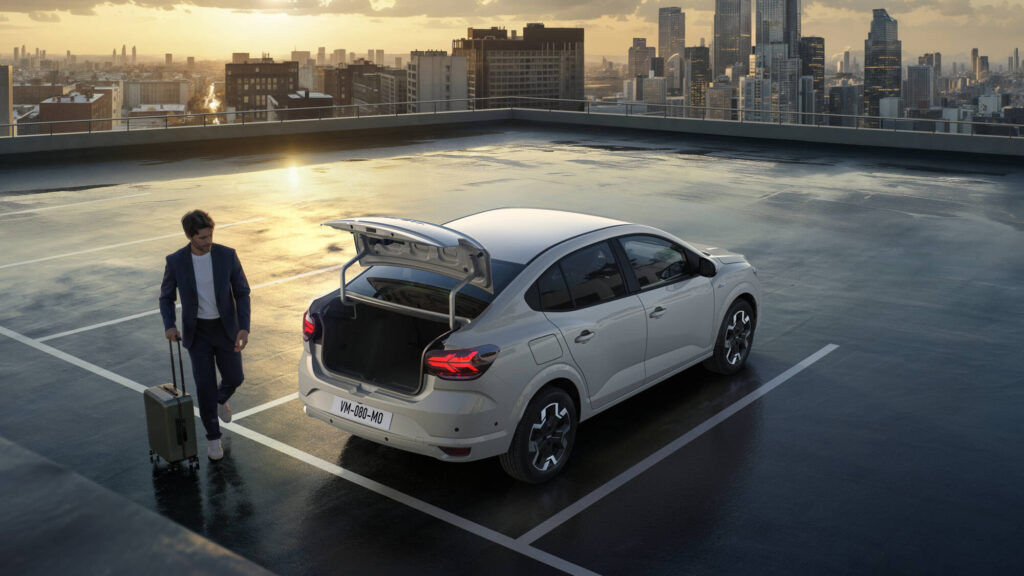
The Dacia Logan with TCe engine suffers from structural problems with the timing chain, EGR valve and ignition coils. These well-known issues appear mainly after 80,000 kilometres and often lead to unexpected repairs for owners. With the right knowledge and preventive maintenance, these problems are manageable. Discover which warning signs you need to look out for and which steps you can take to prevent costly damage.
Which TCe engines are fitted in the Dacia Logan?
The Dacia Logan was offered with the compact 0.9 TCe three-cylinder turbo with 90 bhp and the 1.2 TCe four-cylinder. Both belong to the Renault-Nissan H4D/H4Bt engine family. These turbo engines offer a good balance between performance and fuel economy, with combined consumption of 5 to 6 litres per 100 kilometres in urban driving.
The engines are popular because of their low road tax and efficiency in daily use. However, both suffer from known teething troubles that mainly appear after 80,000 to 100,000 kilometres. Owners regularly report problems with the timing chain, EGR contamination and defective ignition coils.
Common TCe engine problems with the Dacia Logan
Problems with the timing chain
The timing chain, which runs in an oil bath and is therefore wet-lubricated, stretches due to normal wear and insufficient lubrication. This leads to rattling noises during cold starts, especially in the first few minutes after starting. As the stretching progresses, the chain can jump teeth, causing the valve timing to be incorrect.
Symptoms of a worn timing chain are:
- Rattling noises from the engine bay when warming up after start
- Loss of power and irregular running behaviour
- Fault code P0016 indicating a timing problem
- In severe cases: engine damage due to valve components making contact with the pistons
The chain often fails between 100,000 and 120,000 kilometres. Replacement costs between 400 and 600 euros for parts, excluding labour. Some owners opt for an upgraded chain kit that is more reliable than the original version.
EGR valve contamination and consequences
The exhaust gas recirculation valve (EGR valve), which feeds exhaust gases back into the engine to reduce emissions, becomes contaminated by carbon deposits, especially with lots of short city journeys. The valve then gets stuck in the open or closed position. This results in rough idling, a hesitating engine and fault code P0401.
Contamination builds up more quickly when the engine regularly remains cold or is rarely run under load. Diesel engines are more sensitive to EGR contamination, but the TCe petrol engines also show this problem over time.
How do you clean a contaminated EGR valve?
Cleaning the EGR valve can prevent failures. The valve is located on the intake side of the engine and can be accessed after removing a few air hoses. Use a special EGR cleaner or carburettor cleaner to dissolve carbon deposits.
Steps for cleaning:
- Disconnect the battery and remove the air hoses leading to the EGR valve
- Remove the valve by undoing the mounting bolts
- Spray the valve with cleaner and leave it to soak for 15 minutes
- Brush off carbon deposits with a soft brush
- Rinse with cleaner and refit the valve
Some owners opt for an EGR delete, in which the valve is permanently deactivated via a software modification. This reduces carbon build-up, but is not permitted for use on public roads. This procedure costs between 100 and 200 euros.
Replacing ignition coils and spark plugs
Ignition coils and spark plugs fail early on TCe engines, especially in damp weather conditions. Worn coils cause misfires where cylinders no longer ignite. This leads to jerky driving behaviour, loss of power and increased fuel consumption.
Signs of defective ignition coils or spark plugs:
- Vibrations during acceleration
- Warning light coming on with fault codes for cylinder misfires
- Black smoke from the exhaust
- Increased fuel consumption
Replacement of spark plugs is recommended after 30,000 to 40,000 kilometres, depending on driving style and fuel quality. Ignition coils last longer but often fail around 60,000 to 80,000 kilometres. In case of problems, always replace all coils at the same time to prevent uneven loading.
Oil consumption and piston rings
High oil consumption occurs regularly after 80,000 kilometres. Owners report consumption of up to 1 litre per 1,000 kilometres. Causes are worn piston rings and valve stem seals that let oil through into the combustion chamber.
Check the oil level via the dipstick every month. Top up if the level drops below the minimum mark. Always use synthetic 5W30 or 0W30 oil that meets the official Renault specifications RN0700 or RN0710. Change the oil every 10,000 kilometres or annually; do not follow the factory intervals of 20,000 kilometres.
Turbo and intercooler problems
The small turbocharger wears quickly due to insufficient cooling during cold starts and short trips. This leads to overheating and seized bearings. Intercoolers often leak due to cracks in the housing or loose clamps, which causes loss of power and black smoke.
Let the engine idle for 2 to 3 minutes after a cold start before driving off. Avoid full throttle below 2,500 rpm to protect the turbo. Check the intercooler hoses monthly for oil traces that indicate leakage.
Preventive maintenance and tips
Strict maintenance significantly extends the service life of the TCe engine. Owners who apply preventive maintenance report that 200,000 kilometres is achievable. Make sure you carry out regular checks and replace wear parts in good time.
Important preventive measures:
- Change the oil every 10,000 kilometres using approved synthetic oil
- Check the oil level monthly and top up if necessary
- Allow the engine to warm up before driving under load
- Replace spark plugs after 30,000 to 40,000 kilometres
- Clean the EGR valve every year or when symptoms appear
- Check intercooler hoses for leaks and oil traces
- Replace the timing chain preventively at around 100,000 kilometres
Use an OBD2 scanner (a diagnostic device that allows you to read fault codes from the car) to detect codes such as P0016 for timing problems or P0299 for turbo underboost. This helps in early detection of faults. For repairs, choose Renault specialists who have experience with the TCe engine family.
Costs and diagnosis
Repair costs range between 500 and 3,000 euros, depending on the problem and the garage. A chain replacement costs on average 800 to 1,200 euros including labour. Replacing ignition coils and spark plugs costs 200 to 400 euros for all cylinders.
After 100,000 kilometres, budget roughly 1,000 euros per year for maintenance and repairs. Owners buying used models should check the service history and test for known issues during test drives. Listen for rattles when starting and watch for smoke from the exhaust.
On the Carnews website you will find extensive information about other Dacia models and common car problems. Discover more practical tips and maintenance advice to help you keep your car in top condition.
Frequently asked questions
With the Dacia Logan TCe, turbo and intercooler problems are particularly common, such as a rapidly wearing turbo and a leaking intercooler causing loss of power. In addition, increased oil consumption and problems with the stretching timing chain are often reported, which can lead to rattling noises and possible engine damage. Faults with the EGR valve, ignition coils and spark plugs (misfires) are also frequent.
Typical symptoms include clearly noticeable loss of power, irregular or rough idling and sometimes black smoke from the exhaust (often due to turbo or intercooler problems). You may also notice increased oil consumption, rattling noises at cold start (stretched timing chain) and occasional “stuttering” or misfires when accelerating. You can recognise this yourself by paying attention to changes in pulling power, noises when starting and accelerating, visible smoke behaviour and by checking the oil level regularly. If in doubt you can use a simple OBD2 scanner to read fault codes such as P0299 (turbo) or P0016 (timing).
Owners of a Dacia Logan TCe can prevent engine problems by changing the oil (with RN0700/0710 specification) every 10,000 km or annually and checking the oil level monthly. Let the engine warm up gently, avoid high revs with a cold engine and “run down” the turbo gently by not loading it heavily during the last part of the journey. Regularly check for rattling noises (chain), oil traces on intercooler hoses and fault codes via an OBD2 scanner, and if in doubt have a specialist look at it in good time. Consider preventive replacement of the timing chain and having the ECU software updated by a dealer or Renault specialist.
The TCe engine problems in the Dacia Logan are not unique to this model, but belong to the wider Renault/Nissan H4D/H4Bt TCe engine family. Complaints about rapid turbo wear, increased oil consumption, stretching timing chains and problems with the EGR system, ignition coils and cooling system also occur in other models with the same engine. What stands out with the Logan is mainly the usage profile (a lot of short city trips), which can amplify the known TCe weaknesses, rather than a specifically different engine design.
The average costs for fixing common engine problems in a Dacia Logan TCe range roughly between €500 and €3,000, depending on the specific issue and whether you go to a dealer or a specialist. Common jobs include turbo and intercooler repairs, resolving high oil consumption and replacing or modifying the timing chain. For preventive or partly preventive work, such as an upgraded chain kit or a better intercooler, you typically pay between around €200 and €600 per job.