
A used Volvo V60 requires particular attention to the oil, brakes, hybrid system and suspension. Go through these points systematically. That significantly reduces the chance of unpleasant surprises. In this way you increase your chances of years of reliable driving pleasure. Discover exactly what to look out for when buying.
Start with documents and service history
Begin your inspection with the paperwork. A complete service history is the best proof that the Volvo V60 has been maintained according to schedule. Check whether timing belt, fluids and filters have been replaced on time. Do the mileages on the invoices match each other and the current odometer reading?
Ask about any accident damage. Look for repairs to bumpers, doors and wings. Check whether all panels line up neatly and if there are any colour differences in the paintwork. Many short ownership periods can point to recurring problems, so take your time to go through the history.
‘ With newer V60s rust is usually not a major issue, but hidden crash damage is. ’
Check the bodywork thoroughly
The V60 should feel tight and solid. Start with a check for rust and corrosion. Look at wheel arches, sills and the bottoms of the doors. With newer V60s rust is usually not a major issue, but hidden crash damage is.
Check the paint for stone chips on the bonnet, bumper and windscreen. Ask whether the windscreen has already been replaced and test whether the sensors function properly. Test all lighting, including daytime running lights, main beam and cornering lights. On LED versions replacement can be expensive.
Check that the electric tailgate operates smoothly. Look in the boot for signs of moisture and check the rear light units for leaks.

Test interior and electronics thoroughly
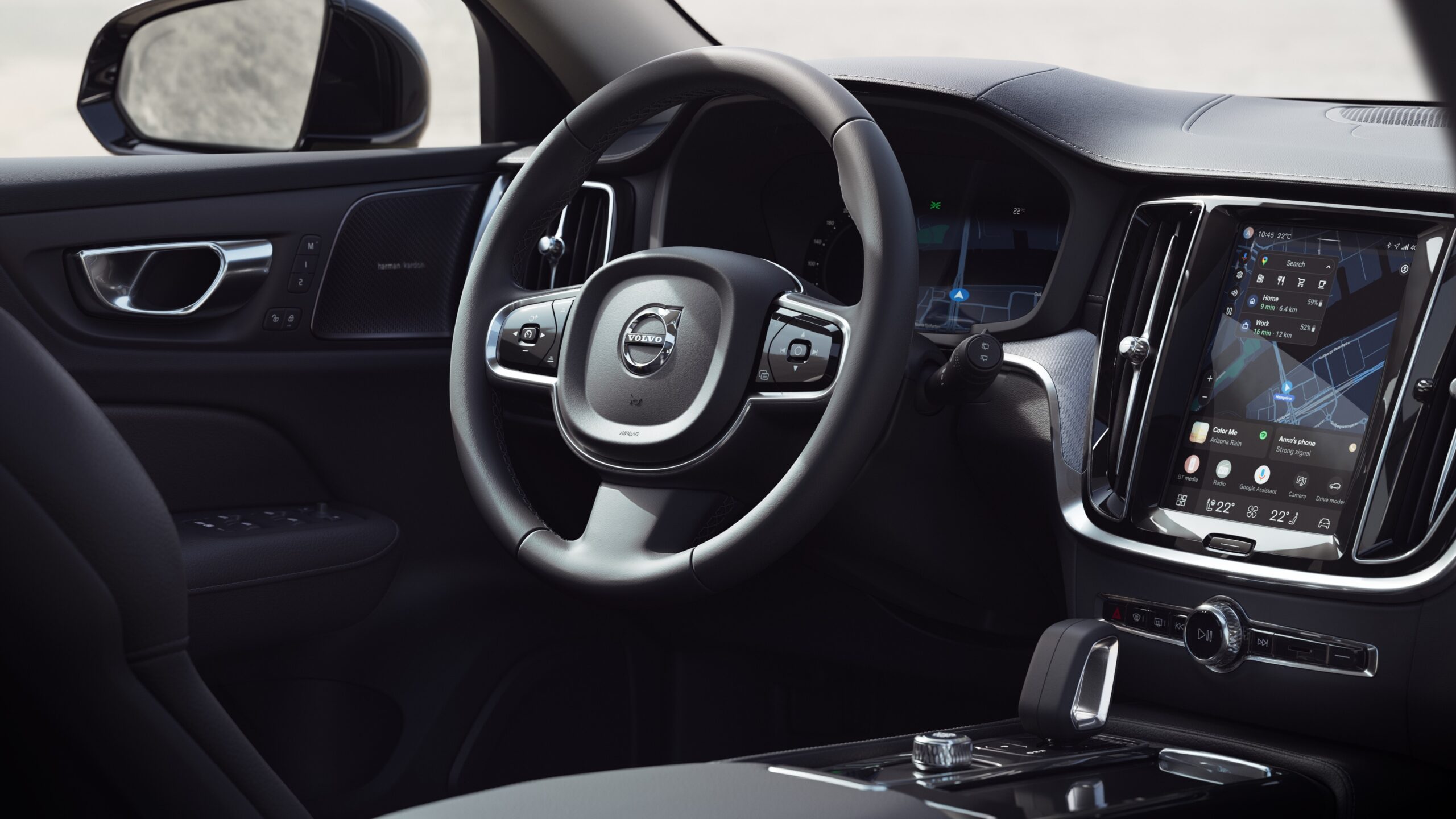
Volvos are known for their tidy interiors, but the electronics deserve extra attention. Test the infotainment system (the screen with navigation and media) for navigation, Bluetooth, Apple CarPlay and Android Auto. The screen should respond quickly and not show any glitches.
Switch on the ignition and watch for warning messages. Warnings about airbag, engine, battery or driver assistance systems (the electronics that help with steering, braking and parking) are a reason to ask further questions. Test the air conditioning and climate control in all settings. Weak air conditioning often points to a leak or compressor problem.
Check the seats for wear on the cushion and side bolsters. With electrically adjustable seats you should test all functions. Windows, mirrors, central locking and parking sensors must also work properly. With plug-in hybrids the charging flap is an extra point of attention.
What problems should you check for on a used Volvo V60?
The V60 has specific points of attention per powertrain. For petrol versions, watch out for rough idling, oil consumption and ticking noises on a cold start. Smoke from the exhaust under acceleration can indicate engine problems.
Diesels require the correct usage history. Pay attention to:
- Diesel particulate filter problems (the filter that captures exhaust particles) with lots of short journeys
- Clogged EGR valves (exhaust gas recirculation, which routes exhaust gases back into the engine)
- Turbo and intake issues
- Warnings relating to emission systems
These problems occur regularly with diesels that have mainly been driven in town.
‘ A well-maintained car with higher mileage often performs better than a poorly maintained low-mileage one. ’
Reliability of the V60 from 2018 onwards
The V60 from 2018 onwards is known as a solid estate car. The electronics can be prone to minor glitches, but the key reliability factor is still maintenance. A well-maintained example with higher mileage often performs better than a sloppily maintained car with low mileage.
Owners report that the V60 mainly offers calmness and comfort. Shock absorbers and springs do need to be in good condition to retain that quality. During the test drive, listen for knocking or clunking over speed bumps. Does the car sit level or is it sagging on one side? These signs indicate worn components.
Check steering and brakes
The steering wheel must be straight and not pull to one side. Irregular tyre wear points to incorrect alignment or worn parts. Check the brake discs (the metal discs that the brake pads clamp onto) for grooves and a rust lip. Test whether the car brakes smoothly and in a straight line without vibrations.
The brakes on the V60 are generally reliable, but may need replacing after intensive use. Ask when they were last replaced and check the remaining thickness of the brake discs.

Buying advice for a used V60 PHEV
The T6 and T8 Recharge versions are attractive because of their performance and low fuel consumption when used correctly. These PHEV versions (plug-in hybrid, combining a petrol engine with a rechargeable battery) do require extra checks. Test the charging behaviour at a public charge point or at home. Do the charging cable and the charging flap work properly?
Ask about the battery condition and any faults. Take a proper test drive. The hybrid powertrain should switch smoothly between electric and petrol. Bear in mind that these cars are most appealing if you can charge regularly. Without charging, much of the benefit disappears.
Battery health in plug-in hybrids
During the test drive, check that the fully electric driving mode works correctly. The V60 PHEV should be able to drive several tens of kilometres purely on electric power. Does the battery capacity drop quickly? That may point to wear or a fault.
Ask the seller about the charging habits in day-to-day use. Cars that have rarely been charged are less appealing because the battery may not have been optimally maintained.
Automatic gearbox and drivetrain during the test drive
The automatic gearbox must change gear smoothly without jolts. During the test drive, pay attention to:
- Juddering when pulling away
- Clutch slip
- Hesitation between gears
- Vibrations at low speed
- Response in Sport, Comfort and manual mode
On some older versions the transmission (the system that transfers power to the wheels) is less refined than on recent models. Pay extra attention to shift comfort and ask about transmission maintenance.
‘ Four very different tyres are a sign of penny-pinching or poor maintenance. ’
Tyres as an important indicator
Tyres tell you a lot about a car’s use and maintenance. Check for uneven wear between left and right. Ask about the age of the tyres and check the brand and quality level. Four very different tyres are a sign of penny-pinching or poor maintenance.
Also check that the tyre size matches the specification for this version of the car. An incorrect size can affect fuel consumption, comfort and safety.
Specific checklist for the test drive
Go through this list during your test drive. Ideally start the car from cold and listen for unusual noises. Check that all warning lights go out after starting. Test acceleration at low and medium revs and let the automatic gearbox shift up both gently and under firm acceleration.
Drive over speed bumps and cobblestones to test the suspension. Brake firmly a few times and test the cruise control and driver assistance systems. Check for vibrations at 100 kilometres per hour or higher. Afterwards, check whether any new warning messages appear on the dashboard.
Points to note with Volvo Selekt cars
With nearly new V60s carrying a selection or quality label you often get a comprehensive technical inspection, clear service history and warranty. Breakdown cover and a service may also be included. That makes such an example more attractive, but it is still sensible to carry out your own checks.
Useful buying tips for the Volvo V60
It is better to buy a well-maintained V60 with a complete history than a cheap example with no proof of maintenance. If possible, arrange an independent pre-purchase inspection. Check that software updates have been carried out, especially for the infotainment and hybrid systems.
Compare trim level and options carefully. Seats, LED lighting, safety systems and towing capacity can vary greatly between cars. Do not rely solely on the mileage; above all, assess the overall condition of the car.
‘ That increases your chances of years of reliable driving pleasure with a comfortable and safe Volvo V60. ’
Summary of the key points
A used Volvo V60 can be a smart purchase, provided you take a critical look at service history, electronics and powertrain. Test the automatic gearbox, suspension and brakes thoroughly during the test drive. With plug-in hybrids, battery health is a key point of attention.
Check the tyres for wear and watch out for warning messages on the dashboard. Work through these points systematically. That increases your chances of years of reliable driving pleasure with a comfortable and safe Volvo V60.
Frequently asked questions
On the V60, pay particular attention to worn control arms, ball joints and other suspension components (knocking noises or nervous handling). For diesels, specifically watch for a dirty or sticking EGR valve and potential diesel particulate filter problems, especially with lots of short journeys. Test the automatic gearbox for smooth, jerk-free shifts and absence of vibrations. Check whether all relevant software updates have been carried out, especially for infotainment, driver assistance systems and (for PHEVs) the hybrid control system.
The petrol engines are generally considered reliable, provided maintenance has been carried out strictly according to schedule and you watch for rough idling, excessive oil consumption and rattling noises on a cold start. Diesels can suffer from particulate filter and EGR problems with lots of short journeys, so during the test drive watch out for emission warnings, hesitation and smoke under acceleration. With automatics, jerky shifts, slipping or vibrations at low speed are important warning signs. During the test drive, the powertrain should operate smoothly and without vibrations in all driving modes, with no warning messages on the dashboard.
Ask for a fully completed service history with invoices and check that services and wear items (oil, filters, brakes, tyres) have been replaced according to schedule. Pay particular attention to timely replacement of the timing belt (where applicable), automatic gearbox oil and maintenance to brakes and suspension. For diesels, particulate filter and EGR maintenance are important, for plug-in hybrids also updates and checks of the high-voltage battery pack and charging system. Finally, check that the mileage logically matches the service stamps and visible wear in the interior.
Essential inspection points are the condition of the shock absorbers and springs (no knocking over speed bumps and the car must not lean to one side) and play or noises in ball joints and control arms. Check that the steering is tight and free of play, the wheel does not vibrate and the car does not pull to one side, and watch for irregular tyre wear as a sign of alignment or suspension problems. For the brakes, you should check discs and pads for wear, grooves, a rust lip and any vibrations in the pedal or steering wheel under hard braking. During the test drive the car must brake straight and stably, even at higher speed and in an emergency stop.
There are no systematically notorious defects with the Volvo V60’s infotainment system, but electronics are a known point of attention. Always thoroughly test the multimedia screen, navigation, Bluetooth and Apple CarPlay/Android Auto for freezing, slow response and connection issues. Also check for warning messages or system restarts after longer drives. Finally, ask whether all relevant software updates have been carried out.