Choosing the right ratchet strap: how to secure loads on and behind your car safely
Whether it’s a motorbike on a trailer, a wardrobe in the estate car or a roof box full of camping gear: if you’re transporting something, you need to secure it properly. A load that shifts can make your car unpredictable in corners and when braking, and a load that falls off a trailer is extremely dangerous for the traffic behind you. A ratchet strap is the simplest way to prevent that, but not every strap is suitable for every job. What should you look for?
Cam buckle or ratchet?
Ratchet straps come in roughly two versions. You tighten a cam buckle strap by hand; the buckle clamps the strap in place. That is ideal for light loads, such as luggage on a roof rack, a bike or a few boxes in the boot. A ratchet strap is tightened with a lever. That allows you to build up much more tension, which is what you need for heavier or larger loads on a trailer, such as a motorbike, a lawnmower or building materials.
Width and strength: look at the label
The width of the strap says a lot about its use. Straps of 25 millimetres are suitable for light to medium loads, 35 millimetres is a solid mid-range option and 50 millimetres is designed for heavy loads and larger trailers. Also always check the label. It shows the LC value (lashing capacity) in daN: the force the strap may safely take when securing a load. That is something different from the breaking strength, which is much higher but is not a working value. Choose a strap whose LC matches the weight of your load, and always use multiple straps rather than one.
Length and ends
Measure in advance how long the strap needs to be: from lashing point to lashing point, over the load. A strap that is too short will not tension properly, while one that is far too long leaves loose ends that flap about. Two-part straps with hooks are handy for attaching to the lashing points of a trailer. An endless strap, without hooks, is passed in a loop around the load or around a frame.
Transporting a motorbike on a trailer
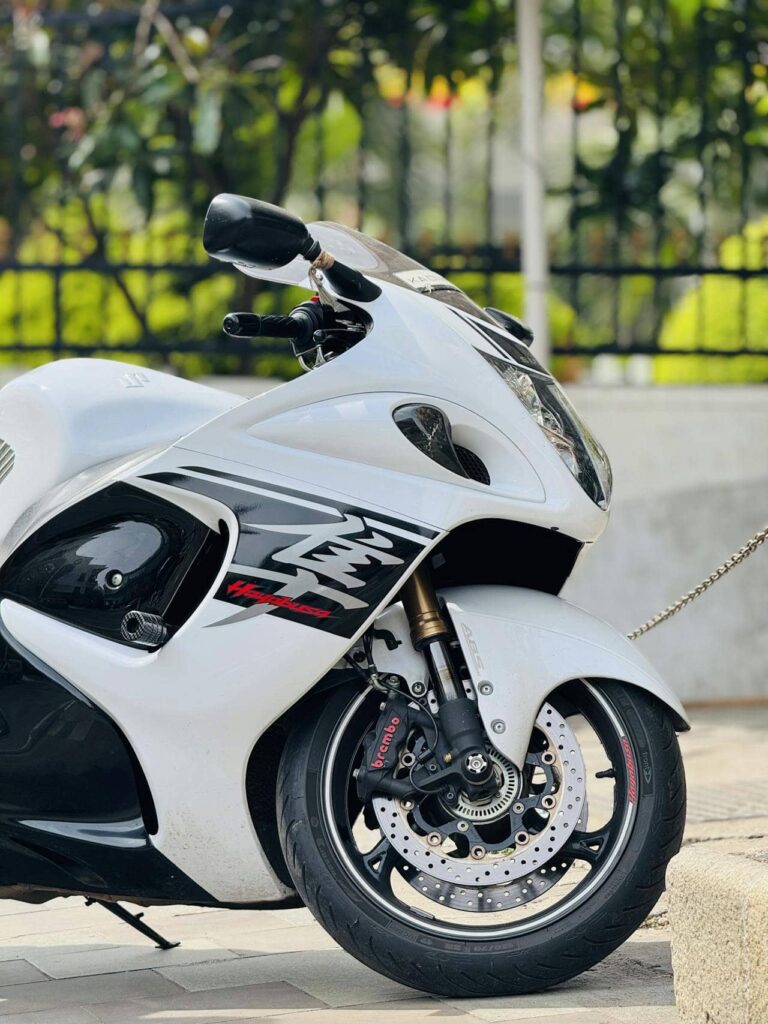
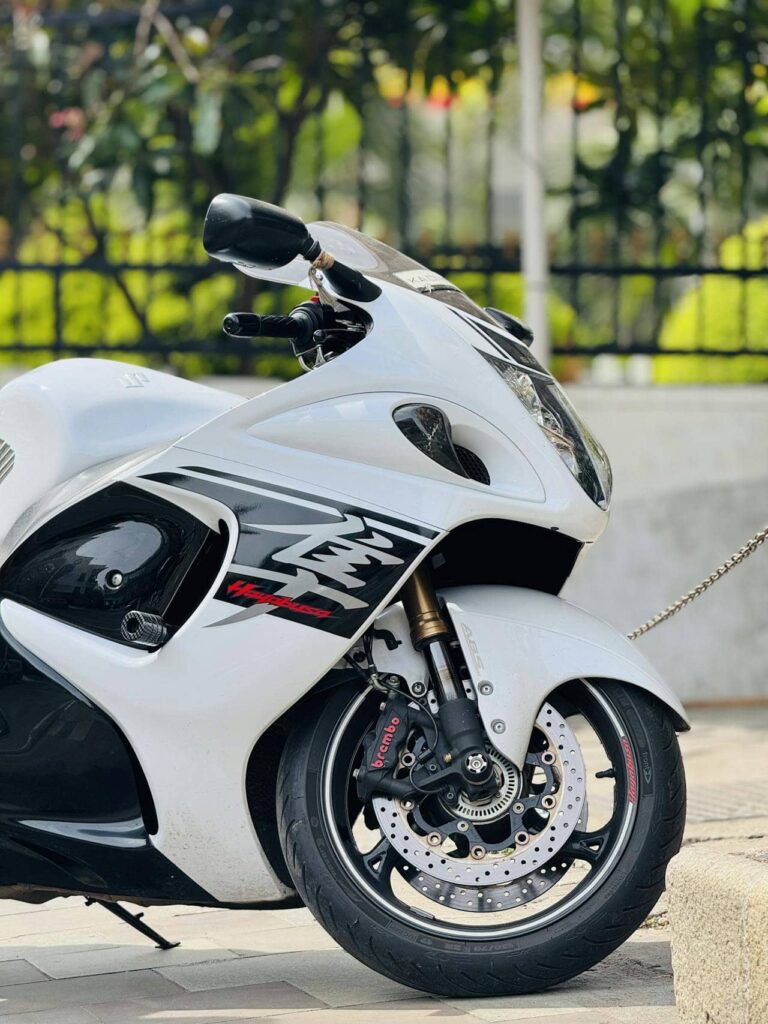
A motorbike is one of the trickiest loads because it is tall and narrow. Place the front wheel in a wheel chock and use at least two, preferably four, ratchet straps. Attach them diagonally forwards and backwards so the motorbike is secured in all directions. Compress the front suspension slightly, but do not push it fully down. Use soft loops around the handlebars or frame so the hooks do not damage the paint, and place protection where the strap runs over sharp edges.
Check your straps before every journey
A ratchet strap wears out. Check the strap for cuts, fraying and burn marks, and make sure the ratchet works smoothly and is not rusty. If the label has become unreadable, you can no longer be sure of the strength and should replace the strap. Anyone who works outdoors often or in the rain will benefit from a stainless steel ratchet. Store straps dry and rolled up, out of the sun. Check on the way after the first few kilometres whether everything is still tight; loads often settle a little.
In conclusion
With the right combination of fastening type, width and length, you can secure almost anything safely. If you are unsure which strap suits your load, it is better to choose the next size up. A wide choice of widths, lengths and colours can be found, for example, in the range of ratchet straps at IJzerwarenwebshop, from light 25 mm straps to heavy-duty 50 mm versions for trailers.