
Aftermarket tailgate springs usually have the same basic construction as OEM examples: a nitrogen-filled cylinder, piston, piston rod and seals. However, they may differ in gas pressure, stroke length, damping, material and seal quality, and mounting points, which affects operation and service life. Especially on electrically operated tailgates, force, length and specification must match the OEM specifications exactly; springs for manual systems are not automatically interchangeable.
What effect do extreme weather conditions have on the hydraulic and electrical load of the ‘tailgate motor’?
In extreme cold, the gas struts provide less support and the strut medium becomes more viscous, so the tailgate motor has to deliver more mechanical force and electrical current. This can lead to slow or jerky movement, premature stopping and accelerated wear or overload of the motor. Moisture and temperature changes can also cause corrosion and voltage loss in connectors, wiring and earth connections, further increasing the electrical load.
What are the technical causes of premature wear in an ‘electric tailgate gas strut’ in modern cars?
Premature wear is mainly caused by ageing or damaged seals, nitrogen or oil leaks, and corrosion or pitting on the piston rod. Low temperatures, frequent use, a heavy tailgate or extra accessories increase the mechanical load, while incorrect, unevenly worn or only one-sided replaced struts cause uneven loading. Incorrect alignment, damaged mountings, forcing the tailgate by hand, and faults in the motor, position sensor or calibration can also overload the strut and electric drive.
How do you recognise an impending fault in the ‘spindle drive’ before the tailgate fails completely?
An impending fault in the spindle drive can be recognised by clicking, humming or rattling noises, jerky or slow movement, and a flap that stops early or keeps stopping at a different position. Buzzing without movement or opening only with manual assistance also points to wear or overload. First check the gas struts, power supply and earth, as faults there can cause the same symptoms.
What steps are involved in diagnosing and calibrating the ‘tailgate control’ after replacing a faulty strut?
After replacing preferably both struts, check the mountings and test the tailgate several times manually and electrically in all operating modes. Then move the flap fully up by hand and hold the control button for around ten seconds to relearn the maximum opening position. After that, check whether the flap moves smoothly, stays open and always stops at the correct end position. If problems persist, read out fault codes and check the power supply, earth, wiring, motor and position sensor.
To what extent does the construction of aftermarket ‘tailgate springs’ differ from manufacturers’ OEM specifications?
Aftermarket tailgate springs usually have the same basic construction as OEM examples: a nitrogen-filled cylinder, piston, piston rod and seals. However, they may differ in gas pressure, stroke length, damping, material and seal quality, and mounting points, which affects operation and service life. Especially on electrically operated tailgates, force, length and specification must match the OEM specifications exactly; springs for manual systems are not automatically interchangeable.
What effect do extreme weather conditions have on the hydraulic and electrical load of the ‘tailgate motor’?
In extreme cold, the gas struts provide less support and the strut medium becomes more viscous, so the tailgate motor has to deliver more mechanical force and electrical current. This can lead to slow or jerky movement, premature stopping and accelerated wear or overload of the motor. Moisture and temperature changes can also cause corrosion and voltage loss in connectors, wiring and earth connections, further increasing the electrical load.
Frequently asked questions
What are the technical causes of premature wear in an ‘electric tailgate gas strut’ in modern cars?
Premature wear is mainly caused by ageing or damaged seals, nitrogen or oil leaks, and corrosion or pitting on the piston rod. Low temperatures, frequent use, a heavy tailgate or extra accessories increase the mechanical load, while incorrect, unevenly worn or only one-sided replaced struts cause uneven loading. Incorrect alignment, damaged mountings, forcing the tailgate by hand, and faults in the motor, position sensor or calibration can also overload the strut and electric drive.
How do you recognise an impending fault in the ‘spindle drive’ before the tailgate fails completely?
An impending fault in the spindle drive can be recognised by clicking, humming or rattling noises, jerky or slow movement, and a flap that stops early or keeps stopping at a different position. Buzzing without movement or opening only with manual assistance also points to wear or overload. First check the gas struts, power supply and earth, as faults there can cause the same symptoms.
What steps are involved in diagnosing and calibrating the ‘tailgate control’ after replacing a faulty strut?
After replacing preferably both struts, check the mountings and test the tailgate several times manually and electrically in all operating modes. Then move the flap fully up by hand and hold the control button for around ten seconds to relearn the maximum opening position. After that, check whether the flap moves smoothly, stays open and always stops at the correct end position. If problems persist, read out fault codes and check the power supply, earth, wiring, motor and position sensor.
To what extent does the construction of aftermarket ‘tailgate springs’ differ from manufacturers’ OEM specifications?
Aftermarket tailgate springs usually have the same basic construction as OEM examples: a nitrogen-filled cylinder, piston, piston rod and seals. However, they may differ in gas pressure, stroke length, damping, material and seal quality, and mounting points, which affects operation and service life. Especially on electrically operated tailgates, force, length and specification must match the OEM specifications exactly; springs for manual systems are not automatically interchangeable.
What effect do extreme weather conditions have on the hydraulic and electrical load of the ‘tailgate motor’?
In extreme cold, the gas struts provide less support and the strut medium becomes more viscous, so the tailgate motor has to deliver more mechanical force and electrical current. This can lead to slow or jerky movement, premature stopping and accelerated wear or overload of the motor. Moisture and temperature changes can also cause corrosion and voltage loss in connectors, wiring and earth connections, further increasing the electrical load.
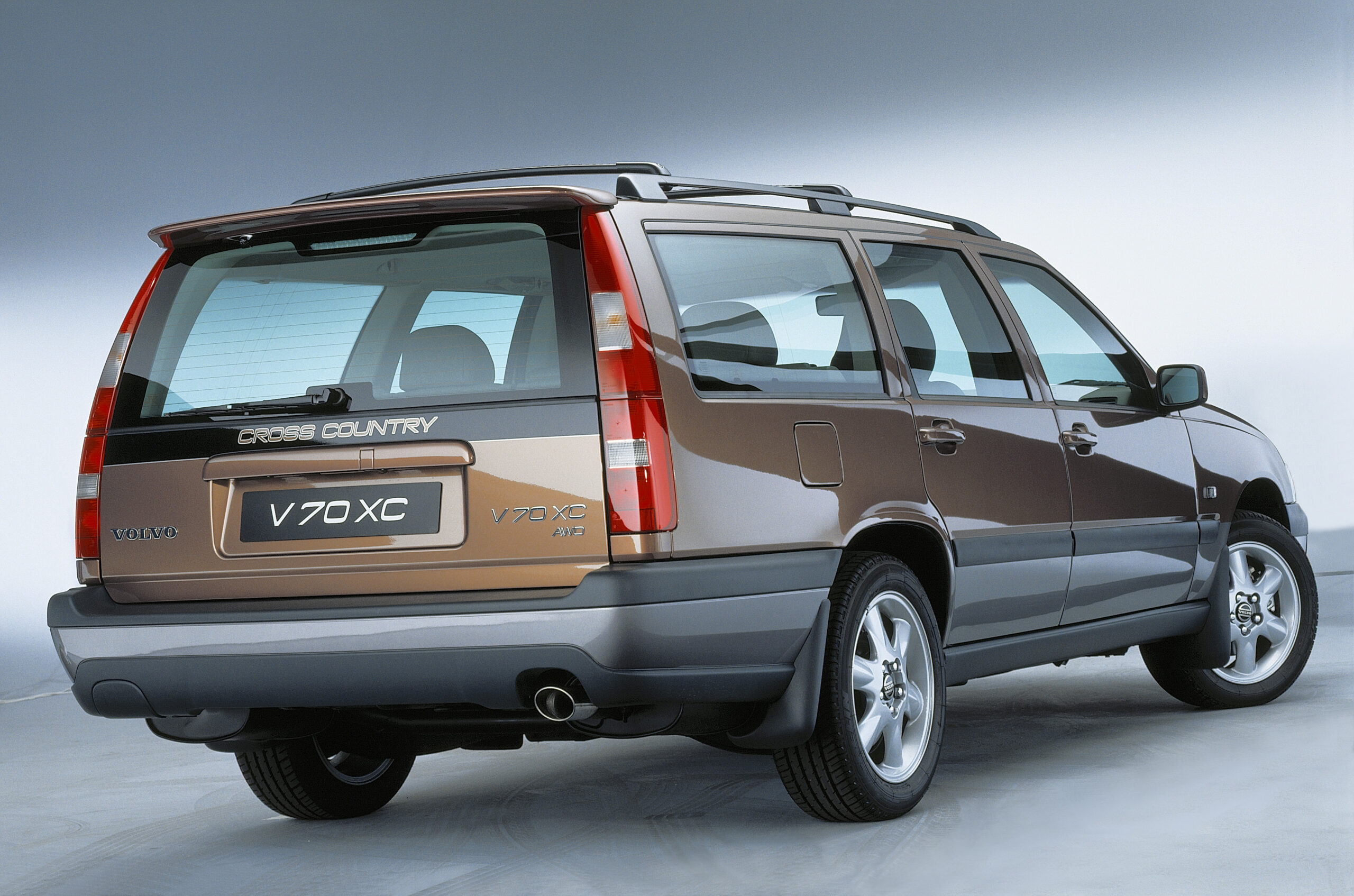
Faults with the electric tailgate gas strut make a Volvo XC70 less practical and can place unnecessary strain on the electric drive. A tailgate that will not stay open is often caused by worn gas struts, but an incorrect end position, cable problem or faulty position sensor is also possible. Anyone who assesses the symptoms in the right order prevents an unnecessarily replaced motor unit. Read on and discover what to look out for.
Why does the tailgate of a Volvo XC70 not stay open?
The gas strut, also called a gas spring, supports the weight of the tailgate. The strut contains nitrogen under pressure. That pressure compensates for a large part of the flap weight, so the electric drive has to provide less force. If the strut loses internal pressure, the flap will still open, but it will no longer stay up on its own.
This problem occurs on the Volvo XC70, especially when the tailgate has already seen a lot of use. Technical information indicates that weaker gas struts often become noticeable from around 100,000 kilometres. Service life depends on use, climate and specification. A heavy tailgate with electric operation asks more of the gas struts than a manually operated flap.
On an electrically operated XC70, it is important not to assume immediately that a dropping tailgate points to an electrical fault. The motor opens and closes the tailgate, but the gas struts take much of the weight during that movement. If both struts lose their force, the motor has to work harder. As a result, the tailgate may open slowly, move jerkily or stop earlier.
These symptoms point to faulty gas struts
A fault is usually recognisable from the behaviour of the tailgate. Pay particular attention to the following signs:
- The flap slowly drops back down after being fully opened.
- The flap suddenly falls a long way down.
- The tailgate no longer reaches its highest position.
- The electric motor sounds more laboured than before.
- One side of the flap drops sooner than the other side.
- Oily traces are visible on the piston rod.
- The complaint becomes more obvious at low outside temperatures.
Oil around the piston rod is a strong indication of seal wear. However, a gas strut does not have to leak visibly to be faulty. Internal pressure can drop without any clear external signs. Therefore, always compare the behaviour on the left and right and assess the tailgate as a whole.
‘ It makes existing wear visible. ’
Cold weather makes weak XC70 gas struts apparent
Many owners only notice the problem in autumn or winter. At low temperatures, gas struts provide less support. The strut medium also moves more slowly. A gas spring that still has just enough force in mild weather may fall short in frost.
However, cold is usually not the cause. It makes existing wear visible. So if the tailgate only drops at low temperatures, that is not a reason to ignore the problem. The gas pressure does not increase again on its own when it gets warmer.
Never leave the tailgate unattended when it starts to drop back down. Especially when loading or working around the boot area, a falling flap can cause injury. Support the tailgate temporarily with a sturdy prop until the cause has been identified.

Recognising a gas strut or electrical fault
Not every electric tailgate fault is caused by the gas struts. An XC70 with electric operation can also suffer from a fault in the motor, the integrated position sensor, wiring or earth connection. Correct diagnosis therefore begins by distinguishing between mechanical support and electrical control.
A flap that physically will not stay open first points to the gas struts or their mounting. If the flap stays open firmly but keeps stopping at the wrong height, a fault in position detection or the stored opening position is more likely.
| Complaint | Most likely cause |
|---|---|
| Flap slowly drops back down | Weakened gas struts |
| Flap suddenly falls shut | Loss of pressure or detached ball joint |
| Motor hums, flap hardly moves | Weak struts, resistance or motor problem |
| Flap keeps stopping at the same wrong height | Calibration or position sensor |
| No response to an operating button | Fuse, cable, earth connection or module |
On some XC70 versions, the motor may include a position sensor. That sensor tells the control unit where the flap is. If this sensor is faulty, the tailgate may stop halfway, move back down or remember the wrong maximum opening height. New gas struts will not fix a faulty sensor.
Checking the electric XC70 tailgate step by step
Work safely and do not replace parts straight away. This order helps narrow down the cause:
- Open the tailgate on level ground and support it mechanically.
- Check both gas struts for oil, rust, bending and loose retaining clips.
- Check whether the flap comes fully up without assistance and stays open for a few minutes.
- Listen for the motor working for too long or making unusual clicking noises.
- Check connectors, cable runs at the hinges and earth connections for moisture, corrosion or discolouration.
- Read out fault codes if the operation is irregular or stops working altogether.
According to technical diagnostic practice, measuring under load is important. A connection can show normal voltage when stationary but fail to pass enough current while the tailgate is opening. This can happen because of a poor earth connection or a damaged cable. So look beyond the fuses alone.
A wrongly stored opening height can sometimes be relearned. On a number of XC70 systems, the flap is manually moved to the desired height, after which the button on the tailgate is held down for around ten seconds. First, however, check whether the gas struts are supporting the flap sufficiently. A setting cannot restore a worn gas spring.
How do you safely replace XC70 gas struts?
Always replace gas struts in pairs. A new strut on one side and an old one on the other side will provide uneven support. This can put the flap under uneven load and create extra resistance for the hinges and drive.
The procedure on many XC70 versions is straightforward, but the tailgate must be properly supported. A strut is under pressure and the tailgate can drop immediately as soon as the first connection comes loose. Use a sturdy prop, a workshop support or help from a second person.
The replacement usually proceeds as follows:
- Support the open tailgate securely.
- Carefully release the retaining clip at the ball joint.
- Pull the old strut off the upper and lower ball joints.
- Compare length, mountings and specification with the new strut.
- Press the new strut onto both ball joints until the locking mechanism clicks into place.
- Repeat on the other side.
- Test the tailgate several times using all available operating buttons.
Do not order solely on the basis of the XC70 model name. The gas struts for an electrically operated tailgate may differ from those for a manual flap. So check the year of manufacture, vehicle identification number, mounting method and correct part number before ordering.
How much does gas strut replacement cost?
The cost depends on the brand of the gas struts, the tailgate specification and the chosen workshop. Replacing only the gas struts is usually cheaper than replacing a faulty motor unit or position sensor. On the other hand, a cheap but incorrect gas spring can still place heavy strain on the electric drive.
At a garage, the bill usually has two parts: the gas struts themselves and the labour for fitting and checking them. If the tailgate still stops in the wrong place or does not respond after fitting, further investigation may be needed into the wiring, earth, motor or body control module. Ask in advance whether reading fault codes and voltage testing are part of the diagnosis.
Do not wait too long to replace them if the flap is clearly dropping. The gas struts also protect your head during loading. They also relieve the electric drive of the Volvo XC70. On Carnews you will find much more about Volvo faults, electric tailgates, maintenance and other related car problems. Find out more on the Carnews website.
Frequently asked questions
What are the technical causes of premature wear in an ‘electric tailgate gas strut’ in modern cars?
Premature wear is mainly caused by ageing or damaged seals, nitrogen or oil leaks, and corrosion or pitting on the piston rod. Low temperatures, frequent use, a heavy tailgate or extra accessories increase the mechanical load, while incorrect, unevenly worn or only one-sided replaced struts cause uneven loading. Incorrect alignment, damaged mountings, forcing the tailgate by hand, and faults in the motor, position sensor or calibration can also overload the strut and electric drive.
How do you recognise an impending fault in the ‘spindle drive’ before the tailgate fails completely?
An impending fault in the spindle drive can be recognised by clicking, humming or rattling noises, jerky or slow movement, and a flap that stops early or keeps stopping at a different position. Buzzing without movement or opening only with manual assistance also points to wear or overload. First check the gas struts, power supply and earth, as faults there can cause the same symptoms.
What steps are involved in diagnosing and calibrating the ‘tailgate control’ after replacing a faulty strut?
After replacing preferably both struts, check the mountings and test the tailgate several times manually and electrically in all operating modes. Then move the flap fully up by hand and hold the control button for around ten seconds to relearn the maximum opening position. After that, check whether the flap moves smoothly, stays open and always stops at the correct end position. If problems persist, read out fault codes and check the power supply, earth, wiring, motor and position sensor.
To what extent does the construction of aftermarket ‘tailgate springs’ differ from manufacturers’ OEM specifications?
Aftermarket tailgate springs usually have the same basic construction as OEM examples: a nitrogen-filled cylinder, piston, piston rod and seals. However, they may differ in gas pressure, stroke length, damping, material and seal quality, and mounting points, which affects operation and service life. Especially on electrically operated tailgates, force, length and specification must match the OEM specifications exactly; springs for manual systems are not automatically interchangeable.
What effect do extreme weather conditions have on the hydraulic and electrical load of the ‘tailgate motor’?
In extreme cold, the gas struts provide less support and the strut medium becomes more viscous, so the tailgate motor has to deliver more mechanical force and electrical current. This can lead to slow or jerky movement, premature stopping and accelerated wear or overload of the motor. Moisture and temperature changes can also cause corrosion and voltage loss in connectors, wiring and earth connections, further increasing the electrical load.