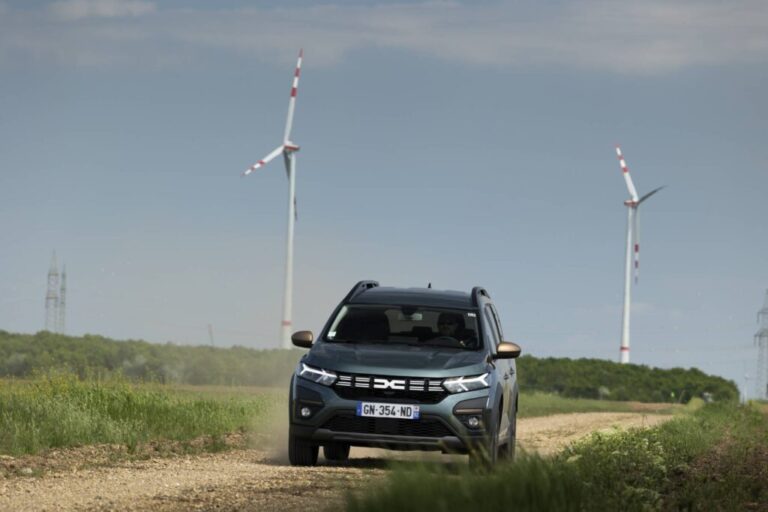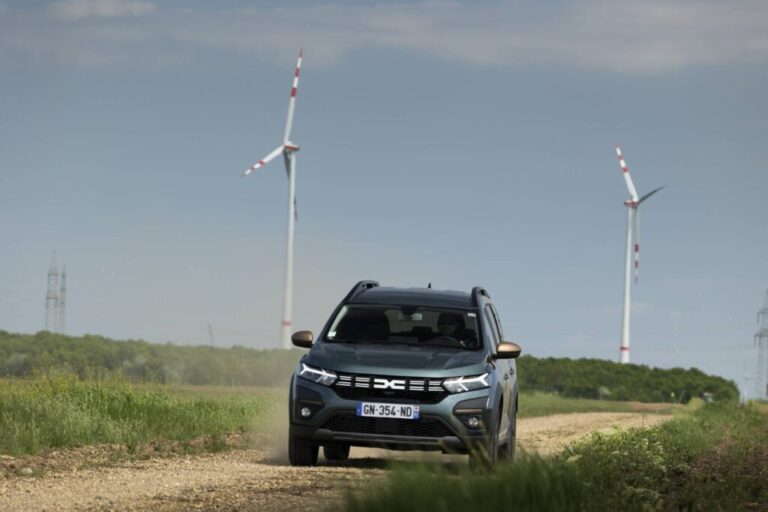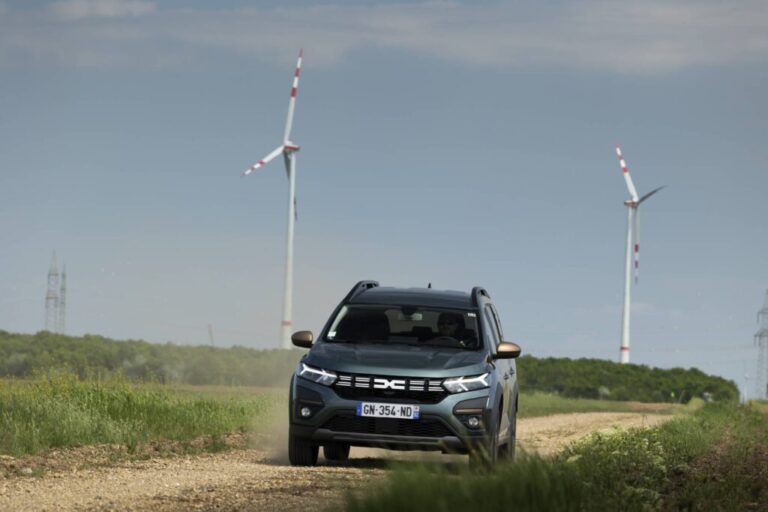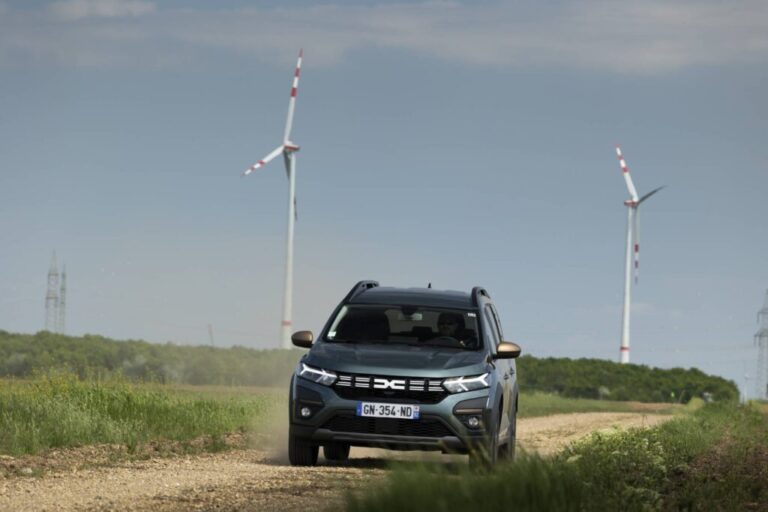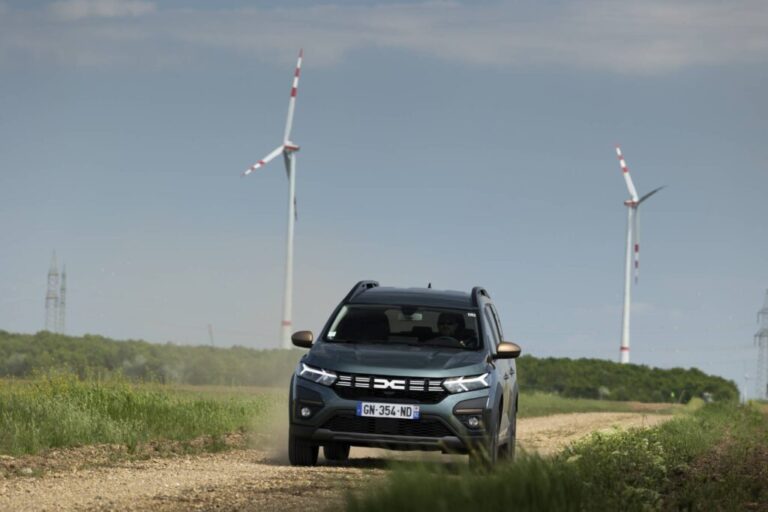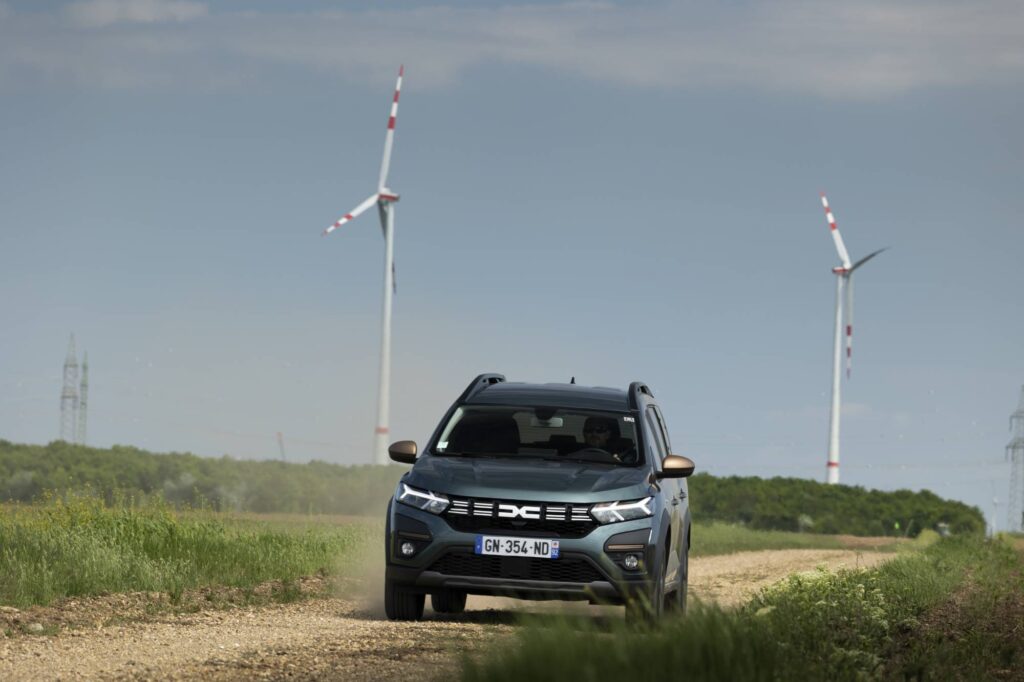
The Dacia Jogger offers remarkably generous space for a car in this segment, but anyone who wants to use the boot cleverly will soon run into a few practical challenges. The large tailgate needs more room than many parking spaces provide, and in the 7-seat layout the boot is considerably smaller than it first appears. With the right approach, however, you can still get the very best from it. Read on for practical tips you can put into action straight away.
How do you open the boot in tight parking spaces?
The Dacia Jogger’s tailgate is large and swings up a long way. On a spacious driveway or in a wide car park, that is no problem at all. In an ordinary parking space, things can get tight. If there is a car parked close behind you, you may soon find that there is not enough room. The tailgate opens rearwards and upwards, which means you quickly need around 70 to 80 centimetres of space.
A few adjustments can help when space is limited:
- Open the tailgate as quickly as possible to prevent it from swinging fully open. Hold it halfway and take out your things from that position.
- If in doubt, pull forward a little before getting out. Even an extra 30 centimetres makes a difference.
- If the car park is full, deliberately choose a space at the end of a row so that you have more room at the rear.
The tailgate itself does not have automatic opening on the standard trim. You open it manually using the handle at the bottom of the tailgate. Be careful not to stand too close to the bumper when loading, as the tailgate can catch your back or shoulder when fully opened.
Maximum load space with 7 seats
The Dacia Jogger is available as a 5-seater and a 7-seater. That difference has major consequences for the available load space. These are the official volumes Dacia quotes:
- Behind the third row of seats (7-seat version): roughly 160 to 212 litres, depending on specification.
- With the third row folded down: well over 700 litres.
- With both the second and third rows folded flat: up to around 1,807 to 2,094 litres.
- In the 5-seat layout: 708 litres behind the rear seats.
In the 7-seat version, there is little more than a rucksack or a few bags left behind the third row. That is not enough for a family holiday. You solve this by folding the third row away when you are not carrying seven passengers. The seats fold completely flat and disappear almost into the floor. That restores a large part of the load space without needing to reconfigure the car.
Would you like to know more about this model’s features and any points worth bearing in mind? On the page about the Dacia Jogger you will find detailed information on owner experiences and practical points to note about this model.
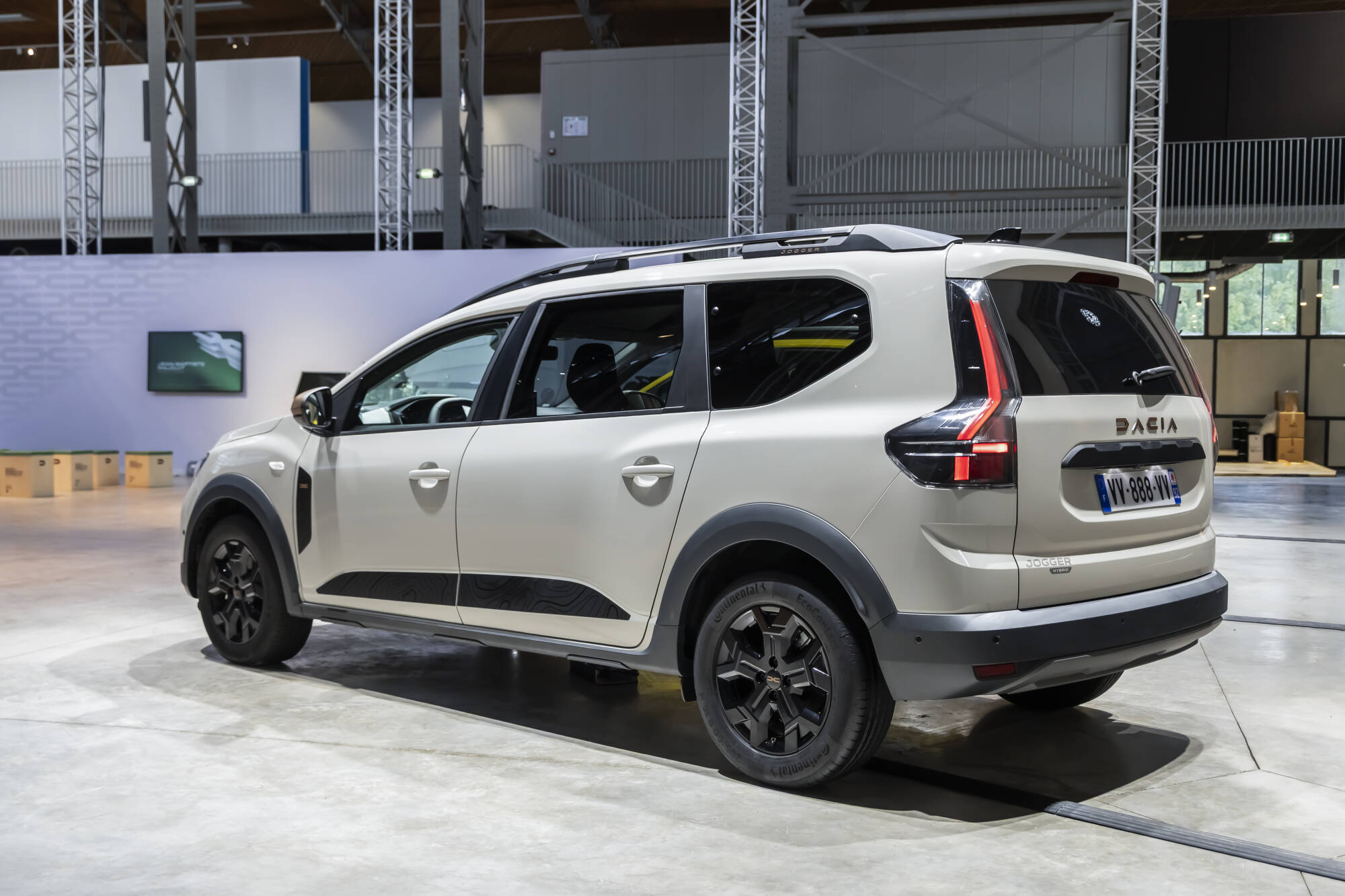
Integrated roof bars as an extra loading option
A distinctive feature of the Jogger is its integrated roof bars. They are built into the roof as standard and ready to use without any extra purchase. That makes the Jogger appealing for anyone who regularly needs more load space without having to fit a separate carrier.
You can attach a roof box, bicycle carrier or surfboard holder to the roof bars. Always check the permitted roof load and the carrier’s fastening when using them, especially after the first few miles with a full roof box. Roof bars spread the weight across the roof. If the load is too heavy or unevenly placed, you will notice it in the way the car drives.
Packing cleverly for everyday use and holidays
The shape of the load space lends itself well to a fixed way of packing. The floor is wide and, with the seats folded down, long enough for items up to around two metres. That makes the Jogger suitable for sports bags, camping kit or moving boxes.
Follow this order when loading:
- Put heavy items such as cool boxes, drinks crates or toolboxes in first, low on the floor and against the rear seat.
- Fill the space around them with medium-weight bags and suitcases.
- Place light and soft items such as sleeping bags or clothing on top.
- Use the storage compartments in the cabin for things you need on the move, such as snacks, chargers and documents.
- Secure loose luggage with tie-down straps or a luggage net if available.
Soft bags work better than hard suitcases. They are easier to stack and fill corners and gaps in the load space more efficiently. With hard suitcases, unused spaces are left that can cause movement during sharp braking or cornering.
‘ A clear line of sight is not only practical, it is also required. ’
Safe loading prevents problems on the road
Loose luggage that shoots forward during heavy braking is a real risk. Dacia’s official instructions are clear: heavy items should be low down and against the backrest. Light items may go on top, but must not be stacked so high that they block the rear window. A clear line of sight is not only practical, it is also required.
If you fold the rear seats and place items on the backrest, remove the head restraints first. That gives you a flat loading floor and prevents items from sitting at an angle and sliding about. With a full load, especially if you also have roof luggage, it is wise to check the tyre pressures too. A more heavily loaded car sometimes calls for slightly higher pressure at the rear, as set out in the handbook.
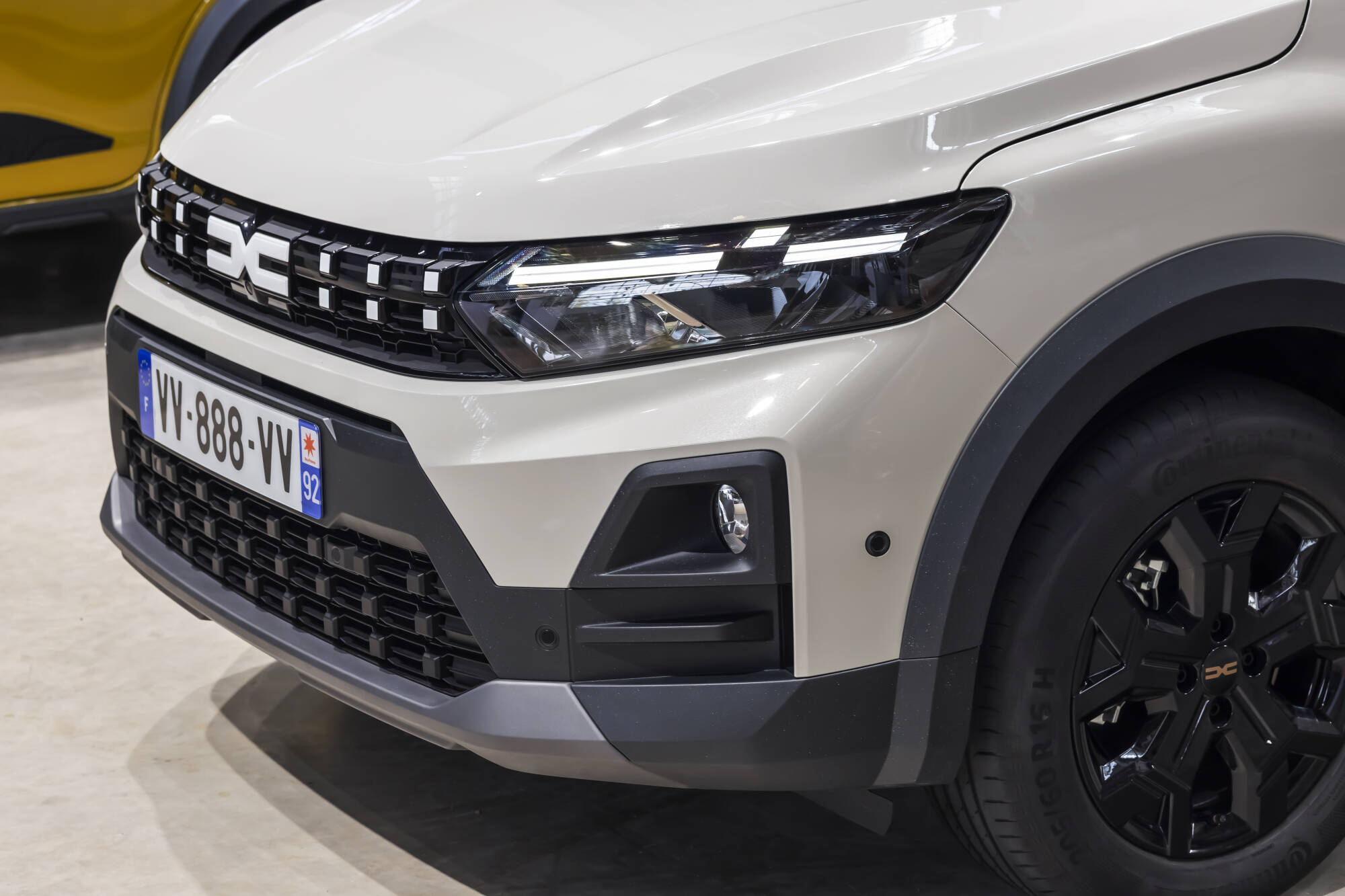
Choosing the 5- or 7-seat version based on your loading needs
For anyone using the Jogger mainly for family outings, weekend trips or holidays with lots of luggage, the 5-seat version is the most practical choice. The boot is immediately usable in that configuration without folding anything down, and you have more load length behind the passengers. The 7-seat version is more attractive if passenger space is the priority and you only need the third row occasionally.
The Jogger offers a large load capacity, integrated roof bars and a flexible seating layout. That makes it one of the most versatile cars in its class. With a well thought-out approach to packing, you can get the most out of it, both for everyday use and for longer journeys.
On the Carnews website you will find much more about the Dacia Jogger and other models with practical load solutions. Discover tips on car use, maintenance and the latest models that suit your driving style and needs.
Frequently asked questions
The Dacia Jogger offers flexible seat configurations, giving you plenty of passenger space in 7-seat mode and a much larger boot in 5-seat mode. By folding down the third row of seats, and if necessary the second row as well, you create a long, flat loading floor that is ideal for large or long items on holiday. The boot benefits from a straight, long floor, meaning soft bags and modularly packed luggage make the best use of the space. In addition, the fixing points in the load floor and the advice to keep heavy items low and against the backrest, with lighter items on top, help you load safely and efficiently for both everyday journeys and long trips.
Always make use of the Jogger’s long, flat loading floor first: if you have a lot of luggage, fold down at least the third row of seats first (or use it as a 5-seater) so that you can place large items and soft bags lengthways. Put heavy items such as crates and cool boxes low down and directly against the backrest of the rear seats, spread the weight as centrally as possible, and only then stack lighter items on top. Use tie-down straps or a luggage net on the lashing eyes to secure the load, and do not leave loose objects rolling about so that nothing can fly forwards under heavy braking. Keep the rear window as clear as possible for visibility and, if necessary, remove the head restraints from the rear seats to create a flatter load surface.
Useful accessories for improving the Dacia Jogger’s load capacity and functionality include an adjustable or double boot floor, organisers and storage boxes for the boot, and a luggage net or set of tie-down straps to secure the load. Inside, extra storage compartments, seat-back organisers and rubber or modular boot mats are practical for making better use of the space and keeping it clean. Outside, roof bars with a roof box, bicycle carrier or ski rack increase transport options for holidays and sport. A detachable towbar with a suitable trailer or caravan set-up also makes the Jogger more versatile for large loads.
Use the modular layout by deciding for each journey how many rows of seats you really need: for larger loads, fold down the third row first, and then the second row if needed, for maximum load length. Place heavy sports bags or shopping crates low down and against the backrest, and spread the weight evenly across the floor. Use soft bags for sports kit so that you can make the most of the long, flat load space, and secure loose items with tie-down straps or a net. Keep small items you need often in the interior storage compartments so that the main load area stays clear and tidy.
Yes, there are a few practical techniques and points to bear in mind. For maximum load space in the 7-seat version, it is best to remove the entire third row of seats if possible; that makes much more difference than simply folding the backrests down. Then fold the second row flat as well, if necessary removing the head restraints first, to create the flattest and longest possible load floor. Place heavy items low down and against the backrest/front seats, distribute the load evenly and secure everything with tie-down straps or the fixing points.