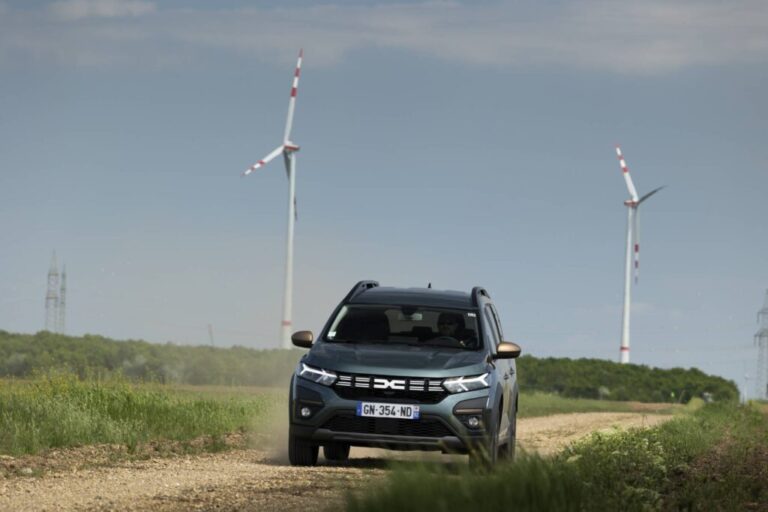
Electronics and control unit faults in the Dacia Jogger are more common than you would expect for a relatively new model. Displays that fail to boot, rapidly discharging batteries, and error messages in hybrid versions are causing uncertainty for owners. These issues often manifest themselves within the first period of ownership and can be quite frustrating for day-to-day use. Do you want to know the cause of these faults and how to address them?
Why do the electronic systems in the Dacia Jogger fail?
The electronic systems in the Dacia Jogger are susceptible to several causes. For instance, the 12V battery discharges unusually quickly when the car is stationary. This sometimes happens after only a week. This leads to problems with starting the car, flickering interior lighting, and low-voltage warnings on the dashboard. The weak auxiliary battery can subsequently cause a chain reaction where other electronic modules start triggering error messages.
Moisture also plays a significant role in the Dacia Jogger. Sensors and control units can fail due to moisture accumulation (condensation) or corrosion (oxidation). This occurs particularly during short trips or when left standing for long periods in damp conditions. This explains why some owners experience problems specifically during cold starts or after periods of rain.
The hybrid version (the model with both an internal combustion engine and an electric motor) also struggles with communication issues between the combustion engine and the electric motor. Software bugs in the control system result in jerky driving behavior, reduced efficiency, and sometimes even sudden failure. Owners regularly report red warning screens with the message “electric motor fault”, after which the car becomes unresponsive.
Common ECU problems in the Dacia Jogger
The engine and transmission control unit (ECU) manages all electronic processes in the car. Various faults are reported in the Jogger, often at relatively low mileages. This points to vulnerabilities in the hardware or software of these control units.
Typical problems with the ECU (engine control module) include:
- Unexplained error codes with no direct cause in mechanical components
- Failure of the central infotainment display, including climate control and navigation
- Dashboard lights that dim or do not illuminate at all
- Communication errors between different control units
- System lock-up, causing the car to fail to start
These faults are often related to corrosion (oxidation) on plug connections (connectors) or voltage spikes caused by a weak battery. The ECU is dependent on a stable power supply; when the voltage fluctuates, the control unit may store incorrect information or put modules into a kind of emergency mode.
Recognisable symptoms of electronic problems
Before heading to the workshop, it is useful to recognise the symptoms. This helps with faster diagnosis and prevents unnecessary costs. Look out for these signs:
- The car struggles to start or does not start at all after standing for a few days
- Interior and exterior lighting behaves unpredictably
- The infotainment screen fails to boot or cuts out while driving
- Warning lights stay on for no apparent reason
- In hybrid versions: jerky driving behavior or sudden power loss
Owners in forums mainly describe sudden total failure where the car becomes completely unresponsive. This happens without prior warning and causes significant uncertainty regarding the model’s reliability. In the event of an error message, always take a photo of the display immediately and note the conditions such as speed, outside temperature, and battery status.
How do you repair control unit faults in the Dacia Jogger?
The approach depends on the cause, but it always starts with diagnosis. A professional workshop can use an OBD scanner (a device to read vehicle error codes) to read the codes and determine which module is experiencing issues. Ensure you go to a garage that has experience with Dacia models, as the software and electronics require specific knowledge.
In cases of battery issues, the solution is often simple. Replacing or charging the 12V battery can resolve many electronic complaints. Also, have the alternator’s charging voltage checked, as a faulty alternator will not charge the battery properly. This leads to recurring problems, even after the battery has been replaced.
For problems caused by corrosion (oxidation) and moisture, plug connections (connectors) must be cleaned or replaced. This is often a time-consuming job because the mechanic must check all connections. If moisture damage is confirmed, it may be necessary to improve the sealing (waterproofing) or replace cable harnesses (bundles of cables).
Software updates and resets
Many electronic faults can be resolved with a software update from the manufacturer. Dacia regularly releases updates that fix known bugs. Ask the dealer specifically about performed software updates and whether new versions are available for your Jogger.
A simple reset of the infotainment system can temporarily help with lock-ups. You can do this by disconnecting the battery for a few minutes or via the reset menu within the system itself. If the problem continues to recur, this indicates a deeper software or power supply issue that requires further diagnosis.
Replacement of control units
In more serious cases, the ECU or another control unit must be replaced. This is costly, but sometimes the only solution for hardware defects. Always check first whether your car is under warranty or if there is an active recall. Dacia publishes a check for each vehicle based on the vehicle identification number (VIN check) for any service campaigns.
Upon replacement, always have the new control unit programmed to your specific vehicle. A non-programmed ECU can lead to new error messages or simply fail to function correctly. The dealer possesses the necessary equipment and software to perform this accurately.
Practical tips to prevent problems
Prevention is always better than repair. With a few simple measures, you can significantly reduce the chance of electronic faults.
- Drive longer distances regularly to keep the battery charged, especially if you normally only make short trips
- If the car is stationary for more than a week, check the battery voltage and consider a trickle charger
- Keep the car dry and check regularly for moisture ingress in the boot or under floor mats
- During maintenance, explicitly have the electronics and error memory read out
- Check via your VIN number if there are any service campaigns or recalls for your car
Are you buying a used Jogger? Thoroughly test all electronic systems. Check the multimedia screen, instrument cluster, climate control, and starting behavior. Preferably, let the car stand for a few days before your test drive, as this is when battery problems truly become visible.
When should you go to the dealer?
Some symptoms require immediate action. Head to the workshop if you see red warnings on the dashboard, the car fails to start, or electronic systems fail completely. For hybrid versions, jerky driving behavior or power loss is also a reason to have the car checked quickly.
For smaller issues, such as an occasionally freezing display, you can wait and see if it recurs. However, do note the circumstances and frequency. With recurring complaints, diagnosis is necessary, as small faults can indicate larger problems that are developing.
On the Carnews website, you will find much more information about specific car problems, maintenance tips, and experiences from owners of various models. Discover what other drivers are experiencing and find inspiration from practical solutions that actually work.
Frequently Asked Questions
Dacia Jogger owners mainly report problems with infotainment and displays failing to boot or booting irregularly, which causes navigation and sometimes climate control to fail. In addition, rapid discharge of the 12V battery occurs, with symptoms such as difficult or failed starting, flickering lighting, and voltage warnings. In the Hybrid version, error codes and messages such as “electric motor fault” are mentioned, often accompanied by jerky driving behavior, power loss, and reduced efficiency. Some users even experience a total electronic lock-up where the car is unresponsive or refuses to start.
Car enthusiasts can recognise emerging electronics or control unit faults by symptoms like spontaneously failing or freezing infotainment, inexplicable warning lights, glitching driver assistance systems, or flickering lights and starting problems due to a rapidly draining 12V battery. For an initial diagnosis, they can check if the problem relates to cold starts or long periods of standing, perform a one-time restart of the system (infotainment), and have the battery voltage/status measured (or measure it themselves with a multimeter). It is wise to record error messages and circumstances (photos of the dashboard, time, temperature, driving speed) to discover patterns. After that, they can preferably take this information to a Dacia dealer or specialist to have the error codes read and to enquire about any software updates.
Common causes include a weak or rapidly discharging 12V battery, software bugs in infotainment or control units, and communication faults between hybrid components. These problems can be reduced by having the battery tested regularly, ensuring all available software and firmware updates are performed at the dealer, and having error messages (with photos) read out immediately rather than ignoring them. Avoid prolonged standing without use or a trickle charge, and ensure that power-hungry devices (aftermarket accessories, chargers) are not constantly connected to the 12V power supply. Finally, periodically check for recalls or service campaigns via your VIN and ensure they are carried out in a timely manner.
A fault in a control unit can lead to power loss, irregular or jerky driving behavior, and sometimes emergency limp-home mode, which noticeably impairs driving performance. In hybrid versions, the coordination between the petrol engine and the electric motor can be disrupted, causing fuel consumption to rise and efficiency to drop. Furthermore, critical safety systems such as ABS, ESP, and driver assistance systems (e.g., emergency braking assistant or stability control) may be switched off or have limited functionality. In severe cases, the car may even fail to start or suddenly enter a restricted driving mode, which directly impacts safety.
There are reports of software and electronics problems with the Dacia Jogger (such as freezing infotainment, error codes in control units, and hybrid warnings), but the approach is primarily focused on targeted software/firmware updates via the dealer rather than one large, globally known recall specifically for the electronics. Dacia provides a VIN check that can be used to determine if there are open service campaigns or recalls for a specific car, which may also include software updates for control units. The known official recall for the Jogger mainly concerned mechanical parts (such as rear suspension bolts) and not the electronics directly. For concrete firmware updates or campaigns, the dealer or the VIN check is the recommended source, as these differ per production series and country.