
A V70 maintenance schedule only works properly if it is matched to the year of manufacture, engine and how the car is used: changing the oil on time, replacing filters and checking wear on belts, suspension and fluids prevents small issues from turning into major repairs. Anyone who takes the service history of their Volvo V70 seriously often keeps the car reliable for longer and has a better view of upcoming costs. See which jobs your V70 needs and when.
What is the maintenance schedule for a V70?
Volvo supplied the V70 in several generations, with a wide range of petrol, diesel, turbo and automatic variants. As a result, there is no single schedule that is exactly right for every V70. Volvo’s official service books distinguish between engine codes, model years and markets. Use the handbook for your car or the maintenance information from Volvo VIDA as your starting point.
In practice, an annual inspection is sensible, even if you do not drive many miles. Rubber components, coolant, brake fluid and belts also age with time. For a V70 with high mileage, such an inspection is especially useful, because play in the suspension and minor leaks are more likely to show up then.
A practical basic schedule for many Volvo V70 models looks like this:
- Every week or before a long journey: check the oil level, coolant, tyre pressure and lights.
- Every 12,000 to 15,000 kilometres or every year: change the engine oil and oil filter, and inspect the car for leaks, brake wear and play.
- Every 30,000 kilometres or every two years: carry out a more thorough check of the air filter, cabin filter, brakes, exhaust, drive shafts and suspension components.
- According to the engine-specific specification: replace the timing belt, tensioners and, if applicable, the water pump.
- Depending on age and specification: change the coolant, brake fluid, fuel filter and transmission oil.
Always check what has already been done. A stamped service book is useful, but invoices with mileage readings give greater certainty about the parts and fluids used.
‘That does not automatically mean that a long interval is the best choice for every car.’
How long can a V70 run on engine oil?
For many V70 owners, 12,000 to 15,000 kilometres, with a maximum of one year between services, is the recommended oil-change interval. This is especially sensible for older five-cylinder petrol engines, turbo engines and diesels that do a lot of short trips. Short journeys mean the oil reaches temperature less effectively and becomes contaminated more quickly by moisture and fuel residues.
According to Volvo maintenance information, factory intervals may be longer depending on the engine and year of manufacture. That does not automatically mean a long interval is the best option for every car. For a V70 used mainly for town driving, towing or with high mileage, a shorter interval is advisable.
Pay extra attention to oil consumption and crankcase ventilation
On older V70s with a five-cylinder turbo engine, the PCV system deserves attention. PCV stands for positive crankcase ventilation. This system removes crankcase gases. When hoses, the oil separator or connections become contaminated, crankcase pressure can build up.
Increased crankcase pressure can cause oil leaks past seals. So do not just check the oil level, but also look for seepage around the engine, an uneven idle and oil at intake-system connections. Have the crankcase ventilation checked during servicing if the history is unclear.
Which fluids should you change on a V70?
Not every fluid has the same change interval. Engine oil needs replacing most often. Brake fluid and coolant receive less attention, but are at least as important for reliability. If in doubt, follow the exact specification Volvo prescribes for your engine and transmission.
These fluids require checking or replacement:
- Engine oil: change together with the oil filter, preferably annually or after 12,000 to 15,000 kilometres.
- Brake fluid: usually replaced every two years. Brake fluid absorbs moisture, which lowers the boiling point and can cause corrosion in the brake system.
- Coolant: change according to the age-based interval and with fluid that matches the Volvo specification. Do not mix different types of coolant without checking first.
- Manual gearbox oil: often only checked for leaks, but replacement can be useful at high mileages if gear change quality deteriorates.
- Automatic transmission oil: have its condition assessed and replace it preventively when usage, mileage or history suggests doing so.
- Power steering fluid: check the colour, level and for leaks at the steering rack and pipes.
Automatic transmission oil is a point of attention on the V70 that is sometimes overlooked. Especially on P2 models, where P2 is Volvo’s internal platform designation for the second-generation V70, and early P3 models with an automatic gearbox, old oil can contribute to harsh shifting, delays when engaging a gear or jerks during gear changes. The correct approach depends on the type of automatic gearbox. A flush is not the right method for every gearbox; a specialist can determine what is suitable based on the transmission code.
The timing belt and cooling system need V70-specific attention
The timing belt is one of the most important maintenance items on many V70 engines. If the belt breaks or a tensioner seizes, pistons and valves can collide. On many engines that leads to serious engine damage. So do not postpone replacement because the mileage is low if the maximum age has already been reached.
The exact replacement interval varies greatly by engine code. Volvo used, among other things, five-cylinder petrol engines, T5 turbo engines and D5 diesels in the V70. When buying a used V70, always ask for the date, mileage and invoice for the last timing belt change. When the belt is replaced, the tensioners and idler rollers are normally changed as well. If the water pump is driven by the same belt, replacing it at the same time often makes sense.
The cooling system also deserves attention, especially on cars that have been on the road for years. During a service, check the following among other things:
- hoses and clamps for seepage or cracks;
- the radiator for corrosion and leaks;
- the operation of the thermostat and cooling fan;
- the expansion tank and cap for pressure loss;
- the water pump when the timing belt is replaced.
A loss of coolant without a visible puddle calls for investigation. A leak may only appear under pressure, for example when the engine is hot. Do not keep driving if the temperature gauge starts to rise.
Can you carry out V70 maintenance yourself?
You can carry out part of the maintenance on a V70 yourself if you have the right tools, axle stands and technical documentation. Oil, oil filter, cabin filter, air filter, wipers and spark plugs can be replaced at home on many versions. However, work carefully and use oil, filters and spark plugs that are demonstrably suitable for your engine code.
For work on brakes, timing belts, airbags, fuel lines and automatic transmissions, specialist knowledge is advisable. On a V70 P2, electronics are also involved. Reading faults with a universal tester can help, but Volvo VIDA usually gives deeper information on suitable models about fault codes, actuators and procedures.
When doing your own maintenance, work in this order:
- Check the engine code, year of manufacture and service history.
- Look up the prescribed fluid specifications and tightening torques.
- Replace parts system by system and note the date and mileage.
- After the work, check for leaks, warning messages and fluid level.
- Keep receipts and make a summary for the next owner or garage.
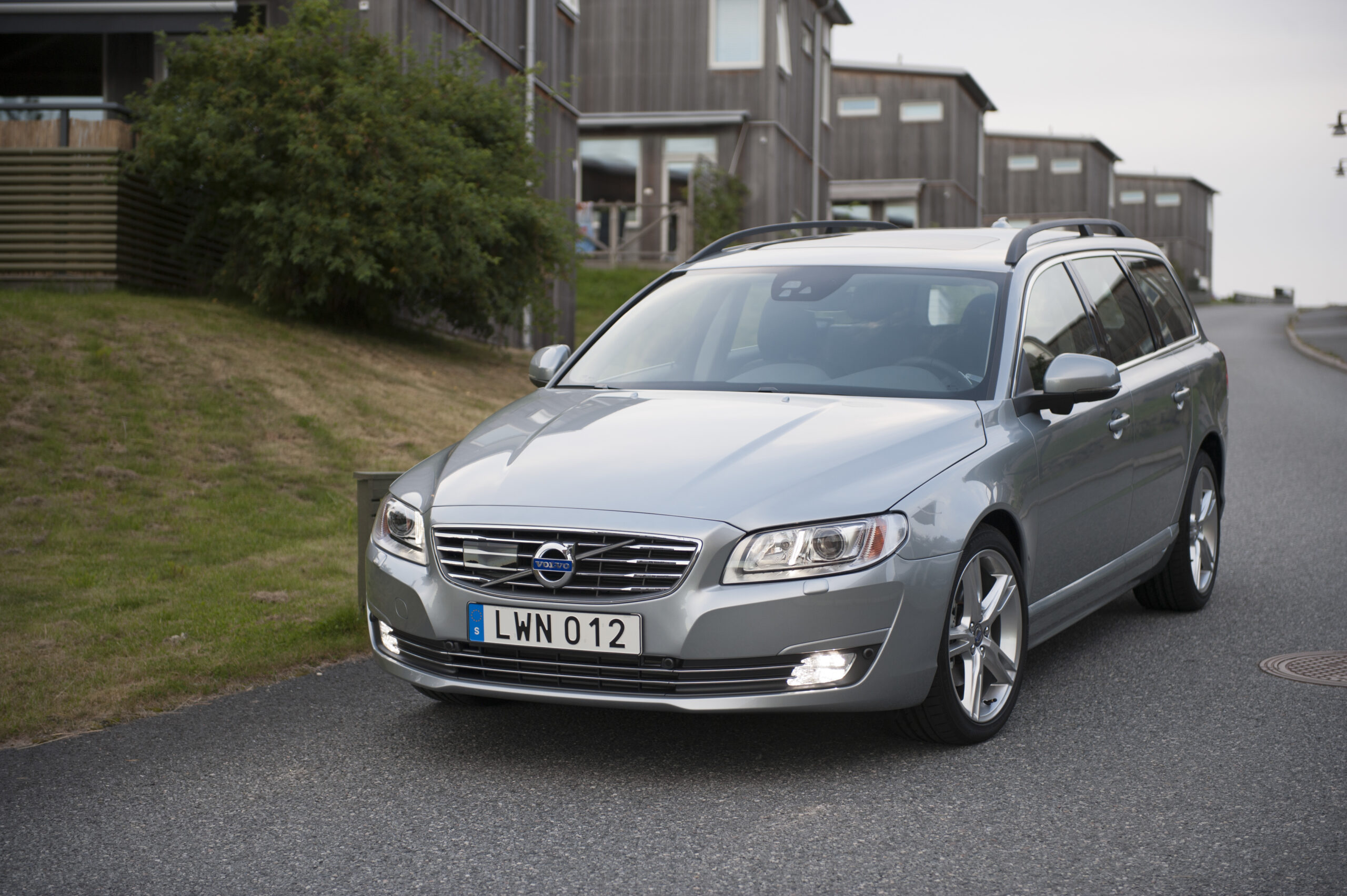
What does annual V70 servicing cost?
The cost of an annual service depends on the engine, garage choice, parts quality and any overdue maintenance. A basic service with oil, filter and inspection is usually straightforward. The bill rises once brakes, tyres, wishbones, engine mounts, the timing belt or automatic transmission servicing are needed.
So do not ask only for a price for a “full service”. Ask for a breakdown of labour, fluids, filters and recommended repairs. On an older V70 it is wise to distinguish between work that is immediately necessary for safety or reliability and work that can be scheduled for the next service.
On the Carnews website you will find much more on Volvo maintenance, known V70 issues and technical points to watch on other models. Discover more on Carnews and keep your V70 in good condition with targeted information.
Frequently asked questions
Under heavy use, the Volvo V70 timing belt is given a replacement interval of around **60,000 to 108,000 km**, depending on the engine and year of manufacture. The tensioners and, if necessary, the water pump are also replaced at the same time.
Early turbo models require more intensive preventive maintenance, especially more frequent oil changes and extra checks of the PCV/crankcase ventilation, timing belt, automatic transmission oil and cooling system. Later variants can generally follow the regular maintenance schedule, with oil and filter changes every 12,000–15,000 km or annually, and other work according to the engine- and model-year-specific interval.
At higher mileage, the subframe bushes, wishbones and ball joints in particular need extra attention. The engine mounts and other suspension and steering components should also be checked for wear and play.